
37 Malcolm RD, Braeside, VIC
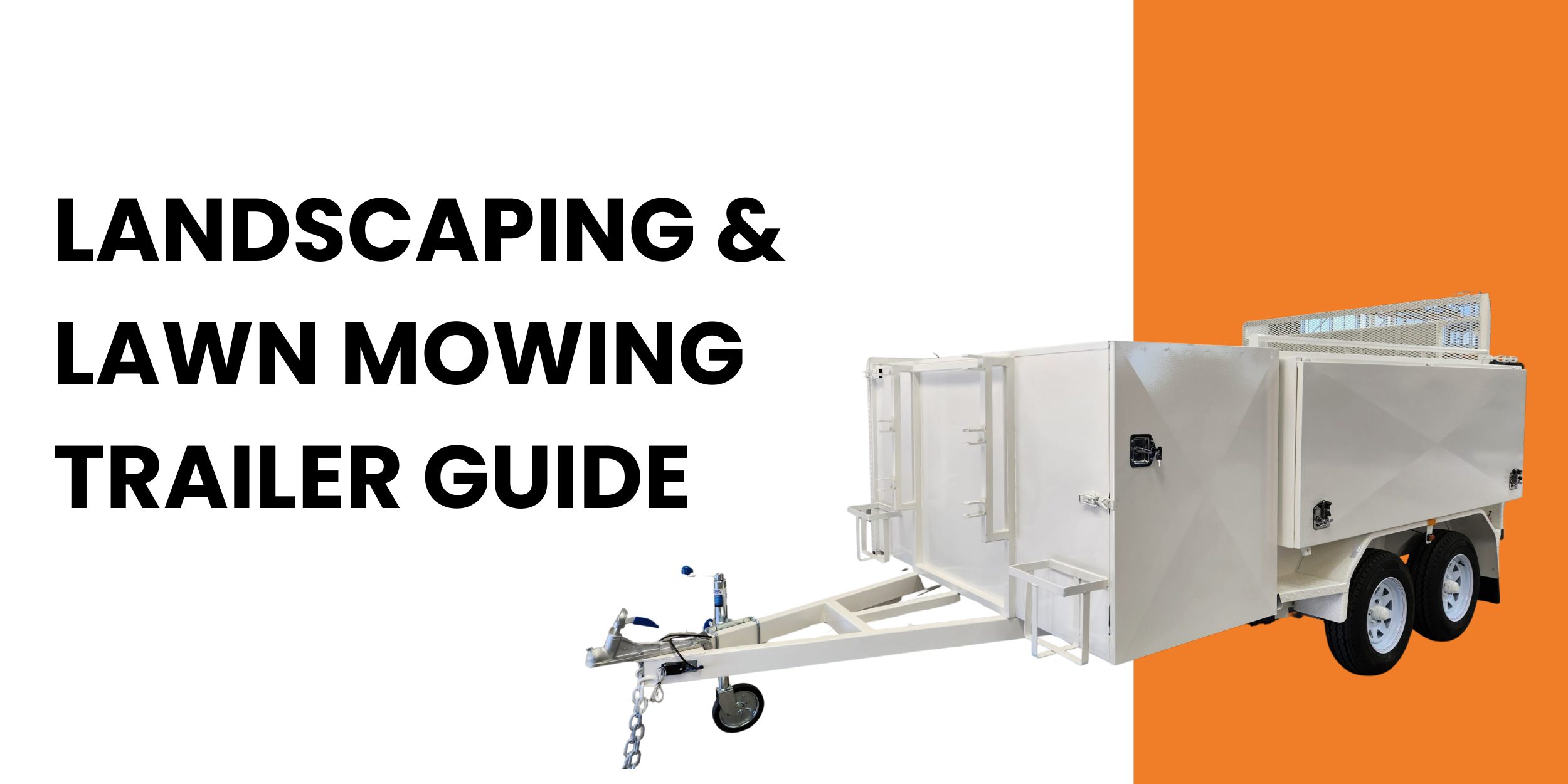
Landscaping And Lawn Mowing Trailer Guide
7 May 2026 | roshartrailers
By Roshar Trailers Editorial Team
Updated: 18 August 2026
Landscaping and lawn care teams often need to transport much more than a mower. A typical working day can involve powered garden equipment, hand tools, landscaping materials, personal protective equipment (PPE), work supplies and green waste, sometimes across several job sites.
A practical landscaping lawn mowing trailer therefore needs to support a mixed workload rather than just one piece of equipment. The right configuration depends on what the team carries, how equipment is loaded and unloaded, whether materials or green waste need to be transported, and how the load changes throughout the working day.
Quick answer: Landscaping and lawn care trailers can transport mowers, trimmers, blowers, tools, materials and green waste between job sites. Dedicated mower trailers suit mowing-focused work, cage trailers provide flexible containment for appropriate bulky loads, tandem configurations can suit larger or heavier setups, and custom trailers can address specialised equipment and workflow requirements.
How Mixed Landscaping Workloads Change Trailer Requirements
Landscaping and property-maintenance teams can have more varied transport requirements than businesses focused mainly on mowing.
One job may involve routine mowing and edging. The next may require hedge trimming, garden clean-up, planting or moving landscaping materials.
This means the trailer may need to support several functions during the same working day:
- carrying mowing equipment
- transporting powered garden tools
- storing hand tools
- carrying work supplies
- moving appropriate landscaping materials
- containing green waste
- keeping equipment organised between sites
The challenge is balancing these different uses without making frequently used equipment difficult to reach.
For example, a landscaping crew that mows at most properties may need to preserve a clear mower loading route even when additional tools, plants or materials are being transported.
The trailer should therefore be considered as part of the complete job-site workflow rather than simply as transport for one machine.
For dedicated mower trailer configurations, visit our lawn mowing trailers page.
Mowers, Tools And Green Waste Transport
A useful way to plan a mixed landscaping load is to separate equipment and materials into categories.
Mowing And Powered Equipment
Depending on the services provided, this may include:
- push mowers
- commercial mowers
- ride-on mowing equipment
- line trimmers
- brushcutters
- blowers
- hedge trimmers
These items generally benefit from predictable positions because crews may need to access them repeatedly.
Hand Tools And Work Equipment
Landscaping teams may also carry:
- rakes
- shovels
- spades
- pruning tools
- hand tools
- PPE
- spare parts
- batteries
- other work supplies
Smaller equipment is easier to manage when it has designated storage rather than being placed wherever space remains around larger machinery.
Landscaping Materials
The materials carried by landscapers can change considerably from one job to another.
Depending on the work, a crew may need to transport plants, bagged materials or other appropriate landscaping supplies.
This changing load is one reason flexible trailer space can be valuable for landscaping work.
Green Waste
Grass, leaves, branches and other garden debris create a different transport requirement from tools and machinery.
Green waste can occupy substantial space after pruning, garden maintenance or clean-up work.
For crews carrying both equipment and waste, ask:
Can we transport the day’s equipment while keeping green waste from interfering with mower access, other equipment and load restraint?
The answer can help determine whether a dedicated mower configuration, cage trailer or more specialised layout better fits the workflow.
Ramp And Cage Requirements For Mixed Landscaping Work
Ramps and cages address different parts of a landscaping workflow.
A ramp can provide loading access for suitable wheeled equipment. A cage can provide additional containment for appropriate loads.
For mixed landscaping work, the important issue is how these features operate when other equipment and materials are already on the trailer.
Keeping Mower Access Available
A landscaping trailer may have enough floor space for a mower but still become difficult to use if plants, tools, materials or waste block its loading route.
Plan the mower path before allocating the remaining space.
Consider whether:
- the mower has a clear route to the ramp
- other tools interfere with loading
- materials need to be moved before unloading the mower
- the loading arrangement still works as the load changes during the day
For a detailed pre-purchase explanation of ramp dimensions, loading angles, floor space and other specifications, see our guide on what to look for in a lawn mowing trailer.
When A Cage Helps
A cage can be useful when the work involves appropriate bulky loads, garden equipment or green waste requiring additional containment.
Cage height and layout should still reflect the actual workload.
More cage space is not automatically more useful if it unnecessarily affects access or creates a configuration the crew does not need.
The key question is whether the cage supports the materials and waste the business regularly carries.
Storage For Tools And Materials
Landscaping crews may carry a broader range of tools than mowing-only operators.
A practical storage system can separate equipment according to how frequently it is used and what role it serves.
For example:
Daily-use powered equipment: Keep it reasonably easy to access.
Hand tools: Use appropriate racks or designated storage.
Smaller equipment and consumables: Consider toolbox or enclosed storage.
PPE: Keep it in an accessible and suitable location.
Materials: Allocate space according to the day’s work.
Green waste: Keep it contained separately where practical.
The aim is not to create a compartment for every item. Storage should reduce unnecessary handling without removing the flexibility needed for changing landscaping loads.
Keep Long-Handled Tools Organised
Rakes, shovels and similar tools can be awkward to carry if they do not have a defined location.
Suitable racks can help keep them away from mower floor space and loading routes.
The rack and restraint arrangement should be appropriate for the equipment being transported.
Leave Flexible Space Where It Helps
Landscaping work changes from site to site.
Filling every available section with permanent storage can reduce the trailer’s usefulness when plants, materials, waste or different equipment need to be carried.
A combination of fixed equipment storage and flexible load space can work better for mixed site work.
Trailer Options For Landscaping Crews
There is no single trailer configuration that suits every landscaping business.
Instead of ranking trailer types, compare them according to the main workload.
| Trailer approach | May suit | Main consideration |
|---|---|---|
| Dedicated mower trailer | Regular mowing and lawn care | Mower access, ramps and equipment organisation |
| Cage trailer | Green waste and mixed bulky loads | Containment and flexible carrying space |
| Tandem trailer | Larger or heavier work setups | Trailer/load ratings and towing requirements |
| Custom trailer | Specialised equipment and workflows | Layout built around specific requirements |
A cage trailer is not automatically better than a mower trailer, and a tandem configuration is not automatically better than a single-axle trailer.
The useful question is:
Which configuration best matches the equipment, materials and waste involved in the work?
When A Cage Trailer May Be Enough
A cage trailer may suit a landscaping crew whose workload involves mixed equipment, green waste or bulky materials and does not require a highly specialised mower layout.
Possible applications include:
- garden clean-ups
- green-waste removal
- carrying bulky garden equipment
- transporting appropriate landscaping supplies
- general property-maintenance work
- mixed loads where flexible space is useful
For these workloads, containment and adaptable load space may be more important than dedicated positions for every piece of mowing equipment.
Landscapers can compare available cage trailers.
When A General Cage Setup May Be Less Practical
A general cage trailer may be less convenient when the business needs highly specific mower positions, specialised ramp access, fixed equipment racks or dedicated storage used repeatedly throughout the day.
That does not make a cage trailer unsuitable. It simply means the workflow may justify a more specialised configuration.
When A Tandem Trailer May Suit The Workload
Landscaping teams carrying larger equipment, more tools or heavier mixed loads may also consider tandem configurations.
However, choosing a tandem trailer should not be based simply on the assumption that two axles are automatically better.
The suitability of a particular trailer depends on factors such as:
- actual equipment weight
- expected total load
- trailer ratings
- load distribution
- braking configuration
- towing vehicle limits
- trailer dimensions
- manoeuvrability requirements
The specifications of the individual trailer and towing vehicle should determine whether a particular configuration suits the intended work.
For larger or heavier landscaping setups, compare our tandem trailers.
When A Custom Lawn Mowing Trailer Is Better
A custom trailer becomes relevant when a standard configuration does not match the equipment or workflow.
The starting point should be a specific operational requirement rather than customisation for its own sake.
For example:
- a mower needs a particular loading arrangement
- several machines need dedicated positions
- cage dimensions need to match the work
- toolboxes must fit around machinery
- long-handled equipment needs dedicated racks
- green waste needs to remain separate from tools
- standard ramp access does not suit the equipment
- a crew needs a consistent layout for repeat work
A custom configuration can then be planned around those requirements.
For specialised storage, cage, ramp and equipment layouts, view our custom trailer options.
Landscaping Workflow: From Yard To Job Site
A landscaping trailer should support the sequence of work rather than only the trip from one location to another.
A typical day might look like:
Load at the yard → travel to site → unload priority equipment → complete mowing → perform garden work → load green waste → secure equipment → move to the next site or disposal point.
Each stage creates a different requirement.
At the start of the day, equipment organisation matters.
At the job site, access matters.
After garden work, waste containment may become more important.
Before travelling again, load restraint and distribution need to be considered.
The trailer may therefore finish the day carrying a significantly different load from the one it started with.
That changing workload is one of the main differences between a mixed landscaping trailer and a trailer used primarily for one type of equipment.
Practical Setup Tips For Daily Landscaping Work
For a landscaping crew, the setup should preserve enough flexibility to accommodate changes between sites.
Keep Mower Access Available
Where mowing is part of most jobs, avoid allowing tools, plants, materials or waste to take over the mower’s loading route.
Leave Flexible Space For Changing Materials
Not every part of the trailer needs permanent storage.
Open usable space can be valuable when the day’s landscaping materials vary.
Plan For The Return Load
A trailer may leave the yard with tools and materials but return carrying green waste.
Consider the return load before filling all available space at the beginning of the day.
Separate Tools, Materials And Waste Where Practical
Clear zones can make it easier to keep work equipment accessible while handling changing materials and garden waste.
Reset Between Sites
Return frequently used tools to consistent locations after each job.
This is particularly useful when several workers share the trailer.
For a more detailed guide to mower position, toolboxes, tie-down points and equipment organisation, see our lawn mowing trailer setup guide.
Daily Landscaping Trailer Checklist
Before travelling between sites, check that:
- mower and powered equipment are appropriately positioned
- ramps and gates are secured
- equipment is appropriately restrained
- hand tools are stored consistently
- PPE and necessary work supplies are present
- landscaping materials are appropriately contained
- green waste is contained where applicable
- lights and required connections are functioning
- tyres and visible trailer components show no obvious problems
- the intended load remains suitable for the trailer and towing combination
This checklist does not replace manufacturer instructions, workplace procedures or applicable road and load-restraint requirements.
Its purpose is to make trailer organisation part of the normal landscaping workflow.
Frequently Asked Questions
What is a landscaping lawn mowing trailer?
A landscaping lawn mowing trailer is a trailer used to transport mowing equipment, landscaping tools, work supplies, materials and potentially green waste between job sites. The appropriate configuration depends on the services provided and the loads being carried.
What equipment do landscapers normally carry on a trailer?
Landscapers may carry mowers, line trimmers, brushcutters, blowers, hedge trimmers, rakes, shovels, hand tools, PPE and other work supplies. Depending on the job, the trailer may also need room for landscaping materials and green waste.
Is a cage trailer suitable for landscaping work?
A cage trailer can suit landscaping work involving green waste, bulky garden equipment or mixed loads where containment and flexible carrying space are useful. A specialised mower configuration may be more practical when dedicated machinery positions and loading access are required.
Do landscapers need a dedicated lawn mowing trailer?
Not always. A dedicated mower trailer may be useful when mowing equipment forms a major part of the daily workload and consistent ramp access, storage and equipment positions are important. Mixed landscaping work may suit a cage or another configuration.
When should landscapers consider a tandem trailer?
A tandem configuration may be worth comparing for larger or heavier work setups. Suitability depends on the individual trailer’s ratings, expected load, towing vehicle, braking configuration and other applicable requirements rather than axle count alone.
How should green waste be carried with lawn equipment?
Green waste should be appropriately contained and should not interfere with machinery access, load restraint or the trailer’s allowable carrying capacity. Crews that regularly transport both equipment and waste may benefit from separate or clearly defined load areas.
What storage is useful on a landscaping trailer?
Useful storage may include toolboxes, racks, cages and designated equipment positions. The best arrangement depends on the equipment carried, how often workers need to access it and how much flexible load space the business requires.
Why is ramp access important for landscaping teams?
Ramp access can make loading suitable wheeled equipment more practical. For mixed landscaping work, the important consideration is whether the loading route remains accessible when other tools, materials or waste are also being carried.
When does a custom landscaping trailer make sense?
A custom trailer may make sense when standard ramps, cages, storage or equipment positions do not match the business’s machinery and workflow. Customisation should address a specific loading, storage, containment or operational requirement.
Match The Trailer To The Landscaping Workflow
A useful landscaping lawn mowing trailer guide comes back to one principle: match the trailer configuration to the work.
A mowing-focused team may prioritise ramp access and consistent equipment positions. A landscaping crew handling garden clean-ups may place greater value on cage containment and flexible load space. Larger or heavier workloads may justify comparing tandem configurations, while specialised equipment can create a case for a custom layout.
Start by listing the equipment, materials and green waste normally transported. Then consider how the load changes between the yard, job site and return trip.
That makes it easier to identify which trailer features support the real workflow rather than choosing a configuration based on one feature alone.
For dedicated mower trailer options, visit our lawn mowing trailers page. Landscapers can also compare cage trailers and tandem trailers, or explore our custom trailer options for specialised requirements.