
37 Malcolm RD, Braeside, VIC
What To Look For In A Lawn Mowing Trailer
5 December 2025 | roshartrailers
By Roshar Trailers Editorial Team
Updated: 18 August 2026
Choosing a lawn mowing trailer is easier when you compare the trailer against the equipment and work it actually needs to handle. Mower dimensions, ramp access, storage, floor space, axle configuration, tie-down points and towing suitability can all affect whether a trailer works well in day-to-day use.
If you are researching what to look for in a lawn mowing trailer, start with your mower and equipment rather than the trailer itself. Measure what you carry, estimate the working load, consider how often equipment will be loaded and unloaded, and check the towing limits of the vehicle you plan to use.
Quick answer: Before choosing a lawn mowing trailer, compare your mower’s dimensions and weight with the trailer’s usable space and load rating. Then check ramp access, cage and storage layout, floor construction, axle configuration, tie-down points, braking requirements and compatibility with your towing vehicle.
Start With The Equipment You Carry
The first step is to work out exactly what the trailer needs to transport.
A lawn mower may be the largest item, but it is rarely the only equipment carried by a lawn care contractor or gardening business.
Your equipment list may include:
- push or commercial lawn mowers
- ride-on mowers
- line trimmers
- brushcutters
- blowers
- hedge trimmers
- hand tools
- fuel or batteries
- personal protective equipment (PPE)
- spare parts and consumables
- green waste where appropriate
Write down the equipment you normally take to jobs and note the dimensions and weight of the larger items.
This gives you a practical starting point for comparing trailer dimensions and carrying capacity.
Measure The Mower, Not Just The Cutting Deck
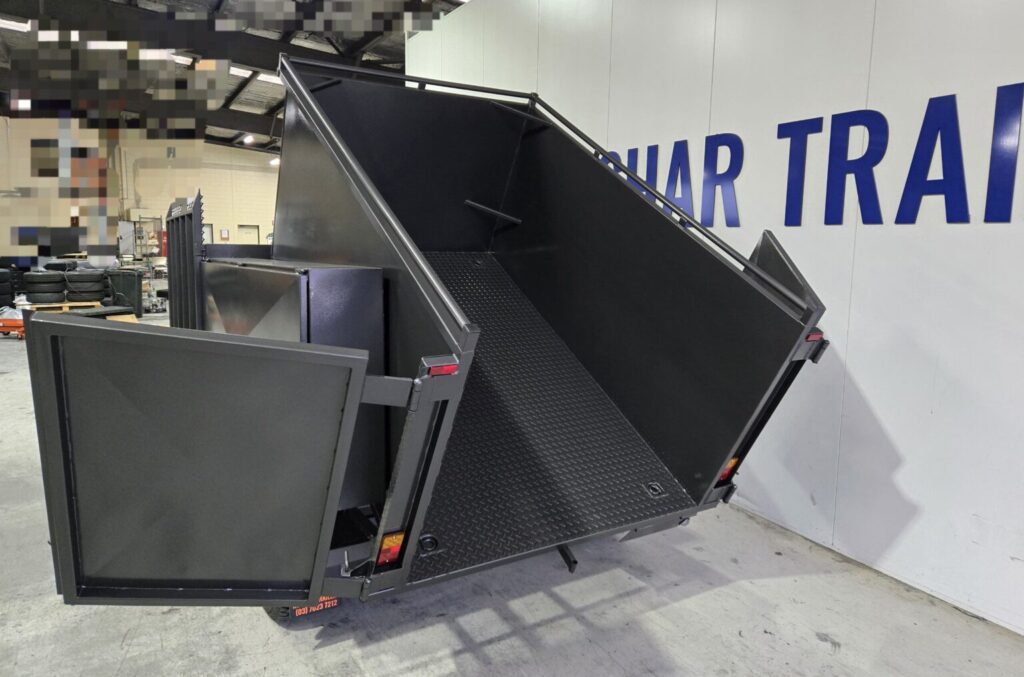
Do not judge mower size only by deck width.
Measure the mower at its widest and longest points in the configuration used for transport. Handles, discharge chutes, roll-over protection structures and other components may affect how much space is required.
For ride-on equipment, also consider the position of the wheels and how much room is needed to load, unload and secure the machine.
The trailer should provide enough usable space for the equipment without forcing other tools into the mower’s loading path.
Calculate The Working Load
Trailer capacity should be considered using the combined load rather than the mower alone.
That means accounting for other machinery, tools, storage equipment and materials carried at the same time.
Check the trailer manufacturer’s specifications and rated capacities rather than estimating capacity from appearance.
A trailer may look large enough but still be unsuitable if the combined load exceeds its rated capacity.
This is also a useful point to consider future requirements. If you expect to replace a mower with a larger machine or add equipment, that may affect the trailer size and axle configuration you need.
For mower trailer configurations, visit our lawn mowing trailers page.
Check Ramp Access And Loading Angle
Ramp design is one of the most important practical features to compare because lawn care equipment may be loaded and unloaded several times during a working day.
A ramp should suit the dimensions, weight and ground clearance of the mower being transported.
Do not look only at ramp width. Consider:
- usable ramp width
- ramp length
- loading angle
- mower ground clearance
- traction on the ramp surface
- ramp strength
- how the ramp is secured when travelling
- whether other equipment blocks ramp access
Why Loading Angle Matters
A short, steep ramp may create clearance problems for some equipment.
The mower can approach the trailer at an angle that causes the deck or another low part of the machine to contact the ramp or trailer edge.
A longer or differently positioned ramp may reduce the approach angle, but the appropriate solution depends on the trailer and mower.
Before choosing a configuration, consider how the mower will move from the ground onto the trailer rather than simply checking whether a ramp is included.
Where possible, compare the mower’s dimensions and ground clearance with the intended loading arrangement.
Check How The Ramp Fits Into Daily Work
A lawn mowing trailer may be opened and closed repeatedly during the working day.
Ask:
- Is the ramp straightforward to deploy?
- Can it be operated in the spaces where you normally work?
- Does it provide enough usable width for the mower?
- Is the loading route clear?
- Can the mower be unloaded without removing other equipment first?
A ramp that technically fits the mower but constantly requires tools to be moved may not suit a repeat-work setup.
Compare Cage And Storage Options
Cages and storage areas can make a mower trailer more practical, but they should be selected according to the equipment being carried.
A higher cage is not automatically better.
Consider what the cage will contain and whether its height or position affects mower access, loading or general usability.
A lawn care business may require storage for:
- hand tools
- line trimmers
- blowers
- PPE
- spare parts
- work supplies
- straps and restraint equipment
- other small equipment
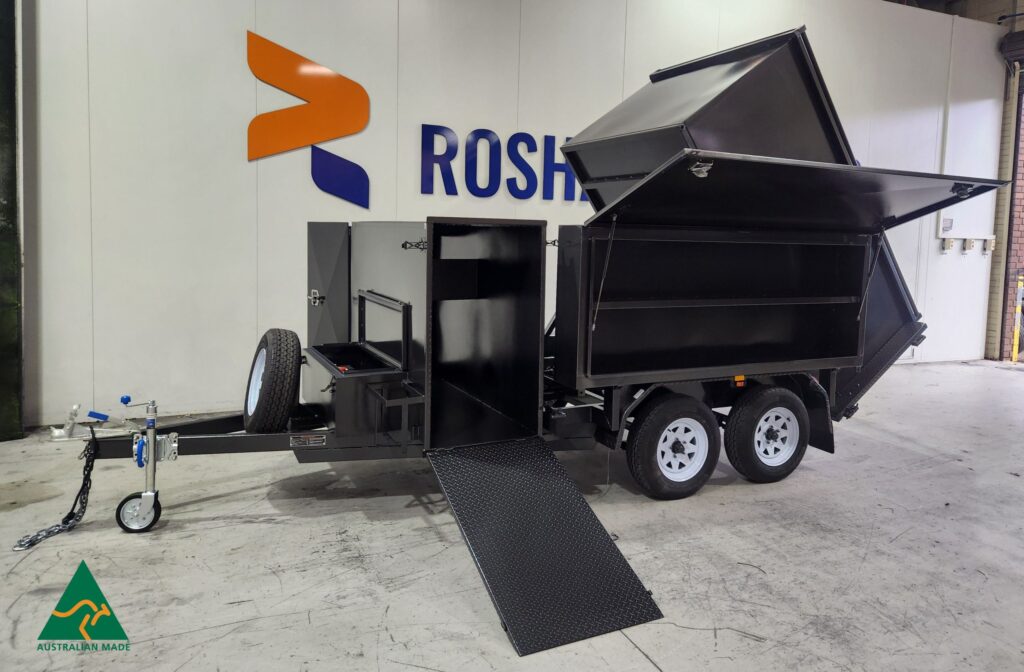
Think About Storage By Frequency Of Use
Frequently used equipment should generally be easier to access.
If an item is needed at nearly every job, placing it behind a mower or underneath rarely used equipment may create unnecessary work.
A useful comparison question is:
Can I reach the tools I use most often without unloading other equipment first?
Toolboxes, racks and cage sections can provide dedicated locations, but each storage feature also occupies space.
Compare the benefit of additional storage with the amount of floor or side access it uses.
Check Cage Access
If a cage is part of the design, consider how equipment inside it will be reached.
Look at:
- gate position
- opening width
- cage height
- access when the mower is loaded
- storage for long-handled tools
- containment of appropriate loose equipment
The purpose of a cage should be to support the way the trailer is used rather than simply adding height around the trailer sides.
Look At Trailer Size And Floor Strength
Trailer dimensions should be compared with the complete equipment load.
Length and width matter because they determine how much usable floor area remains after the mower is positioned.
A trailer that closely matches the mower’s dimensions may leave little room for additional equipment or suitable restraint arrangements.
Allow for practical clearance where required.
Compare Usable Space, Not Just Advertised Size
A quoted trailer size does not necessarily tell you everything about the usable layout.
Ask whether storage boxes, wheel arches, cages, spare-wheel positions or other components reduce the space available for equipment.
Measure:
- internal usable length
- usable width
- mower footprint
- ramp opening
- storage footprint
- space required around restraint points
This provides a more useful comparison than selecting a trailer solely by its nominal dimensions.
Consider The Floor And Structure
The trailer floor needs to be suitable for the equipment and loads the trailer is designed to carry.
When comparing trailers, ask what materials and construction are used for the floor and structure and whether that configuration is designed for your intended load.
Also consider how the floor will be used.
A commercial mowing trailer may experience repeated wheel loading in similar areas as machinery enters, exits and travels in a regular position.
The correct construction depends on the trailer design and rated capacity. Rely on verified manufacturer specifications rather than assuming that a thicker-looking floor automatically provides a higher load rating.
Consider Single Axle Vs Tandem Setup
Axle configuration is another important comparison point.
Single-axle and tandem-axle trailers can both be appropriate depending on trailer size, rated capacity, load distribution and intended use.
The objective is not to select a tandem configuration simply because it sounds more heavy-duty.
Instead, compare the axle configuration with the actual equipment, load and towing requirements.
When A Single-Axle Setup May Suit
A single-axle configuration may suit some smaller or lighter mower-trailer setups.
Factors to consider include:
- overall trailer size
- equipment weight
- manoeuvrability requirements
- available carrying capacity
- towing vehicle compatibility
Always compare the specifications of the individual trailer rather than assuming every single-axle trailer has the same capacity.
When To Compare A Tandem Setup
A tandem-axle configuration may be worth comparing when the trailer, machinery or total working load requires a different capacity or configuration.
It may also suit larger setups where more equipment and storage are carried.
However, axle count alone does not determine whether a trailer is suitable.
You still need to consider:
- Aggregate Trailer Mass (ATM) and other relevant ratings
- load distribution
- braking configuration
- towing vehicle limits
- trailer dimensions
- actual equipment weight
For heavier work setups, compare our tandem trailers.
Check Tie-Down Points And Tool Security
A mower fitting onto the trailer is only part of the decision. You also need a suitable way to restrain equipment during transport.
Tie-down points should be positioned so appropriate restraints can be used without creating unsuitable restraint angles or interfering with other equipment.
Before choosing a trailer, consider where the mower and other major equipment will sit and how each item will be secured.
Useful questions include:
- Are suitable restraint points available near the mower position?
- Can restraints be used without moving other equipment?
- Are long-handled tools appropriately stored?
- Can smaller equipment be prevented from moving around?
- Will storage interfere with restraint points?
- Is the restraint system suitable for the equipment being transported?
Do not assume that having several tie-down points automatically means a load is adequately restrained.
The restraints, anchor points and loading method need to suit the load.
For Victorian operators, refer to current Transport Victoria load-restraint guidance when securing equipment on vehicles and trailers.
Understand Towing And Braking Requirements
Before choosing a trailer, check that the towing vehicle and trailer combination is suitable.
This is an area where verified specifications matter more than rules of thumb.
Start with the towing vehicle manufacturer’s information.
Relevant figures may include maximum towing capacity, towbar limits and permitted towball download.
Then compare those limits with the trailer specifications and expected loaded weight.
Understand Trailer Weight Ratings
You may encounter several weight terms while comparing trailers.
One important term is Aggregate Trailer Mass (ATM). When evaluating a particular trailer, use the manufacturer’s compliance information and specifications to confirm its applicable ratings and limits.
Do not choose a trailer simply because the towing vehicle appears capable of moving it.
The complete towing combination needs to remain within the applicable vehicle, towbar, trailer and other relevant limits.
Check Braking Requirements
Braking requirements depend on the trailer’s specifications and mass.
Do not rely on a generic statement from an advertisement or an outdated buying guide.
For a new trailer, confirm what braking system is fitted to the particular configuration and whether it meets the requirements applicable to that trailer.
Vehicle Standards Bulletin 1 (VSB 1 Revision 6) provides guidance on applicable Australian Design Rule requirements for trailers with an Aggregate Trailer Mass of 4.5 tonnes or less.
Because requirements can depend on the individual trailer and towing combination, verify current specifications and applicable requirements before making a purchase decision.
Check The Complete Towing Setup
Before choosing, verify:
- trailer ratings
- expected loaded trailer weight
- towing vehicle rating
- towbar rating
- coupling compatibility
- towball download limits
- braking system
- electrical connection
- required safety equipment
- tyre and wheel specifications
This is more useful than asking only:
“Can my ute tow this trailer?”
The better question is whether the complete vehicle-and-trailer combination is suitable for the intended load.
Compare Features Against Your Actual Work
A buying checklist becomes more useful when each trailer feature is connected to a practical requirement.
| Feature | What To Compare | Why It Matters |
|---|---|---|
| Trailer size | Mower footprint and remaining floor space | Determines whether equipment fits practically |
| Ramp | Width, length and loading angle | Affects mower loading and clearance |
| Cage | Height, access and layout | Affects storage and containment |
| Toolboxes | Position and usable volume | Helps organise smaller equipment |
| Floor | Construction and rated suitability | Must suit intended equipment and load |
| Axles | Configuration and trailer ratings | Relates to overall trailer setup and load |
| Tie-down points | Position and suitability | Supports equipment restraint |
| Brakes | System fitted and applicable requirements | Important for compliant towing |
| Coupling | Compatibility with tow vehicle | Required for the towing setup |
| Trailer rating | Manufacturer specifications | Defines trailer limits |
| Tow vehicle | Manufacturer towing limits | Must suit the loaded trailer |
This type of comparison keeps the decision focused on usability rather than isolated features.
A feature only adds value when it addresses a genuine requirement.
Think About Future Equipment Without Oversizing Unnecessarily
It can make sense to allow some flexibility for future equipment, but buying a substantially larger trailer than required is not automatically the better approach.
A larger trailer can change:
- overall trailer weight
- towing requirements
- manoeuvrability
- storage requirements
- load distribution
- braking requirements
- the towing vehicle required
Consider which equipment changes are realistically likely.
If you expect to move from a push mower to a larger ride-on mower soon, allowing for that equipment may make sense.
If expansion is only a distant possibility, base the decision mainly on your current equipment and workload.
Where a standard configuration cannot accommodate particular machinery, storage or loading requirements, a custom layout may be worth considering.
For specialised ramp, cage and equipment-storage layouts, view our custom trailer options.
Questions To Ask Before Buying
Before choosing a lawn mowing trailer, take your equipment measurements and load information with you and ask specific questions.
1. What Are The Usable Internal Dimensions?
Confirm the actual floor space available after fixed storage, cages, wheel arches and other components are taken into account.
2. What Is The Trailer’s Rated Capacity?
Check the manufacturer’s stated ratings rather than estimating capacity from the trailer’s appearance.
3. Will My Mower Fit Through The Ramp Opening?
Compare the mower’s widest transport dimension with the usable ramp opening.
4. What Is The Ramp Angle With This Trailer?
Consider mower ground clearance as well as ramp width and length.
5. How Will The Mower Be Restrained?
Identify appropriate restraint locations before deciding where the mower will sit.
6. Where Will My Other Tools Go?
Check whether trimmers, blowers, PPE and other work supplies have practical storage positions.
7. Does This Configuration Suit My Towing Vehicle?
Compare the trailer and expected loaded weight with the towing vehicle and towbar specifications.
8. What Braking System Is Fitted?
Confirm that the braking system is appropriate for the particular trailer configuration and applicable requirements.
9. Would A Single-Axle Or Tandem Configuration Better Suit My Load?
Compare the actual trailer specifications, equipment load and towing requirements rather than choosing by axle count alone.
10. Can The Setup Be Modified Around My Equipment?
If standard storage, cage or ramp positions do not work, ask whether an appropriate custom configuration is available.
11. What Maintenance Will The Trailer Require?
Ask about tyres, bearings, brakes, coupling, ramp hardware and other relevant service points.
12. What Compliance Information Comes With The Trailer?
Confirm the documentation and compliance information supplied with the trailer and required for its intended road use.
Frequently Asked Questions
What should I look for first in a lawn mowing trailer?
Start with the size and weight of the mower and other equipment you need to carry. Once you understand the load, compare usable trailer dimensions, rated capacity, ramp access, storage, tie-down points, axle configuration and towing compatibility.
What size trailer do I need for a lawn mower?
The appropriate trailer size depends on the mower’s full transport dimensions and the other equipment you carry. Measure the mower at its longest and widest points and allow enough usable space for loading, restraint and additional equipment.
Is a ramp important on a mower trailer?
A ramp is important when wheeled mowing equipment needs to be loaded regularly. Compare ramp width, length, strength and loading angle with the mower’s dimensions, weight and ground clearance.
Should I choose a single-axle or tandem lawn mowing trailer?
The appropriate axle configuration depends on trailer size, load, rated capacity, towing setup and intended use. A single axle may suit some lighter configurations, while larger or heavier setups may justify comparing tandem options. Always check the specifications of the individual trailer.
What storage should a lawn mowing trailer have?
Useful storage depends on the equipment you carry. Toolboxes, cages and tool racks can help organise hand tools, trimming equipment, PPE and work supplies, but storage should not unnecessarily block mower access or restraint points.
How do I know if my vehicle can tow a lawn mowing trailer?
Check the towing limits specified by the vehicle manufacturer and the towbar rating. Compare these with the trailer’s specifications and expected loaded weight while also considering towball download, braking and other requirements for the complete towing combination.
Do lawn mowing trailers need brakes?
Braking requirements depend on the trailer’s mass, specifications and applicable requirements. Confirm the braking system fitted to the individual trailer and check current Australian and Victorian requirements rather than relying on a general assumption.
How should a mower be secured on a trailer?
A mower should be restrained using a system appropriate for the equipment, trailer and load. Check that suitable restraint points are available and follow current load-restraint requirements.
Is a cage necessary on a lawn mowing trailer?
Not necessarily. A cage can be useful for containing appropriate equipment or materials, but the right cage height and layout depend on what you transport and how the trailer is loaded.
When should I consider a custom lawn mowing trailer?
A custom configuration may be useful when standard trailer dimensions, ramps, cages, storage or tie-down locations do not suit your mower and equipment. Start by identifying the specific loading, storage or equipment problem that needs to be solved.
Use A Checklist Before You Choose
Knowing what to look for in a lawn mowing trailer makes it easier to compare options according to practical requirements rather than appearance or one headline specification.
Start with your equipment. Measure the mower, consider the complete working load, compare ramp access and storage, check usable floor space, evaluate axle configurations where relevant, and make sure the trailer and towing vehicle are compatible.
Most importantly, use verified specifications for the individual trailer and towing vehicle rather than relying on assumptions.
For mower trailer options, visit our lawn mowing trailers page.
For heavier work setups, compare our tandem trailers. If your mower, ramp or storage requirements need a specialised configuration, explore our custom trailer options.