
37 Malcolm RD, Braeside, VIC
How Lawn Care Businesses Use Lawn Mowing Trailers
4 October 2025 | roshartrailers
By Roshar Trailers Editorial Team
Updated: 18 August 2026
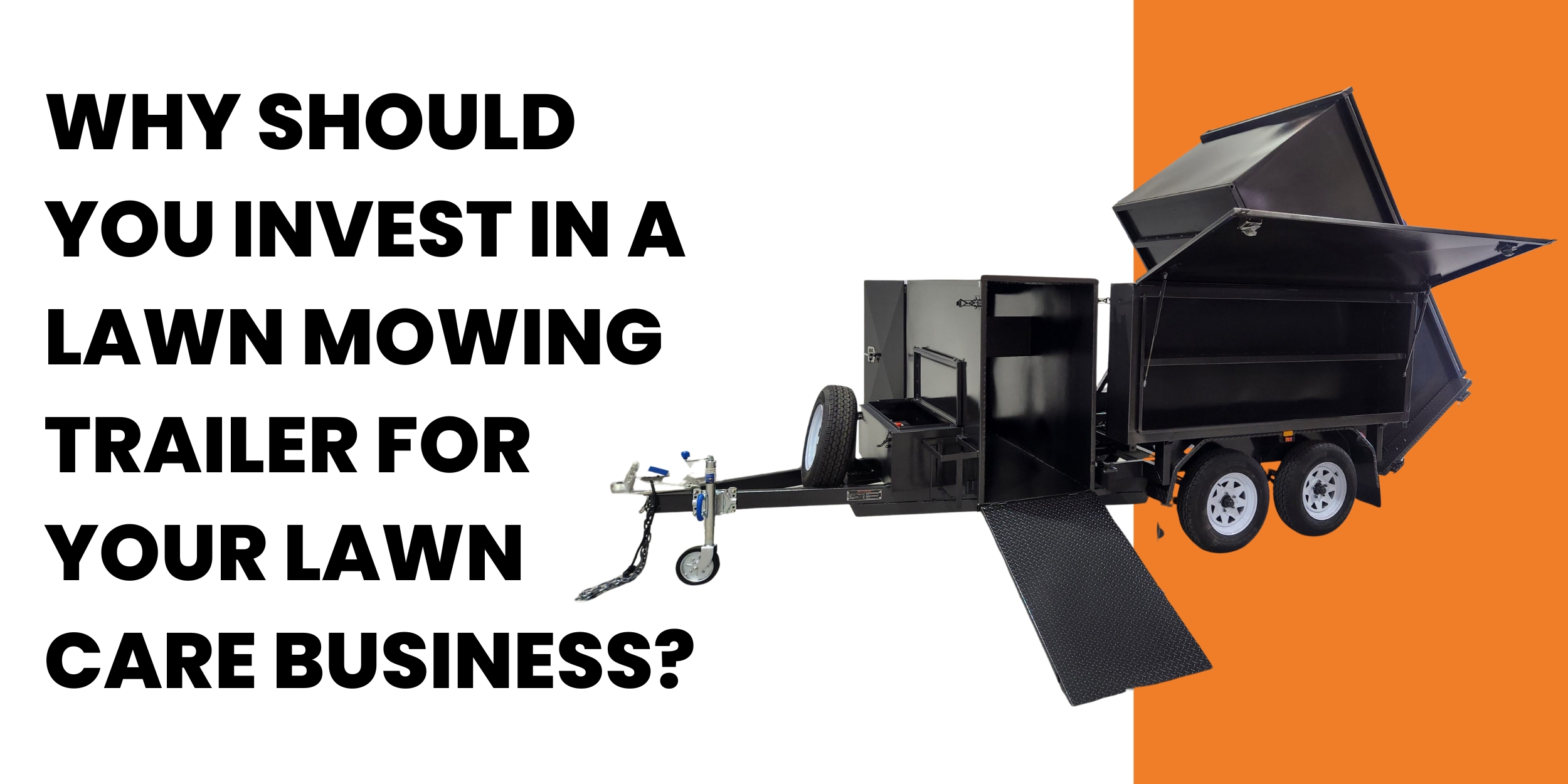
A lawn mowing trailer for a lawn care business can be an important part of everyday operations. Rather than simply transporting a mower, the trailer can provide space for mowing equipment, trimmers, blowers, hand tools, work supplies and other equipment needed when moving between properties.
For businesses completing several jobs in a day, the practical challenge is not only fitting equipment on the trailer. The setup also needs to account for equipment access, organisation, repeated loading and unloading, appropriate load restraint and the way tools are used throughout the working day.
Quick summary: A practical lawn mowing trailer setup helps a lawn care business transport mowing equipment, organise tools, provide convenient mower access and support repeated loading and unloading between jobs. The most suitable layout depends on the equipment carried, storage requirements, loading routine and whether garden waste also needs to be transported.
Why Lawn Care Businesses Need a Practical Trailer Setup
Lawn care contractors often load and unload equipment several times during a normal working day.
A typical routine may involve travelling to a property, unloading the mower and required tools, completing the work, returning equipment to the trailer, securing the load and travelling to the next job.
When that sequence is repeated throughout the day, trailer layout becomes important.
A practical setup should make frequently used equipment reasonably easy to access while providing enough usable space for the machinery, tools and supplies required for the work.
Requirements can vary considerably between businesses.
A contractor primarily completing residential lawn mowing may carry a mower, trimmer and blower. A business offering broader garden maintenance or landscaping services may need additional machinery, hand tools and space for green waste.
The starting point should therefore be the work being performed and the equipment required to complete it.
For available trailer configurations, visit our lawn mowing trailers page.
Carrying Mowers, Tools and Garden Equipment
The mower is often one of the largest pieces of equipment transported by a lawn care business, but it should not be considered in isolation.
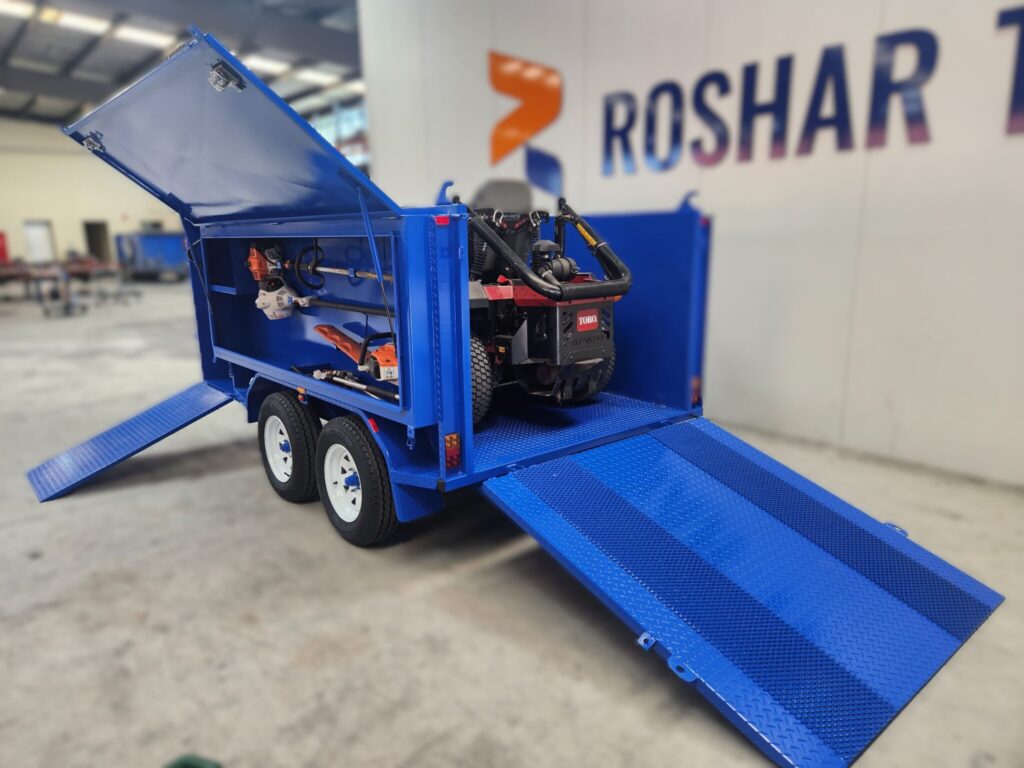
Depending on the services provided, a contractor may also need to transport:
- push or commercial lawn mowers
- ride-on mowing equipment
- line trimmers and brushcutters
- leaf blowers
- hedge-trimming equipment
- rakes and shovels
- hand tools
- personal protective equipment
- spare parts and consumables
- other garden-maintenance equipment
The equipment combination will differ between businesses.
A contractor specialising in routine lawn maintenance may use the same core equipment on most jobs. A gardening or property-maintenance business may need a wider range of tools depending on the work scheduled for that day.
Instead of considering only whether the largest mower will fit, it is useful to look at the complete working load.
Plan Around the Equipment You Actually Use
Before deciding how a lawn mowing trailer should be arranged, make an inventory of the equipment regularly taken to jobs.
Consider:
- Which mower is used most often?
- What other powered equipment travels to most properties?
- Which long or awkward tools need dedicated storage?
- Which equipment needs to be unloaded first?
- Which items need to remain readily accessible?
- Is space regularly required for green waste?
- Is the equipment list likely to expand?
These questions help define the space, storage and access requirements before decisions are made about the trailer layout.
They can also prevent a common practical problem: allocating most of the usable space to one large machine and then trying to fit every other tool around it.
Storage, Cages and Tie-Down Points
An organised trailer gives frequently used equipment a consistent place during transport and between jobs.
Without dedicated storage, smaller tools and supplies can become mixed with larger equipment. This may make them harder to find and can interfere with mower access.
Depending on the trailer configuration and business requirements, useful features may include:
- toolboxes
- cages
- dedicated storage areas
- tool racks
- suitable tie-down or restraint points
The goal is not to add every available feature. Each feature should address a practical requirement.
For example, a toolbox can provide a designated place for smaller equipment and supplies. A cage may provide a defined carrying area for appropriate loads. Suitable restraint points can form part of the system used to secure machinery and equipment during transport.
Equipment carried on a trailer needs to be appropriately positioned and restrained. Businesses operating in Victoria should refer to current Transport Victoria guidance for securing loads on vehicles and trailers when planning and using load-restraint systems.
A useful trailer setup therefore considers storage and load restraint together rather than treating them as unrelated features.
Ramp Access for Daily Loading
Ramp access becomes particularly important when wheeled equipment is loaded and unloaded repeatedly.
For suitable mowing equipment, an appropriate ramp provides a loading route between the ground and trailer deck.
Its value becomes clearer when the same process occurs several times during a working day:
Park → access equipment → unload → complete the job → reload → secure equipment → travel to the next property.
The trailer layout should support this sequence.
If other equipment regularly blocks the mower’s loading path, workers may need to rearrange tools every time they arrive at or leave a property.
For that reason, ramp access should be considered together with mower dimensions, equipment position, available floor space and the overall loading sequence.
The appropriate ramp and loading arrangement will depend on the equipment and trailer involved.
Keeping Tools Organised Between Jobs
Organisation is especially useful when the trailer travels directly from one customer property to another.
A consistent storage system means equipment can be returned to the same location after each job.
One practical approach is to organise tools by their purpose and how frequently they are used.
For example:
- mowing equipment in the main loading area
- trimming and edging equipment in a designated location
- hand tools in dedicated storage
- PPE in an accessible location
- work supplies and consumables together
- green waste kept separate where practical
The exact arrangement is less important than consistency.
When commonly used items have regular locations, it becomes easier to check that equipment has been returned before leaving a property. It can also reduce time spent searching through mixed tools when starting the next job.
This becomes particularly useful when several people work from the same trailer because each team member can follow the same organisation system.
Managing Fuel and Other Work Supplies
Lawn care businesses may need to carry more than mowers and garden tools.
Depending on the equipment used, the daily setup may include fuel, batteries, charging equipment, spare trimmer line, replacement parts, lubricants and other work supplies.
These items should be considered during trailer planning rather than placed wherever space remains.
Fuel and other dangerous goods can be subject to specific transport and storage requirements. Businesses should follow applicable Australian and Victorian requirements and check current WorkSafe Victoria guidance on transporting dangerous goods as tools of trade where relevant.
From a trailer-organisation perspective, the important principle is to provide appropriate locations for work supplies without unnecessarily interfering with mower access or creating loose items around the trailer.
Businesses should also consider the manufacturer’s instructions for the equipment and containers being transported.
Carrying Garden Waste Alongside Equipment
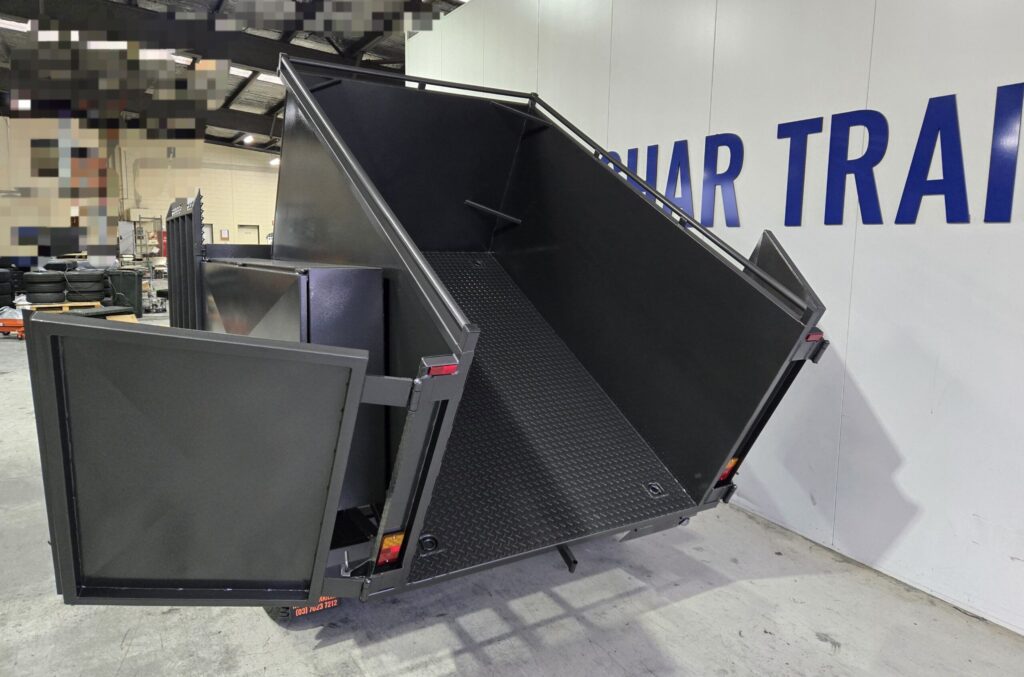
Some lawn care businesses mainly mow and edge lawns. Others also remove grass clippings, leaves, branches and other green waste.
If waste removal is a regular part of the service, it needs to be considered when planning the trailer.
The amount of waste can vary substantially between jobs.
Routine mowing may produce relatively little material, while garden clean-ups, hedge trimming or pruning can create much larger loads.
This creates an important planning question: how will equipment and garden waste share the available trailer space?
Businesses that regularly remove green waste should consider:
- how much waste is normally produced
- whether a separate carrying area is needed
- whether waste will obstruct equipment access
- how the material will be appropriately contained
- how the additional load affects available trailer capacity
Planning for green waste as part of normal operations can be more practical than treating it as an afterthought.
Trailer Setup for Repeat Lawn Care Work
The most useful trailer layout is often one designed around tasks that happen repeatedly.
A lawn care business may use the same core equipment across many properties. Small layout decisions can therefore influence the working routine every day.
Start by considering a normal job from arrival to departure.
Which equipment comes off the trailer first?
Which tools are used at nearly every property?
Which items are needed only occasionally?
What needs to remain accessible without unloading other equipment?
The answers can help establish priorities.
A practical setup for repeat work may provide:
- clear mower loading access
- designated positions for frequently used tools
- appropriate equipment-restraint locations
- accessible PPE
- separate storage for smaller items
- enough usable space around larger equipment
- space for garden waste where required
There is no single layout that works for every lawn care business.
A solo operator transporting a compact mower and a small collection of tools will have different requirements from a team carrying several machines and providing broader garden-maintenance services.
The trailer should therefore be planned around the actual sequence of work.
Check the Trailer Before Leaving Each Job
Organisation works best when it becomes part of the routine.
Before leaving a property, operators can check that equipment has been returned to its normal location, necessary items are appropriately secured and no tools have been left behind.
A simple routine might cover:
- mower
- trimming equipment
- blower
- hand tools
- PPE
- work supplies
- load restraint
- waste containment
The purpose is not to create unnecessary administration. It is simply to reset the trailer before travelling to the next job.
Standard Setup or Custom Layout?
Not every lawn care business needs a custom trailer.
A standard configuration may be suitable when it provides enough usable space, appropriate loading access and sufficient storage for the equipment normally carried.
Customisation becomes more relevant when a standard arrangement creates recurring operational problems.
For example, a business might require:
- different trailer dimensions
- a particular ramp arrangement
- additional toolbox storage
- cage sections
- dedicated equipment positions
- specialised loading access
- a layout designed around larger machinery
The decision should start with the problem that needs to be solved.
If an existing arrangement already provides suitable access, storage and carrying capacity, adding more features may offer little practical benefit.
If equipment regularly needs to be rearranged, frequently used tools are difficult to access or additional machinery no longer fits the normal layout, it may be time to reconsider the setup.
When to Upgrade to a Custom Lawn Mowing Trailer
The equipment requirements of a lawn care business can change over time.
A contractor might initially operate with one mower, a trimmer and a small collection of hand tools. As services expand, the business may add larger mowing equipment, more powered tools or additional garden-maintenance equipment.
The trailer then needs to support a different workload.
Signs that it may be worth considering a custom layout include:
- equipment no longer fits comfortably
- frequently used tools are difficult to access
- the mower loading route is regularly obstructed
- additional dedicated storage is required
- garden waste and equipment compete for usable space
- larger or additional machinery has been introduced
- equipment needs to be rearranged repeatedly between jobs
In these situations, a custom trailer can be planned around the equipment and workflow rather than simply around overall trailer dimensions.
For custom storage, ramp and cage options, view our custom trailer options.
Frequently Asked Questions
What is a lawn mowing trailer used for in a lawn care business?
A lawn mowing trailer can transport mowers, trimmers, blowers, hand tools and other lawn-maintenance equipment between jobs. Depending on the configuration, it can also provide dedicated storage, mower loading access, equipment-restraint points and space for green waste.
What should a lawn care business carry in its trailer?
The equipment depends on the services provided. Common items can include mowers, line trimmers, blowers, hedge equipment, hand tools, PPE and work supplies. The trailer should be planned around the equipment the business actually uses rather than a generic equipment list.
Why are ramps useful for lawn mowing businesses?
An appropriate ramp provides loading access for suitable wheeled mowing equipment. This can be particularly useful for contractors who repeatedly load and unload mowers while travelling between several properties during the working day.
How should tools be organised in a lawn mowing trailer?
Frequently used tools should have consistent, accessible locations. Mowing equipment, trimming tools, hand tools, PPE and work supplies can be grouped according to their purpose and how frequently they are needed.
Are tie-down points important on a mower trailer?
Suitable restraint points can form part of the system used to secure machinery and equipment during transport. The appropriate restraint method depends on the trailer and load, and businesses should follow current load-restraint requirements and guidance.
Can a lawn mowing trailer carry garden waste?
A trailer may carry garden waste if its design, available capacity and intended use are suitable. Businesses that regularly remove grass, leaves or branches should plan how waste will be contained and how it will affect equipment access and available carrying capacity.
How should fuel be carried in a lawn care trailer?
Fuel should be transported in accordance with applicable dangerous-goods requirements and the relevant container and equipment instructions. Victorian businesses should check current WorkSafe Victoria guidance where dangerous-goods transport requirements apply.
When should a lawn care business consider a custom trailer?
A custom trailer may be useful when standard layouts no longer suit the business’s equipment, storage requirements or loading routine. This can happen when larger machinery is added or when specific ramp, cage, toolbox or storage arrangements are required.
What should I consider before changing my lawn mowing trailer setup?
Start with your normal working day. Identify the equipment taken to most jobs, what needs to be unloaded first, which tools require dedicated storage, how machinery will be restrained and whether garden waste or additional work supplies also need to be carried.
Make the Trailer Part of the Daily Workflow
A practical lawn mowing trailer for a lawn care business should support what happens at each property as well as what happens on the road.
Mower access, equipment organisation, storage, load restraint, work supplies and garden-waste requirements can all affect how practical the trailer is during daily operations.
The most suitable setup is therefore not necessarily the one with the most features. It is the one that fits the equipment, workload and routine of the business using it.
For available trailer configurations, visit our lawn mowing trailers page. Businesses requiring a specialised layout can also explore our custom trailer options.
At Roshar Trailers, we understand the importance of durability and practicality in such trailers. That’s why we offer a range of options that cater to the specific needs of lawn care professionals, combining reliability with the convenience needed to keep your business running smoothly. Whether you’re looking for a trailer to carry a single mower or multiple pieces of equipment, our Trailer for Lawn Mowers is designed to handle the demands of everyday use, providing a hassle-free solution for your lawn care business. By investing in the right trailer, you can streamline operations, improve efficiency, and offer better service to your clients.