37 Malcolm RD, Braeside, VIC

Flat Top Trailer Buying Guide for Heavy Loads Towing Capacity and ADR Compliance
16 March 2026 | roshartrailers
Transporting heavy materials across Australia requires equipment that is engineered for strength, stability, and compliance. Whether you are hauling construction supplies, agricultural machinery, pallets of goods, or industrial equipment, choosing the right trailer is essential for safe and efficient transport.
A flat top trailer offers exceptional flexibility for carrying oversized or irregular loads, but not all trailers are built to handle serious weight. Understanding towing capacity, Aggregate Trailer Mass, structural strength, and ADR compliance ensures that your investment performs safely under demanding conditions.
This guide explores what to look for when purchasing a flat top trailer for heavy duty applications across Australian roads.
Evaluating Load Requirements Before You Buy
Before comparing trailer models, begin by assessing your actual load demands. Many buyers underestimate the importance of calculating real working weight rather than occasional use scenarios.
Consider:
- Maximum expected cargo weight
- Frequency of heavy transport
- Distance travelled
- Road conditions such as highways or regional routes
Heavy loads place stress on the chassis, suspension, and braking system. If your operations regularly involve machinery or bulk materials, your trailer must comfortably exceed those weight demands rather than operate at maximum capacity.
Selecting a trailer with sufficient structural strength ensures safer handling and longer service life.
Manufacturers such as Roshar Trailers design flat top models built for consistent commercial transport rather than occasional light duty use.
Understanding Towing Capacity and Vehicle Compatibility
Your towing vehicle plays a crucial role in determining which trailer is appropriate. Even the strongest trailer becomes unsafe if paired with a vehicle that cannot handle the weight.
Key terms to understand include:
- Aggregate Trailer Mass (ATM)
- Gross Trailer Mass (GTM)
- Tow ball rating
- Vehicle towing limit
For example, popular Australian utes such as the Toyota HiLux and Ford Ranger often support towing capacities up to 3,500kg when correctly configured. However, this figure includes the total loaded trailer weight, not just the cargo.
Exceeding towing limits increases braking distance, reduces steering control, and may void insurance coverage.
Matching trailer specifications to your vehicle’s certified limits is fundamental to safe operation.
Chassis Strength and Structural Integrity
The chassis forms the backbone of any flat top trailer. Heavy loads can cause flex, frame distortion, and long term fatigue if the trailer is not reinforced correctly.
Look for:
- Fully welded RHS steel chassis
- Reinforced cross members
- Heavy duty drawbars
- High tensile steel construction
A rigid frame distributes weight evenly across the platform, reducing strain during acceleration and braking.
Poor weld quality or thin steel increases the risk of cracking under repeated stress.
High quality construction ensures the trailer remains aligned and stable even after years of heavy duty use.
Braking Systems for Heavy Load Control
When transporting substantial weight, braking performance becomes a critical safety factor.
Australian regulations require specific braking systems once trailers exceed certain weight thresholds.
Common systems include:
- Mechanical override brakes
- Electric brake systems
- Breakaway units
For heavier trailers, electric brake systems offer superior control and smoother deceleration. They allow adjustable braking force from inside the towing vehicle, reducing the risk of trailer sway.
Breakaway systems provide an additional safety layer by automatically activating brakes if the trailer becomes detached.
Always confirm that braking components comply with national standards.
ADR Compliance and Legal Requirements
ADR compliance refers to adherence to Australian Design Rules. These regulations ensure trailers meet national safety standards.
When purchasing a flat top trailer, verify that it includes:
- ADR compliant lighting systems
- Approved safety chains
- VIN plate identification
- Certified braking systems
- Reflective safety markings
Non compliant trailers may attract fines and invalidate insurance claims in the event of an accident.
Ensuring ADR compliance protects both your business and other road users.
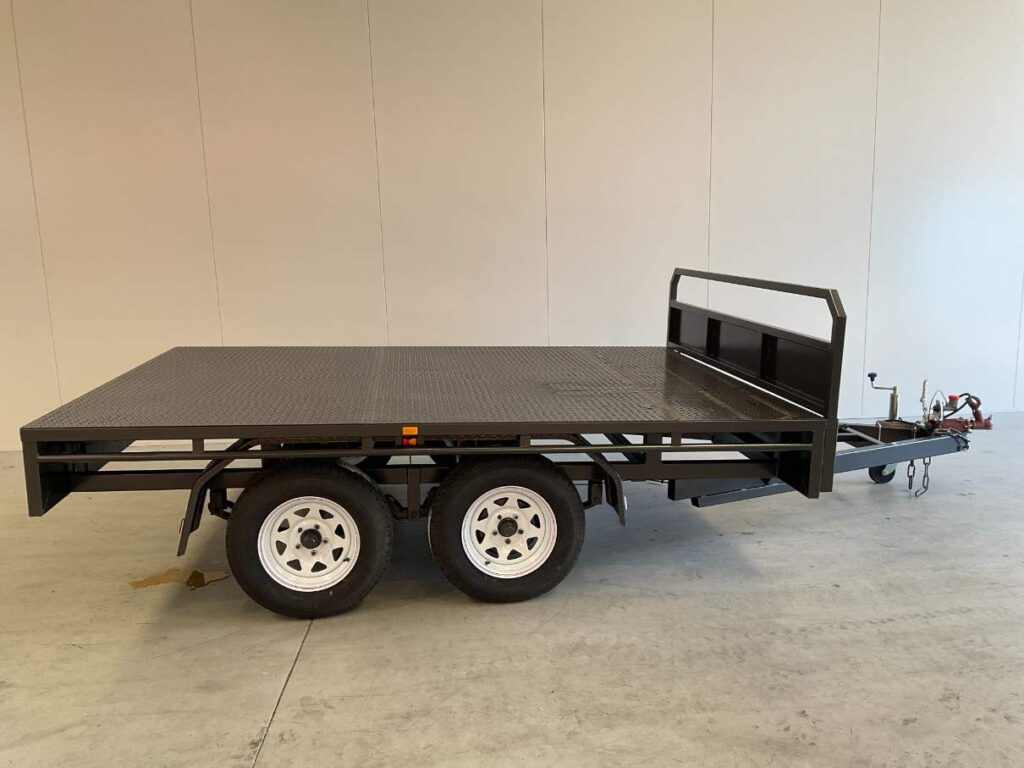
Deck Construction and Load Bearing Capacity
The trailer deck must withstand concentrated weight without bending or sagging.
Heavy machinery or palletised goods can place intense pressure on specific points of the platform.
Look for:
- Checker plate steel flooring
- Closely spaced cross members
- Reinforced deck supports
- Anti slip surfaces
A properly reinforced deck distributes weight evenly and maintains structural stability.
Companies like Roshar Trailers engineer flat top decks designed to handle consistent commercial loads across Australian terrain.
Suspension Systems and Road Performance
Australia’s road conditions range from smooth highways to uneven regional surfaces. Suspension quality directly influences load stability and ride comfort.
Heavy duty trailers often feature:
- Multi leaf spring suspension
- Rocker roller systems
- Reinforced axle assemblies
Quality suspension reduces vibration transfer to the cargo and prevents excessive frame stress.
Stable suspension improves towing comfort and enhances control during long distance travel.
Load Securing and Safety Measures
Flat top trailers rely on effective load restraint systems to prevent cargo movement.
Essential features include:
- Integrated tie rails
- Rated anchor points
- Stake pockets
- Heavy duty lashing rings
Using properly rated ratchet straps ensures cargo remains stable during braking and cornering.
Incorrect load restraint can shift weight distribution and compromise steering control.
Investing in a trailer with built in securing points simplifies compliance with Australian load restraint guidelines.
Corrosion Protection and Environmental Durability
Exposure to rain, dust, and ultraviolet radiation gradually weakens unprotected steel.
High quality trailers incorporate:
- Powder coated finishes
- Sealed electrical systems
- Rust resistant coatings
Corrosion protection extends service life and reduces maintenance frequency.
Trailers operating in coastal or high humidity regions particularly benefit from enhanced protective finishes.
Matching Trailer Size to Operational Needs
Selecting the correct platform size is equally important.
Common sizes range from compact configurations suited to smaller loads through to extended platforms capable of transporting heavy equipment.
Choosing an oversized trailer may increase fuel consumption unnecessarily, while undersized trailers limit flexibility.
Assess the typical length and width of your transported materials before finalising your decision.
A well matched platform size improves efficiency and reduces wasted capacity.
Maintenance Considerations for Long Term Reliability
Routine maintenance ensures your trailer remains safe and operational.
Regular checks should include:
- Brake inspection
- Tyre pressure monitoring
- Wheel bearing lubrication
- Electrical connection testing
- Suspension inspection
Preventative maintenance reduces downtime and protects your investment.
High quality construction and durable finishes reduce the frequency of major repairs.
Industry Applications for Flat Top Trailers
Flat top trailers are widely used across Australian industries.
Construction Sector
Transporting steel beams, bricks, and equipment requires reliable load capacity and structural strength.
Agriculture
Farmers utilise flat top platforms for machinery, fencing supplies, and bulk materials.
Landscaping
Landscapers benefit from open deck access when carrying pavers, plants, and tools.
Industrial Transport
Warehouses and factories use flat tops for palletised goods and machinery relocation.
Understanding your industry’s specific requirements ensures better trailer selection.
Final Thoughts on Choosing a Flat Top Trailer
Selecting a flat top trailer for heavy load transport requires careful evaluation of structural strength, braking systems, towing capacity, and ADR compliance.
A properly engineered trailer improves safety, stability, and long term reliability across Australian road conditions.
Manufacturers such as Roshar Trailers focus on durable construction standards designed for commercial and industrial transport applications.
Making an informed decision ensures consistent performance and protects your investment.
Ready to Invest in the Right Flat Top Trailer
If you are considering upgrading your heavy load transport equipment, take time to compare structural specifications, braking systems, and compliance certifications.
Visit Roshar Trailers to explore professionally engineered flat top trailers built for Australian roads and demanding workloads.
For More info. Read Complete Flat Top Trailer Guide:
Frequently Asked Questions
What is the best ATM rating for heavy loads
Choose an ATM rating that exceeds your maximum expected load by a safe margin.
Do I need electric brakes
Electric brakes are required for heavier trailers and improve stopping control.
What does ADR compliance mean
It means the trailer meets Australian safety and design regulations.
How often should I service a flat top trailer
Routine inspection every few months is recommended, especially for commercial use.
Can I tow a heavy flat top trailer with a ute
Yes, provided the trailer’s loaded weight does not exceed the vehicle’s certified towing capacity.
How long will a flat top trailer last
With proper maintenance and corrosion protection, a well built trailer can last over ten years.