
37 Malcolm RD, Braeside, VIC

Why Scaffolding Trailers Are Essential for Safe and Efficient Australian Worksites
28 January 2026 | roshartrailers
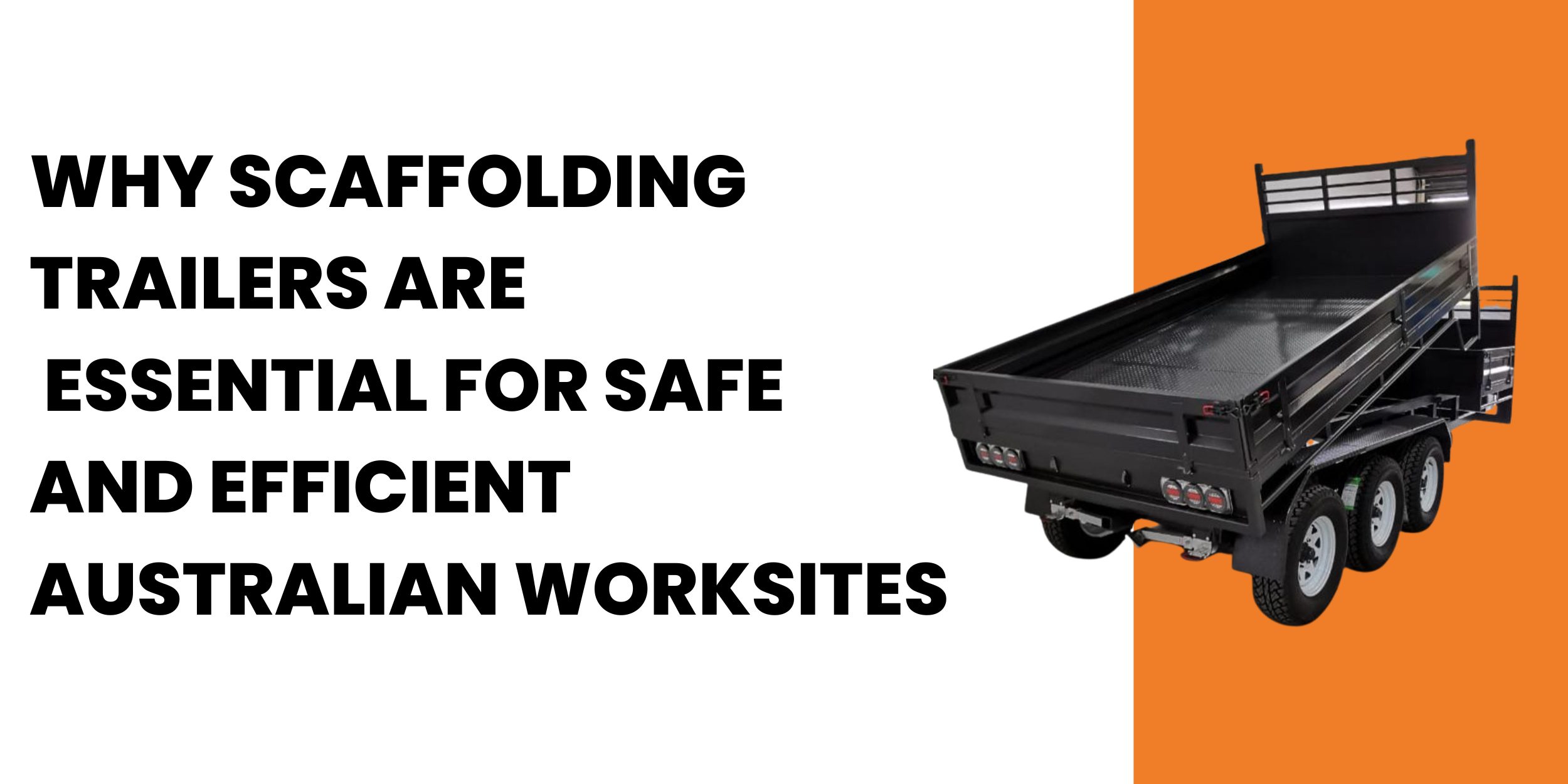
On Australian construction sites, scaffolding is moved, loaded, unloaded, and reassembled every single day. From commercial builds in Melbourne to residential projects across Dandenong, Braeside, and Bayswater, scaffolding contractors rely on transport systems that are safe, efficient, and compliant with Australian standards. This is exactly why a purpose-built scaffold trailer is no longer optional, it’s essential.
Buying a scaffold trailer for sale isn’t just about getting scaffolding from Point A to Point B. It’s about protecting workers, reducing manual handling risks, keeping materials organised, and meeting strict road and worksite safety expectations. Many businesses that try to use modified box trailers or generic flatbeds quickly discover the limitations,and risks, of the wrong setup.
This in-depth guide explains why scaffolding trailers are critical for Australian worksites, what features to look for when buying a scaffolding trailer in Melbourne, and why locally built solutions from trusted manufacturers like Roshar Trailers deliver long-term value across Victoria.
Why Australian Worksites Demand Purpose-Built Scaffolding Trailers
Scaffolding components are long, heavy, awkwardly shaped, and often transported multiple times per day. Frames, planks, standards, ledgers, braces, and base plates all place unique stresses on trailers during loading, transport, and unloading.
On busy Melbourne roads and congested industrial zones such as Braeside and Dandenong South, trailers must remain stable, balanced, and predictable. A standard cage or box trailer simply isn’t designed to handle scaffold loads safely.
Australian worksites demand scaffold trailers that can:
- Handle repeated daily loading cycles
- Prevent load movement during transport
- Reduce lifting strain for workers
- Remain stable on uneven roads and jobsite surfaces
- Meet Australian Design Rules (ADR) for towing
A dedicated scaffolding trailer is engineered specifically for these demands, making it safer and more efficient than any improvised alternative.
Why Melbourne Conditions Increase the Need for the Right Scaffold Trailer
Load Distribution: Why the 60/40 Rule Matters on Melbourne Roads
One of the most common causes of trailer sway incidents across Victoria is improper weight distribution. In 2025, enforcement agencies continue to focus on this issue, particularly for trailers carrying dense steel loads like scaffolding.
The 60/40 load distribution rule is now widely recognised as best practice:
- 60% of the total scaffold weight should be positioned in the front half of the trailer
- 40% toward the rear, evenly balanced across racks
This ensures sufficient tow-ball download, which is critical when travelling at speed or in crosswinds, especially on exposed routes such as the West Gate Bridge, EastLink, or major arterial roads connecting Melbourne’s industrial suburbs.
Melbourne presents a unique mix of challenges for scaffold transport. Contractors often move between dense metro areas, industrial estates, and outer suburban developments in a single day. Roads vary from smooth highways to uneven access points and active construction zones.
In areas like Braeside and Dandenong, trailers are regularly exposed to:
- Stop-start traffic
- Tight access points
- Uneven site entries
- Frequent loading and unloading
A poorly designed trailer increases the risk of sway, load shift, brake strain, and damage to scaffolding materials. Over time, this also leads to higher maintenance costs and reduced productivity.
Purpose-built scaffold trailers are engineered with axle placement and rack geometry that naturally supports correct load distribution, reducing sway and improving braking response.
This is why Melbourne-based contractors increasingly choose scaffolding trailers for sale that are designed and built locally for Australian conditions.
What Features Should I Look for in a Scaffold Trailer in Melbourne?
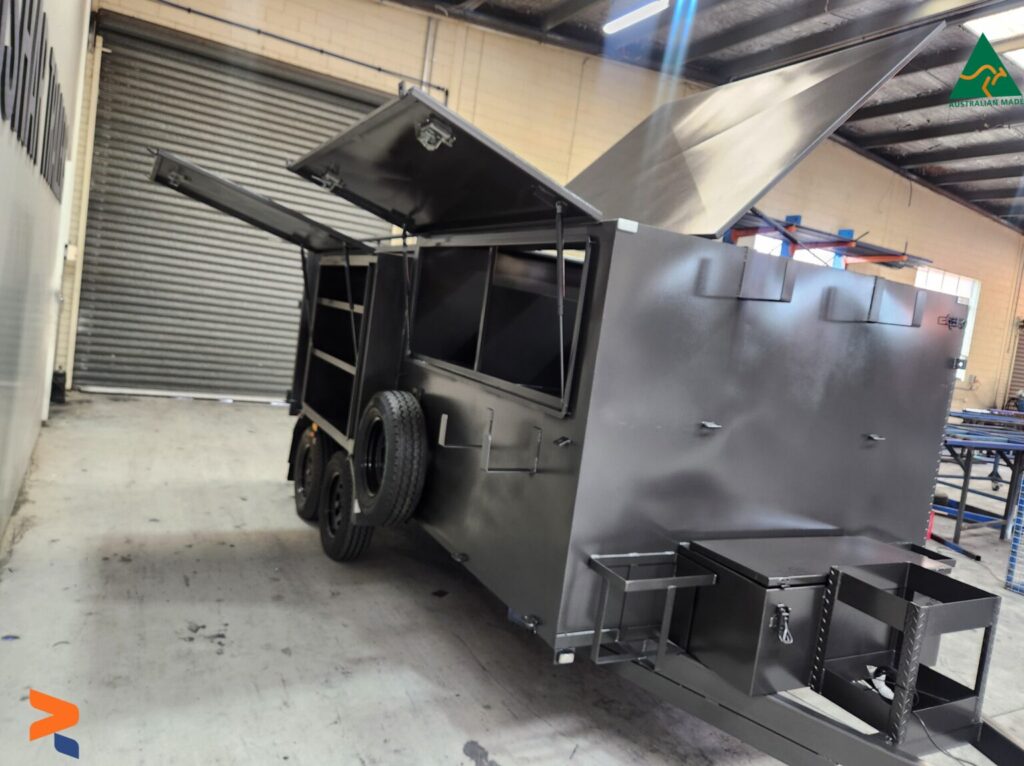
Choosing the right scaffold trailer starts with understanding how it will be used day to day. A quality scaffold trailer should be purpose-built, not adapted from a general trailer design.
Strong Steel Construction
Scaffold trailers must be built from heavy-duty steel to withstand point loads and repeated impact from steel scaffold components. Locally manufactured trailers offer superior durability compared to lightweight imported builds.
Purpose-Built Scaffold Racks
Dedicated scaffold racks keep frames, planks, and tubes organised and upright. This improves load balance, reduces damage, and speeds up loading and unloading on site.
High Load Rating and Axle Strength
Scaffolding is deceptively heavy. A properly rated axle system ensures the trailer can safely carry full scaffold loads without overstressing suspension or brakes.
Secure Tie-Down and Load Containment
Strong side rails, tie-down points, and load retention systems prevent movement during transport, especially important when towing through Melbourne traffic.
ADR-Compliant Braking and Lighting
All road-going scaffold trailers must meet ADR requirements. Proper braking systems and lighting ensure legal compliance and safer stopping performance when fully loaded.
Balanced Towing Geometry
Correct axle placement and drawbar design reduce sway and improve towing stability, particularly on longer trips through Victoria’s regional areas.
How Scaffolding Trailers Improve Safety on Australian Worksites
2025 Load Restraint Requirements for Scaffolding Transport (Australia)
In 2025, the National Heavy Vehicle Regulator (NHVR) released an updated Load Restraint Guide, placing stronger emphasis on preventing load movement during emergency braking and evasive manoeuvres. This update is especially relevant for scaffolding transport, where steel components can shift dangerously if not restrained correctly.
What are the load restraint requirements for scaffolding in 2025?
According to the NHVR Load Restraint Guide (2nd Edition) which remains in force through 2025,scaffolding loads must be restrained to prevent forward, rearward, and sideways movement during braking or evasive manoeuvres.
The NHVR has also confirmed that updated national restraint performance standards will take effect during 2026, maintaining the same 0.8g minimum deceleration resistance.
Purpose-built scaffolding trailers are strongly recommended because they use engineered rack systems and rated tie-down points that achieve this standard consistently, something generic box or flatbed trailers struggle to meet.
Safety is the primary reason scaffolding trailers exist. Improper transport methods increase the risk of injuries, dropped materials, and unstable loads.
A dedicated scaffold trailer improves safety by:
- Reducing manual handling strain through organised loading
- Preventing loose components from shifting or falling
- Creating predictable loading zones on site
- Minimising time spent lifting awkward items
- Supporting safer unloading sequences
For Melbourne contractors operating on high-traffic corridors and industrial routes, compliance with these updated standards is not optional. It directly affects roadside inspections, insurance cover, and workplace safety obligations.
On busy worksites in Melbourne and Dandenong, these benefits translate directly into fewer incidents and smoother daily operations.
Efficiency Gains: How Scaffold Trailers Save Time and Money
Efficiency on a scaffold job isn’t just about erection speed, it starts with transport. A well-designed scaffold trailer allows crews to:
- Load faster at the yard
- Access specific components quickly on site
- Reduce double handling
- Pack down faster at the end of the day
Over time, these efficiency gains significantly reduce labour costs. Contractors using proper scaffolding trailers for sale often find they complete more jobs per week with the same crew size.
Real-World Use Case: Melbourne Scaffolding Contractor
How Local Melbourne Conditions Shape Scaffold Trailer Design
In industrial hubs like Dandenong and Braeside, scaffold trailers operate in high-density truck zones where sudden braking is common. For this reason, dual-axle scaffold trailers fitted with electric brakes offer a clear safety advantage, providing stronger and more controlled stopping performance when fully loaded.
In inner-metro and mixed residential areas such as Bayswater, access constraints are just as important. Contractors often need to reverse into narrow driveways or staged worksites. Compact dual-axle scaffold trailers deliver better manoeuvrability and stability compared to long-wheelbase trucks, without sacrificing load capacity.
These local realities are why Melbourne contractors prioritise trailers engineered for both industrial traffic and residential access.
Consider a scaffolding company operating across Melbourne, Braeside, and Dandenong. Each day involves multiple site visits, scaffold drop-offs, and collections.
Before upgrading, they used a modified flat trailer. Scaffold frames shifted during transport, loading took longer, and damage to planks was common.
After switching to a purpose-built scaffold trailer with dedicated racks and proper load distribution, the business saw:
- Faster loading times
- Reduced material damage
- Improved towing stability
- Better compliance confidence
This is a common experience among contractors who upgrade to purpose-built scaffold trailers.
Common Mistakes When Buying Cheap Scaffold Trailers

Many buyers make costly mistakes when choosing scaffold trailers based on price alone.
Using Generic Box or Cage Trailers
These lack proper load containment for long scaffold components and create safety risks.
Ignoring Load Ratings
Underrated trailers wear out quickly and compromise braking performance.
Poor Weight Distribution
Incorrect axle placement leads to sway and uneven tyre wear.
Non-Compliant Builds
Trailers without proper ADR compliance expose operators to fines and insurance issues.
Avoiding these mistakes starts with choosing a trailer designed specifically for scaffolding transport.
Standard Trailer vs Purpose-Built Scaffold Trailer (Melbourne Conditions)
| Feature | Standard Flatbed / Box Trailer | Purpose-Built Scaffold Trailer |
| Material Handling | Loose frames and planks (shift risk) | Dedicated upright scaffold racks |
| Loading Speed | Slower – manual stacking & tying | Faster – slide-in, organised systems |
| Load Security | Limited tie-down options | Rated lashing points built into frame |
| Compliance (0.8g) | Difficult to achieve consistently | Designed to meet NHVR requirements |
| Corrosion Resistance | Painted steel (rust risk in humidity) | High-grade treated steel options available |
| Worksite Efficiency | Higher manual handling | Reduced lifting and safer unloading |
For Melbourne-based operations exposed to rain, coastal air, and industrial moisture, corrosion resistance and structural durability become long-term cost factors, not just convenience features.
Local vs Imported Scaffolding Trailers
Imported trailers are often built for lighter loads and smoother road networks. Australian conditions demand more robust engineering.
Locally built scaffolding trailers Melbourne operators rely on are designed for:
- Australian steel scaffold systems
- Heavier daily usage
- Local road conditions
- Ongoing service and parts support
This is why Australian contractors increasingly prioritise locally manufactured trailers over cheaper imported alternatives.
Roshar Trailers: Trusted Scaffolding Trailer Manufacturer in Melbourne
Roshar Trailers, based in Melbourne, is a trusted name for businesses seeking reliable scaffolding trailers for sale across Victoria. Serving areas including Dandenong, Braeside, and surrounding industrial hubs, Roshar Trailers designs and manufactures trailers engineered for real Australian worksites.
Their scaffold trailers are known for:
- Heavy-duty steel construction
- Purpose-built scaffold rack systems
- Strong load ratings and stable axles
- ADR-compliant braking and lighting
- Practical designs informed by contractor feedback
By focusing on durability, safety, and long-term usability, Roshar Trailers delivers transport solutions that support daily scaffolding operations without compromise.
Buying a Scaffold Trailer for Sale: What to Check Before Purchase
Before committing to a scaffold trailer, buyers should inspect:
- Steel thickness and weld quality
- Load rating and axle capacity
- Rack layout and accessibility
- Brake system suitability
- Compliance documentation
- Manufacturer support and warranty
A well-chosen scaffold trailer becomes a long-term asset rather than an ongoing maintenance burden.
Maintenance Tips for Long-Term Scaffold Trailer Performance
Even the best scaffold trailer requires routine care. Regular maintenance ensures safety and extends service life.
Key maintenance practices include:
- Checking brakes and electrical connections
- Inspecting tyres and suspension
- Monitoring welds and rack mounts
- Keeping loading areas clean and clear
For contractors operating daily across Melbourne and industrial suburbs like Braeside, consistent maintenance prevents downtime and unexpected failures.
Conclusion
Scaffolding trailers play a critical role in keeping Australian worksites safe, efficient, and compliant. From busy Melbourne projects to industrial operations across Dandenong and Braeside, contractors depend on trailers that can handle heavy loads, repeated use, and demanding conditions.
Choosing the right scaffold trailer for sale is an investment in safety, productivity, and long-term reliability. Purpose-built designs outperform modified trailers in every meaningful way.
For businesses operating across Melbourne, Australia, working with a trusted local manufacturer like Roshar Trailers ensures your scaffolding transport solution is engineered for real-world conditions, not compromises.
If you’re moving scaffolding daily and want a safer, more efficient setup, speaking with a local trailer specialist is the smartest next step.
Frequently Asked Questions (FAQs)
1. What is a scaffold trailer used for?
A scaffold trailer is designed specifically to transport scaffolding frames, planks, tubes, and components safely and efficiently.
2. Can I use a standard trailer for scaffolding?
Standard trailers are not ideal. They lack proper load containment, balance, and safety features required for scaffold transport.
3. Are scaffold trailers ADR compliant?
Quality scaffold trailers built in Australia are designed to meet ADR requirements for road use.
4. What size scaffold trailer do I need?
The size depends on the volume and type of scaffolding you transport. Larger commercial operations usually require higher load-rated trailers.
5. Are scaffold trailers suitable for Melbourne roads?
Yes, when properly engineered, scaffold trailers are designed for Melbourne traffic and Victorian road conditions.
6. Do scaffold trailers improve worksite safety?
Absolutely. They reduce manual handling risks, improve organisation, and prevent load movement.
7. Is buying better than modifying a trailer?
Buying a purpose-built scaffold trailer is safer, more durable, and more cost-effective long term.
8. Can scaffold trailers be customised?
Yes. Manufacturers like Roshar Trailers offer custom layouts to suit specific scaffold systems.