
37 Malcolm RD, Braeside, VIC
Why Flat Top Trailers Suit Heavy-Duty Transport Across Victoria
19 January 2026 | roshartrailers
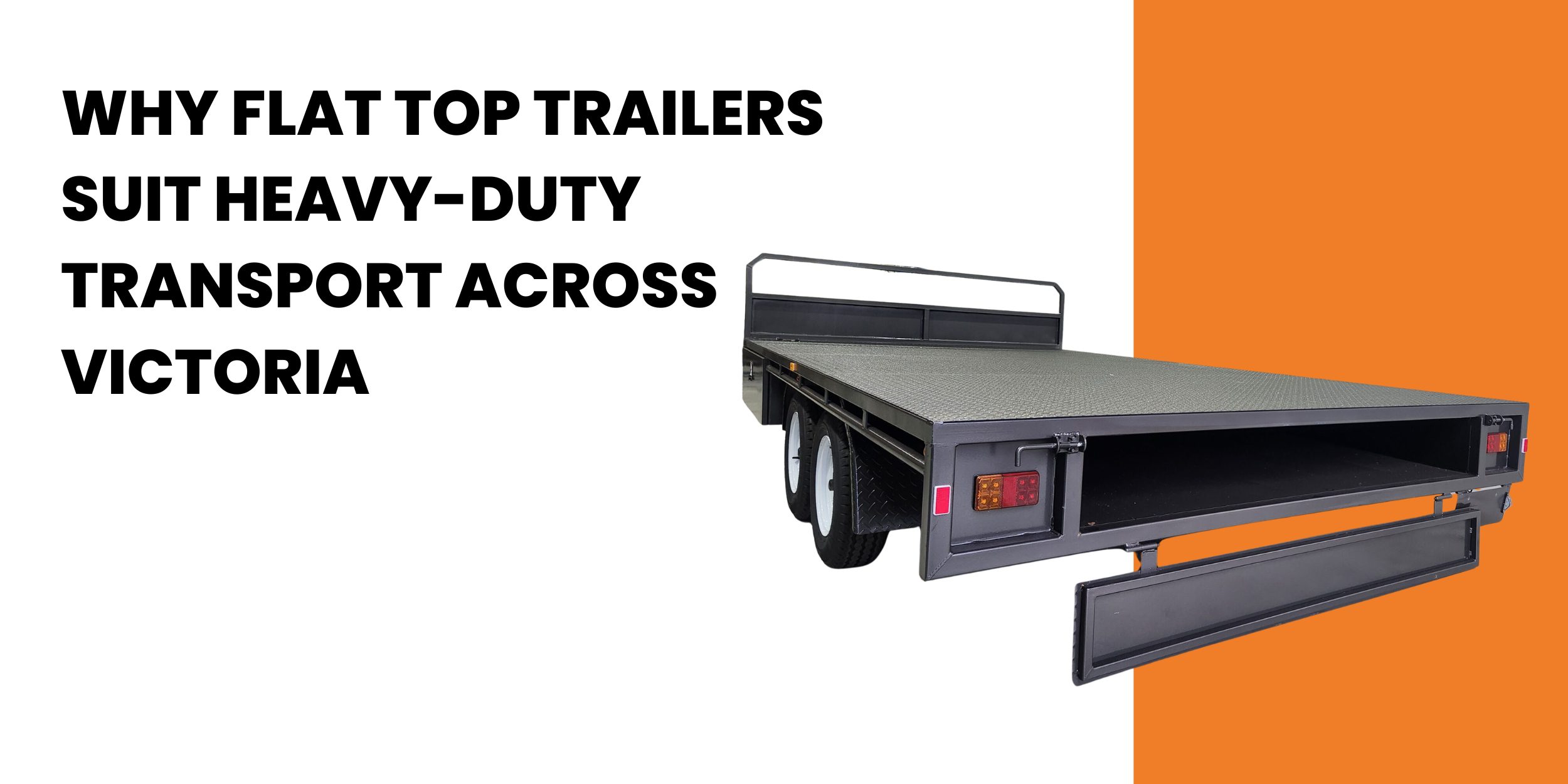
Flat top trailers suit heavy-duty transport because they provide an open, usable deck for machinery, pallets, building materials, landscaping supplies and bulky equipment. Their open layout helps with side loading, rear loading, forklift access, ramp loading and load restraint across different Victorian work conditions.
Flat top trailers suit heavy-duty transport because their open deck allows easier side loading, rear loading, forklift access, ramp loading and load restraint for machinery, pallets, building materials, landscaping supplies and bulky equipment.
This guide explains the transport problems flat top trailers help solve. It is not about choosing the cheapest trailer or comparing sales offers. It focuses on why open-deck trailer design can be useful for businesses moving heavy, wide, awkward or changing loads.
View Roshar’s flat top trailer range for Melbourne and Victoria businesses.
Reviewed by: Roshar Trailers Team
Roshar Trailers manufactures Australian-made trailers in Melbourne for trade, machinery, landscaping, construction and commercial transport applications.
Last updated: June 2026
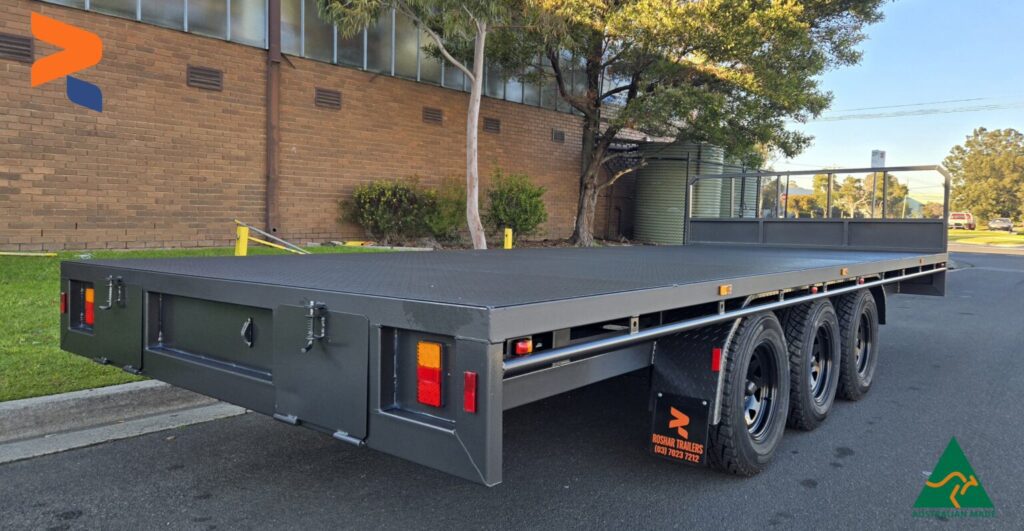
Heavy-Duty Transport Challenges In Victoria
Heavy-duty transport across Victoria can involve different conditions in the same week. A trailer may need to move through metro streets, industrial estates, construction sites, rural access roads, landscaping jobs, farms and regional worksites.
The challenge is that heavy-duty loads are not always neat or uniform. They may be:
- Long
- Wide
- Palletised
- Machinery-based
- Irregular in shape
- Difficult to lift by hand
- Repeated across multiple jobs
- Different from one worksite to the next
For example, a builder may need to move timber, steel, frames and site equipment. A landscaper may carry pavers, turf, sleepers, compact machinery and tools. A contractor may need to transport generators, compressors, pallets or mixed equipment.
A flat top trailer helps because the open deck gives more flexibility for arranging and securing these changing load types.
Common transport problems flat top trailers help solve
| Transport problem | Why it matters | How a flat top trailer helps |
| Awkward load shape | Not all materials fit inside a box trailer | Open deck gives fewer side restrictions |
| Side loading needed | Pallets or materials may need forklift access | Open sides improve loading access |
| Machinery loading | Equipment may require ramps and tie-down points | Deck layout can suit ramps and restraints |
| Mixed loads | Tools, materials and equipment may travel together | Load can be arranged across the deck |
| Long materials | Timber, steel and pipe need usable deck length | Flat layout supports longer items |
| Repeated trade transport | Daily work needs efficient loading and unloading | Layout can be matched to regular use |
Why Open Deck Access Helps Loading
Open deck access is one of the main reasons flat top trailers are useful for heavy-duty transport. Instead of loading only from the rear or working around high sides, the load can often be accessed from multiple directions.
A flat top trailer can support loading by:
- Hand, for tools and smaller materials
- Forklift, for pallets and packaged supplies
- Ramps, for machinery and equipment
- Crane or lifting equipment, for bulky or awkward items
This matters because many worksites do not have perfect loading conditions. A forklift may approach from one side. A machine may need to be driven up ramps from the rear. Long materials may need to be positioned carefully to keep the load balanced.
Open deck access compared with enclosed layouts
| Feature | Open deck flat top trailer | Enclosed or high-sided trailer |
| Side loading | Easier | Often restricted |
| Forklift access | More practical | Limited by sides or roof |
| Oversized items | Easier to position | May not fit |
| Pallet loading | More flexible | May require rear-only access |
| Load visibility | Easier to inspect | More concealed |
| Weather protection | Lower | Better |
An open deck does not replace every trailer type. Loose materials may still suit a tipper, box trailer or cage trailer better. But for heavy, bulky, palletised or awkward transport, open deck access can make loading and restraint more practical.
Carrying Machinery, Materials And Equipment
Flat top trailers are often used for loads that need a strong deck and flexible loading space. They are especially useful where the load changes across jobs.
Common loads include:
| Load type | Examples | Key consideration |
| Machinery | Compact equipment, mowers, compressors, generators | Ramp angle, tie-down points, deck strength |
| Construction materials | Timber, steel, mesh, frames, pipe | Deck length, load balance, restraint |
| Pallets | Bricks, tiles, pavers, packaged goods | Deck width, forklift access, payload |
| Landscaping supplies | Turf, sleepers, plants, pavers, bagged soil | Mixed load layout and restraint |
| Trade equipment | Toolboxes, ladders, work platforms, site gear | Storage, access and tie-down layout |
| Agricultural items | Fencing, tanks, feed, small machinery | Access, deck space and stability |
The trailer still needs to match the load rating. A load may physically fit on the deck but still be unsuitable if the payload, tyres, axles, brakes or tow vehicle capacity are not matched correctly.
For trailers with an aggregate trailer mass of 4.5 tonnes or less, Vehicle Standards Bulletin 1 Revision 6 helps manufacturers understand the Australian Design Rule requirements that apply to common trailer types. (Infrastructure Australia)
Load Restraint And Road Safety
Load restraint is critical on a flat top trailer because the deck is open. Every item must be secured so it cannot slide, bounce, shift, fall or create a hazard during transport.
Transport Victoria recommends choosing suitable restraint equipment for the load, using rated equipment where possible, and notes that chains are best suited to heavy loads while tarpaulins, cargo nets and ropes are only suited to light loads. (Transport Victoria)
The National Transport Commission also says Victoria is one of the jurisdictions where laws refer to the Load Restraint Guide for Light Vehicles. (National Transport Commission)
Flat top trailer load restraint checklist
Before towing, check that:
- The load does not exceed the trailer’s rated capacity
- The towing vehicle can safely handle the loaded trailer
- Heavy items are placed low and evenly
- Weight is balanced from side to side
- Rated straps or chains are used where appropriate
- Machinery is secured at multiple points
- Pallets cannot slide on the deck
- Long materials are bundled where practical
- Loose items cannot bounce or fall
- Straps and chains are not worn, cut or damaged
- Lights, tyres, brakes and coupling are checked before travel
Common restraint mistakes
| Mistake | Why it creates risk |
| Using light restraints for heavy loads | Equipment may not have enough lashing capacity |
| Securing only one side of the load | Load can shift during braking or turning |
| Ignoring load balance | Trailer stability can be affected |
| Leaving loose items on the deck | Items may fall from the trailer |
| Using damaged straps or chains | Restraint strength may be reduced |
| Forgetting to recheck restraints | Loads can settle or move during travel |
A flat top trailer can make loading easier, but safe transport depends on matching the load, trailer rating and restraint method.
Why Tandem Axles Matter For Heavier Loads
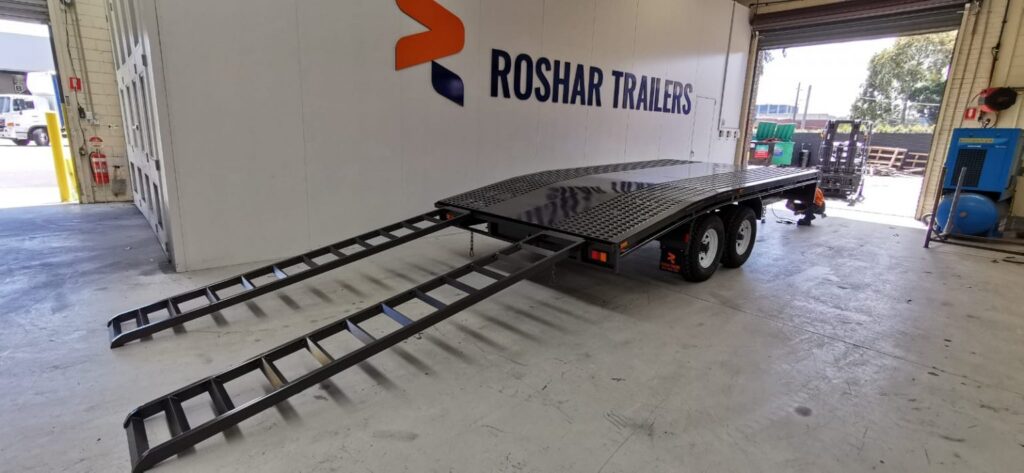
For heavier transport tasks, tandem axle trailers are often preferred because the load is spread across more wheels. This can improve load support and towing stability when the trailer is loaded correctly.
A single axle trailer may suit lighter trade loads, smaller equipment or occasional transport. A tandem axle trailer is usually more suitable where the load is heavier, more frequent or more commercial in nature.
Single axle vs tandem axle for heavy-duty transport
| Feature | Single axle flat top trailer | Tandem axle flat top trailer |
| Best suited to | Lighter loads and occasional use | Heavier or more regular loads |
| Load support | Lower | Higher |
| Stability | Moderate | Better when loaded correctly |
| Manoeuvrability | Easier to move by hand | Heavier and less nimble |
| Maintenance | Fewer tyres and components | More tyres, brakes and components |
| Typical transport use | Tools, light materials, small equipment | Machinery, pallets, construction supplies |
Axle choice should not be based on weight alone. The trailer’s chassis, tyres, suspension, brakes, deck size and towing vehicle must all suit the intended load.
VSB1 states that brakes are not required on trailers that do not exceed 750kg GTM, trailers exceeding 750kg GTM must have an efficient service braking system, over-run brakes may be used up to 2,000kg GTM, and trailers over 2,000kg GTM must have brakes operating on all wheels plus an emergency breakaway braking system. (Infrastructure Australia)
When A Custom Flat Top Trailer Makes Sense
A custom flat top trailer makes sense when the transport problem is repeated, heavy, awkward or difficult to solve with a standard trailer layout.
Customisation is not only about adding extras. It can help match the trailer to the way the load is actually handled, positioned and secured.
Consider a custom flat top trailer when:
- You regularly carry the same machine or equipment
- Your load needs specific tie-down points
- You need ramps for machinery or mowers
- You need a lower or longer ramp angle
- You often carry pallets or forklift-loaded materials
- You need a wider or longer usable deck
- You carry mixed trade loads on the same trip
- You need toolboxes, headboards or spare wheel brackets
- Your current trailer is slow or awkward to load
- Your work includes both metro and regional access conditions
Custom feature planning table
| Transport need | Custom feature to consider |
| Machinery loading | Ramps, winch points, reinforced deck |
| Heavy equipment | Tandem axles, suitable brakes, stronger chassis |
| Pallet loading | Wider flat deck, side access, tie-down layout |
| Long materials | Longer deck, headboard, load restraint points |
| Mixed loads | Toolboxes, removable sides, flexible deck layout |
| Frequent site work | Durable flooring, spare wheel, storage options |
A custom trailer should be based on the regular transport task, not just an occasional oversized load. The aim is to make heavy-duty transport safer, easier and more consistent.
Final Thoughts
Flat top trailers suit heavy-duty transport because they solve practical loading, access and restraint problems. Their open deck design can help carry machinery, pallets, construction materials, landscaping supplies and trade equipment across varied Victorian work conditions.
The right trailer setup depends on the load, deck size, axle configuration, braking requirements, restraint points, towing vehicle and how often the trailer is used.
For businesses moving repeated heavy, bulky or mixed loads, a flat top trailer can be a practical transport platform when it is properly rated, safely loaded and configured for the task.
If your business regularly moves machinery, pallets, building materials or mixed trade loads, compare Roshar’s flat top trailer options before requesting a quote.
Frequently Asked Questions
Why are flat top trailers useful for heavy-duty transport?
Flat top trailers are useful for heavy-duty transport because they provide open deck access for machinery, pallets, materials and equipment. This helps with side loading, ramp loading, load positioning and restraint.
What can a flat top trailer carry?
A flat top trailer can carry machinery, construction materials, pallets, landscaping supplies, trade equipment, agricultural items and bulky commercial loads when the trailer rating, deck size and restraint setup are suitable.
Are flat top trailers good for machinery transport?
Yes, flat top trailers can suit machinery transport when the deck size, ramp setup, payload, axles, brakes and tie-down points match the equipment being moved.
Is a tandem axle better for heavy-duty transport?
A tandem axle trailer is usually better for heavier or more regular transport because the load is spread across more wheels. However, the full setup must also match the trailer rating, brakes, tyres and towing vehicle.
How should loads be secured on a flat top trailer?
Loads should be positioned evenly and restrained using suitable equipment such as rated straps or chains where appropriate. Heavy loads should be secured at multiple points, and restraints should be checked before travel.
When should a business consider a custom flat top trailer?
A business should consider a custom flat top trailer when standard dimensions, tie-down points, ramps, deck layout or storage features do not suit the loads being moved regularly.