37 Malcolm RD, Braeside, VIC

Why Custom-Made Trailers Are Becoming a Must-Have for Australian Businesses
12 January 2026 | roshartrailers
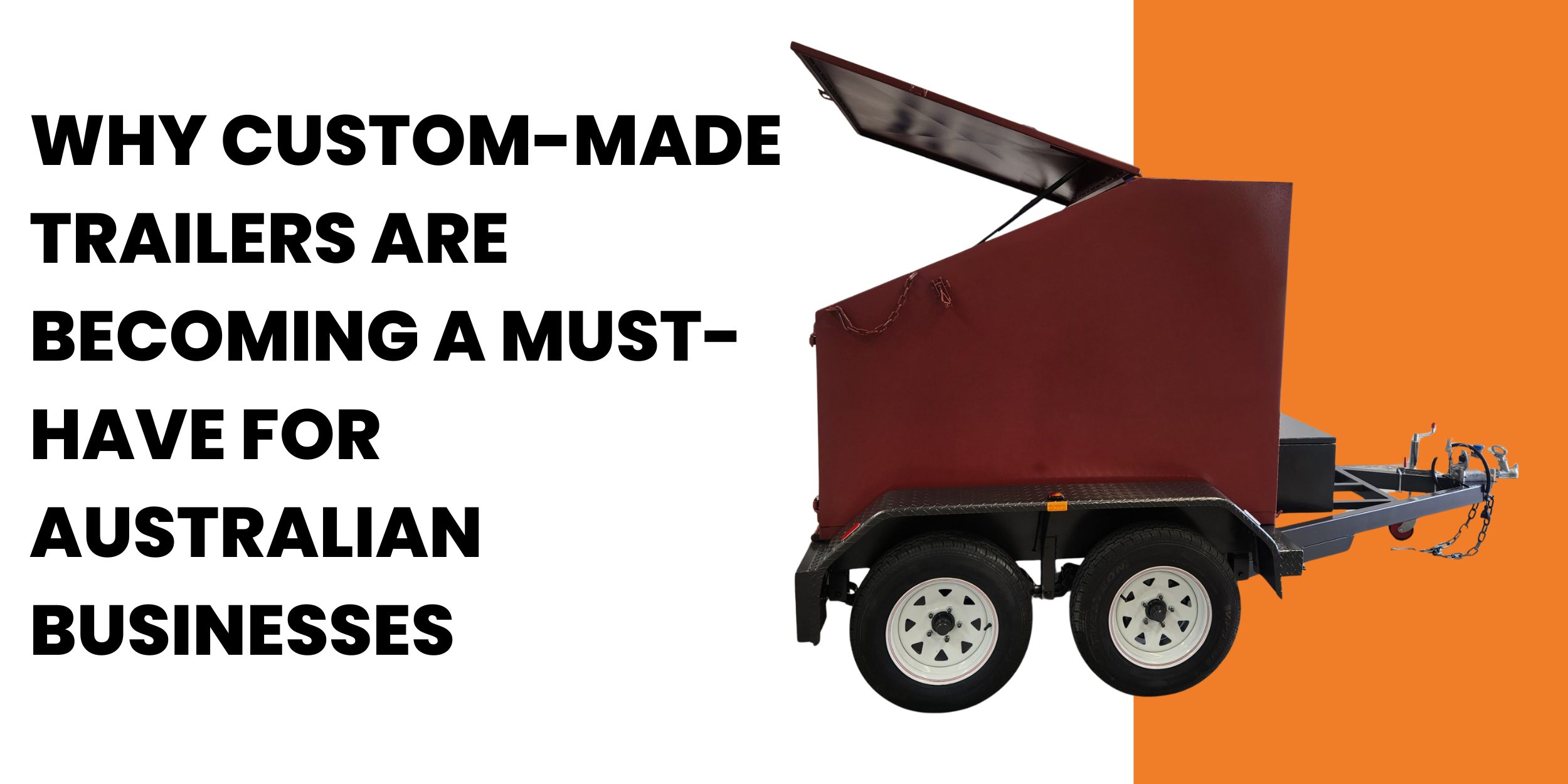
In today’s fast-paced industries, from construction and landscaping to logistics and automotive transport, Australian businesses are relying more on Custom Made Trailers to meet their growing transport and operational needs.
Across Melbourne, Dandenong, Braeside, and Bayswater, companies are realising that not every trailer suits every job. Off-the-shelf models can limit efficiency, safety, and compliance when used for specialised loads or frequent heavy-duty tasks. For this reason, custom-built trailers are becoming a preferred investment for businesses that want long-term reliability, regulatory confidence, and purpose-driven performance.
Whether transporting machinery, equipment, or trade materials, a custom trailer allows business owners to design their setup for exact dimensions, load types, and work environments, creating a safer, more efficient towing experience that meets Australian road standards.
Custom-made trailers give Australian businesses safer, more compliant, and more efficient transport solutions. As of 2026, all new trailers must be digitally registered on the RAV system under the RVSA, ensuring full traceability and ADR compliance across Melbourne and Victoria.
What Are Custom-Made Trailers?
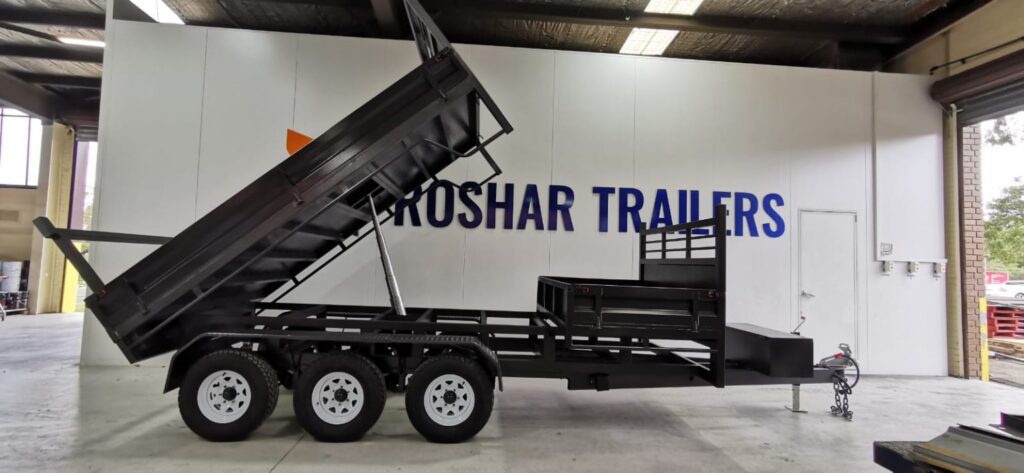
A custom-made trailer is a purpose-built transport solution designed to match the unique requirements of a business, operator, or trade. Unlike standard trailers, which come in fixed dimensions and configurations, custom trailers are built from the ground up to suit specific applications, ensuring every feature serves a practical function.
The design process begins with understanding how and where the trailer will be used, whether for carrying plant machinery, transporting vehicles, or supporting mobile worksites. From there, manufacturers can customise:
- Chassis strength and size to suit equipment weight.
- Axle configuration and suspension for balance and durability.
- Deck design and tie-down points for secure loading.
- Storage compartments and ramps to improve workflow.
- Electrical, braking, and hydraulic systems for compliance and control.
This flexibility makes custom trailers essential for Australian businesses that operate in diverse conditions and need reliable performance under demanding workloads.
Why Standard Trailers Don’t Work for Every Business
Many businesses begin with standard box or flat-top trailers, only to discover their limitations as their operations grow.
Common Challenges Include:
- Load Mismatch: Off-the-shelf trailers are not designed for heavy or irregular equipment such as compact excavators, generators, or pallets of materials.
- Poor Weight Distribution: Generic layouts can cause load imbalance, increasing the risk of sway and strain on towing vehicles.
- Limited Access: Without proper ramp angles or side openings, loading and unloading become time-consuming and unsafe.
- Non-Compliance Risks: Modifying a standard trailer to carry more weight often breaches Australian Design Rules (ADR) or Vehicle Standards Bulletin 1 (VSB1), leading to potential fines or insurance issues.
For operators working in busy zones like Dandenong’s industrial parks or along Braeside’s construction corridors, downtime caused by poorly matched trailers can quickly translate into financial loss and logistical complications.
Types of Custom-Made Trailers Businesses Use
Different industries require different trailer configurations. The following are some of the most commonly requested designs in Melbourne and surrounding regions.
Custom Flat Top Trailer
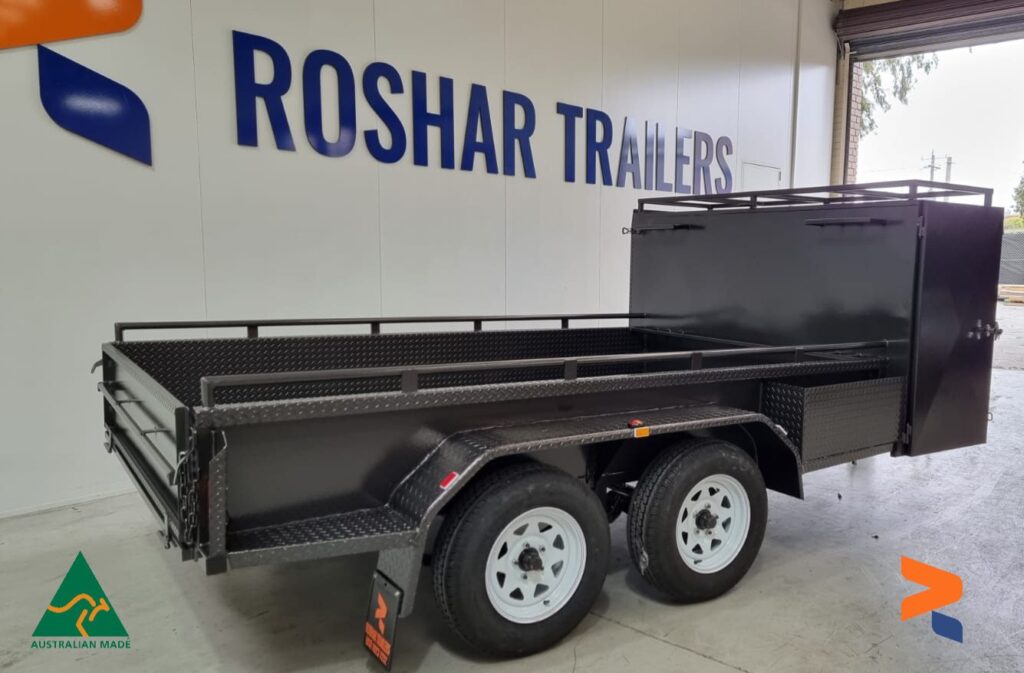
A Custom Flat Top Trailer is one of the most versatile transport options available. Designed with a wide, open deck and optional removable sides, it’s ideal for carrying machinery, construction materials, or palletised goods. The customisation often includes hydraulic ramps, reinforced steel flooring, and toolboxes integrated under the deck for convenience.
Custom Car Trailers
Custom Car Trailers are engineered for precision transport, perfect for car dealerships, motorsport teams, or automotive restorers. Features such as low-loading angles, tie-down rails, and enclosed compartments make them suitable for moving both everyday vehicles and valuable classics safely across Victoria’s highways.
Custom Box Trailer
A Custom Box Trailer provides secure, enclosed storage and transport for tools, machinery, and trade materials. Businesses in Bayswater and Dandenong commonly request built-in shelving, ladder racks, and lockable compartments, turning their trailer into a mobile workshop that supports efficiency and security on site.
Each of these trailer types can be tailored in size, weight rating, axle setup, and suspension design to match specific towing and load requirements, ensuring smooth, compliant operation under all conditions.
How Custom Trailers Improve Safety and Efficiency
Safety and efficiency are at the core of every well-designed trailer. Custom Made Trailers deliver measurable improvements in both by aligning engineering features with real-world usage.
Load Stability and Balance
Every custom trailer is designed around the specific weight and distribution of the intended load, reducing sway and preventing axle overload.
Reduced Manual Handling
Purpose-built ramps, hydraulic tilt systems, and strategically placed tie-down points streamline loading and unloading, reducing physical strain on operators.
Improved Access and Organisation
Custom shelving, drawers, and tool compartments mean less time searching for equipment and more time working efficiently on-site.
Long-Term Durability
Australian-built custom trailers are constructed using high-strength steel, advanced protective surface treatments, and heavy-duty components designed to resist corrosion, wear, and structural fatigue over years of operation.
Compliance Confidence
By meeting ADR and VSB1 standards from the start, custom trailers eliminate the need for costly post-modifications and ensure roadworthiness across Victoria.
Why Australian Conditions Make Custom Trailers More Practical
Australia’s diverse geography and climate present unique challenges for towing and transport. From Melbourne’s stop-start city driving to the rougher roads of regional Victoria, trailers must be engineered to handle it all.
- Urban Environments: In industrial zones like Dandenong and Braeside, stop-start traffic and tight site entries demand trailers with responsive braking and compact manoeuvrability.
- Regional Routes: On longer hauls to rural or regional worksites, trailers face variable road conditions, making suspension design and weight balance critical for safety.
- Weather Exposure: Trailers endure heat, rain, and UV exposure. High-grade corrosion-treated steel construction and waterproof seals help maintain structural integrity and prevent rust over time.
- Heavy Use: Frequent loading and transport across mixed environments mean that standard trailers wear out faster, while Custom Trailers Melbourne are built for high-cycle durability.
Ultimately, trailers designed for Australian conditions reduce downtime, improve operator safety, and lower long-term maintenance costs.
Common Mistakes Businesses Make When Choosing Trailers
Even experienced operators can make costly mistakes when selecting or modifying trailers.
Buying Based on Price Alone
Choosing the cheapest trailer often leads to inadequate capacity or poor-quality materials, resulting in faster wear and reduced safety.
Ignoring Compliance
Failing to verify ADR and VSB1 compliance can make the trailer illegal for use on Australian roads. Insurance claims may be denied if the trailer fails inspection.
Overlooking Growth
Businesses that underestimate future equipment or fleet upgrades often outgrow their trailers within a year, forcing premature replacement.
Modifying Unsuitable Trailers
Altering off-the-shelf models (e.g., reinforcing the chassis or adding an extra axle) can void manufacturer warranties and lead to structural failure if not professionally engineered.
The smarter approach is to invest in a custom trailer that fits current and future needs, ensuring every dollar spent contributes to safety and productivity.
When a Custom-Made Trailer Makes Sense
Not every operator requires a custom trailer, but for those who depend on their trailers daily, the benefits are clear.
Frequent or Heavy Equipment Transport
Businesses moving excavators, generators, or skid steers multiple times a week benefit from reinforced decks and hydraulic ramps.
Specialised Loads
For irregularly shaped or high-value items, such as vehicles or fragile machinery, purpose-built trailers offer the safest and most stable transport solution.
Fleet Standardisation
Companies managing multiple trailers across teams can design standardised layouts that simplify operations, maintenance, and driver training.
Long-Term Use and ROI
Custom trailers often last significantly longer than mass-produced models, reducing total ownership costs over time, a key consideration for logistics and construction firms in Bayswater and Braeside.
Technical Specifications Checklist for Custom-Made Trailers
Use this 2026-ready checklist to ensure your trailer meets ADR, RAV, and VicRoads registration standards.
1. Load & Structural Design
- Total Equipment Weight (GVM): ___________ kg
- Aggregate Trailer Mass (ATM) Rating: ___________ kg
- Chassis Material: Chassis Material: High-grade steel / Mild steel / Aluminium
- Reinforced Cross Members: Yes / No
- Floor Type: Checker plate / Smooth steel / Composite
2. Axle & Suspension System
 Axle Configuration: Single / Tandem / Tri-axle
- Axle Rating: ___________ kg per axle
- Suspension Type: Rocker roller / Independent torsion / Leaf spring
- Shock Dampening for Uneven Roads (Regional VIC): Yes / No
3. Braking & Compliance
- Brake Type: Electric / Hydraulic / Override
- Meets ADR 38/05 & VSB1 Rev 6 (2025): Yes / No
- Load Holding Valves (Anti-Drop Safety): Yes / No
- Compliance Entry on RAV (Register of Approved Vehicles): Yes / Pending
4. Electrical & Lighting
- Lighting Type: LED (ADR compliant)
- 12V Power Outlets / Auxiliary Wiring: Yes / No
- Solar or Battery System Integration: Yes / No
5. Safety & Load Restraint
- Tie-Down Points Rated to 0.8g (NHVR 2025): Yes / No
- Side Rail / Ladder Rack / Tool Storage: Specify: ___________
- Reflective Tape & Visibility Markings (VicRoads Requirement): Yes / No
6. Weather & Corrosion Protection
- Coating: Powder coat / Advanced protective coating / Marine-grade sealant
- UV & Salt Spray Tested (Coastal Operation – Braeside/Bayswater): Yes / No
- Drainage Channels / Mudguard Seals: Yes / No
7. Functionality & Access
- Ramp Type: Hydraulic / Manual fold / Detachable
- Ramp Angle (Low Clearance): ___________°
- Door / Gate Configuration: Single swing / Dual / Tilt deck
- Winch Mount / Hydraulic Tip Option: Yes / No
8. Smart Fleet Integration (Optional – 2025 Trend)
- Telematics / GPS Tracking: Yes / No
- Tyre Pressure Monitoring System (TPMS): Yes / No
- Maintenance Alerts (IoT Integration): Yes / No
9. Digital Compliance & RAV Certification
 RAV (Register of Approved Vehicles) Entry Confirmation: Yes / No
- ROVER System Record Verified: Yes / No
- Digital Compliance Certificate (Post-2026 Standard): Received / Pending
- VicRoads Registration Ready: Yes / No
Feature Comparison Table
| Feature | Off-the-Shelf Trailer | Custom-Made Trailer (2026 Ready) |
| Compliance | May require modification | Fully compliant with ADR 38/05 and RAV registration |
| Build Quality | Standard mass-production | Tailored engineering for load, road, and environment |
| Safety Systems | Basic braking | Anti-drop valves, load sensors, and ADR-certified brakes |
| Lifespan | 3–5 years | 10+ years with high-grade corrosion-treated steel frame |
| Digital Record (2026) | None | Recorded under ROVER/RAV system |
Conclusion
The demand for Custom Made Trailers is growing rapidly across Australia, and for good reason. As businesses become more specialised, their transport needs require precision-built solutions that enhance safety, compliance, and operational efficiency.
In regions like Melbourne, Dandenong, and Braeside, where industries rely heavily on daily logistics and heavy transport, custom trailers are proving to be a long-term investment that pays off in performance and reliability.
As 2026 brings stricter national trailer regulations under the RAV and RVSA systems, investing in a compliant custom-made trailer is not just smart, it’s essential. Melbourne-based builders and Victorian businesses are leading the way in safe, high-performance, and digitally certified trailer design.
Frequently Asked Questions
What are custom-made trailers used for?
Custom-made trailers are designed for specialised transport tasks such as moving machinery, vehicles, or trade equipment. They provide greater strength, stability, and usability compared to standard models.
Are custom trailers ADR compliant in Australia?
Yes, Professionally built custom trailers must meet Australian Design Rules (ADR) and Vehicle Standards Bulletin 1 (VSB1) for registration and road use. Always ensure your manufacturer provides compliance documentation.
How long does it take to build a custom trailer?
Most Australian manufacturers take 6–10 weeks depending on design complexity, materials, and workload. Larger or more specialised builds, such as hydraulic or enclosed trailers, may take longer.
Is a custom trailer worth the cost for small businesses?
While the upfront cost may be higher, custom trailers are designed for specific operations, leading to better efficiency, safety, and longevity, saving money in the long term.
Can custom trailers be designed for specific vehicles?
Yes, Many custom trailers are built for particular vehicles or fleets, including utes, trucks, or heavy equipment. This ensures proper weight distribution, towing balance, and compatibility with existing setups.
Can I get a custom trailer designed locally in Melbourne?
Several Custom Trailer Manufacturers operate across Melbourne, Dandenong, Braeside, and Bayswater, offering consultation, design, and fabrication services to meet local requirements.
How do I ensure my custom trailer is road legal in Victoria?
As of 2026, all newly manufactured and registered trailers in Australia must comply with the Road Vehicle Standards Act (RVSA) and be digitally recorded on the Register of Approved Vehicles (RAV) through the federal ROVER system.