37 Malcolm RD, Braeside, VIC
Where to Buy Trailers in Australia: Dealer vs Manufacturer vs Marketplace
24 July 2026 | roshartrailers
If you are deciding where to buy trailers in Australia, compare three channels: authorised dealers, direct manufacturers and online marketplaces. The safest choice depends on your load, budget, warranty expectations, custom needs, compliance checks and after-sales support.
Buying a trailer is not like buying a small accessory. For tradies, landscapers, contractors, farmers, vehicle owners and small businesses, the trailer often becomes part of the work system. If it is wrong for the load, the towing vehicle or the job site, it can waste time, damage gear or create safety issues.
For many buyers, the question of where to buy trailers in Australia comes down to trust. A marketplace may look cheaper. A dealer may have stock ready. A manufacturer may offer better fit-for-purpose advice. The right answer depends on how the trailer will be used after the sale.
Where to buy trailers in Australia if you need a reliable work trailer?
For reliable work use, buy from a trailer manufacturer or established trailer dealer that can explain ratings, brakes, tyres, load restraint, warranty and fit-for-purpose design. Marketplace buying can work, but it needs stricter inspection and more buyer responsibility.
A homeowner doing occasional rubbish runs may be comfortable buying a basic trailer if it is roadworthy and correctly rated. A landscaper, builder, farmer or contractor should be more careful because the trailer will carry heavier and more varied loads.
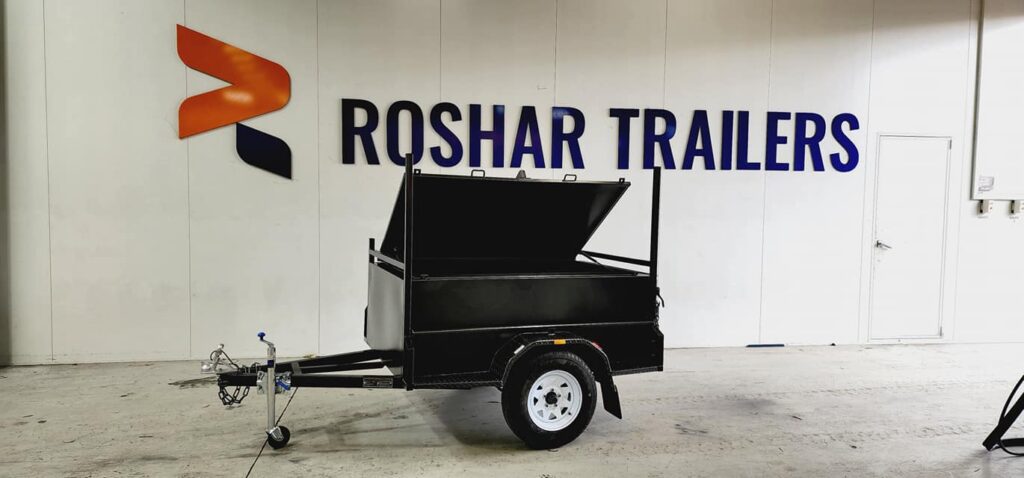
Roshar Trailers supplies Australian-made trailers for trade, business, transport and everyday use across Melbourne, including box, tandem, tipper and custom trailers. The Roshar range page also explains that buyers should consider load type, use frequency, axle setup, towing capacity and whether ramps, cages, brakes or custom features are required.
That advice matters because the purchase channel should match the use case. If you need a simple household trailer, a dealer or ready-stock page may be enough. If you need daily trade storage, machinery transport, vehicle carrying or a custom business setup, direct advice becomes more valuable.
Should you buy from a trailer dealer, manufacturer or marketplace?
Choose a dealer for convenience, a manufacturer for custom or work-specific trailers, and a marketplace only when you can inspect condition and paperwork carefully. The best buying channel is the one that reduces risk for your exact trailer use.
Most buyers compare price first. That is understandable, but it misses the real decision. A cheaper used trailer may need tyres, bearings, brakes, wiring, rust repair or registration work. A manufacturer-built trailer may cost more upfront but suit the load better. A dealer may offer faster delivery if the trailer is already in stock.
Dealer vs manufacturer vs marketplace comparison
| Buying option | Best for | Main advantage | Main risk |
| Trailer dealer | Buyers comparing multiple ready-made models | Stock access, showroom comparison and guided sales support | May have limited customisation depending on stock and supplier |
| Direct manufacturer | Tradies, landscapers, builders, farmers and business users | Better fit-for-purpose advice, custom builds and clearer build knowledge | Lead time can be longer for custom trailers |
| Online marketplace | Budget buyers and used-trailer shoppers | Lower price options and local private listings | Higher risk around condition, warranty, compliance and hidden repairs |
| Auction or clearance | Experienced buyers | Possible bargain if you know what to inspect | Limited recourse, rushed checks and unclear history |
| Imported low-cost seller | Price-sensitive buyers | Lower upfront pricing in some cases | Parts, warranty and build suitability may be harder to verify |
A realistic example: a gardener buying a used cage trailer online may save money upfront. But if the trailer has tired tyres, weak tie-down points, damaged lights and a rusted floor, it may cost more than buying a better trailer from a local supplier. For weekly business use, downtime is part of the real price.
What are the pros and cons of trailer dealers Australia-wide?
Trailer dealers Australia-wide can be a good choice when you want available stock, showroom comparison, finance options and product guidance. They are less ideal if you need a highly customised trailer, direct fabrication advice or detailed changes to suit unusual loads.
A good dealer helps you compare trailer sizes, axle setups and product categories without starting from a blank page. This suits buyers who know the general trailer type they need but still want help choosing between single axle, tandem axle, cage, tipper, car carrier or tradesman options.
Many trailer dealers Australia-wide focus on showroom choice, ready-made stock and product category browsing. That can be useful when you want to see different trailer sizes, shapes and layouts before deciding. However, the quality of advice depends on the dealer’s product knowledge, supplier access and willingness to explain the details behind the trailer.
The limitation is that dealer advice depends on the dealer’s range, supplier relationship and technical depth. Some dealers are highly experienced. Others are more sales-focused. Ask whether they can explain payload, braking, drawbar, coupling, suspension, tyre rating and load restraint for your actual job.
When a dealer makes sense
- Compare stock in person: seeing several trailers side by side helps buyers understand size, ramps, cages and storage.
- Ask about delivery time: available stock may be faster than a custom build.
- Review finance or payment options: dealers may have finance partners or payment plans.
- Check warranty pathway: ask who handles warranty claims: the dealer, manufacturer or both.
- Inspect build details: look underneath the trailer, not only at the paint and tray size.
When is buying direct from a trailer manufacturer better?
Buying direct from a trailer manufacturer is better when your load, job site or business use needs a specific design. Manufacturers can usually advise on chassis, axles, ramps, brakes, toolboxes, cages, tie-down points, dimensions and custom changes more directly.
For tradies and contractors, the trailer is often a mobile work platform. Tool security, lid design, shelves, side access and weight distribution can matter more than the basic tray size. For landscapers, cage height, tipper function and corrosion resistance may matter. For farmers, ground access and practical repairability can matter.
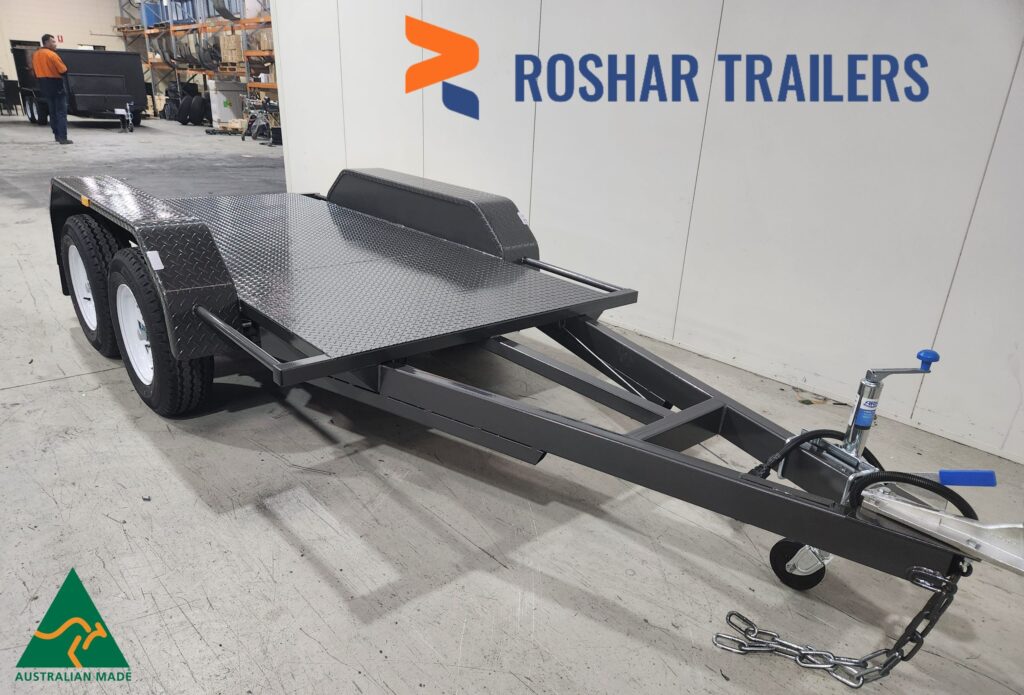
Manufacturer-led buying is often based on product knowledge and supply capability, not just a product listing. This becomes important when a buyer needs a trailer for machinery, trade tools, rural work, vehicle transport or a regular business route rather than a simple occasional load.
Roshar Trailers is positioned around practical trailer solutions for real-world use, helping buyers compare trailer types, sizes and configurations for the job. Its trailer range includes options such as box trailers, cage trailers, car carrier trailers, custom trailers, enclosed trailers, excavator trailers, flat top trailers, hydraulic tipper trailers, machinery trailers, plant trailers, tandem trailers, tiny house trailers, tradesman trailers and tri-axle trailers.
Manufacturer buying is stronger when you need:
- a trailer built around specific machinery or tools
- stronger tie-down points or ramp setup
- a trailer for daily business use
- custom dimensions, cages, racks, toolboxes or side access
- advice on payload, ATM, GTM, brakes and tow vehicle matching
- local after-sales support from the team involved in the build
Are online marketplaces safe for buying trailers?
Online marketplaces can be safe for experienced buyers, but they carry more risk than dealers or manufacturers. You need to inspect the trailer, confirm ownership, check registration details, verify ratings and budget for repairs before treating the advertised price as final.
The biggest marketplace risk is not always fraud. It is incomplete information. A listing may show a clean-looking trailer from the outside while hiding rust underneath, poor wiring, tyre age, brake faults, cracked welds, soft floors or mismatched parts.
According to the ACCC, products bought by consumers are protected by consumer guarantees, and businesses cannot take those rights away with warranty wording or store policies. The ACCC also notes that a business can be a consumer too for some purchases, including a vehicle or trailer used mainly to transport goods on public roads, subject to exceptions.
Private marketplace purchases are different from buying from an Australian business. You may have less practical support if something goes wrong. That does not mean every private trailer is bad, but it does mean inspection matters more.
Marketplace inspection checklist
- Check the compliance plate: confirm VIN/chassis number, ATM, GTM, tare and manufacturer details.
- Confirm ownership and registration: make sure the seller has the right to sell and the details match the trailer.
- Inspect the chassis and drawbar: look for cracks, bent steel, rust, poor repairs or fresh paint hiding damage.
- Check tyres and bearings: old tyres, uneven wear or noisy hubs can add immediate cost.
- Test every light: brake lights, indicators and tail lights must work before towing away.
- Look at brakes if fitted: electric or hydraulic brake issues can be expensive and unsafe.
- Inspect the floor and welds: soft floors, cracked welds and rusted seams are warning signs.
- Ask why it is being sold: vague answers are not proof of a problem, but they should make you inspect harder.
What should you check before paying for a trailer?
Before paying, check the trailer’s legal identity, rating, roadworthiness, build quality, load suitability, warranty, repair support and included accessories. A good seller should explain tare, ATM, GTM, payload, brakes, tyres, coupling, safety chains and restraint points clearly.
This is where many buyers accidentally compare unlike products. One quote may include a spare wheel, cage, upgraded tyres, jockey wheel, ramps and electric brakes. Another may not. One used trailer may be registered and roadworthy. Another may need work before it can be safely used.
According to the Department of Infrastructure, VSB 1 Revision 6 applies to trailers with an aggregate trailer mass of 4.5 tonnes or less and assists manufacturers with Australian Design Rule requirements for common trailer types. That is why compliance is not just paperwork; it affects braking, lighting, tyres, mechanical connections and road use.
According to the National Transport Commission, light vehicle loads must be properly restrained, must not overhang dangerously, must not exceed mass limits and must not cover lights, indicators, reflectors or the number plate. This should influence your trailer purchase because tie-down points, cages, headboards and load layout affect how safely you can use the trailer.
Pre-purchase trailer checklist
| Check | What to ask | Why it matters |
| Trailer identity | VIN/chassis number, compliance plate and registration status | Confirms the trailer is identifiable and saleable |
| Load rating | Tare, ATM, GTM and payload | Stops you buying a trailer that cannot legally carry your load |
| Braking | Brake type and whether it suits the loaded weight | Affects control, stopping and compliance |
| Tyres and wheels | Load rating, age and condition | Cheap tyres can become an early replacement cost |
| Coupling and chains | Rating and condition | Keeps the trailer connected safely |
| Lights and wiring | Brake lights, indicators, tail lights and plug | Required for road use and safe towing |
| Load restraint | Tie-down points, cage, headboard, racks or tarp options | Helps keep tools, machinery and loose loads secure |
| Warranty/support | Who handles issues after purchase | Important for business users who cannot afford downtime |
Which buying option suits your trailer type?
The best buying option depends on trailer type. General household trailers may be bought from dealers or marketplaces, but car carriers, tradesman trailers, plant trailers, tippers and custom business trailers usually benefit from manufacturer or specialist dealer advice.
A buyer looking for a basic home-use trailer may only need a simple trailer for sale that suits household loads, garden waste or occasional moving jobs. A mechanic or vehicle owner comparing a car trailer for sale should focus on deck length, ramps, tie-down method, braking and vehicle weight. A carpenter, electrician, plumber or landscaper should compare tradesman trailers for sale around tool storage, lid strength, side access and daily workflow.
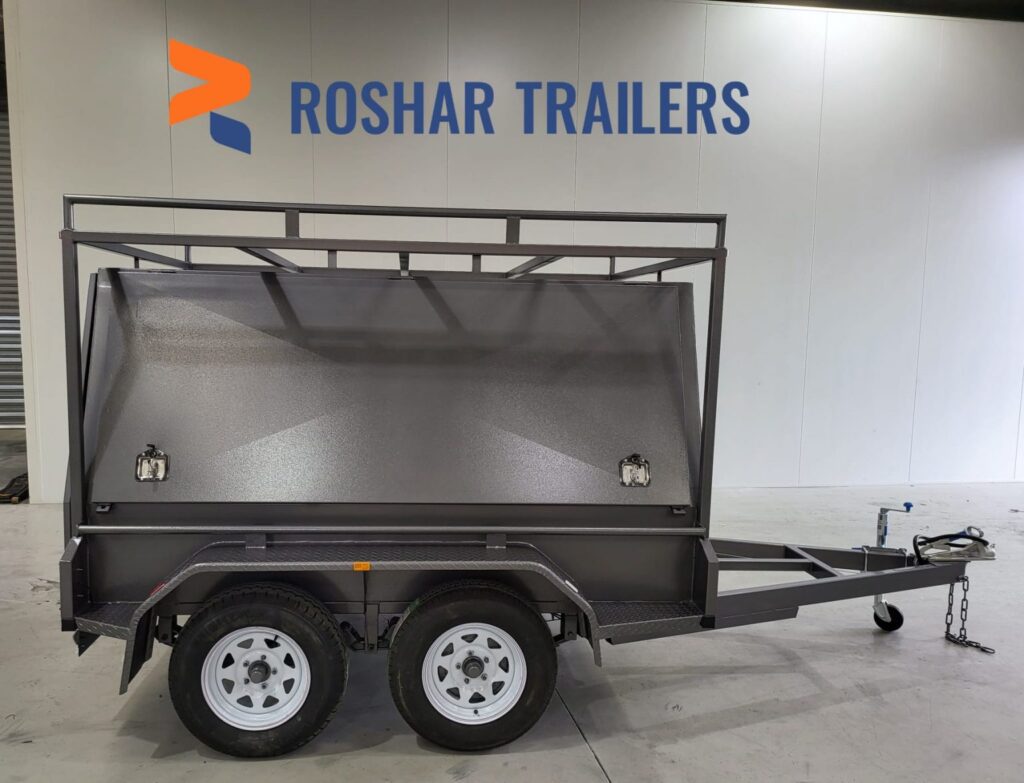
Roshar’s trailer range is useful for this matching step because it includes box trailers, cage trailers, car carrier trailers, custom trailers, hydraulic tipper trailers, machinery trailers, plant trailers, tandem trailers, tradesman trailers and more.
Trailer type matching table
| Buyer type | Better buying channel | Trailer options to compare |
| Tradies and contractors | Manufacturer or specialist dealer | Tradesman trailer, custom trailer, tandem trailer |
| Construction companies | Manufacturer | Plant trailer, machinery trailer, flat top trailer |
| Landscapers and garden businesses | Manufacturer or dealer | Cage trailer, hydraulic tipper trailer, lawn mowing trailer |
| Farmers and rural owners | Manufacturer or experienced dealer | Tandem trailer, flat top trailer, custom rural-use trailer |
| Vehicle owners and workshops | Specialist dealer or manufacturer | Car carrier trailer, flat top trailer |
| Homeowners and DIY buyers | Dealer or carefully inspected marketplace | Box trailer, cage trailer |
| Tiny house builders | Manufacturer | Tiny house trailer or custom chassis |
How should Australian buyers compare trailer quotes?
Australian buyers should compare trailer quotes by specification, not headline price. Ask each seller for the same details: size, tare, ATM, GTM, payload, axle rating, brake setup, tyre rating, finish, included accessories, warranty and delivery timing.
Quote comparison is especially important when browsing trailer dealers Australia-wide or comparing a local manufacturer against online marketplace listings. A lower quote may exclude a cage, spare wheel, upgraded jockey wheel, brakes, ramps, galvanised finish or custom tie-down points.
According to Transport Victoria, load transport must suit the equipment being carried, heavy-load headboards and racks must be strong enough, rated restraint equipment is preferred where possible, chains suit heavy loads, and loads should be stable and evenly distributed. That means a cheaper trailer without suitable load-restraint features may not be cheaper in real use.
Quote comparison process
- Write down your heaviest realistic load: include tools, attachments, ramps, fuel, water, cages and boxes.
- Confirm your tow vehicle limit: the trailer must suit the vehicle, not only the load.
- Request tare, ATM, GTM and payload in writing: payload is the usable carrying capacity after trailer weight is counted.
- Ask what is included in the quote: confirm cage, ramps, spare wheel, jockey wheel, brakes, registration and coating.
- Check warranty and support pathway: know who you call if lights, brakes, welds, latches or components need attention.
- Compare build details underneath: chassis, drawbar, axle, suspension and weld quality matter more than photos.
- Inspect before final payment: a showroom, factory or pickup inspection can reveal fit-up issues before the trailer enters service.
- Choose for long-term use: a business trailer should be priced against downtime, safety and service life, not only upfront cost.
Conclusion
The best answer to where to buy trailers in Australia is simple: buy from the channel that matches your risk level. Dealers suit convenience, manufacturers suit custom and work-use trailers, and marketplaces suit experienced buyers who can inspect condition properly.
For Victorian buyers, Roshar Trailers offers practical trailer options for trade, business, construction, landscaping, vehicle transport and everyday towing. Start with the full trailer range, then choose the buying path around your real load, towing vehicle and long-term use.
Faq’s
Do Australian Consumer Law guarantees apply to business trailer purchases?
Yes, in some cases. The ACCC says a business can be treated as a consumer when certain conditions are met, including some trailer purchases mainly used to transport goods on public roads. Keep quotes, invoices, warranty terms and seller messages in writing.
Can I buy a trailer from another state in Australia?
Yes, but check registration, transfer requirements, pickup logistics and local road authority rules before paying. Interstate buying can work well when the trailer is new and properly documented, but used trailers need extra care around identity, compliance plate details and roadworthy condition.
Should I pay a deposit before inspecting a trailer?
No, not unless the seller provides clear written specifications, business details, invoice terms and refund conditions. For private listings, avoid pressure tactics and large upfront payments. For custom builds, deposits are normal, but the quote should clearly list what is being built.
Is a pre-purchase inspection worth it for a used trailer?
Yes, especially for tandem trailers, car trailers, plant trailers or any trailer used for business. A mechanic or trailer repairer can check bearings, brakes, welds, rust, suspension, tyres, lights and coupling condition before you inherit hidden repair costs.
What warranty questions should I ask before buying?
Ask what the warranty covers, how long it lasts, who handles repairs, whether parts and labour are included, and what voids the warranty. Also ask how quickly common issues such as lights, latches, brakes or fit-up problems are usually handled.
Can I finance a trailer for business use?
Yes, many business buyers finance trailers, especially tradesman, plant, tipper and car carrier trailers. Compare the total repayment cost, not only the weekly figure. Speak with an accountant about GST, depreciation and whether the trailer should be purchased personally or through the business.
How long should I expect to wait for a custom trailer?
Custom trailer lead times vary by design, material availability, workload and complexity. A simple change may be quicker, while toolboxes, cages, hydraulic tipping, plant ramps or special dimensions can take longer. Ask for an estimated timeframe in writing before approving the order.