
37 Malcolm RD, Braeside, VIC
Flat Top Trailer Dimensions Explained: Length, Width, Load Space And Towing Fit
20 February 2026 | roshartrailers
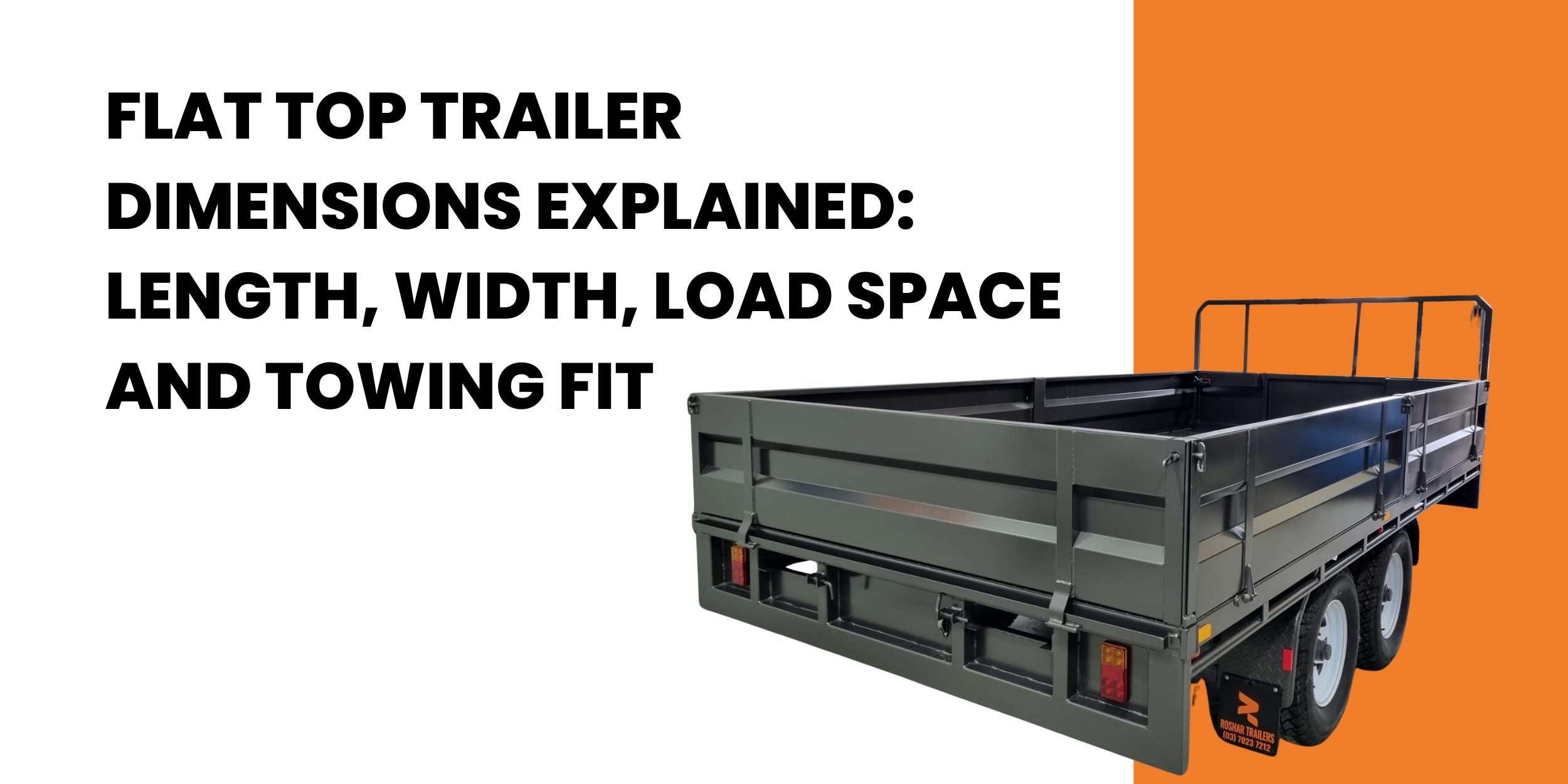
Flat top trailer dimensions affect what you can carry, how safely the load fits, how the trailer tows, and whether it can access your worksite, driveway or storage area. Before choosing a flat top trailer, it is important to compare the usable deck length, deck width, load space, axle setup, towing vehicle capacity and storage fit.
A flat top trailer is often used for machinery, pallets, timber, steel, landscaping materials, construction supplies and trade equipment. Because the trailer has an open deck, the dimensions matter more than just the outside size. You need to know how much usable space is available for the load.
To choose the right flat top trailer dimensions, measure the load length, width, height, weight and loading method first. Then compare the trailer’s deck size, usable load space, axle position, drawbar length, towing vehicle capacity, turning clearance and storage space.
For broader trailer selection advice, read Roshar’s flat top trailer buying guide for heavy loads and ADR compliance.
Reviewed by: Roshar Trailers Team
Roshar Trailers manufactures Australian-made trailers in Melbourne for trade, machinery, landscaping, construction and commercial transport applications.
Last updated: June 2026
Why Flat Top Trailer Dimensions Matter
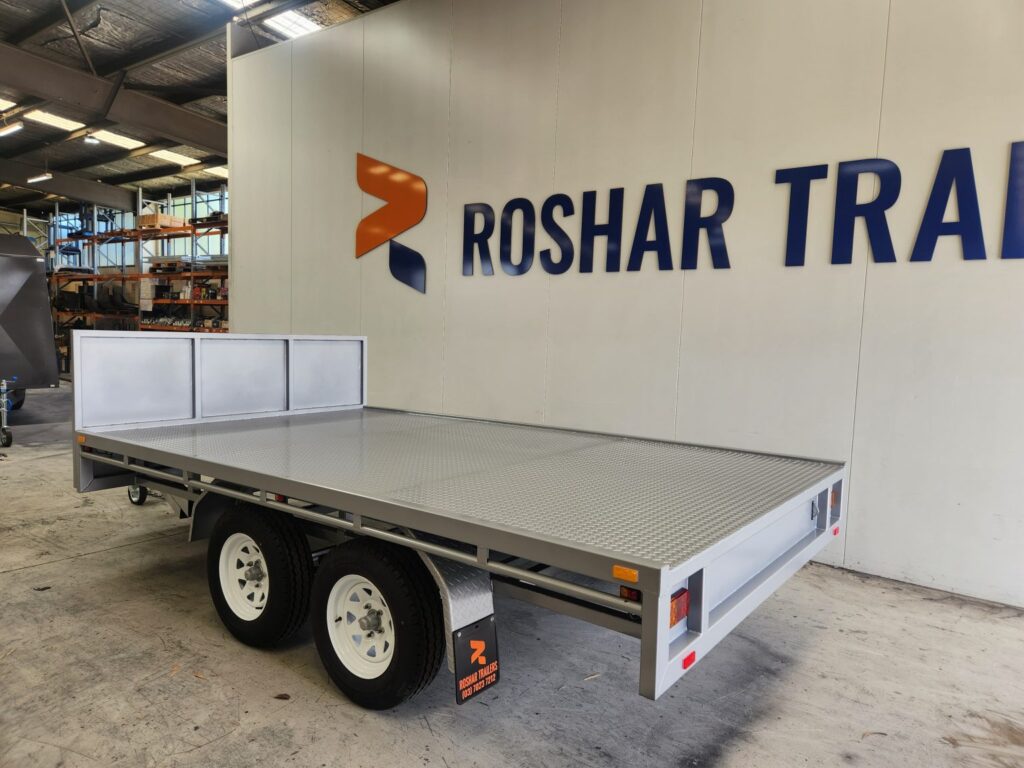
Flat top trailer dimensions matter because the trailer must suit the load, the towing vehicle and the places where it will be used. A trailer may look large enough, but small details such as wheel guards, headboards, ramps, tie-down points and drawbar length can affect how the load actually fits.
For low ATM trailers in Australia, the Department of Infrastructure explains that Vehicle Standards Bulletin 1 Revision 6 applies to trailers with an aggregate trailer mass of 4.5 tonnes or less and helps manufacturers understand applicable Australian Design Rule requirements.
The main dimensions to check
| Dimension | What it means | Why it matters |
| Deck length | The usable loading length of the trailer | Determines whether long loads fit safely |
| Deck width | The usable loading width across the trailer deck | Affects pallets, machinery and wide materials |
| Overall length | Full trailer length including drawbar | Affects towing, parking and storage |
| Overall width | Full trailer width including guards or outer edges | Affects access through gates, yards and driveways |
| Deck height | Height of the loading surface from the ground | Affects ramp angle and loading ease |
| Drawbar length | Distance from trailer body to coupling | Affects turning clearance and towing feel |
| Ramp length | Length of ramps if machinery is loaded | Affects loading angle and machinery clearance |
The most important measurement is not always the advertised trailer size. For everyday use, the usable deck space is what matters most.
Common Flat Top Trailer Lengths
Flat top trailers can be built in different lengths depending on the load. Common sizes include shorter trade trailers for tools and materials, mid-size trailers for pallets and mixed work, and longer trailers for machinery, timber, steel or commercial loads.
Common flat top trailer length guide
| Trailer length | Common use | Best suited to |
| 8 ft | Light trade and general use | Tools, small equipment, light materials |
| 10 ft | Medium worksite use | Pallets, landscaping materials, trade equipment |
| 12 ft | Heavy trade and machinery use | Machinery, timber, steel, mixed loads |
| 14 ft | Larger construction and commercial use | Long materials, bulk loads, larger equipment |
| Custom length | Repeated or specialised loads | Machinery-specific or business-specific transport |
A longer deck can be useful, but it is not always better. Longer trailers may need more turning space, more storage room and a suitable towing vehicle. They can also be harder to manoeuvre in tight sites, laneways and driveways.
How to choose trailer length
Before choosing the trailer length, measure:
- The longest item you carry regularly
- The space needed for tie-down angles
- The room needed for ramps or loading equipment
- The space needed for mixed loads
- The turning area at your worksite or home
- The storage space available when the trailer is not in use
For example, timber or steel may need extra deck length, while compact machinery may need enough space for the machine plus safe restraint points.
Common Flat Top Trailer Widths
Trailer width affects load stability, pallet fit, machinery fit and forklift access. A wider trailer may be more practical for pallets or machinery, but it may also be harder to tow through narrow entries or store in tight areas.
Common flat top trailer width guide
| Trailer width | Common use | What to consider |
| 5 ft | Light trade and smaller equipment | Easier to tow and store |
| 6 ft | General trade, pallets and materials | More usable deck space |
| 7 ft or wider | Larger machinery or custom loads | Check access, towing and storage fit |
| Custom width | Repeated load requirements | Useful when standard widths do not suit |
Width should be measured based on usable deck space and overall trailer width. Wheel guards, sides, headboards or fitted accessories may affect how the load sits on the trailer.
Width questions to ask
| Question | Why it matters |
| Do you load pallets? | Pallet loading may need more deck width and forklift access |
| Do you carry machinery? | Machine wheel track must fit safely on the deck |
| Do you use side loading? | Forklift clearance and load positioning matter |
| Do you access narrow driveways or gates? | Overall width may limit access |
| Do you carry long materials? | Width can affect how materials are stacked and restrained |
For a general-purpose flat top trailer, width should support your regular loads without making the trailer difficult to access, park or tow.
How Deck Size Affects Load Capacity
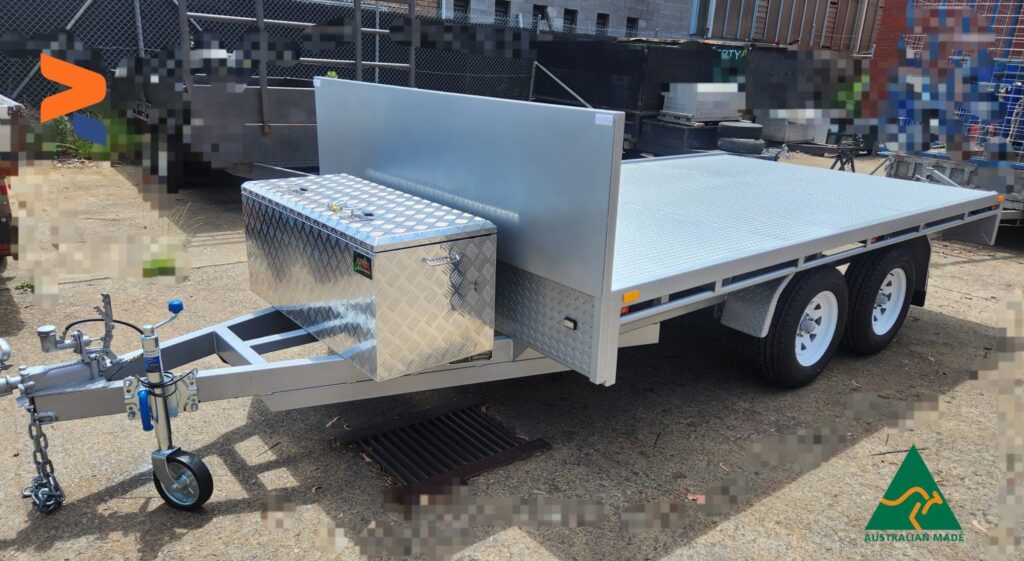
Deck size and load capacity are related, but they are not the same thing. A larger trailer deck does not automatically mean the trailer can carry more weight.
Load capacity depends on the trailer’s tare mass, ATM, GTM, payload, axle rating, tyre rating, braking setup and chassis strength. The Department of Infrastructure explains that ATM is the trailer’s total mass when carrying the maximum load recommended by the manufacturer, and VSB1 Revision 6 applies to low ATM trailers up to 4.5 tonnes ATM.
Deck size vs load capacity
| Factor | What it affects |
| Deck length | How long the load can be |
| Deck width | How wide the load can be |
| Deck height | How easily machinery can be loaded |
| ATM | Maximum loaded trailer mass |
| Tare mass | Empty trailer weight |
| Payload | How much load the trailer can carry |
| Axle rating | How much load the axle setup can support |
| Tyre rating | How much weight the tyres are rated to carry |
| Brakes | How safely the trailer can stop when loaded |
A trailer may have enough deck space for a machine or pallet load but still not have enough payload capacity. That is why dimensions should always be checked with weight ratings.
Example
If a trailer has a large deck but a limited payload, it may physically fit a heavy machine but still be unsuitable. If a trailer has the right payload but the deck is too short or narrow, the load may be difficult to position and restrain.
The safest choice is a trailer where deck size, payload and restraint points all match the load.
Matching Trailer Dimensions To Your Vehicle
Flat top trailer dimensions must also suit the towing vehicle. A trailer that is too large, too heavy or poorly matched to the tow vehicle can be harder to control, especially when loaded.
Before choosing trailer dimensions, check:
- Vehicle towing capacity
- Towbar rating
- Tow ball download limit
- Trailer ATM and GTM
- Trailer overall length
- Trailer overall width
- Turning clearance
- Rear visibility
- Brake controller requirements
- Access to loading and storage areas
Towing fit checklist
| Check | Why it matters |
| Towing capacity | The vehicle must be rated to tow the loaded trailer |
| Towbar rating | The towbar must suit the trailer load |
| Tow ball download | Too much or too little can affect stability |
| Overall trailer length | Affects turning, reversing and parking |
| Overall trailer width | Affects lane position, mirrors and access |
| Deck height | Affects ramp angle and loading safety |
| Axle position | Affects balance and towing behaviour |
The trailer should not only fit the load. It should also fit the towing vehicle’s rated limits and the driver’s normal operating environment.
Storage And Access Considerations
Storage and access are often overlooked when comparing flat top trailer dimensions. A trailer may be practical on the road but difficult to store at home, at a depot or on a worksite.
Before choosing a size, measure the spaces where the trailer will be used most often.
Spaces to measure
| Area | What to check |
| Driveway | Width, slope, turning angle and gate clearance |
| Garage or shed | Overall trailer length, width and height |
| Worksite access | Entry width, surface condition and turning space |
| Storage yard | Parking space and manoeuvring room |
| Loading area | Forklift access, ramp space and overhead clearance |
| Roadside parking | Trailer length and visibility when parked |
A larger trailer may be useful for load space, but it can become frustrating if it is difficult to reverse, park or store.
Practical storage questions
Ask yourself:
- Can the trailer fit through the gate?
- Can it be reversed safely into position?
- Is there enough room to open ramps?
- Is the storage surface level and stable?
- Will the trailer block access to vehicles or equipment?
- Can it be safely parked when loaded?
- Can it be moved by hand if needed?
For tradies and businesses, storage fit can affect daily efficiency as much as deck size.
When To Choose A Custom Size
A custom flat top trailer size can make sense when standard dimensions do not match the load or worksite requirements. This is especially useful for businesses that carry the same type of load regularly.
Choose a custom size when:
- Standard trailer lengths are too short for regular loads
- Standard widths do not suit pallets or machinery
- The load needs specific tie-down locations
- Ramp angle needs to suit machinery clearance
- The trailer must fit a particular storage space
- Forklift side-loading is required
- Toolboxes, headboards or ramps reduce usable deck space
- The business carries mixed loads on the same trip
- The trailer must suit a specific towing vehicle
Custom size planning table
| Requirement | Dimension to review |
| Long timber, pipe or steel | Deck length |
| Pallet loading | Deck width and side access |
| Machinery loading | Deck length, width, height and ramp angle |
| Limited storage space | Overall length and width |
| Tight worksites | Turning clearance and overall size |
| Mixed business loads | Usable deck space and tie-down layout |
| Low-clearance equipment | Deck height and ramp length |
A custom size should be based on repeated practical needs, not just occasional oversized loads. The best trailer dimensions are the ones that make daily loading, towing, storage and restraint easier.
For tailored deck layouts and build configurations, compare Roshar’s custom flat top trailer sizes.
Final Thoughts
Flat top trailer dimensions affect more than load space. They influence loading, towing, braking, storage, access, turning clearance and how safely the load can be restrained.
Before choosing a trailer size, measure the load first. Then compare deck length, deck width, usable load space, overall trailer size, tow vehicle fit, storage access and weight ratings.
For many tradies and businesses, the right trailer is not the largest option. It is the size that fits the regular load, towing vehicle and daily work environment.
Frequently Asked Questions
What are common flat top trailer dimensions?
Common flat top trailer dimensions include sizes such as 8×5, 10×6, 12×6 and 14×6, with custom sizes available for specific machinery, pallet, trade or commercial transport needs.
What does 10×6 mean on a flat top trailer?
A 10×6 trailer generally refers to a trailer with an approximate deck size of 10 feet long by 6 feet wide. Always check the usable deck space, as accessories such as headboards, ramps and wheel guards may affect load placement.
Is a wider flat top trailer better?
A wider flat top trailer can be better for pallets, machinery and bulky loads, but it may be harder to access, store and tow through narrow areas. The best width depends on the load and where the trailer will be used.
Does a bigger flat top trailer carry more weight?
Not always. A bigger deck gives more load space, but carrying capacity depends on ATM, GTM, payload, axles, tyres, brakes and chassis strength. Deck size and load capacity should always be checked together.
What trailer size is best for machinery?
The best trailer size for machinery depends on the machine’s length, width, weight, wheel track, loading method and tie-down requirements. The trailer must have enough deck space, suitable ramps and the correct weight rating.
How do I know if a trailer will fit my vehicle?
Check your vehicle’s towing capacity, towbar rating, tow ball download limit, mirror visibility, braking requirements and the loaded trailer’s ATM and GTM. The trailer should match both the load and the tow vehicle.
Should I choose a custom flat top trailer size?
Choose a custom size when standard trailer dimensions do not suit your regular load, storage area, loading method, tie-down layout or towing vehicle requirements.