
37 Malcolm RD, Braeside, VIC
8 Common Trailer Tyre Problems and How to Spot Them
21 September 2026 | roshartrailers
By Writer :- Ron
By Roshar Trailers Team, Trailer Manufacturing and Sales Specialists
Published: 21/09/2026
Trailer tyres are easy to overlook because they often receive less attention than the tow vehicle’s tyres. Yet they carry the trailer’s load, stay exposed to road debris and can spend long periods sitting in the same position.
For Australian tradies, contractors, landscapers, farmers, vehicle owners and homeowners, tyres can face very different conditions. A work trailer may travel every day between Melbourne job sites, while a home trailer might sit unused for weeks.
That difference matters.
A trailer that looks fine in the driveway can develop pressure loss, sidewall deterioration or uneven wear that only becomes obvious after it is loaded.
Transport Victoria states that road-use tyres must be suitable for normal road use, have the required tread depth and be free from damage such as deep cuts, cracks and bulges. It also recommends regularly checking and adjusting tyre pressure to the recommended level.
This guide explains the most common trailer tyre problems, what each one can tell you and what to do before the next tow.
What are the most common trailer tyre problems?
The most common trailer tyre problems include uneven wear, incorrect inflation, sidewall cracking, flat spots, overloading, punctures and age-related deterioration. The important point is that visible tyre wear can sometimes be a symptom of a deeper suspension, axle, alignment or loading problem.
| Problem | What you may notice | What it can indicate | First action |
| Uneven wear | One edge wears faster | Alignment, suspension or load issue | Inspect running gear |
| Low pressure | Outer edges wear faster | Air loss or incorrect inflation | Check pressure cold |
| High pressure | Centre tread wears faster | Incorrect inflation | Confirm recommended pressure |
| Cracks | Fine lines in sidewall/tread | Age, exposure or deterioration | Stop and assess condition |
| Flat spots | One section looks worn | Long storage or locked wheel | Inspect tyre and brakes |
| Overload | Rapid or abnormal wear | Excessive load | Check actual trailer load |
| Puncture | Slow pressure loss | Nail, screw or sharp object | Inspect before towing |
| Age deterioration | Hard rubber, cracks, damage | Long-term ageing | Seek replacement assessment |
The pattern matters because the same tyre can be showing the result of two different problems.
For example, replacing a tyre with severe inner-edge wear may solve the immediate tyre issue, but if the axle or suspension remains misaligned, the replacement can develop the same pattern.
1. What does uneven trailer tyre wear mean?
Uneven trailer tyre wear means the tread is wearing at different rates across the tyre or compared with another trailer tyre. Common causes include incorrect inflation, axle misalignment, suspension wear, excessive loading, damaged components or poor load distribution.
Inside-edge wear
If the inside shoulder is wearing significantly faster than the rest of the tread, possible causes include alignment, axle or suspension problems.
The important point is not to assume the tyre itself is the only problem.
Outside-edge wear
Outside-edge wear can be associated with under-inflation, alignment issues or loading conditions.
Check the pressure first, then investigate the trailer if the pattern persists.
Centre tread wear
A tyre that wears primarily through the centre can indicate excessive inflation for the operating condition.
The correct pressure should come from the trailer or tyre manufacturer’s recommendation rather than a generic number.
Wear across opposite tyres
If one tyre wears differently from the tyre on the other side of the axle, investigate alignment, suspension, wheel-end components and load distribution.
The most useful way to think about uneven trailer tyre wear causes is:
Pattern → mechanical clue → inspection → correction
The Trailer Caravan Service Man similarly identifies inside-edge, outside-edge and diagonal wear as useful clues for alignment, suspension, pressure and axle problems.
A practical scenario
Imagine a tandem trailer used every day by a landscaper. One tyre starts wearing on its inside edge while the others look normal.
The first reaction might be to replace the tyre.
A better approach is to ask:
- Is the axle aligned?
- Has the trailer hit a kerb or pothole?
- Are suspension components worn?
- Is the trailer being overloaded?
- Is the tyre pressure correct?
The tyre may be the messenger rather than the cause.
2. How does under-inflation damage trailer tyres?
Under-inflation allows a tyre to flex more than intended and can increase heat and abnormal wear. It can also reduce the tyre’s ability to carry its rated load under the applicable conditions, making regular pressure checks particularly important before towing.
Transport Victoria recommends regularly checking and adjusting tyre pressure to the recommended pressure.
Signs of under-inflation can include:
- Outer-edge tread wear
- Excessive sidewall flex
- A visibly soft tyre
- Pressure that drops repeatedly
- Increased heat after towing
A slow leak should never be treated as a pressure-maintenance issue alone.
If the pressure keeps falling, find the reason.
Possible causes include:
- Puncture
- Damaged valve
- Rim problem
- Bead leak
- Tyre damage
What should you do?
Check the pressure when the tyre is cold, inspect for visible damage and investigate any unexplained pressure loss before towing.
3. Can over-inflation cause trailer tyre wear?
Yes, excessive inflation can change the tyre’s contact patch and contribute to centre tread wear. The solution is not to guess a lower pressure; use the pressure specified for the trailer, tyre and operating conditions.
A common mistake is treating the maximum pressure printed on a tyre as the universal operating target.
That is not necessarily the correct pressure for your trailer.
Big Man Trailer’s pressure guide also recommends checking tyres when cold and warns that the number printed on the tyre is a maximum rather than automatically the correct operating pressure.
Watch for these signs
- Faster centre tread wear
- Harsh ride
- Pressure significantly above the recommended setting
- Different pressure between tyres on the same axle
If you regularly change between empty and heavily loaded towing, follow the relevant manufacturer’s instructions rather than making an informal pressure adjustment.
4. What do cracks, cuts and sidewall damage mean?
Cracks, deep cuts, bulges or exposed internal material are serious tyre warning signs. They can result from ageing, impact, weather exposure or other damage, and a damaged tyre should be assessed before the trailer is used on the road.
Sidewall damage deserves particular attention because the sidewall flexes during towing.
Check:
- Both sidewalls
- Inner sidewall
- Outer sidewall
- Tread surface
- Tread grooves
- Around the bead
- Between dual or closely spaced components where applicable
The inside sidewall is easy to miss because it is difficult to see without getting down beside the trailer.
Transport Victoria specifically states that tyres should be free from deep cuts, cracks, bulges and other defects likely to cause failure, and that tyres with this type of damage or deterioration must be removed from the vehicle.
Don’t confuse dirt with deterioration
A dusty tyre can look older than it is.
Clean the surface and inspect it properly.
If you can see cracking in the rubber, bulging, exposed cords or significant structural damage, don’t rely on tread depth to decide whether the tyre is safe.
5. Why do trailer tyres develop flat spots?
Trailer tyres can develop flat spots when a trailer remains stationary for extended periods, particularly when loaded or stored in one position. Flat spotting may also occur after a wheel locks during braking or from other mechanical problems.
This is particularly relevant for:
- Boat trailers
- Car trailers
- Seasonal trailers
- Farm trailers
- Spare or infrequently used trailers
A trailer can sit for weeks while its tyres carry the same load in the same position.
What does a flat spot look like?
Rotate the tyre slowly and inspect the tread.
You may notice:
- One section that looks flatter
- Repeated vibration after storage
- A rhythmic sensation while towing
- Localised tread damage
If the trailer develops vibration after sitting unused, inspect the tyres rather than assuming the tow vehicle is responsible.
6. Can overloading cause trailer tyre problems?
Yes, overloading can accelerate tyre wear and place additional stress on tyres, axles, suspension and other trailer components. The tyre must have an appropriate load rating, and the trailer must remain within its applicable mass limits.
The Australian Government’s trailer guidance defines ATM as the trailer’s total mass when carrying the maximum load recommended by the manufacturer and explains that trailer categories and compliance requirements are tied to mass ratings.
This matters for working trailers.
A tradie may load:
- Tools
- Materials
- Equipment
- Spare parts
- Ramps
- Fuel
- Water
- Toolboxes
The trailer itself also has weight.
The simple mistake
A trailer may appear to have plenty of physical space remaining while already approaching its allowable mass.
That is why load capacity should be checked by weight, not by how full the trailer looks.
Check the tyre load rating
Transport Victoria notes that tyre load and speed ratings need to be appropriate for the vehicle.
If you are changing tyre size or specification, confirm compatibility instead of assuming a larger-looking tyre automatically provides a suitable upgrade.
7. How can you spot a trailer tyre puncture or embedded object?
A puncture can appear as obvious air loss or as a slow leak that only becomes noticeable after several days. Nails, screws and other road debris can remain embedded in the tread while the tyre gradually loses pressure.
Look for:
- Nails
- Screws
- Metal fragments
- Cuts
- Puncture marks
- Valve damage
- Slow pressure loss
Do not simply remove an embedded object and continue towing.
Removing it can change the rate of air loss.
A useful owner check
Check the pressure before towing and compare it with your previous reading.
If one tyre repeatedly loses pressure while the others remain stable, investigate the tyre, valve, rim and wheel assembly.
For a commercial trailer, a recurring slow leak should be resolved rather than managed by repeatedly adding air.
8. How does tyre age affect trailer safety?
Trailer tyres can deteriorate with age even when they have plenty of visible tread. Sun exposure, heat, storage conditions, moisture, inactivity and general rubber deterioration can affect tyre condition, so owners should inspect age-related condition rather than relying only on tread depth.
This is particularly important for trailers that are used occasionally.
A trailer may have low kilometres but still have older tyres.
Check for:
- Sidewall cracking
- Hardened-looking rubber
- Tread cracks
- Bulges
- Deformation
- Deterioration around the bead
- Unknown tyre history
There is no single replacement age that should be applied blindly to every trailer tyre. Condition, manufacturer guidance, operating conditions and tyre history all matter.
For that reason, when to replace trailer tyres should be decided using both visible condition and manufacturer guidance rather than kilometres alone.
How can you tell whether a trailer tyre needs immediate attention?
A trailer tyre needs immediate attention when it has a serious cut, bulge, exposed cord, significant crack, severe tread damage, rapid pressure loss or another defect that could cause failure. If a tyre looks structurally compromised, don’t rely on a short-distance trip to “see how it goes”.
Stop and inspect when you notice:
- Sudden pressure loss
- Strong vibration
- A bulge
- Exposed cords
- Severe tread separation
- Deep sidewall cuts
- Rapid uneven wear
- Tyre damage after an impact
- One tyre becoming significantly hotter than expected
A realistic workshop-style scenario is a work trailer returning from a long job with one tyre noticeably hotter and more worn than its partner. The useful response is not simply to fit a replacement tyre. The wheel end, brake condition, bearing, suspension, alignment and load should also be considered.
Tyre damage plus an unexplained mechanical symptom is a reason to investigate the system.
What tyre pressure should you use before towing?
Use the pressure specified by the trailer or tyre manufacturer for the tyre, load and operating conditions. Check pressure when the tyres are cold and do not substitute the maximum sidewall pressure for the manufacturer’s recommended operating pressure.
Your trailer tyre pressure before towing should be checked before the trip rather than after several kilometres of highway travel.
Pressure-check routine
- Let the tyres cool.
- Remove the valve cap.
- Use a reliable pressure gauge.
- Check every trailer tyre.
- Compare readings.
- Inflate or adjust to the recommended pressure.
- Inspect for visible damage.
- Replace the valve cap securely.
Do not assume that all tyres on different trailers require the same pressure.
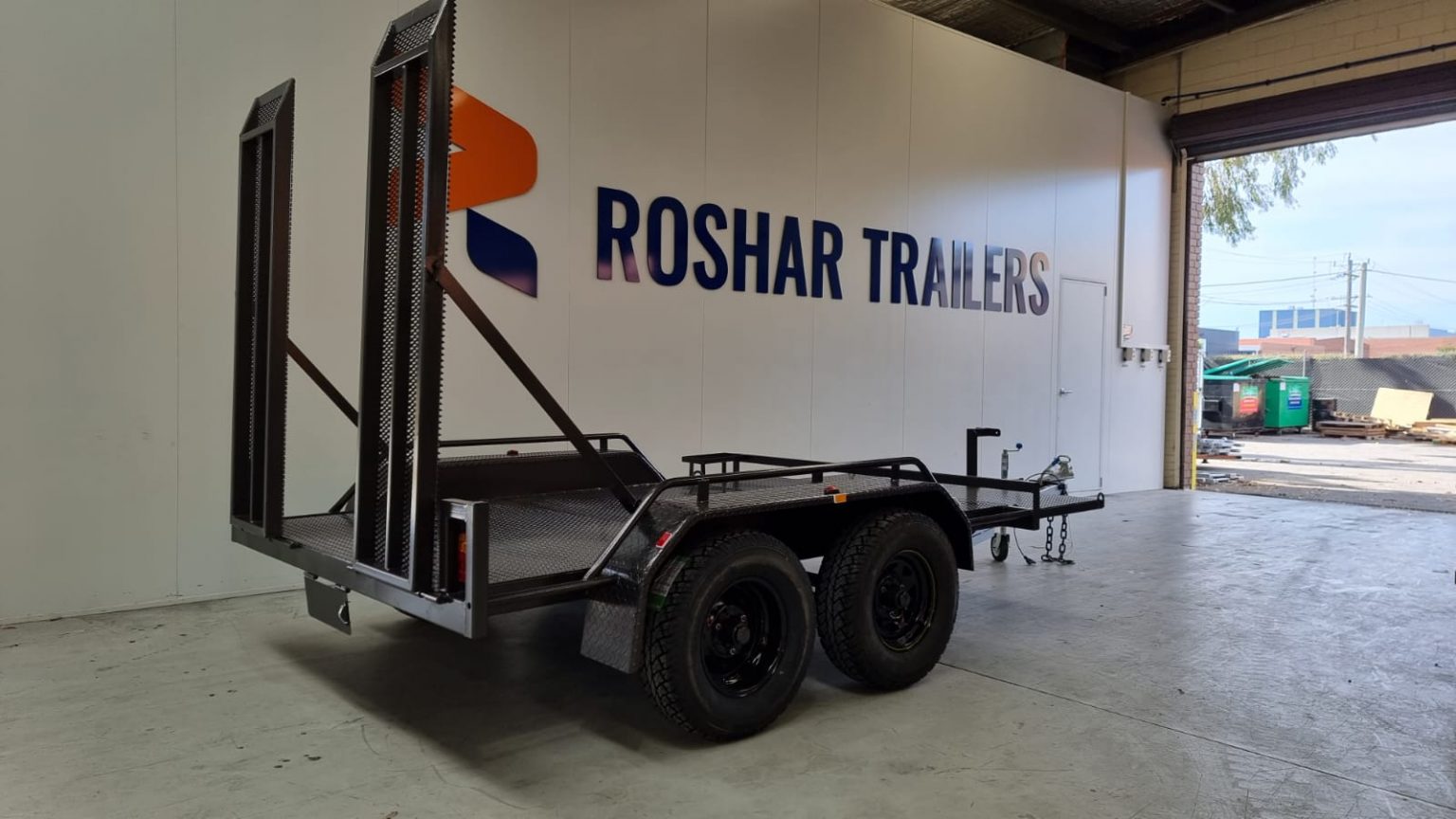
A light box trailer, tandem work trailer and heavy machinery trailer can have very different tyre specifications.
TyreSafe’s trailer guidance also explains that load ratings depend on tyres being in good condition and correctly inflated, reinforcing the relationship between pressure and carrying capacity.
When should you replace trailer tyres?
Replace a trailer tyre when it reaches the applicable wear limit, has structural damage or deterioration, repeatedly loses pressure, develops serious cracking, exposes internal material or otherwise fails the manufacturer’s or roadworthiness requirements.
Transport Victoria states that road tyres must have at least 1.5 mm tread depth in the principal grooves and must not have excessive uneven wear; it also requires damaged or deteriorated tyres likely to cause failure to be removed.
However, tread depth is only one part of the decision.
Replace or professionally assess a tyre when you see:
| Sign | Why it matters |
| Tread at wear indicators | Indicates the tyre has reached its wear limit |
| Deep cracks | Can indicate structural deterioration |
| Bulge | May indicate internal structural damage |
| Exposed cords | Serious structural damage |
| Severe uneven wear | May indicate a mechanical fault |
| Repeated pressure loss | Possible puncture, valve or rim problem |
| Tread separation | High-risk tyre failure warning |
| Unknown or questionable history | Condition cannot be confidently established |
Don’t fit a new tyre and ignore a mechanical problem that caused the old one to fail.
If a replacement tyre immediately begins wearing on the same edge, the underlying cause needs attention.
What should a trailer tyre inspection include?
A trailer tyre inspection should cover pressure, tread, sidewalls, valves, load rating, visible damage, uneven wear, embedded objects and the condition of every tyre, including the spare. It should be completed before towing and repeated after unusual impacts or demanding work.
Trailer tyre inspection checklist
Before towing:
- ☐ Check cold tyre pressure
- ☐ Inspect tread condition
- ☐ Check sidewalls
- ☐ Look for cracks
- ☐ Look for bulges
- ☐ Check for cuts
- ☐ Look for embedded objects
- ☐ Compare left and right wear
- ☐ Check valve condition
- ☐ Confirm tyre load rating
- ☐ Check wheel nuts as part of the trailer’s broader pre-tow inspection
- ☐ Inspect the spare tyre
- ☐ Check for obvious rubbing or clearance issues
After an impact
If the trailer hits a substantial pothole, kerb or object, inspect the tyre and wheel area even if the tyre still appears inflated.
A tyre can be damaged without immediately losing air.
Uneven wear should also be investigated because axle misalignment can produce abnormal tyre patterns. Trailer alignment specialists identify misalignment as a contributor to uneven wear and handling problems.
How often should trailer tyres be checked?
Trailer tyres should be visually checked before every tow, with pressure checked when cold according to the manufacturer’s recommendations. More detailed inspections should be scheduled according to use, storage, load, distance and operating conditions.
| Trailer use | Basic owner check | Extra attention |
| Occasional household trailer | Before every tow | After long storage |
| Regular tradie trailer | Before loaded trips | Frequent wear comparison |
| Landscaping trailer | Before loaded runs | After heavy or wet work |
| Farm trailer | Before road use | After rough paddock work |
| Plant trailer | Before machine transport | After loading incidents |
| Car trailer | Before each vehicle move | Before long-distance towing |
| Tandem trailer | Before loaded towing | Monitor both axles for wear |
| Heavy work trailer | Before every significant trip | Shorter inspection intervals based on use |
The harder a trailer works, the more useful consistent inspection becomes.
What are the best trailer tyre maintenance tips?
The best trailer tyre maintenance tips are simple: maintain recommended pressure, avoid overloading, inspect tyres regularly, protect stored trailers from unnecessary exposure, investigate uneven wear and replace damaged tyres before road use.
1. Check pressure consistently
Do not wait for the tyre to look flat.
Small pressure differences can be difficult to spot visually.
2. Keep loads within the trailer rating
Overloading affects more than tyres. It can place additional stress on axles, suspension, brakes and the chassis.
3. Don’t ignore uneven wear
A tyre wearing differently from its partner is useful information.
Find out why.
4. Inspect after rough use
If a trailer has travelled through construction sites, gravel, paddocks or areas with potholes and debris, give the tyres an additional inspection.
5. Protect stored trailers
Long periods of outdoor exposure can accelerate deterioration.
Where practical, store the trailer in a suitable sheltered location and follow tyre manufacturer’s storage recommendations.
6. Keep records
For a business trailer, record:
- Tyre brand
- Size
- Load rating
- Installation date
- Pressure
- Replacement date
- Unusual wear
- Repairs
This creates a simple history that can help identify recurring problems.
What should you do when a trailer tyre keeps wearing unevenly?
When a trailer tyre repeatedly wears unevenly, inspect the complete running gear instead of repeatedly replacing the tyre. Check pressure, load distribution, axle alignment, suspension, wheel bearings and evidence of impact damage before fitting another replacement.
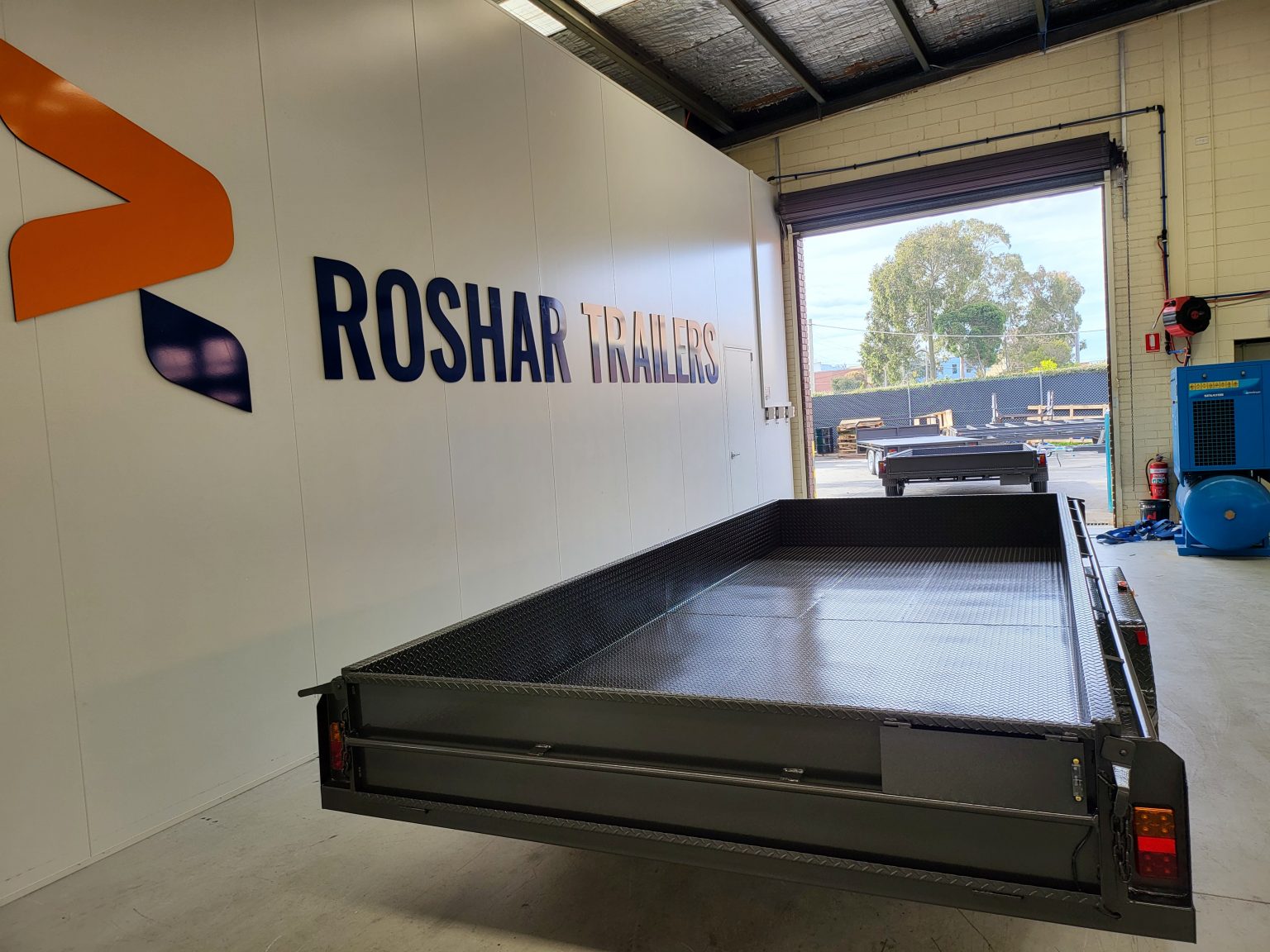
This is particularly important on tandem trailers, where multiple axles and suspension components create more opportunities for a mechanical issue to show up as an unusual wear pattern.
Pattern-to-action framework
| What you see | First question | Next step |
| Inside-edge wear | Is the axle/suspension aligned? | Professional inspection |
| Outside-edge wear | Is pressure correct? | Pressure + alignment check |
| Centre wear | Is inflation too high? | Confirm recommended pressure |
| One tyre wears faster | Is load distribution even? | Compare running gear |
| Diagonal wear | Has the axle shifted? | Alignment inspection |
| Repeated flat spot | Is braking or storage involved? | Inspect brakes and tyre |
| Cracking | Is the tyre deteriorating? | Replacement assessment |
| Repeated pressure loss | Where is the air escaping? | Leak inspection |
This framework is intentionally diagnostic: identify the pattern first, then investigate the cause.
How do trailer tyres connect with the rest of the trailer?
Trailer tyres should not be treated as an isolated component because pressure, load, suspension, bearings, axles, brakes and alignment all affect how the tyre performs. A tyre can reveal a problem elsewhere in the trailer before another component becomes visibly damaged.
For example:
Suspension problem → wheel position changes → irregular contact → uneven tyre wear
Or:
Overloading → increased component stress → abnormal tyre behaviour → accelerated wear
This is why tyre inspection should sit alongside broader trailer servicing rather than being treated as a separate task.
Roshar Trailers’ current site identifies repairs and maintenance as one of its services and offers trailers across single-, tandem- and tri-axle configurations.
If a recurring tyre problem is accompanied by suspension noise, poor tracking, braking symptoms or unusual wheel movement, a broader inspection is more appropriate than simply replacing rubber.
When should you get professional trailer repairs?
Professional trailer repairs are appropriate when tyre wear keeps returning, a tyre has structural damage, the trailer pulls or vibrates, a wheel becomes unusually hot, or you suspect an axle, suspension, bearing or brake problem.
A tyre replacement is straightforward when the tyre is simply worn out.
It becomes a different problem when the replacement is being used to hide a mechanical fault.
Book an inspection when you notice:
- Repeated uneven wear
- Wheel wobble
- Persistent vibration
- Abnormal heat
- Suspension damage
- Bent components
- Bearing noise
- Brake-related tyre damage
- Repeated punctures
- Tyre rubbing against trailer components
For Melbourne owners who need help assessing a trailer, Roshar has locations in Braeside, Bayswater North and Dandenong, with contact details published on its current contact page.
Conclusion
Trailer tyre problems are often easier to manage when they are spotted early. Check pressure, tread, sidewalls, load rating and wear patterns before towing, and treat unusual wear as a possible clue to a larger trailer problem.
For tradies, landscapers, farmers, contractors and everyday trailer owners, the goal is simple: don’t wait for a tyre to fail before checking it.
A five-minute inspection can tell you whether the trailer is ready for the next job or whether something needs attention first.
If a tyre problem keeps returning, investigate the axle, suspension, brakes, bearings and loading rather than replacing tyres repeatedly.
For owners looking for a new trailer matched to their workload, Roshar Trailers offers Australian-made trailer options across Melbourne, including box, cage, car carrier, flat top, machinery, plant, tandem, tipper and tradesman trailers.
Need help choosing the right trailer for your work? Contact Roshar Trailers and discuss your requirements.
Braeside | Bayswater North | Dandenong
Contact Roshar Trailers for trailer advice and enquiries.
FAQ’S
Can trailer tyres lose pressure while the trailer is parked?
Yes, a trailer tyre can gradually lose pressure while parked because of a puncture, valve leak, bead issue, temperature change or natural pressure loss. Check pressures before towing rather than assuming a trailer that has been sitting unused is ready for the road.
Should trailer tyres be the same on both sides?
Yes, tyres on the same axle should be appropriately matched for size, construction, load and speed requirements. Mixing unsuitable specifications can affect handling and load capability. If one tyre needs replacement, confirm compatibility with the trailer and tyre manufacturer’s recommendations rather than choosing solely by appearance or price.
Can I use passenger car tyres on a trailer?
No, do not substitute tyres simply because they physically fit the wheel. Trailer tyres must be suitable for the application, including their construction, load and speed ratings. Confirm the correct tyre specification with the trailer or tyre manufacturer before changing from the originally specified type.
Do trailer tyres need to be balanced?
Not always, balancing requirements depend on the wheel, tyre, trailer and operating conditions. If a trailer develops persistent vibration, do not assume balancing is the only solution. Check tyres, wheels, bearings, suspension and alignment as appropriate because vibration can have more than one cause.
Should the spare trailer tyre match the tyres in use?
Yes, ideally the spare should be an appropriate match for the trailer’s specified tyre size, construction and load requirements. A spare with the wrong specification may not be suitable for carrying the trailer’s load. Check its pressure and condition regularly too; a spare that has been stored for years can deteriorate.
Can a trailer tyre be repaired after a puncture?
Sometimes, but only if the damage is within the repairable area and the tyre remains structurally suitable. A tyre professional should assess the puncture rather than relying on a temporary plug indefinitely. Sidewall damage, severe deterioration or internal structural damage may require tyre replacement instead.
Do trailer tyres need checking after a pothole impact?
Yes, inspect them after a significant pothole or kerb impact, even if there is no immediate pressure loss. The impact can damage the tyre, wheel, axle or suspension and may later appear as vibration or uneven tread wear. A recurring wear pattern after an impact deserves a proper running-gear inspection.