
37 Malcolm RD, Braeside, VIC
Are Trailers Dangerous? Common Towing Mistakes and How to Avoid Them
20 July 2026 | roshartrailers
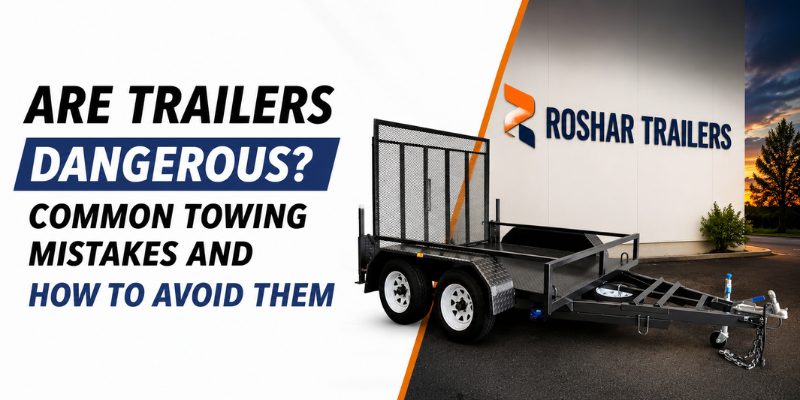
Trailers are not dangerous when they are matched, loaded, secured, and towed correctly but trailer towing safety starts well before you connect the trailer and drive away. The problem usually begins when the wrong trailer is used for the job, the load is not balanced, tyres are ignored, or the driver forgets that towing fundamentally changes how the vehicle handles.
For tradies, landscapers, builders, farmers, vehicle owners, DIY users, and small business owners, trailers are part of daily work. They carry tools, soil, machinery, vehicles, green waste, farm supplies, building materials, and household loads. That makes trailer towing safety important before every trip, not just on long highway drives.
A trailer can feel fine when empty but behave very differently when loaded. A small mistake at the yard, worksite, or driveway can turn into sway, poor braking, load movement, or damage on the road. This guide explains the most common towing mistakes, what must be fitted when towing, how to hitch correctly, and what not to do.
Are Trailers Actually Dangerous?
Trailers are useful, practical, and safe when used properly. They become risky when people treat towing like normal driving.
A vehicle without a trailer can brake, turn, and accelerate in a predictable way. Add a loaded trailer and everything changes. You need more space to stop, more room to turn, and more care when changing lanes or reversing. Most trailer towing safety problems come from simple, avoidable mistakes: carrying too much weight, loading it in the wrong place, using the wrong tow vehicle, forgetting tyre checks, not securing the load, ignoring brakes or lights, driving too fast for the load, taking sharp turns, or reversing without adequate space or visibility.
The trailer itself is only one part of the setup. The load, tow vehicle, road conditions, and driver behaviour all determine whether a trip is safe or not.
What Are Some Safety Tips for Towing a Trailer?
When people ask what are some safety tips for towing a trailer, the answer almost always comes down to the same core habits: preparation before departure, correct loading, and adjusting driving behaviour to account for the extra weight and length.
Here are the ten most important safety tips for towing a trailer in Australia:
- Match the trailer to the load – check ATM, axle setup, and brake configuration against your actual loaded weight, not your estimate
- Check tyre pressure and condition on both the trailer and the tow vehicle before every trip, not just occasionally
- Balance the load correctly – heavy items low and slightly forward of the axle, nothing stacked high or concentrated at the rear
- Secure the load with rated restraints – never rely on weight alone to keep items in place during braking and cornering
- Check the coupling, safety chains, and plug before moving – do a pull test and walk-around after hitching
- Allow significantly more braking distance than you would without a trailer – a loaded trailer adds momentum your tow vehicle must manage
- Take wider turns and avoid sudden steering inputs – the trailer cuts corners tighter than the tow vehicle and reacts to sharp inputs
- Recheck straps and load after the first 5–10 kilometres – loads settle and straps relax during the first section of every trip
- Slow down in wet conditions, wind, and on downhill sections – these conditions amplify the effects of extra trailer weight and momentum
- Use a spotter when reversing in tight or unfamiliar spaces – poor visibility during reversing is one of the most common causes of trailer damage
The checklist later in this article covers these safety tips for towing a trailer in a format you can run through in under five minutes before every trip.
What Must You Have Fitted When Towing a Trailer?
Understanding what must be fitted when towing a trailer is not just about legal compliance; each of these components plays a direct role in towing safety on every trip. Missing or faulty components are not minor oversights. They affect your ability to stop safely, warn other road users, and maintain control of the trailer.
Coupling
The coupling connects the trailer to the tow vehicle and must be rated for the trailer’s ATM. It must be fully locked before towing a coupling that is not fully engaged can separate during a trip. The tow ball must also be correctly rated for the trailer’s ATM.
Safety Chains
Safety chains must be attached correctly, crossed under the drawbar in an X pattern with enough slack to allow turning but not enough to drag on the road. If the trailer separates from the tow vehicle, the safety chains are the last line of contact preventing the trailer from becoming completely detached.
Trailer Lights
Brake lights, indicators, tail lights, and the number plate light are all legally required. The electrical plug must be compatible with the tow vehicle and correctly connected before every trip. Flickering or failed lights are not just a defect they are a road safety and legal issue.
Brakes
The question of what must be fitted to a trailer for legal road use includes brake requirements that depend on GTM. In Australia, trailers over 750kg GTM require service brakes. Trailers over 2,000kg GTM require brakes on all wheels and a breakaway system. These requirements are set out in VSB1 Vehicle Standards Bulletin 1 which provides guidance for trailers with an aggregate trailer mass of 4.5 tonnes or less. For a full explanation of brake requirements by GTM threshold and state, read our guide on trailer brake requirements in Australia.
Breakaway System
For trailers over 2,000kg GTM, a breakaway braking system must be fitted. It must activate immediately if the trailer separates from the tow vehicle and keep the brakes applied for at least 15 minutes. The breakaway battery must be maintained in a charged condition.
Compliance Plate
A manufacturer’s compliance plate must be fitted and must show tare weight, ATM, and GTM. For trailers up to 4,500kg, VicRoads states that tare weight and ATM must be displayed on the trailer identification plate or the Register of Approved Vehicles. The compliance plate is also the reference point for confirming brake requirements and registration eligibility.
Number Plate
The trailer’s number plate must be clearly visible and lit at night. A plate that is obscured by a load, dirty, or unlit is a legal issue and a safety issue for following drivers.
What Not to Do When Towing a Trailer?
Knowing what not to do when towing a trailer is just as important as knowing the correct procedure. The most common towing incidents in Australia come from a predictable set of avoidable mistakes.
- Don’t overload the trailer – always calculate the real loaded weight against ATM before departure, not after
- Don’t load all weight at the rear – rear-heavy loading causes trailer sway and reduces tow vehicle steering control
- Don’t assume weight holds the load in place – always use rated restraints regardless of load type or trip length
- Don’t ignore tyre checks – a soft or damaged tyre under load is one of the most common causes of trailer incidents on Australian roads
- Don’t drive at normal speed – towing requires earlier braking, wider turns, and smoother acceleration; in most Australian states the maximum speed when towing is 100km/h even where the general limit is higher
- Don’t take sharp turns – the trailer cuts corners tighter than the tow vehicle; allow extra room at every intersection and driveway entry
- Don’t rush the coupling process – always perform a pull test and walk-around check before entering traffic
- Don’t ignore warning signs while driving – sway, vibration, pulling, or unusual sounds require stopping safely and inspecting before continuing
- Don’t reverse without checking the space first – walk the reversing path before you begin, particularly in unfamiliar locations
- Don’t use a trailer that is no longer rated for your current loads – a worn, damaged, or under-specified trailer is a liability for every trip
This is one of the clearest examples of what not to do when towing driving at normal highway speed and making normal steering inputs as if the trailer is simply not there. The physics of a loaded trailer behind you do not change because the driving feels familiar.
What Must You Do When You Hitch a Trailer to a Towing Vehicle?
Understanding what you must do when you hitch a trailer to a towing vehicle is the foundation of every safe towing trip. A rushed or incomplete hitching process is one of the most common starting points for towing incidents and one of the easiest to prevent.
Follow these steps every time:
- Position the tow vehicle correctly – reverse slowly until the tow ball sits directly under the trailer coupling head. Use a spotter or camera if visibility is limited.
- Lower the trailer onto the tow ball – use the jockey wheel to lower the coupling head fully and squarely onto the ball. Do not leave the coupling sitting partially on the ball.
- Lock the coupling – engage the locking mechanism fully and confirm it is locked with a visual check followed by lifting the drawbar firmly upward. If it lifts off, it is not locked.
- Wind up or remove the jockey wheel – raise the jockey wheel fully so it cannot contact the road surface during towing. A jockey wheel dragging on the road is a serious hazard.
- Attach safety chains – cross them under the drawbar in an X pattern with enough slack to allow the full turning arc but not so much that they can contact the road.
- Connect the electrical plug – ensure a firm, secure connection and check that all lights are working brake lights, indicators, tail lights, and the number plate light.
- Connect the breakaway lanyard – if the trailer has a breakaway braking system, attach the lanyard to a solid rated point on the tow vehicle, not to the safety chain or a plastic bracket.
- Do a full walk-around – check coupling, chains, plug, lights, load security, tyre condition, ramp security, and that all latches and tailgates are closed and locked.
- Do a pull test – drive forward a short distance on private property or a quiet road, brake firmly, and confirm nothing has moved, shifted, or disconnected before entering public traffic.
Many of the warning signs drivers notice while towing coupling clunks, trailer sway, and lighting faults can be traced directly back to what happened during the hitching process. Get this right every time and a significant proportion of towing problems simply do not occur.
Mistake 1: Choosing the Wrong Trailer for the Load
Safe towing starts before you connect the trailer. The first mistake is choosing a trailer because it looks big enough without checking whether it is actually suitable for the load.
A trailer should match: the weight of the load, the shape and type of the load, how frequently it will be used, the tow vehicle’s rated capacity, the loading and unloading method, and the road or site conditions it will be used on.
A small box trailer may be fine for a weekend clean-up but entirely unsuitable for wet soil, machinery, heavy tools, or daily business use. If your business has grown, your trailer requirements may have changed to a trailer that worked for light jobs two years ago may no longer match your current load profile. The safest trailer is not always the biggest one. It is the one built and rated for your real workload.
Mistake 2: Not Understanding Trailer Weight Limits
Many towing problems happen because people underestimate weight. A trailer may look only half-full but the load can still be well above safe limits.
Three terms every trailer owner should understand:
Tare weight is the empty weight of the trailer itself.
ATM (Aggregate Trailer Mass) is the maximum allowed total loaded trailer weight — shown on the compliance plate. In Victoria, VicRoads states that tare weight and ATM must be displayed on the trailer identification plate or the Register of Approved Vehicles for trailers up to 4,500kg.
GTM (Gross Trailer Mass) is the loaded weight carried by the trailer wheels when connected to the tow vehicle the figure used to determine brake requirements.
Do not rely only on the empty trailer weight or available space. The real question is: what will the trailer weigh once it is fully loaded with everything you plan to carry?
Dry green waste may be light. Wet soil, gravel, bricks, pavers, machinery, or a vehicle become heavy very quickly. This is where many tradies, landscapers, and DIY users get caught; they judge by trailer space instead of actual load weight.
You should also check your tow vehicle’s rated towing capacity found on the compliance plate or in the owner’s manual. The loaded trailer’s ATM must not exceed the tow vehicle’s rated braked towing capacity. Additionally, loading heavy cargo into the tow vehicle’s tray or cabin while towing can push the tow vehicle over its Gross Vehicle Mass (GVM) even if the trailer is within its ATM limit this is a common and overlooked mistake among tradies carrying tools in the tray while also towing a loaded trailer.
For how ATM and GTM appear on your compliance plate, read our guide on how to register a trailer in Victoria.
Mistake 3: Poor Load Distribution
Even if the total weight is within limits, poor load distribution makes towing unsafe. Load distribution is one of the most underestimated aspects of trailer towing safety and one of the easiest to get right with a few simple habits.
If too much weight sits at the rear of the trailer, the towball becomes light and trailer sway risk increases significantly. If too much weight is on one side, the trailer may lean or pull unevenly. If heavy items are stacked high, the centre of gravity rises and the trailer becomes less stable through corners and lane changes.
The guideline is the 60/40 rule approximately 60% of load weight forward of the axle group and 40% behind it. Keep heavy items low, secure, and balanced across the trailer.
Real examples:
A builder carrying timber, tools, and cement sheets should spread weight evenly and secure long materials so they cannot shift forward under braking.
A landscaper carrying soil or mulch should avoid creating a heavy mound concentrated on one side.
A farmer moving equipment across rough access roads should check that the load cannot shift over uneven ground.
A homeowner clearing renovation waste should not throw all the heaviest material at the back simply because it is easier to unload from there.
Before leaving, walk around the trailer and ask: is this load balanced, low, and properly secured?
Mistake 4: Forgetting Tyres, Wheels and Suspension
Tyres and suspension carry the real load, yet they are often checked last or not checked at all. Before towing, check tyre pressure on every wheel including the spare, tyre condition and sidewall integrity, wheel nut torque, any signs of uneven wear, and suspension condition including signs of sagging or damage.
Tyre checks should happen before loading once the trailer is full, low pressure or sidewall damage is harder to detect visually. A soft tyre under load heats up, wears faster, and destabilises the trailer.
If the trailer bounces badly, pulls to one side, or wears tyres unevenly, do not ignore it. These are symptoms of problems with tyre pressure, suspension condition, axle alignment, or loading all of which affect trailer towing safety on every trip.
Mistake 5: Ignoring Brakes, Chains and Coupling
Brakes, safety chains, and coupling are not small details. They are the core of trailer towing safety on every Australian road.
The coupling must lock fully and be rated for the trailer’s ATM. Safety chains must be correctly attached and must not drag. Brakes must be functional and appropriately specified for the trailer’s GTM. If electric brakes are fitted, the brake controller must be compatible and calibrated.
Before leaving, check:
- Coupling is fully locked and the pull test confirms it
- Safety chains are crossed under the drawbar and correctly attached
- Trailer plug is connected and all lights are working
- Brake controller is functioning if required
- Breakaway system lanyard is attached and battery is charged if fitted
- No visible wear or damage around the coupling head or chains
- All shackles and attachment points are secure
A rushed coupling is one of the easiest mistakes to prevent. After hitching, always do a pull test and a full walk-around before loading or driving.
Mistake 6: Not Securing the Load Properly
A trailer can be correctly rated, properly connected, and still become unsafe if the load moves during the trip. Never assume weight alone will keep items in place a mower, toolbox, ladder, machine, piece of furniture, or length of timber can move during braking, cornering, or driving over bumps.
Use suitable rated restraints for every load. Loose material such as mulch, soil, green waste, or rubble may need to be covered where required to prevent it from blowing or spilling onto the road.
Different loads need different securing methods:
- Tools and boxes should be strapped or contained so they cannot slide or tip
- Mowers and garden equipment should be tied down so they cannot roll or shift under braking
- Machinery should be secured at appropriate rated anchor points with suitable rated restraints
- Cars and vehicles must be positioned correctly and secured with rated vehicle restraints read our complete guide on how to tie down a car on a trailer for the correct method
- Furniture should be protected from contact damage and tied so it cannot slide in any direction
Stop after a short distance and recheck the load. Straps settle, loads shift, and loose items move once the trailer begins travelling particularly after the first braking event.
Mistake 7: Driving Like You Are Not Towing
This is one of the clearest examples of what not to do when towing driving at normal speed and making normal steering inputs as if the trailer is simply not there. Towing changes how your vehicle behaves fundamentally, and the faster you drive, the less time you have to respond if the trailer starts to sway or the load shifts.
Safe towing requires adjusted driving behaviour:
- Brake significantly earlier and more gently than without a trailer
- Leave far more space in front double your normal following distance as a minimum
- Take wider turns at every intersection and driveway entry
- Accelerate smoothly and gradually rather than sharply
- Avoid sudden steering inputs at any speed
- Slow well down in rain, wind, and on downhill sections
- Avoid sharp lane changes on highways
- Reverse slowly and use a spotter in tight spaces
Speed limits when towing: in most Australian states the maximum speed when towing a trailer is 100km/h even where the general speed limit is higher. Check your specific state’s rules some circumstances or trailer types may have lower limits. Exceeding the towing speed limit increases stopping distance, amplifies sway risk, and reduces reaction time simultaneously.
For a full guide on reversing technique with a trailer, read our guide on how to reverse a trailer.
Trailer Towing Safety for Tandem Trailers
Tandem trailers are often chosen for larger loads, regular towing, and better load support compared with single-axle trailers. They are common with tradies, landscapers, farmers, property owners, and businesses.
The main mistake is assuming a tandem trailer can carry anything simply because it has two axles. It still has weight limits, tyre ratings, brake requirements, and load balance limits and because tandem trailers typically carry heavier loads, the consequences of exceeding those limits are proportionally more serious.
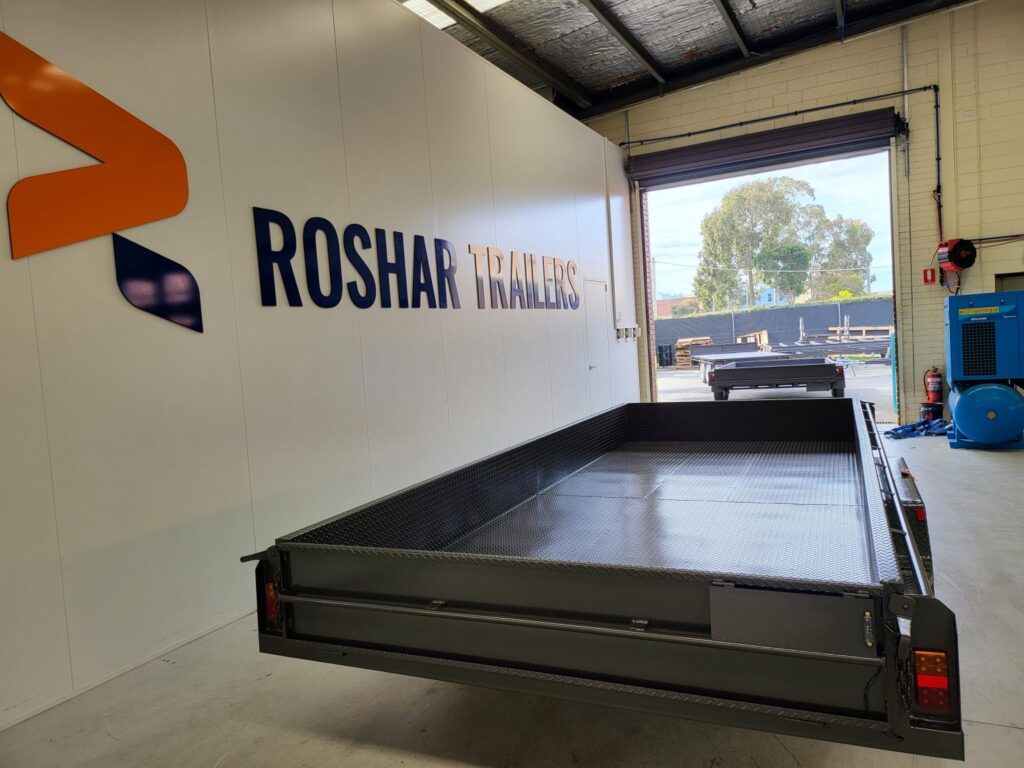
Before towing a tandem trailer, check both axles, all tyres and tyre pressure on every wheel, brakes if fitted, load rating against the actual loaded weight, load balance across both axles, coupling and chains, and available turning room for the route and site.
A tandem trailer can feel more stable under load but that stability may also mean you are carrying significantly more weight than a single-axle trailer would allow. That means longer braking distances and more care on downhill sections, tight worksites, and narrow driveways.
Trailer Towing Safety for Car Trailers
A car trailer carries a concentrated and heavy load. Safe loading and securing are more critical here than with almost any other trailer type; a vehicle that shifts during towing is not a recoverable situation at highway speed.
A mechanic moving a project car, a workshop transporting a customer vehicle, or a vehicle owner taking a car to a show or event should never rely on the car’s weight to keep it stationary. The vehicle must be positioned correctly on the trailer, wheel straps or chassis restraints attached at all four corners, the vehicle placed in park or with the handbrake applied, and all restraints checked after the first few kilometres.
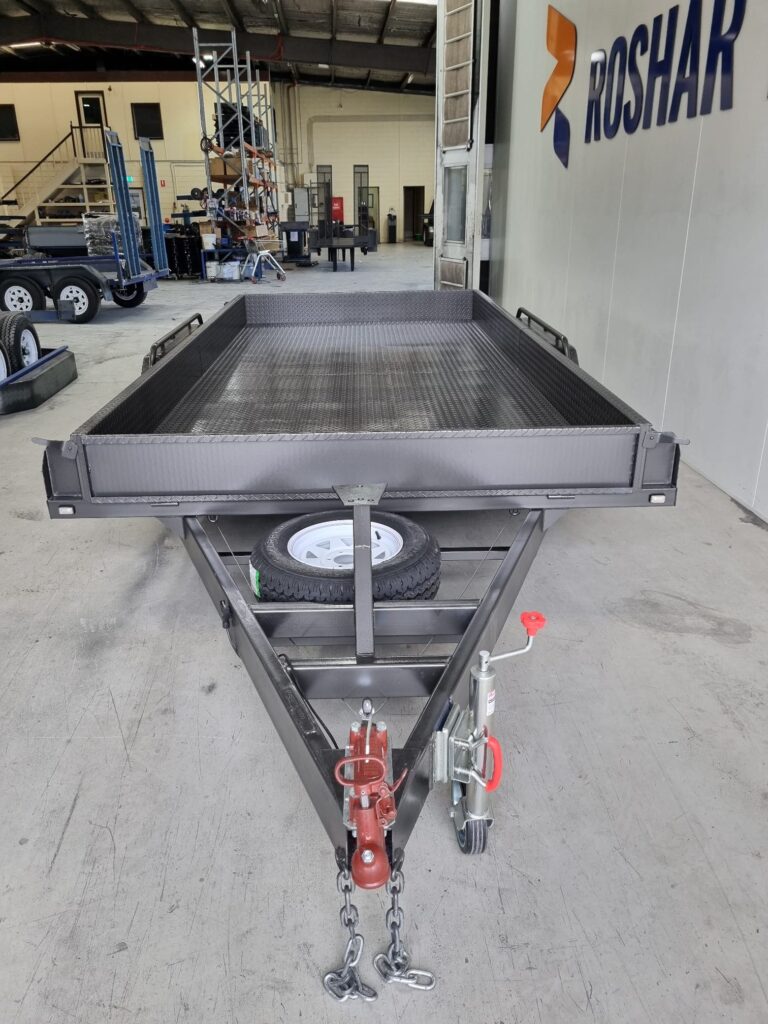
Before towing a car trailer, confirm: vehicle weight against the trailer’s ATM, tow vehicle capacity, ramp condition, winch condition if fitted, the restraint system and rated tie-down points, and that brake lights and the number plate remain visible with the vehicle loaded.
For the complete method, including the 60/40 load positioning rule and strap types, read our full guide on how to tie down a car on a trailer.
Trailer Towing Safety for Tipper Trailers
Tipper trailers are useful for landscaping, construction, garden maintenance, farming, and site clean-up. They make unloading faster and easier, particularly for bulk materials. The main safety risk is underestimating the weight difference between different load types.
Mulch and dry green waste may be relatively light. Wet soil, clay, gravel, sand, or rubble can be dramatically heavier; a cubic metre of wet clay can exceed one tonne. A trailer that feels manageable with dry material can be at or beyond its ATM limit with a full load of wet soil. Never treat bulk material loads as interchangeable without checking the loaded weight.
When using tipper trailers:
- Confirm the load is spread evenly across the trailer bed before tipping
- Check the trailer is not overloaded against its ATM
- Confirm tyres are appropriate and inflated correctly for the loaded weight
- Ensure brakes are working before any loaded trip
- Lock the tailgate securely before towing
- Confirm the hydraulic system is functioning correctly before arriving at the tipping site
- Tip on firm, level ground only tipping on uneven ground shifts the trailer’s lateral balance unpredictably and can cause the trailer to roll sideways
- Never allow anyone to stand behind or beside the trailer during the tipping operation hydraulic tipping creates unexpected lateral movement if the ground is uneven or the load is unevenly distributed, and there is no reliable warning before it occurs
Trailer Towing Safety for Worksites, Farms and Small Businesses
Work trailers face tougher conditions than weekend trailers, early starts, traffic, tight worksites, rural tracks, and often multiple drivers using the same trailer without consistent checking habits.
For worksites: check access routes before arriving, watch for overhead clearances, pedestrians, plant equipment, uneven ground, and limited reversing space. Do not assume a reversing path is clear because it was clear on a previous visit.
For farms: check coupling, tyres, suspension, and load security before towing across rough tracks or long rural driveways. Farm conditions accelerate wear on all trailer components.
For landscaping businesses with multiple staff: make sure every person who uses the trailer follows the same pre-tow safety routine. A quick job is not a reason to skip checks many towing incidents happen on short, familiar trips precisely because drivers are less careful when the route feels routine.
Common Warning Signs While Towing
Recognising these warning signs while driving is a core part of trailer towing safety pull over safely at the first sign of anything unusual. Do not try to manage a developing towing problem while at speed in traffic.
| Warning Sign | What It May Indicate |
| Trailer sway | Rear-heavy load, speed too high, or tyre pressure issue |
| Pulling to one side | Uneven load, flat tyre, or axle/bearing problem |
| Excessive bouncing | Overloaded suspension, tyre pressure, or suspension damage |
| Clunking at the coupling | Coupling not fully locked or worn coupling components |
| Flickering trailer lights | Loose plug connection, damaged wiring, or corroded connector |
| Burning smell | Dragging brake, overloaded bearing, or tyre rubbing |
| Hot tyres or hubs | Under-inflated tyres, overloaded bearing, or brake dragging |
| Load movement | Straps have loosened or load has shifted stop and recheck |
| Brakes grabbing | Brake controller calibration or brake adjustment issue |
| Brakes not responding | Flat breakaway battery, wiring fault, or brake failure |
| Unusual vibration | Wheel balance, bearing wear, or damaged tyre |
| Rattling from ramps or tailgate | Latches or securing pins not fully engaged |
If the trailer starts to sway: do not apply sharp steering corrections. Ease off the accelerator steadily, keep the steering wheel straight, and allow the vehicle and trailer to slow down gradually before making any corrections. Steering into a sway is one of the most common ways to make it worse.
Speed Limits When Towing in Australia
Speed limits when towing a trailer vary by state but in most Australian states the maximum speed is 100km/h when towing a trailer even where the general speed limit is higher. Exceeding the towing speed limit increases stopping distance, amplifies trailer sway risk, and significantly reduces reaction time.
Confirm the applicable speed limit in your state before towing on roads with limits above 100km/h. Some trailer types or load conditions may have lower applicable limits. When in doubt, 100km/h is the safe default for most towing situations in Australian conditions.
Pre-Trip Trailer Towing Safety Checklist
Use this numbered checklist before every trip, it takes under five minutes and addresses the most common causes of towing incidents:
- Trailer suits the load type, weight, and intended use
- Load is within both trailer ATM and tow vehicle towing capacity limits
- All trailer tyres are checked pressure, condition, and wheel nuts
- Tow vehicle tyres are also checked
- Coupling is fully locked confirmed with upward pull test
- Safety chains are correctly crossed under the drawbar
- Trailer plug is connected and all lights are working
- Brakes are confirmed working if fitted
- Brake controller is calibrated if electric brakes are fitted
- Breakaway lanyard is attached and battery is charged if applicable
- Load is secured with rated restraints nothing relying on weight alone
- Loose material is covered where required
- Number plate is visible and lit
- Ramps are secured and latches are closed
- Driver allows extra braking distance for the loaded weight
- Load will be rechecked after the first 5–10 kilometres
When Should You Upgrade or Replace Your Trailer?
Sometimes the safest decision is not another repair it is replacing a trailer that no longer matches your workload or is showing structural decline.
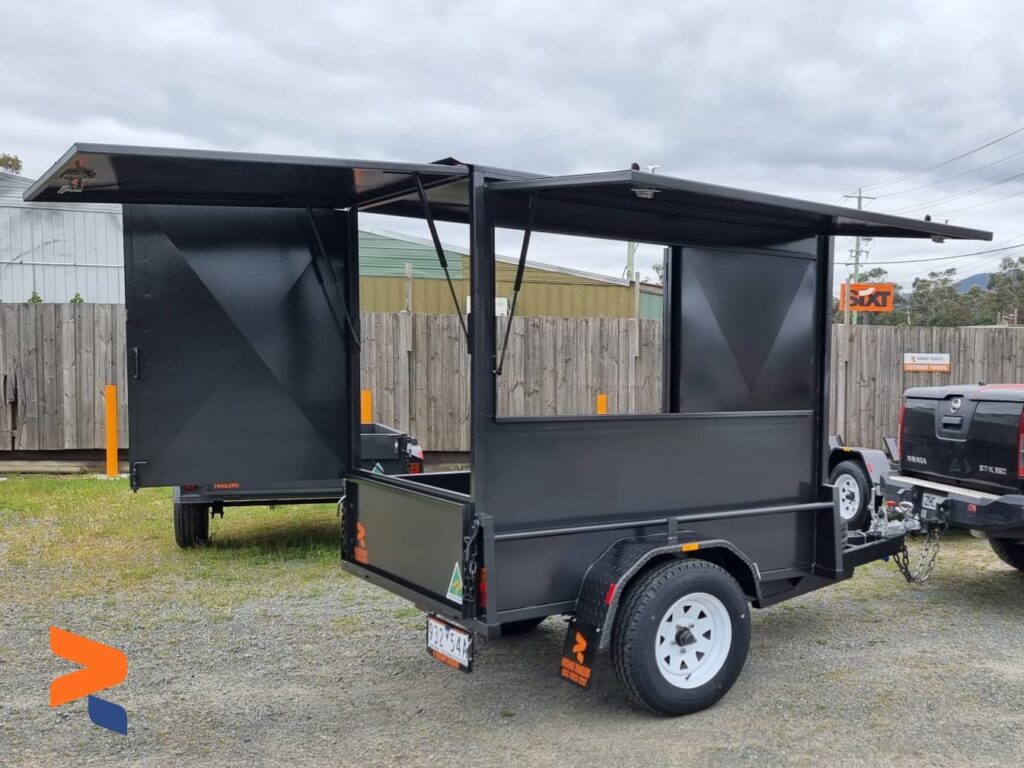
Consider upgrading if:
- You regularly carry heavier loads than the current trailer was rated for
- The trailer feels unstable, pulls unevenly, or bounces more than it used to
- Repairs are becoming more frequent and more expensive
- There is visible rust on structural components, weld cracking, or frame damage
- You need brakes, ramps, a cage, or tie-down points the current trailer does not have
- Your business has grown and the current trailer no longer matches the daily load
- Your tow vehicle has changed and the trailer no longer matches the setup
Read our guide on quality trailer construction to understand what to look for when assessing a replacement, and our guide on why quality trailers are expensive for a full breakdown of what construction and specification differences mean for long-term cost of ownership.
For peace of mind on a new trailer purchase, read our guide on do trailers need insurance in Australia a quality trailer is a significant asset worth protecting from day one.
Need Help Choosing a Safer Trailer Setup?
If your current trailer is missing brakes, has a coupling not rated for your load, lacks the right tie-down points, or is showing structural wear it may be time to look at a properly specified replacement. Roshar Trailers builds Australian-made trailers for tradies, landscapers, contractors, and businesses across Melbourne. Every trailer leaves our workshops with the correct brake setup, rated coupling, and full compliance documentation.
Roshar Trailers builds Australian-made trailers for tradies, contractors, landscapers, farmers, and businesses across Victoria. Whether you need a tandem trailer for daily work, a tipper for bulk loads, a car trailer for vehicle transport, or a custom configuration for a specific job our team can help you match the right trailer to your actual load before you buy. Visit us in Braeside, Bayswater North, or Dandenong or get a quote online.
Faq’s
What are some safety tips for towing a trailer?
The most important safety tips for towing a trailer are: match the trailer to the load, check tyre pressure before every trip, balance the load with heavy items forward of the axle, secure everything with rated restraints, check the coupling and safety chains, allow extra braking distance, slow down in wet or windy conditions, and recheck straps after the first 5–10 kilometres. Adjusted driving behaviour is as important as pre-trip checks.
What must you have fitted when towing a trailer in Australia?
You must have a correctly rated and fully locked coupling, properly attached safety chains, working trailer lights including brake lights and indicators, a compatible electrical plug, and a number plate that is clearly visible. Trailers over 750kg GTM must have service brakes. Trailers over 2,000kg GTM must also have brakes on all wheels and a breakaway braking system. A manufacturer’s compliance plate showing ATM and GTM must also be fitted.
What not to do when towing a trailer?
Do not overload the trailer, load all weight at the rear, drive at normal highway speed, take sharp turns, rush the coupling process, ignore tyre checks, assume weight alone holds the load, drive past warning signs without stopping, reverse without checking the space first, or continue using a trailer that is no longer rated for your current loads. These are the most common causes of towing incidents on Australian roads.
What must you do when you hitch a trailer to a towing vehicle?
Position the tow vehicle over the ball, lower the coupling fully onto the tow ball, lock the coupling and confirm it with a pull test, wind up the jockey wheel, cross and attach the safety chains, connect the electrical plug and check all lights, attach the breakaway lanyard if fitted, do a full walk-around check, then drive a short distance and brake firmly to confirm nothing has moved before entering traffic.
What speed can you tow a trailer in Australia?
In most Australian states the maximum speed when towing a trailer is 100km/h even where the general speed limit is higher. Check the specific rules in your state as some circumstances or trailer types may have lower limits. Towing at speeds above 100km/h increases stopping distance, amplifies sway risk, and reduces reaction time significantly.
How do I know if my trailer is overloaded?
Check the ATM on the compliance plate this is the maximum allowed total loaded weight. Calculate your actual load weight including all materials, tools, equipment, and the trailer’s tare weight. If the sum exceeds the ATM, the trailer is overloaded. Warning signs of overloading include excessive bouncing, tyre bulging, poor braking performance, and the rear of the tow vehicle sagging significantly.
How often should I check trailer straps during a trip?
Recheck straps after the first 5–10 kilometres of every trip loads settle and straps relax during the initial phase of travel, particularly after the first braking event. On long trips, check straps again at every fuel stop. On short trips, the first recheck is still important even if the destination is close.
When should I use a spotter when reversing a trailer?
Use a spotter whenever reversing into a tight, unfamiliar, or obstructed space worksites, narrow driveways, boat ramps with limited width, and anywhere your mirrors do not give complete visibility of the reversing path. Agree on clear hand signals with the spotter before beginning, and stop immediately if the spotter disappears from your mirror view. Read our guide on how to reverse a trailer for full technique guidance.