
37 Malcolm RD, Braeside, VIC
7 Things to Know About Trailer Tow Ball Weight in Australia
23 November 2026 | roshartrailers
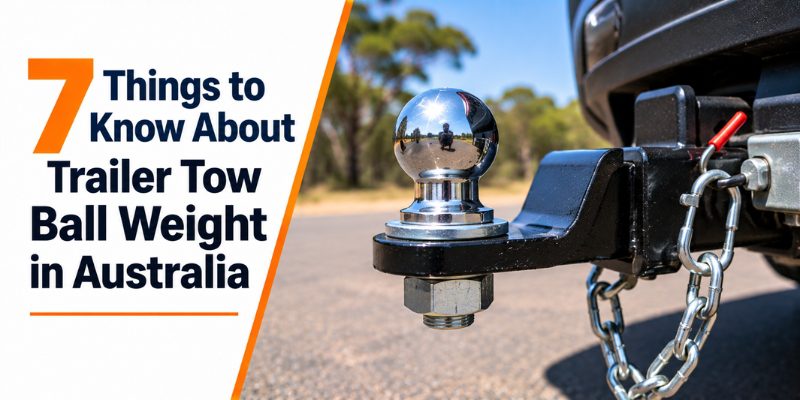
Table of Contents
By Writer :- Ron
Roshar Trailers Team, Trailer Manufacturing and Sales Specialists
Published: 23/11/2026
Quick answer: Trailer tow ball weight in Australia is generally guided around 8–10% of the loaded trailer weight, but it must never exceed the lowest rated limit of the tow vehicle, towbar, coupling or trailer. Correct loading matters because excessive or insufficient ball weight can affect stability, steering and braking.
If you tow a box trailer, tandem trailer, flat top trailer, plant trailer or another work trailer, tow ball weight is one number you should understand before loading up. It changes with the position and weight of your cargo, so the figure you had on one trip may not be the same on the next.
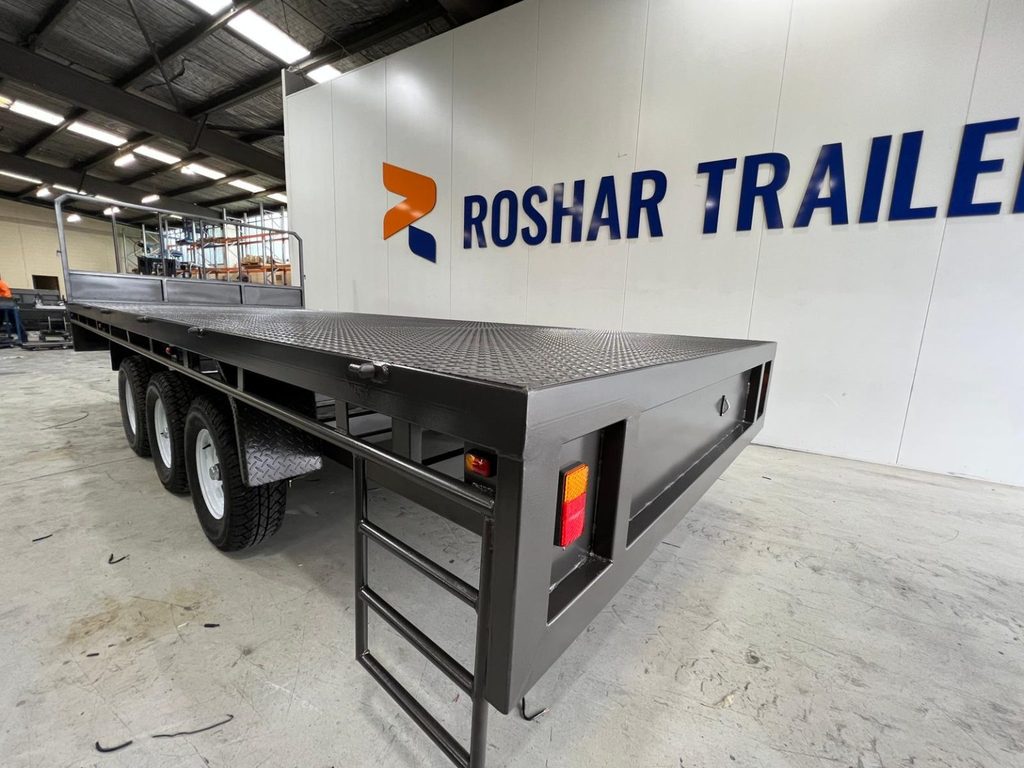
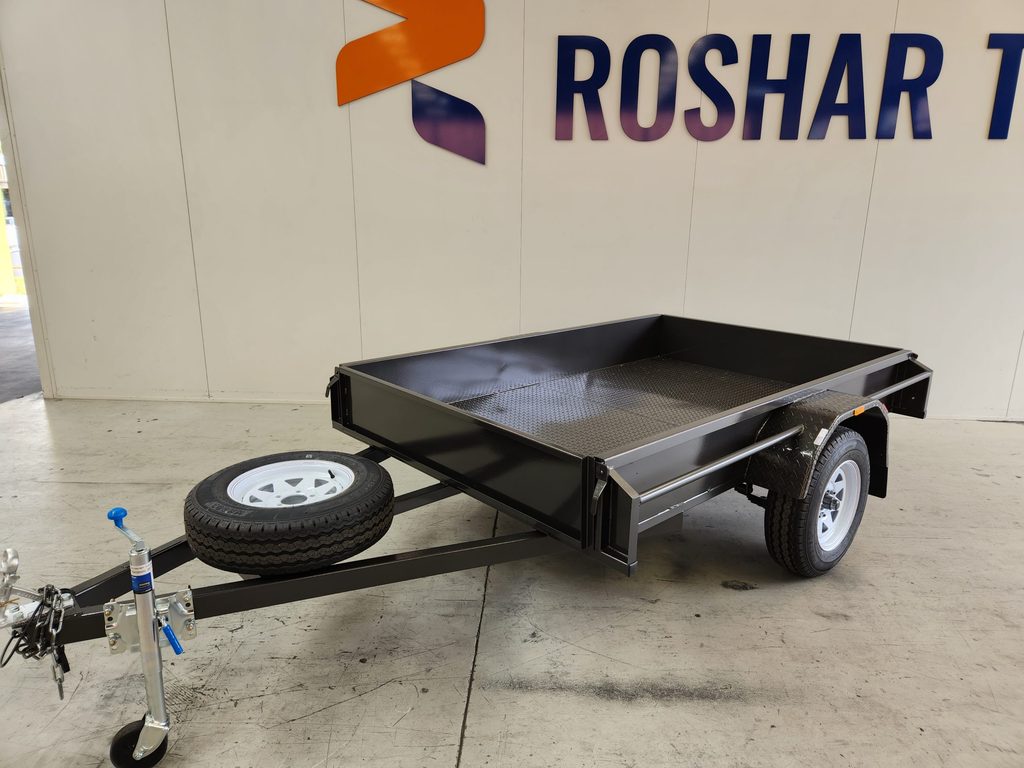
Think of this as a practical tow ball weight explained guide for Australian trailer owners, tradies, contractors, farmers, landscapers and small businesses.
How much tow ball weight should a trailer have?
A practical Australian starting point is around 8–10% of the loaded trailer weight, but the correct figure depends on the trailer design and the limits specified for your vehicle, towbar, coupling and trailer. Never use the percentage alone to decide whether a setup is legal or safe.
For example, if a trailer weighs 2,000 kg when loaded, an 8–10% guide would put the tow ball load around 160–200 kg.
That does not mean 200 kg is automatically acceptable.
You still need to check the maximum tow ball rating for:
- the towing vehicle
- the towbar
- the tow ball and coupling
- the trailer configuration
The lowest applicable rating controls.
A simple tow ball weight guide
| Loaded trailer weight | 8% guide | 10% guide |
| 750 kg | 60 kg | 75 kg |
| 1,000 kg | 80 kg | 100 kg |
| 1,500 kg | 120 kg | 150 kg |
| 2,000 kg | 160 kg | 200 kg |
| 2,500 kg | 200 kg | 250 kg |
| 3,000 kg | 240 kg | 300 kg |
| 3,500 kg | 280 kg | 350 kg |
These figures are illustrative calculations, not legal limits. Your manufacturer’s specifications always take priority.
For a work trailer, this distinction matters. A tradie might add a heavy toolbox, compressor, spare wheel, ramps and equipment over time. The trailer’s tow ball load can change even though the trailer itself has not changed.
What does tow ball weight mean in Australia?
Tow ball weight is the downward force transferred through the trailer coupling onto the tow ball and tow vehicle. It is also called tow ball mass, tow ball download or ball load, and it changes according to how the trailer is loaded.
The easiest way to picture it is to imagine the trailer’s weight being shared between two places:
- the trailer’s wheels and axles
- the towing vehicle through the coupling
The second part is the tow ball weight.
According to the Australian Department of Infrastructure’s VSB 1 Revision 6, ATM includes the downward force imposed on the towing vehicle, while GTM represents the mass transmitted through the trailer’s tyres when the trailer is coupled and loaded. The department also explains that, at maximum load and appropriate distribution, the difference between ATM and GTM represents tow-ball down-weight.
Why does the number change?
Tow ball weight changes when you move heavy items.
For example, imagine a landscaper carrying:
- a toolbox at the front
- several bags of soil
- a mower
- green waste
- ramps
- spare equipment
Move the mower from just behind the axle group to the rear of the trailer and the load applied to the coupling can change.
The trailer hasn’t changed. The load distribution has.
That is why tow ball weight is something to check with the trailer loaded for the job, not just when the trailer is empty.
How do ATM, GTM and tow ball weight work together?
ATM is the trailer’s maximum loaded mass, while GTM is the maximum mass transmitted through the trailer’s wheels when coupled; the difference between the two represents the load transferred through the coupling when the trailer is loaded appropriately.
These terms are easy to mix up, so use this simple framework:
| Term | What it means | Why it matters |
| Tare mass | Trailer’s unladen mass as specified | Helps establish available payload |
| ATM | Maximum loaded trailer mass | Sets the trailer’s overall rated limit |
| GTM | Maximum mass transmitted through the trailer wheels when coupled | Sets the trailer’s axle-side loading limit |
| Tow ball weight | Downward load transferred to the tow vehicle | Counts toward the tow vehicle’s load |
| GVM | Maximum loaded mass of the tow vehicle | Includes the tow ball load |
| GCM | Maximum combined mass of vehicle and trailer | Limits the complete combination |
A useful way to remember the relationship is:
ATM = GTM + tow ball weight
The actual numbers you measure can vary with loading, but the manufacturer’s ratings remain fixed limits.
Why does this matter to tradies?
Suppose a contractor has a trailer rated for a particular ATM and loads it with tools, ramps, a generator and building materials.
It may be possible to stay under the trailer’s ATM while still creating a problem elsewhere if the tow vehicle’s GVM, rear axle rating or tow ball limit is exceeded.
RAC WA notes that tow ball weight forms part of the towing vehicle’s GVM, while the vehicle’s GCM and towing limits also need to be considered.
That is why checking only the trailer’s capacity isn’t enough.
What happens if tow ball weight is too high or too low?
Too little tow ball weight can contribute to trailer instability and sway, while too much can overload the towing vehicle’s rear axle and affect steering, braking and suspension. The correct balance depends on the trailer, vehicle and manufacturer’s limits.
If the tow ball weight is too low
A rear-heavy trailer can become unstable, particularly when travelling at higher speeds or encountering crosswinds and passing vehicles.
A practical example is a flat top trailer carrying machinery where too much weight has been positioned behind the axle group. The trailer may feel acceptable at low speed but become noticeably less stable as speed increases.
If the tow ball weight is too high
Excessive ball weight places more load on the rear of the tow vehicle.
That can contribute to:
- Rear suspension compression
- Reduced load on the front axle
- Changes in steering response
- Increased rear axle loading
- Reduced braking performance if limits are exceeded
Subaru Australia specifically notes that incorrect tow ball download can affect stability and steering control, while the load also contributes to the vehicle’s payload and GVM.
The goal is balance, not simply “more weight”
It is tempting to think that more weight at the front automatically means better stability.
That’s not the right approach.
The target is a properly loaded trailer that stays within all applicable limits and has the ball weight appropriate for its design.
How do you measure tow ball weight accurately?
The most reliable way to check tow ball weight is to use a suitable tow ball scale or professional weighing service with the trailer loaded as it will actually travel. A weighbridge or mobile weighing assessment can also identify wider GVM, GTM, ATM and axle-loading issues.
A practical measurement process
Load the trailer as you normally would: include the tools, equipment, spare wheel, ramps, fuel, materials and accessories you would actually carry.
Check the trailer plate and vehicle specifications: confirm ATM, GTM, towing capacity, GVM, GCM and applicable tow ball ratings before relying on a calculated percentage.
Use a suitable tow ball scale: position the scale according to the manufacturer’s instructions and ensure the coupling is supported at the appropriate height.
Record the result: write down the measured ball weight and the trailer’s loaded weight so you can compare future loads.
Reposition heavy items if required: move equipment forward or rearward only within safe loading requirements and remeasure rather than guessing the result.
Get the combination professionally weighed when close to limits: a complete assessment can identify axle, GVM, GTM, ATM, GCM and tow ball issues that a single ball-weight measurement cannot show.
The key point is consistency. If you regularly tow a work trailer with a similar load, measuring one typical setup gives you a useful baseline. If you add a heavy toolbox, hydraulic equipment, water tank or machinery, check again.
DIY measurement vs professional weighing
| Method | Best for | Limitation |
| Dedicated tow ball scale | Regular owner checks | Measures ball load only |
| Weighbridge | Checking overall weights | Service capability varies |
| Mobile weighing | Full combination assessment | Costs more than a simple DIY check |
| Manufacturer/dealer advice | New trailer setup | Cannot replace measurement of your actual loaded combination |
For current pricing, one Victorian mobile weighing provider currently lists from $270 + GST for a car-and-caravan weigh, while another Australian provider lists $295 for a vehicle-and-trailer session. Prices vary by location, trailer type and service scope, so confirm the current price and inclusions before booking.
How should you load a trailer to manage tow ball weight?
Load heavy items deliberately, keep the trailer balanced, follow the manufacturer’s loading guidance and avoid placing excessive weight at the extreme rear or front. Then measure the loaded setup rather than assuming the distribution is correct.
This is particularly important for work trailers.
A tradie may load a toolbox, compressor, spare wheel and ramps without thinking about how their combined position affects the coupling. A landscaper may add wet green waste that weighs substantially more than the same volume of dry material.
A practical loading framework
Place heavy equipment low and securely: this helps keep the centre of gravity controlled and reduces unnecessary movement.
Keep the load within the trailer’s designated load area: do not use the drawbar or rear overhang as improvised storage for heavy items.
Avoid creating a rear-heavy trailer: excessive weight behind the axle group can reduce ball load and contribute to instability.
Distribute equipment across the trailer: side-to-side imbalance can create uneven loading even when the overall trailer weight appears acceptable.
Secure every load properly: tie-downs and restraint equipment should suit the load and trailer setup.
Recheck after major changes: adding a toolbox, generator, water tank, machinery attachment or heavy rack can change the balance.
The Department of Infrastructure notes that ATM and GTM are manufacturer specifications developed with factors including chassis strength, wheel, axle and tyre ratings, and towing stability in mind.
Trailer type and ball-weight considerations
| Trailer type | Typical loading concern | What to pay attention to |
| Box trailer | Mixed household or trade loads | Keep heavy items balanced |
| Cage trailer | Bulky green waste and materials | Watch how wet/heavy loads build up |
| Tandem trailer | Heavier commercial loads | Check total mass and axle loading |
| Flat top trailer | Machinery and pallets | Machinery position can change ball load |
| Plant trailer | Compact machinery | Measure after loading the machine and attachments |
| Tradesman trailer | Tools, boxes and racks | Added storage can change front/rear loading |
| Tipper trailer | Bulk loose materials | Load distribution changes as material is added or removed |
If you’re comparing a trailer for sale for commercial use, ask how the axle position, load area and intended payload relate to the work you plan to do.
When should you recheck tow ball weight?
You should recheck tow ball weight whenever the trailer’s typical load changes, after adding substantial accessories, when towing behaviour changes, or when the trailer is regularly operated close to its weight limits. Regular users should treat weighing as part of responsible trailer maintenance.
Recheck after these changes
| Situation | Recheck? | Why |
| New trailer purchase | Yes | Establish your actual loaded baseline |
| Adding a large toolbox | Yes | Adds concentrated weight |
| Adding ramps or racks | Yes | Changes trailer tare and distribution |
| Carrying new machinery | Yes | Equipment weight and position may differ |
| Changing from light to heavy materials | Yes | Load characteristics change |
| Long-distance/highway trip | Yes | Better to confirm the real travel configuration |
| Trailer starts swaying | Immediately | Indicates a potential loading or setup issue |
| After major repairs/modifications | Yes | Components or layout may have changed |
| Routine identical loads | Periodically | Confirms the setup remains consistent |
When should you get professional help?
Professional weighing is particularly useful when you’re close to the vehicle or trailer’s limits, have a heavy commercial trailer, have modified the setup or can’t confidently determine your actual axle and ball loads.
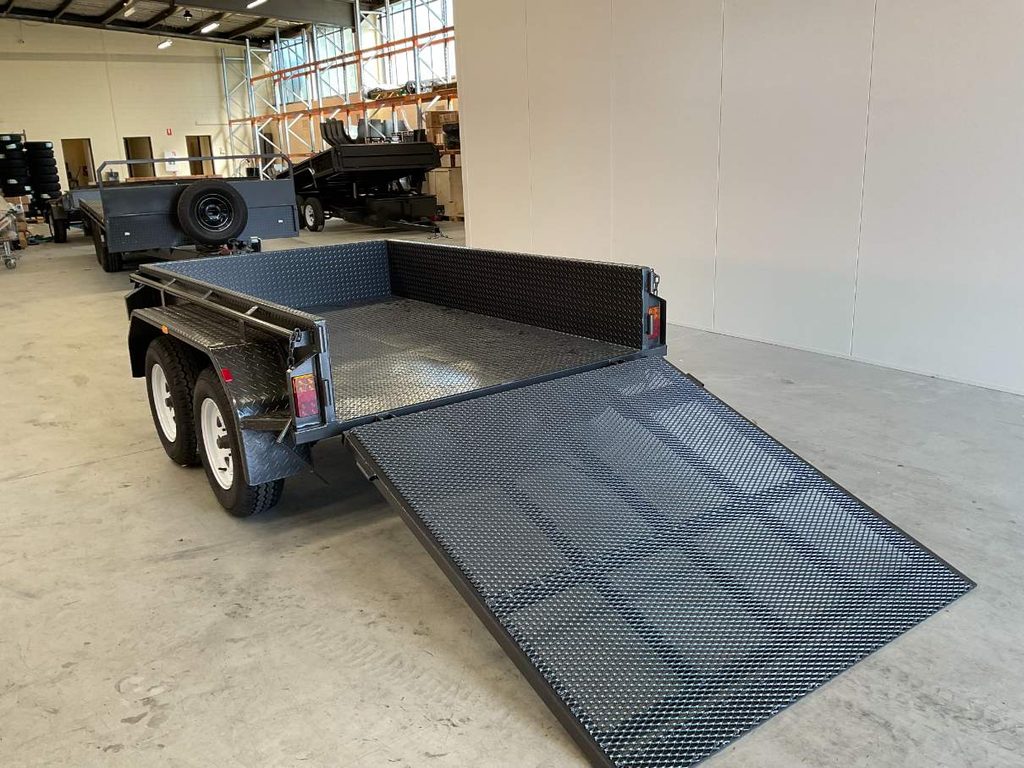
This is especially relevant for tandem trailers, plant trailers, machinery trailers and heavily equipped tradesman trailers.
For a new trailer, a professional assessment can also establish a useful baseline before the trailer becomes part of daily work. Roshar Trailers provides trailer sales and repairs and maintenance support across Melbourne, so buyers can also discuss their trailer requirements and maintenance needs with the manufacturer or service team.
If you need replacement trailer parts, repairs or servicing after changing your setup, keep the trailer’s specifications and measured weights available for the technician. Roshar’s trailer maintenance guidance also recommends keeping records of replaced components and service work.
For buyers comparing tandem trailers or flat top trailers for sale in Melbourne, tow ball weight should be considered alongside payload, axle rating, braking, suspension and the towing vehicle’s limits.
Conclusion
Understanding trailer tow ball weight Australia guidance starts with one simple principle: don’t rely on the percentage alone. Use the common 8–10% guide as a starting point, then check your actual loaded weight against every applicable manufacturer and component limit.
For tradies, contractors and businesses, correct loading is part of getting value from a trailer. If you are choosing a new trailer, discuss your expected load, towing vehicle and work requirements before deciding on the configuration.
Looking for a trailer built around your load and towing requirements? Explore Roshar Trailers or speak with the team before ordering.
FAQ’S
Does tow ball weight count as part of vehicle payload?
Yes, tow ball weight counts toward the load carried by the towing vehicle. It contributes to the vehicle’s GVM and needs to be considered alongside passengers, fuel, tools, accessories and other cargo. A vehicle can therefore reach its payload or axle limits before reaching its advertised maximum towing capacity.
Is 10% tow ball weight a legal requirement in Australia?
No, 10% is a commonly used towing guideline, not a universal percentage requirement applying to every Australian trailer. Different guidance uses different ranges, while some jurisdictions focus on manufacturer limits. Always follow the applicable vehicle, towbar, coupling and trailer specifications.
Can tow ball weight change without changing the trailer?
Yes, moving or adding cargo can change the load transferred through the coupling. A toolbox, spare wheel, machinery attachment or heavy material placed toward the front or rear can alter the ball load. This is why the loaded trailer should be checked after significant changes to its normal configuration.
Should I check tow ball weight on an empty trailer?
No, an empty trailer measurement does not represent the configuration you normally tow. Ball weight changes with payload and load position. For a meaningful check, measure the trailer loaded as you would use it, including normal tools, equipment, accessories and other cargo.
Does a tandem trailer always need more tow ball weight?
No, axle count alone does not determine the correct ball load. A tandem trailer’s appropriate tow ball weight depends on its design, loaded mass, axle position, load distribution and the manufacturer’s specifications. The same percentage should not automatically be applied without checking the complete towing combination.
Can incorrect tow ball weight cause trailer sway?
Yes, insufficient or poorly distributed ball load can contribute to trailer instability and sway. However, sway can have multiple causes, including load distribution, tyre pressures, trailer design, speed and road conditions. If a trailer starts behaving unpredictably, reduce risk and have the complete towing setup assessed rather than simply adding weight to the front.
Should I weigh my trailer after adding a toolbox?
Yes, adding a substantial toolbox can change both the trailer’s tare and its load distribution. If the toolbox is mounted toward the front or rear, its position can materially change ball weight. Rechecking the loaded setup is particularly sensible when the trailer is already operating near its weight limits.