
37 Malcolm RD, Braeside, VIC
7 Trailer Suspension Types and Where They Work Best
18 September 2026 | roshartrailers
By Writer :- Ron
By Roshar Trailers Team, Trailer Manufacturing and Sales Specialists
Published: 18/09/2026
Last updated: 18/09/2026
Table of Contents
Trailer suspension is easy to ignore until something starts going wrong. You notice a rough ride, uneven tyre wear, excessive bouncing or a trailer that no longer feels settled behind the tow vehicle.
For tradies, contractors, landscapers, farmers and equipment operators, suspension does more than make a trailer ride comfortably. It supports the load, connects the wheels to the chassis and influences how the trailer behaves over different road surfaces.
The important point is that there isn’t one universally “best” suspension. A light box trailer used around town has very different requirements from a plant trailer carrying machinery or a tandem trailer travelling long distances with heavy loads.
This guide explains the main trailer suspension types, where each works best and what to check before choosing one.
What Does Trailer Suspension Actually Do?
Trailer suspension connects the wheels and axle system to the trailer chassis while helping absorb road impacts, maintain tyre contact and control how the trailer responds to bumps and changes in road surface. It also influences load behaviour, stability and ride quality.
Without suitable suspension, road shocks transfer more directly through the wheels and chassis. That can increase stress on components and make the trailer less settled when travelling over uneven surfaces.
According to Without a Hitch, trailer suspension connects the wheels and brakes to the trailer body, absorbs impacts from the road and contributes to handling. Its overview identifies springs as a core component while explaining how leaf, trailing-arm, air and rubber-based systems differ.
In practice, the suspension should be selected alongside the axle, brakes, tyres, chassis and expected load. You shouldn’t choose suspension in isolation.
For example, a contractor transporting a compact machine needs a different suspension strategy from a homeowner towing a light box trailer with garden waste.
7 Trailer Suspension Types at a Glance
The seven configurations below cover the main suspension approaches Australian trailer buyers are likely to encounter. Some are variations within the same suspension family, so the distinction is important when comparing products.
| Suspension type | Main characteristic | Where it works best |
| Slipper leaf spring | Leaf spring with a sliding rear end | General-purpose and work trailers |
| Eye-to-eye leaf spring | Leaf secured at both ends through eyes and shackles | Heavier-duty general trailers |
| Rocker roller leaf | Multi-leaf setup using rocker/roller components | Work trailers and heavier applications |
| Torsion/rubber | Rubber elements provide springing and damping | Compact trailers and applications needing independent wheel movement |
| Independent trailing arm | Each wheel can move independently | Rougher terrain and ride-sensitive applications |
| Air suspension | Pressurised air springs support the load | Applications needing ride-height/load adjustment |
| Coil-spring independent | Coil spring used with an independent arm | Ride-focused and specialist trailer applications |
The exact availability and suitability of each system depends on the trailer manufacturer, axle rating, design and intended use.
1. Slipper Leaf Spring Suspension
Slipper leaf suspension uses a leaf spring anchored at one end while the rear portion slides within a slipper arrangement, making it a simple and widely used solution for lighter general-purpose trailers.
Leaf springs have been used on trailers for generations because the design is straightforward, relatively easy to understand and practical to manufacture.
Without a Hitch describes slipper springs as a common arrangement on light trailers and notes that they are light, economical and relatively easy to install, while also pointing out that they have limitations for heavy use.
Where slipper leaf suspension works well
It can suit:
- Light box trailers
- General-purpose trailers
- Occasional-use trailers
- Garden and household trailers
- Some light trade applications
Where it may not be ideal
If your trailer is carrying heavy equipment every day, the suspension should be selected around the actual load and duty cycle rather than simply choosing the most basic leaf-spring arrangement.
Illustrative example: a homeowner carrying garden waste once a fortnight has very different suspension demands from a landscaper carrying equipment and materials between several job sites every day.
2. Eye-to-Eye Leaf Spring Suspension
Eye-to-eye leaf suspension secures both ends of the spring through mounting points, typically using shackles at the rear, creating a more controlled leaf-spring arrangement for work-oriented trailer applications.
This configuration uses the spring’s front and rear eyes as mounting points rather than allowing the rear end to slide as it does in a slipper arrangement.
A key advantage is serviceability. Bushes, pins and shackles can be inspected and replaced when worn.
Without a Hitch notes that heavier-duty leaf-spring arrangements can use eye mounts at both ends, with the rear connection attached to a pivoting shackle. It also highlights the importance of lubrication where greasable components are used, particularly in dusty or wet environments.
Where it works best
Eye-to-eye leaf suspension can be appropriate for:
- Work trailers
- Heavier general-purpose trailers
- Trade trailers
- Tandem axle configurations
- Applications where serviceability matters
For a tradie using a trailer every day, accessible suspension components can be useful because wear can be identified during routine servicing rather than waiting for a noticeable failure.
3. Rocker Roller Leaf Suspension
Rocker roller suspension uses linked leaf-spring components and rocker mechanisms to distribute movement across a trailer’s suspension, making it useful for heavier work trailers and tandem configurations.
This is particularly relevant when discussing trailer suspension for heavy loads.
Roshar’s plant-trailer specification lists Rocker Roller 5 Leaf to 9 Leaf suspension, alongside heavy-duty chassis, braking and load-capacity options.
The number of leaves and the exact configuration should be matched to the trailer’s engineering and intended load rather than selected simply because “more leaves” sounds stronger.
Where rocker roller suspension works well
It can be suited to:
- Plant trailers
- Machinery trailers
- Tandem trailers
- Construction applications
- Commercial work trailers
- Equipment transport
Why it matters for machinery
Consider a contractor loading a compact excavator onto a plant trailer. The trailer experiences concentrated loading as the machine travels up the ramps, then repeated road impacts while the equipment is transported.
The suspension therefore needs to work as part of the entire trailer system, including chassis, axles, brakes, tyres and load restraint.
4. Torsion and Rubber Suspension
Torsion and rubber suspension systems use rubber elements to provide springing, with the suspension packaged within or around the axle assembly; many designs allow each wheel to respond more independently than a conventional solid axle.
Modern Trailers describes its Independent Torsion Suspension as using four rubberised cords inside the axle housing, with the axle assembly bolted directly to the trailer frame. The manufacturer highlights independent wheel movement, ride comfort and reduced maintenance requirements as key characteristics.
Without a Hitch similarly describes independent rubber suspension as a compact system using rubber elements inside a cross-trailer tube, with self-damping characteristics.
Where torsion or rubber suspension works well
Depending on the specific system, it can suit:
- Car trailers
- Light-to-medium work trailers
- Compact trailer designs
- Applications where independent wheel movement is desirable
- Trailers where low maintenance is a priority
Important trade-off
Don’t assume rubber or torsion suspension automatically makes a trailer suitable for heavier loads.
The suspension rating still needs to match the trailer’s intended load. A suspension system can have excellent ride characteristics but still be unsuitable for a particular heavy-duty application.
5. Independent Trailing-Arm Suspension
Independent trailing-arm suspension mounts each wheel on its own trailing arm, allowing the wheels to respond more independently to bumps and changes in road surface than a conventional interconnected axle arrangement.
Without a Hitch explains that independent trailing arms allow each wheel to move vertically without transferring the same impact from one side of the trailer to the other. It also notes the potential ground-clearance advantage of eliminating a conventional cross-vehicle axle beam in some off-road designs.
Xtend Outdoors also describes trailing-arm suspension as allowing each wheel to move independently, with the suspension design aimed at improving ride behaviour.
Where it works best
Independent trailing arms can be useful for:
- Off-road trailers
- Camper trailers
- Rough-road applications
- Ride-sensitive loads
- Specialist trailer designs
The practical consideration
Independent suspension can introduce additional components and design considerations. For a commercial work trailer, the decision should be based on the actual operating environment rather than assuming independent suspension is automatically superior.
6. Air Suspension
Air suspension uses pressurised air springs instead of conventional steel springs, allowing the suspension characteristics and, in some systems, ride height to be adjusted for changing loads and operating conditions.
According to Without a Hitch, air suspension is a variation of trailing-arm suspension where a pressurised rubber airbag carries the load. The system can provide ride-height and stiffness adjustment, but it requires an air supply such as a cylinder or compressor.
Xtend Outdoors also explains that air suspension uses reinforced rubber air springs and can be adjusted according to terrain when suitable equipment is available.
Where air suspension works best
It can make sense for:
- Specialist trailers
- Ride-sensitive loads
- Applications requiring height adjustment
- Certain commercial transport applications
- Specialist touring or recreational trailers
The trade-off
Air suspension brings additional components, including air springs, lines, valves and potentially a compressor or reservoir.
That means maintenance and troubleshooting can be more involved than with a basic leaf-spring system.
7. Coil-Spring Independent Suspension
Coil-spring independent suspension uses a coil spring with an independent arm or similar mechanism, giving each wheel its own suspension movement and allowing the trailer design to focus on ride quality and controlled wheel travel.
Coil springs are commonly associated with independent trailing-arm systems rather than being a universal standalone trailer suspension architecture.
Without a Hitch notes that independent trailing-arm systems can use coil springs and explains that each wheel can move independently through its available suspension travel.
Where it works best
Coil-based independent systems can suit:
- Specialist trailers
- Off-road applications
- Camper-style applications
- Trailers where wheel travel is important
- Ride-sensitive designs
For a standard trade trailer, however, there may be little benefit in selecting a complex suspension arrangement if a properly rated leaf or other system already meets the workload.
How Do You Choose Suspension for Heavy Loads?
For heavy loads, choose suspension by rated capacity, axle configuration, trailer design, load distribution and duty cycle rather than by suspension type alone; the suspension, chassis, tyres, brakes and coupling must all be appropriate for the loaded trailer.
This is one of the most important points in choosing trailer suspension for heavy loads.
A suspension system doesn’t work independently from the rest of the trailer. If a trailer is designed for machinery, every major component needs to support the intended application.
Roshar’s plant trailer range demonstrates this approach by offering different sizes, GVM options, floor types, braking systems, ramp configurations and suspension arrangements according to machinery and towing requirements.
Use this decision framework
| Question | Why it matters |
| What is the heaviest load? | Determines required capacity |
| Is the load concentrated? | Machinery can place high local loads |
| How often is it loaded? | Daily commercial use increases duty-cycle demands |
| What roads will it use? | Highway, gravel and rough roads create different stresses |
| Single or tandem axle? | Changes load distribution and trailer behaviour |
| What is the tow vehicle rating? | Trailer capability cannot exceed vehicle limitations |
| How important is serviceability? | Work trailers need practical maintenance access |
At Roshar, the practical starting point is to match the trailer configuration to the equipment and towing vehicle rather than choosing suspension as a standalone upgrade. Roshar’s plant-trailer guidance specifically recommends choosing based on equipment weight and dimensions, towing capacity and intended configuration.
Single vs Tandem Axle Suspension
Single vs tandem axle suspension is really a trailer-configuration decision: single axle setups suit lighter and more compact applications, while tandem arrangements distribute the trailer load across two axles and are common for heavier work.
The suspension itself isn’t necessarily different simply because a trailer has one or two axles. What changes is the overall axle and suspension arrangement supporting the trailer.
Single axle
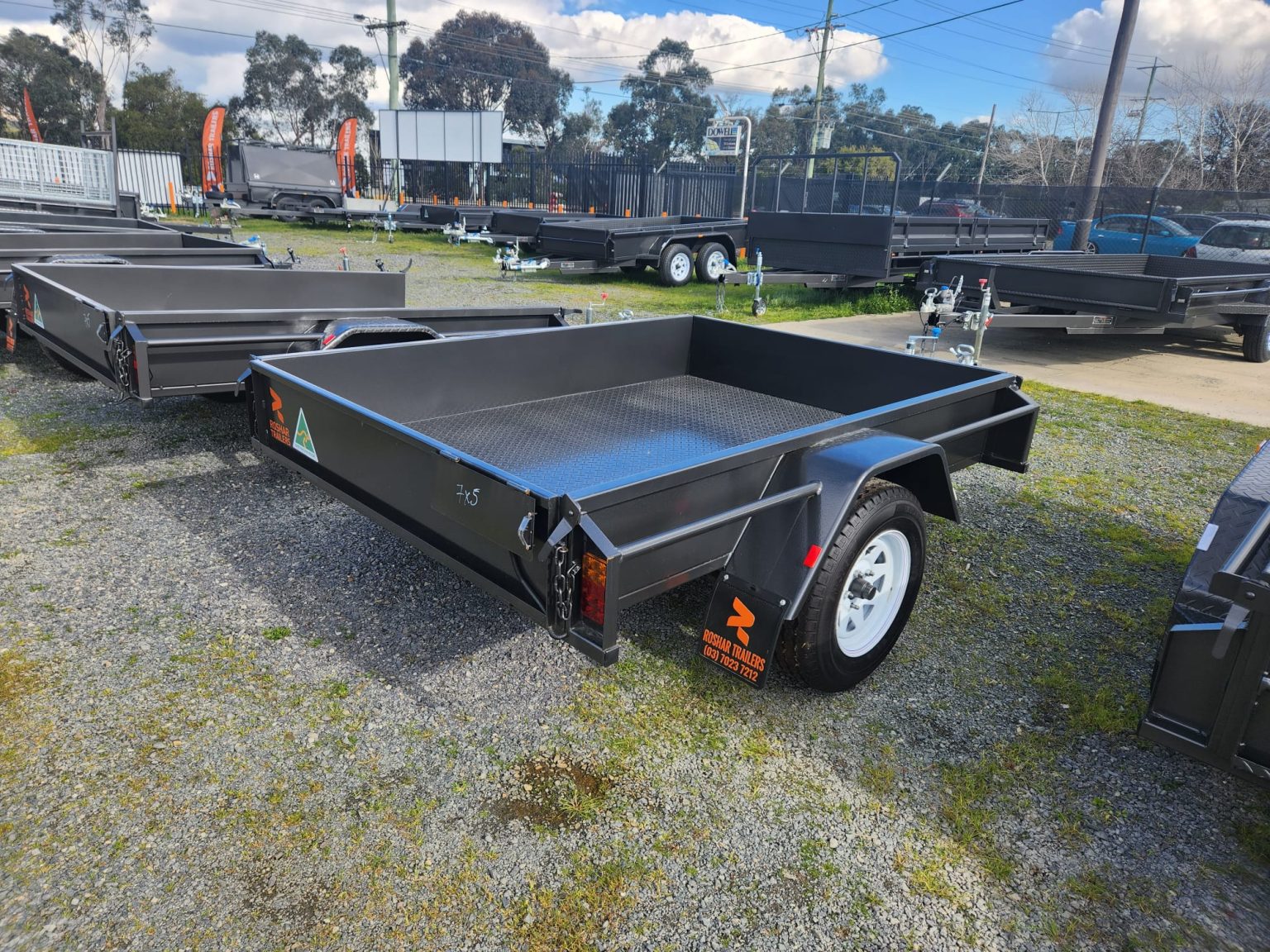
Single axle trailers can be practical when:
- Loads are relatively light
- Manoeuvrability matters
- The trailer is compact
- The trailer is used for general transport
Tandem axle
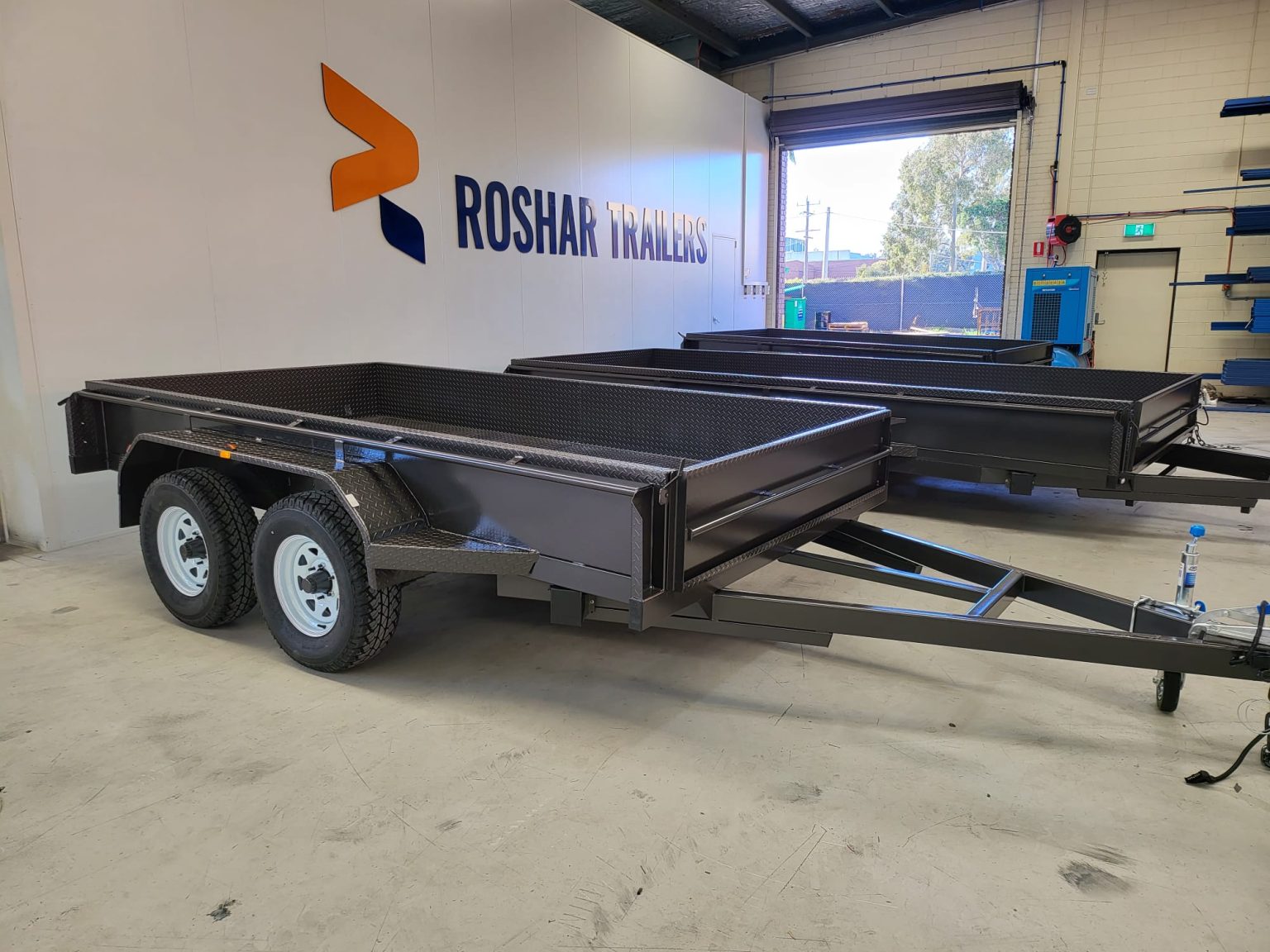
Tandem trailers can be preferable when:
- Loads are heavier
- More carrying capacity is required
- The trailer is used frequently
- Stability and load distribution are important
- The trailer is designed for machinery or commercial work
Roshar’s current trailer range includes tandem trailers alongside plant, machinery and tradesman options, showing how suspension and axle configuration should be considered alongside the trailer’s intended application.
Single vs tandem comparison
| Factor | Single axle | Tandem axle |
| Typical application | Light/general use | Heavier work |
| Manoeuvrability | Generally easier | Requires more space |
| Load distribution | Across one axle | Across two axles |
| Maintenance | Fewer components | More components |
| Heavy-duty applications | Limited by design | Common choice |
| Business use | Light-duty work | Frequent/heavier work |
Don’t select a tandem simply because it sounds stronger. Your trailer, tow vehicle and legal ratings still determine what you can safely carry.
Signs of Trailer Suspension Problems
Common signs of trailer suspension problems include uneven ride height, excessive bouncing, unusual tyre wear, damaged or sagging springs, worn bushes, loose hardware, unusual noises and visible movement where components should remain secure.
Suspension problems rarely appear as one dramatic symptom. Often, you notice a small change first.
Watch for these warning signs
1. Uneven ride height
If one side of the trailer sits noticeably lower than the other, inspect the springs, mounting points and related components.
2. Uneven tyre wear
Suspension, axle alignment, loading and tyre condition can all contribute to uneven wear. Don’t automatically blame the tyres.
3. Excessive bouncing
A trailer that continues bouncing after a bump may need further inspection, particularly if its behaviour has changed.
4. Cracked or damaged springs
Leaf springs should be inspected for cracks, distortion and other visible damage.
5. Worn bushes or shackles
Bushes and mounting components can wear over time, particularly on trailers exposed to dust, water and frequent loading.
6. New rattles or knocking
A new noise from underneath the trailer deserves investigation rather than being dismissed as normal trailer noise.
7. Loose or damaged fasteners
Fasteners and suspension mounting points should be checked during servicing.
Illustrative example: a landscaper may notice that a trailer now sits lower on one side after months of carrying equipment. The temptation is to keep working until the trailer becomes obviously unsafe. A better approach is to stop and have the suspension, axle, load distribution and related components inspected.
Trailer Suspension Inspection Checklist
A trailer suspension inspection should examine springs, bushes, shackles, mounting points, axle alignment, ride height, fasteners, tyres and visible damage, with the inspection frequency increased for trailers carrying heavy loads or operating on rough roads.
Use this checklist during routine checks:
| Component | What to look for |
| Leaf springs | Cracks, distortion, sagging or broken leaves |
| Shackles | Excessive movement, wear or damage |
| Bushes | Splitting, deterioration or excessive play |
| Mounting points | Loose hardware, cracks or movement |
| Rocker/roller components | Wear, damage or unusual movement |
| Torsion components | Uneven ride height or abnormal movement |
| Trailing arms | Damage, loose hardware or excessive play |
| Air suspension | Leaks, damaged bags or pressure issues |
| Axle alignment | Signs of uneven tyre wear or tracking problems |
| Tyres | Uneven wear, damage and abnormal temperatures |
| Chassis | Cracks, distortion or corrosion around mounts |
For heavier work trailers, inspection should form part of a broader check covering brakes, bearings, tyres, wheels, coupling and load-restraint equipment.
Roshar’s plant-trailer specifications show how suspension sits alongside other critical systems such as heavy-duty chassis, braking, tyres, wheels and drawbars.
Trailer Suspension Maintenance
Trailer suspension maintenance should focus on regular visual inspections, checking mounting hardware, replacing worn bushes or damaged components, lubricating serviceable parts where specified and investigating changes in ride height, tyre wear or towing behaviour.
Maintenance requirements vary significantly between suspension designs.
Leaf springs
Inspect:
- Leaves
- Bushes
- Shackles
- Pins
- Mounting hardware
Where greasable pins are fitted, follow the manufacturer’s lubrication recommendations.
Without a Hitch specifically notes that greasable leaf-spring pins can require regular lubrication, particularly where trailers operate in dusty or wet environments.
Rubber/torsion systems
These can have fewer routine service points, but that doesn’t mean they should be ignored. Check fasteners, ride height, tyres, wheels and signs of abnormal movement.
Modern Trailers states that its ITS systems require periodic inspection of fasteners alongside maintenance of brakes, bearings and wheels.
Air suspension
Inspect:
- Airbags
- Lines
- Fittings
- Valves
- Pressure
- Compressor/reservoir where fitted
Independent systems
Check:
- Arms
- Bushes
- Springs
- Mounting hardware
- Wheel alignment
- Signs of uneven movement
The important rule: follow the suspension and trailer manufacturer’s service instructions. Don’t apply the same maintenance schedule to every suspension design.
Which Suspension Is Best for Different Trailer Types?
The best suspension depends on the trailer’s intended application: general-purpose trailers often suit leaf-spring arrangements, heavy work trailers may use multi-leaf or rocker-roller systems, while specialist trailers can benefit from torsion, independent, air or coil-based designs.
The following is a practical starting point rather than a universal specification.
| Trailer application | Suspension direction to investigate | Why |
| General box trailer | Leaf spring | Simple, practical and serviceable |
| Tradesman trailer | Leaf or suitable work-rated system | Daily tools and equipment require dependable support |
| Tandem work trailer | Multi-leaf/rocker roller or other rated system | Designed around heavier loads |
| Plant trailer | Heavy-duty rated suspension | Machinery creates demanding loading conditions |
| Machinery trailer | Heavy-duty leaf/roller or suitable specialist system | Requires capacity and durability |
| Off-road trailer | Independent/trailing-arm or suitable heavy-duty design | Wheel movement and ground clearance can matter |
| Specialist transport | Air or independent system | Useful where ride or adjustment is important |
Roshar’s plant trailers, for example, are available with Rocker Roller 5 Leaf to 9 Leaf suspension and different GVM, brake, floor and ramp configurations.
For tradesman trailers, the suspension choice should be considered alongside tool storage, payload, chassis construction and the frequency of towing. A heavily loaded tradesman setup used every day has different requirements from an occasional-use trailer.
How Suspension Choice Affects Your Trailer Purchase
Suspension should be considered before buying a trailer because changing the suspension strategy later can affect ride height, load capacity, axle geometry, tyres, brakes and the trailer’s overall design.
If you’re looking for a trailer for sale, don’t ask only, “What suspension does it have?”
Ask:
- What load is the suspension rated for?
- What is the trailer’s ATM and GTM?
- What is the actual tare?
- What payload remains?
- Is it single or tandem axle?
- What tyres and wheels are fitted?
- What braking system is included?
- How does the manufacturer recommend servicing the suspension?
- Is the trailer designed for highway, worksite or rough-road use?
- What happens if a suspension component needs replacement?
This approach gives you a much better comparison between trailers.
When Should You Get Professional Help?
Get professional trailer advice when you notice uneven ride height, repeated tyre wear, broken springs, unusual suspension movement, structural damage or changes in towing behaviour, or when you are selecting suspension for a heavy commercial trailer.
A suspension problem can involve more than the suspension itself.
For example, uneven tyre wear could involve:
- Alignment
- Axle damage
- Suspension wear
- Incorrect loading
- Tyre pressure
- Wheel problems
Replacing one component without identifying the underlying issue can leave the original problem unresolved.
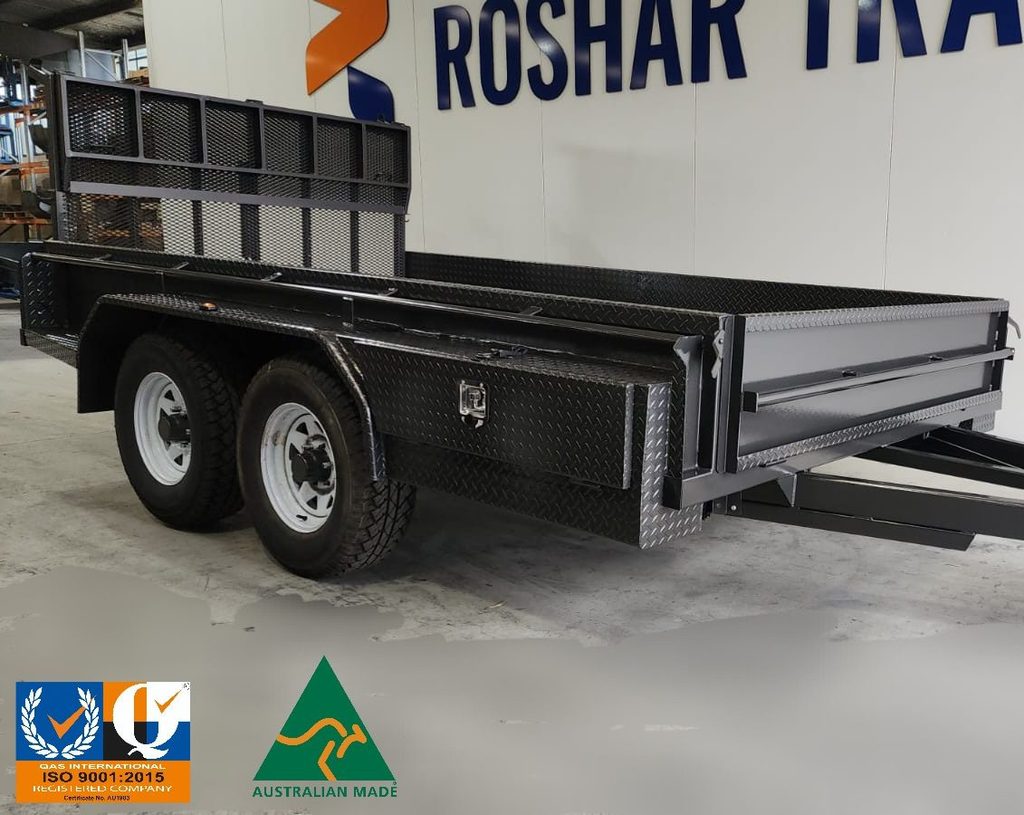
For commercial users, this matters even more. A plant trailer carrying expensive machinery needs the entire system assessed, not just the component that looks damaged.
Conclusion
There are several trailer suspension types, and each has a place. Leaf-spring arrangements remain practical for many work trailers, while rocker roller, torsion, independent trailing-arm, air and coil-based systems provide different characteristics for specialised applications.
The best choice comes down to your load, trailer type, axle configuration, road conditions, towing frequency and maintenance expectations.
If you’re comparing tandem trailers, tradesman trailers, plant trailers or another work-focused trailer, look at the complete specification rather than choosing suspension in isolation.
Roshar Trailers builds trailer solutions for tradies, contractors, landscapers, machinery operators, farmers and businesses across Melbourne, with locations in Braeside, Bayswater North and Dandenong. Its plant range demonstrates the importance of matching suspension, GVM, brakes, chassis, floor and ramp configuration to the equipment being transported.
Need help choosing the right trailer setup? Contact Roshar Trailers and discuss your load, towing vehicle and intended use before ordering.
Braeside | Bayswater North | Dandenong
Contact Roshar Trailers for a trailer quote
roshartrailers.com.au
FAQ’S
Can trailer suspension be upgraded later?
Yes, but only if the trailer chassis, axle, brakes, wheels, tyres and mounting arrangement are compatible with the proposed change. A suspension upgrade isn’t simply a matter of installing stronger springs. The complete trailer specification should be assessed before changing components, particularly where capacity or ride height could change.
Can different suspension types be used on the same trailer?
Yes, but only as part of an engineered and manufacturer-approved configuration. Mixing suspension systems can affect ride height, axle geometry, braking behaviour and load distribution. On a tandem trailer, both axle assemblies should be designed to work together rather than combining unrelated components without checking compatibility.
Does suspension affect a trailer’s payload?
Yes, the suspension is one part of the trailer’s overall load-carrying system. Payload is also constrained by the trailer’s ATM, GTM, axle ratings, tyres, wheels, brakes and chassis. Installing a higher-rated suspension component does not automatically increase the legal payload of the complete trailer.
Does a heavier suspension always give a better ride?
No, heavier suspension isn’t automatically more comfortable. A suspension system needs to be matched to the trailer’s actual load range. An overly stiff setup can behave poorly when lightly loaded, while an unsuitable light-duty system may struggle under repeated heavy loads. Ride quality and load capacity need to be considered together.
Can trailer suspension problems cause tyre wear?
Yes, suspension or axle problems can contribute to abnormal tyre wear, but tyres can also wear unevenly because of alignment, pressure, loading, wheel condition or other issues. If wear appears on one tyre or one side of the trailer, inspect the complete wheel, axle and suspension system rather than replacing the tyre alone.
Does trailer suspension need inspection after loading heavy machinery?
Yes, heavy machinery loading is a good reason to inspect the trailer’s suspension, tyres, wheels, ramps, brakes, coupling and restraint points before travel. Pay particular attention to ride height, visible damage and unusual movement after loading. The trailer should remain within its rated capacity and towing-vehicle limits.