
37 Malcolm RD, Braeside, VIC
How to Stop a Trailer from Being Stolen: Security Tips for Owners
24 August 2026 | roshartrailers
Table of Contents
By Roshar Trailers Team, Trailer Manufacturing
Published: 24 August 2026
Trailer security tips work best when you layer visible locks, smart parking, GPS tracking, property marking, good records and daily habits. No single device stops every thief, but every extra barrier adds time, noise, visibility and recovery options.
Trailer theft is not only a problem for caravan owners. Tradies can lose tools and site equipment. Landscapers can lose mower trailers and green-waste setups. Farmers can lose machinery support trailers. Vehicle owners can lose a car trailer just when they need it most.
For Roshar customers using trailers for trade, construction, landscaping, vehicle transport and everyday towing, the practical goal is simple: make your trailer harder to move, easier to identify and faster to report if something goes wrong.
What are the best trailer security tips for Australian owners?
The best trailer security tips are to use a coupling lock, wheel clamp, locked storage, GPS tracker, alarm, number plate security screws, identifying marks and written ownership records. Together, these reduce theft opportunities and improve recovery chances.
Think of security in layers. One lock slows a thief. Two locks create more work. Good parking reduces access. A GPS tracker improves recovery options. Photos, VIN records and distinguishing features help police and insurers identify the trailer.
Victoria Police recommends securing and parking caravans or trailers safely, using technology such as sensor lights, GPS trackers, wheel clamps, coupling padlocks and alarms, and keeping records such as VIN, registration, brand, model and distinguishing features.
Trailer security layer table
| Security layer | Example | Why it helps |
| Physical lock | Coupling lock, hitch lock, wheel clamp | Makes the trailer harder to hitch or tow |
| Access control | Locked gate, shed, blocked driveway | Makes the trailer harder to reach |
| Visibility | Sensor light, CCTV, visible clamp | Increases risk for opportunistic thieves |
| Tracking | Hidden GPS tracker or security device | Helps locate the trailer after theft |
| Identification | VIN record, photos, markings, number plate screws | Makes reporting and recovery easier |
| Contents security | Lockable toolbox, cable lock, alarm | Protects tools, gear and accessories |
| Routine | Lock it every time, even for short stops | Stops “quick opportunity” theft |
How to stop a trailer from being stolen at home or work?
To stop a trailer from being stolen, make it difficult to access, difficult to hitch, difficult to move and easy to identify. Use locks, clamps, blocked parking, lighting, tracking, markings and a routine check before leaving it unattended.
At home, the safest place is usually behind a locked gate, inside a shed or in a driveway where another vehicle blocks access to the drawbar. If the trailer must be visible from the street, use obvious deterrents such as a wheel clamp and coupling lock.
At a worksite, the risk changes. The trailer may be left in open parking, a construction zone, a rural property entrance or a shared industrial yard. In these settings, treat the trailer like mobile business equipment. Lock the trailer, lock the contents, remove portable valuables and avoid leaving expensive tools visible.
Big Man Trailer’s security guide also recommends secure storage, coupling locks, hitch locks, wheel clamps, GPS tracking, smart parking, unique identifiers and wireless alarms as common ways to reduce trailer theft risk.
Daily anti-theft process
- Lock the coupling before walking away: the trailer should not be easy to connect to another tow vehicle.
- Add a visible wheel clamp: a clamp tells thieves the trailer will take time and noise to move.
- Block the drawbar where possible: park another vehicle, wall or fixed obstacle near the hitch side.
- Remove loose valuables: tools, ramps, generators, straps and small machines should not sit exposed.
- Turn on lighting or camera coverage: thieves prefer dark, quiet and hidden spots.
- Check the trailer after long storage: locks, tyres, trackers, alarms and batteries should still work.
- Keep records updated: photos and VIN details are only useful if you can access them quickly.
Which trailer locks are worth using?
The most useful trailer locks are coupling locks, hitch locks, wheel clamps, locking hitch pins, heavy chains, padlocks for toolboxes and door locks for enclosed trailers. Use at least two different lock types because each protects a different theft point.
A coupling lock protects the front of the trailer when it is unhitched. A hitch pin lock helps when the trailer is connected to a tow vehicle. A wheel clamp stops or slows wheel movement. Toolbox locks protect contents. Heavy chains can anchor the trailer to a fixed point where suitable.
Camec’s security guide recommends combining a hitch lock and wheel clamp as layered protection, noting that thieves usually prefer quick targets and that added time and difficulty can encourage them to move on.
Trailer lock comparison
| Lock type | Best use | Limitation |
| Coupling lock | Trailer parked unhitched | Does not stop the trailer being moved by other methods |
| Hitch pin lock | Trailer attached to tow vehicle | Only helps if the tow setup is also secured |
| Wheel clamp | Visible deterrent for parked trailers | Must fit the wheel size properly |
| Heavy chain and padlock | Anchoring trailer to fixed point | Chain and anchor quality matter |
| Toolbox locks | Tradesman trailers and tool storage | Protects contents, not the full trailer |
| Enclosed trailer door lock | Enclosed trailers and car trailer accessories | Only protects entry points |
| Alarmed cable lock | Loose gear and accessories | Can be cut, but creates noise and attention |
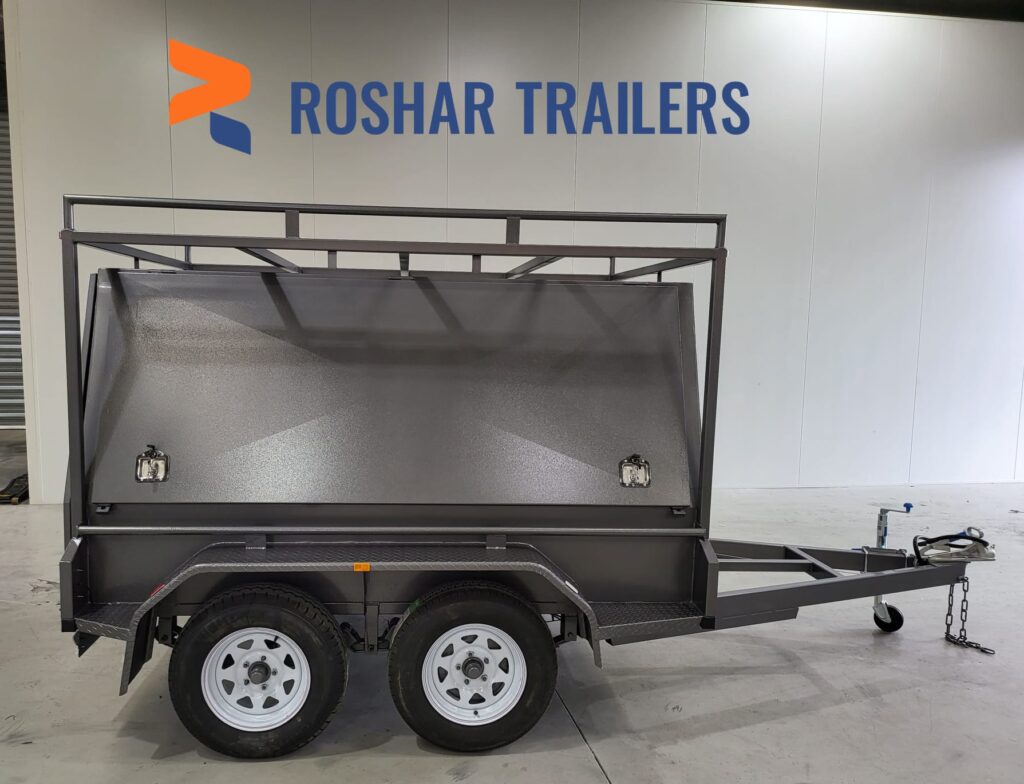
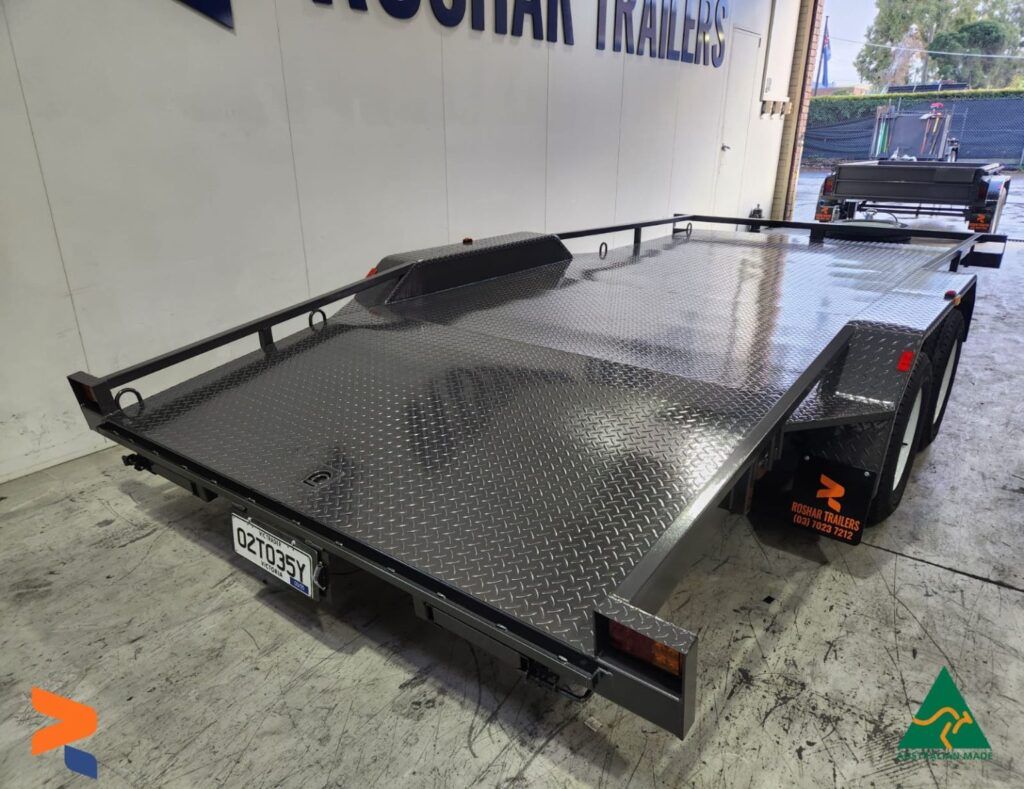
For Roshar buyers, trailer locks should be selected around the trailer type. A small box trailer may need coupling and wheel protection. A car trailer may need wheel clamps, hitch security and careful vehicle tie-down security. Tradesman trailers need both trailer theft protection and toolbox security because tools are often the bigger target.
How should you park and store a trailer safely?
Park and store a trailer where access is difficult, lighting is strong, and the drawbar is not easy to reach. Use locked gates, sheds, CCTV, sensor lights, wheel clamps, coupling locks and blocked parking whenever the trailer is unattended.
The best storage position is not always the neatest one. Facing the hitch toward a wall, fence or locked gate can make the trailer harder to connect. Parking a ute, van or another trailer in front of it creates another barrier. Keeping it out of street view reduces casual attention.
Victoria Police recommends parking caravans and trailers in well-lit and secure areas when not in use, considering commercial storage for extended periods, closing and locking doors and windows, and telling trusted neighbours if you are going away.
Storage risk table
| Storage location | Risk level | Better security setup |
| Street parking | High | Wheel clamp, coupling lock, GPS, frequent checks |
| Open driveway | Medium to high | Blocked access, lighting, clamp, lock, camera |
| Behind locked gate | Medium | Gate lock, hitch facing inward, wheel clamp |
| Garage or shed | Lower | Door lock, camera, trailer lock, contents removed |
| Worksite | High | Chain to anchor, lock contents, GPS, daily inspection |
| Industrial yard | Medium to high | CCTV, controlled access, lighting, visible locks |
| Rural property | Medium | Shed storage, gate security, neighbour awareness |
How can GPS tracking, alarms and marking improve recovery?
GPS tracking, alarms and identification marks do not replace locks, but they help detect theft, deter tampering and support recovery. The trailer should be easy for you to track and easy for police or insurers to identify.
A hidden GPS tracker can help after the trailer leaves your property. A visible warning label can also deter some thieves. A motion alarm creates noise if the trailer is moved or interfered with. Number plate security screws can make plate theft harder.
Victoria Police recommends installing GPS trackers, wheel clamps, coupling padlocks and alarms, and also recommends keeping a list of VINs, registration details, serial numbers, model numbers, unique personal codes and specific property features.
Identification checklist
- Photograph the trailer from all sides: include drawbar, wheels, rear, sides, floor, ramps and custom features.
- Record the VIN and registration: store a copy on your phone and in your business records.
- Photograph distinguishing marks: include stickers, paint marks, dents, toolboxes, racks and accessories.
- Mark valuable contents: tools, generators, mowers and accessories should have serial numbers recorded.
- Use number plate security screws: this makes it harder to remove or swap plates quickly.
- Hide tracking carefully: a tracker is easier to defeat if it is obvious.
- Test batteries and subscriptions: a tracker that is flat or inactive will not help when theft happens.
What should tradies and business owners secure differently?
Tradies and business owners should secure both the trailer and its contents. A work trailer may carry tools, compressors, mowers, machinery, spare parts, ramps, fuel cans and customer materials, so trailer security must include storage, access and inventory control.
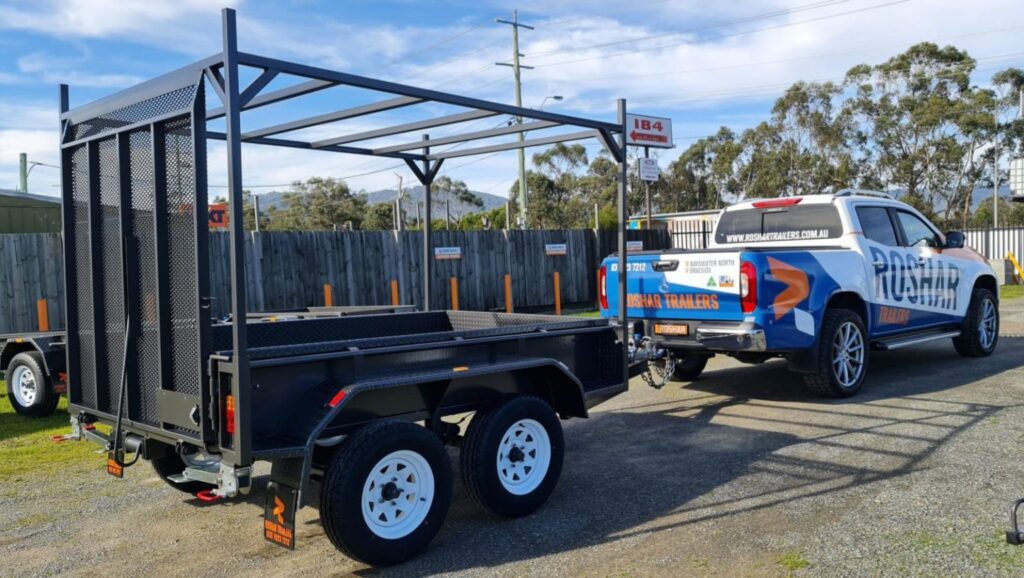
For a builder, the trailer may sit on a construction site while the crew is inside. For a landscaper, the trailer may be parked near a nature strip or driveway while work happens behind a property. For a farmer, the trailer may sit at a shed, field entrance or rural road edge. Each situation creates different theft opportunities.
Victoria Police advises securing property outside caravans and trailers, removing valuables from view, marking property with a unique personal code and taking photos of valuables. It also lists “secure your tools” and “prevent construction site theft” as related business and commercial safety topics.
Work trailer security framework
| Business use | Theft risk | Practical security step |
| Tradie trailer | Tools and lockable storage | Lock toolboxes, record tool serials, add alarm |
| Landscaping trailer | Mowers, blowers, ramps and fuel | Lock small equipment inside or to frame |
| Plant trailer | Machinery and ramps | Use visible locks, GPS and secure storage location |
| Car trailer | Vehicle, straps and trailer itself | Secure hitch, wheels, vehicle and tie-down gear |
| Rural trailer | Low visibility and long storage | Store in shed, lock gates, use tracker |
| Construction trailer | Open site access | Chain to fixed point and park under lighting |
| Enclosed trailer | Contents hidden but valuable | Door locks, alarm, GPS and inventory photos |
Roshar’s range of trailers for sale includes options for trade, business, construction, landscaping, machinery transport, vehicle carrying and everyday towing across Victoria. When buying or upgrading, consider how the trailer will be secured after hours, not only how it carries the load.
What should you do if your trailer is stolen?
If your trailer is stolen, stay safe, do not confront the offender, contact police, notify your insurer and provide the trailer’s registration, VIN, photos, identifying marks, GPS location if available and any CCTV or witness information.
Speed matters, but safety matters more. Do not chase the trailer or approach a suspected thief. Share accurate details with police, including the last known location, time discovered, direction of travel if known and any tracking information.
Victoria Police says not to confront an offender, not to touch anything after theft or burglary, to call the insurance company and provide the police report number. For emergencies call Triple Zero, and for non-emergencies call the Police Assistance Line on 131 444.
Stolen trailer reporting checklist
| Detail | Why it helps |
| Registration number | Helps identify the trailer quickly |
| VIN or chassis number | Confirms identity even if plates are removed |
| Brand, model and size | Helps police classify and search |
| Distinguishing features | Custom paint, dents, racks, cages, toolboxes or stickers |
| Photos or video | Helps prove appearance and ownership |
| GPS location | Can support recovery if provided safely to police |
| Tool and accessory list | Helps with insurance and property recovery |
| CCTV or witness details | Gives police a starting point |
What trailer security features should buyers consider?
When buying a trailer, think about security before delivery. Consider lockable storage, toolbox design, enclosed body options, tie-down locations, ramp storage, wheel clamp fit, coupling lock compatibility, GPS hiding spots and whether the trailer can be parked safely at home or work.
Security is easier to plan before the trailer is built or purchased. A tradesman trailer can include better tool storage. An enclosed trailer can reduce visibility of contents. A plant trailer can have proper tie-down points and lockable ramp storage. A car trailer can be planned around how the vehicle and straps will be secured when parked.
Roshar Trailers is a Melbourne trailer manufacturer with locations in Braeside, Bayswater North and Dandenong, building and selling box trailers, flat top trailers, cage trailers, tipper trailers, hydraulic tipper trailers, car carrier trailers, tradesman trailers, plant trailers, machinery trailers and custom trailer solutions.
Security questions before buying
- Where will the trailer sleep at night? storage location decides what locks and tracking make sense.
- What valuable gear will it carry? tools and machinery may need separate locks and records.
- Can the coupling accept a quality lock? check compatibility before buying a lock.
- Can a wheel clamp fit easily? wheel size and guard clearance matter.
- Can a GPS tracker be hidden properly? a visible tracker is easier to remove.
- Does the design hide or expose contents? open trailers need more routine content security.
- Will the trailer be left on worksites? worksites need extra parking and access control.
Conclusion
The strongest trailer security tips are simple: use layers, make towing difficult, make theft noisy, make the trailer visible to cameras and make ownership easy to prove. Locks, GPS, smart parking and records work best together.
For a secure trailer setup that suits trade, landscaping, vehicle transport, farming or everyday use, speak with Roshar Trailers about trailer type, storage habits and practical security considerations before choosing your next trailer.
FAQ’S
Are trailer locks enough to stop theft?
No, trailer locks help, but they should not be the only security measure. Use a coupling lock with a wheel clamp, smart parking, lighting, GPS tracking and good ownership records. The goal is to make the trailer slower, louder and riskier to steal.
Can a trailer be stolen while attached to a vehicle?
Yes, a trailer can still be targeted while attached, especially if the hitch pin, safety chains or vehicle are not secured. Use a locking hitch pin, lock the vehicle, avoid leaving valuables visible and park where cameras, lighting or people increase risk for thieves.
Should I remove the trailer wheels for storage?
Yes, for long-term storage, removing a wheel can make theft harder, but it is not practical for daily work use. Use this only when the trailer will sit unused for weeks or months, and still keep coupling locks, clamps and records in place.
Where should I hide a GPS tracker on a trailer?
Hide it where it is protected from weather, not obvious to a thief and still able to send a signal. Do not place it where road vibration, heat or water will damage it. Test the location before relying on it for theft recovery.
Are tradesman trailers more likely to be targeted?
Yes, they can be attractive because they may contain tools, compressors, batteries, ladders and valuable small equipment. Secure the trailer itself and the contents separately. Keep tool serial numbers, lock toolboxes, remove high-value portable gear and avoid advertising what is inside.
What is the cheapest way to improve trailer security?
Start with better parking and visible deterrents. Park behind a locked gate, block the drawbar, add a coupling lock, use a wheel clamp and remove valuables. These steps are usually cheaper than replacing a stolen trailer or losing tools needed for work.
Should I report suspicious trailer activity?
Yes, report suspicious activity if someone appears to be inspecting, towing, photographing or tampering with a trailer without permission. Record safe details such as time, location, vehicle description and direction of travel. Do not confront the person yourself.