
37 Malcolm RD, Braeside, VIC
6 Reasons Your Trailer Pulls to One Side
16 November 2026 | roshartrailers
Table of Contents
By Writer :- Ron
Roshar Trailers Team, Trailer Manufacturing and Sales Specialists
Published: 16/11/2026
If your trailer pulls to one side, check tyre pressure, loading, brakes, axle alignment, suspension, and wheel or bearing condition. Start with simple checks, then stop towing if the pull is sharp, persistent, or accompanied by heat, noise, vibration, or poor braking.
A trailer that suddenly starts tracking differently is worth investigating. You might notice it after loading a work trailer, replacing a tyre, hitting a pothole, travelling on a rough worksite, or simply towing after the trailer has been sitting for a while.
The important thing is not to assume the cause. A directional pull can come from something as simple as uneven tyre pressure, but it can also point to a brake, axle, suspension or wheel-end problem.
This guide gives you a practical way to narrow down the cause without turning a safety issue into a roadside experiment.
Why does my trailer pull to one side?
A trailer can pull to one side because of tire problems, uneven loading, brake imbalance, axle alignment, suspension wear, or wheel and bearing faults. Road camber and the towing setup can also influence direction, so the symptom needs to be diagnosed rather than guessed.
The first clue is when the pulling happens.
| What you notice | Area to investigate first |
| Pulls while cruising | Tyres, loading, axle or suspension |
| Pulls mainly during braking | Trailer brakes |
| Started immediately after loading | Load distribution or tyre pressure |
| Started after a pothole or kerb impact | Axle, wheel or suspension |
| Trailer leans to one side | Suspension or uneven loading |
| One hub becomes unusually hot | Bearing or brake drag |
| Pull changes between different roads | Road camber or surface |
| Pull remains on different roads | Trailer running gear or towing setup |
This distinction is useful because not every directional movement means the same thing.
For example, a trailer that gently drifts towards the lower side of a crowned road is different from a trailer that consistently moves left on several reasonably level roads.
According to Transport Victoria, roadworthiness requirements cover areas including wheels and tyres, suspension, brakes, body and chassis, and towing couplings. Those are also the areas worth considering when a trailer develops a persistent handling problem.
Can trailer tyres cause a trailer to pull?
Tyre problems can make a trailer track unevenly because different pressures, wear patterns, or damage change how each wheel contacts the road. Check all tyres cold and look for uneven tread, sidewall damage, rubbing, or repeated pressure loss.
Start here because it is one of the easiest checks to perform.
Check tyre pressure
A difference in pressure between left and right can change how the trailer rolls and tracks.
Do not simply inflate both tyres to a number you remember from another vehicle. Use the pressure specified for your trailer and tyre setup.
Check:
- Left and right trailer tyres
- All tyres on a tandem trailer
- Spare tyre condition
- Visible sidewall condition
- Valve stems
- Tread wear
According to Transport Victoria, tyres are critical to handling and traction, and the department’s tyre guidance says tyres should be checked regularly and meet applicable road-use requirements.
Look for uneven wear
Uneven wear can be a symptom rather than the original problem.
For example, if the inside edge of one tyre is wearing faster than the rest, replacing that tyre may not solve the issue. The axle, suspension or wheel alignment may need investigation.
Lippert’s axle guidance explains that correct axle camber helps keep tyres aligned with the road and supports even tyre wear. It also identifies pulling to one side and uneven tyre wear as possible signs of axle alignment problems.
Check for damage
Look for:
- Bulges
- Cracks
- Cuts
- Exposed cords
- Foreign objects
- Tread separation
- Tyre rubbing
- Repeated pressure loss
If a tyre has structural damage, don’t keep towing simply because it still holds air.
Can uneven loading make a trailer pull?
Uneven loading can make a trailer sit differently from left to right, changing the load carried by each tyre and suspension component. This matters most when heavy tools, machinery, soil, or equipment are concentrated on one side.
This is particularly relevant for tradies, landscapers, farmers and contractors because their loads change from job to job.
A trailer carrying a mower, soil and equipment might behave normally when empty but start tracking differently once the heavier items are loaded on one side.
Check side-to-side distribution
Heavy equipment should not be concentrated entirely on one side of the trailer.
Before towing, look at:
- Left-to-right weight distribution
- Front-to-rear load position
- Load height
- Load restraint
- Trailer ride height
- Tyre clearance
The National Transport Commission says light-vehicle loads must be properly restrained, must not exceed applicable mass limits and must not endanger other road users.
Check what changed
A useful diagnostic clue is timing.
If the trailer was towing normally yesterday and started pulling immediately after today’s load was added, inspect the load before assuming something mechanical has failed.
For example, a landscaper may load a heavy mower, bags of soil and green waste. If the mower and soil are both positioned heavily on one side, the trailer can sit unevenly and place different loads on the suspension.
Don’t just move the load until the steering “feels better”. Keep the overall load within the trailer’s rated capacity and secure it correctly.
Why does a trailer pull to one side when braking?
If the trailer pulls mainly when you brake, suspect an uneven braking response before assuming the tow vehicle is at fault. One brake may apply differently, drag, or suffer from adjustment, contamination, wiring, or hydraulic problems.
This symptom deserves more attention than a mild directional drift while cruising.
Pulling only during braking
If the trailer tracks normally while cruising but moves left or right when the brakes are applied, investigate the braking system.
Possible causes include:
- Uneven brake adjustment
- Worn brake components
- Brake drag
- Electric brake wiring problems
- Faulty brake components
- Hydraulic brake issues
- Contamination
- Incorrect brake-controller settings
Do not repeatedly change the brake controller to hide the problem.
A controller setting cannot repair a damaged brake component or mechanical drag.
Pulling that gets worse after driving
Heat provides another clue.
If the trailer feels normal when cold but begins pulling more strongly after several kilometres, a dragging brake or wheel-end problem deserves investigation.
A significantly hotter hub or wheel compared with the opposite side is not something to ignore.
When to stop
If the trailer pulls hard under braking, braking becomes unpredictable, or one wheel is producing unusual heat or smell, stop loaded towing and arrange an inspection.
Can axle alignment cause a trailer to pull?
Axle alignment affects how the wheels track behind the tow vehicle, so a shifted, bent, or incorrectly positioned axle can create a persistent directional pull. Impacts, overloads, rough worksites, or suspension problems can change axle position and tyre wear.
Axle problems can develop after:
- Hitting a large pothole
- Striking a kerb
- Overloading
- Rough worksite use
- Suspension damage
- Incorrect previous repairs
- Structural impact
Look for these clues
A possible axle problem may be accompanied by:
- Persistent pulling
- Uneven tyre wear
- Wheels that don’t look symmetrical
- Trailer “dog tracking”
- A change after an impact
- One side sitting differently
- Repeated tyre replacement
Lippert explains that a trailer axle helps maintain wheel alignment and tracking, while incorrect camber or a bent axle can contribute to poor handling and uneven tyre wear.
Don’t improvise an axle repair
If an axle appears bent or displaced, don’t attempt to straighten or modify it without proper technical assessment.
The correct repair depends on the trailer design, axle specification, suspension arrangement and applicable requirements.
For light trailers in Victoria, Transport Victoria notes that applicable trailer standards include Vehicle Standards Bulletin 1 requirements, and modifications that affect compliance may require appropriate assessment.
Can trailer suspension cause pulling?
Worn or damaged suspension can change ride height, wheel position, and load distribution, allowing one side to behave differently. Look for a trailer that leans, bounces excessively, makes clunking noises, rubs tyres, or shows damaged springs, bushes, shackles, or mounts.
A suspension issue may be obvious when the trailer is empty but become more noticeable under load.
Inspect the suspension visually
Look for:
- Cracked springs
- Broken spring leaves
- Worn bushes
- Damaged shackles
- Loose mounting hardware
- Sagging
- Uneven ride height
- Tyre-to-guard contact
- Unusual movement
A trailer that sits noticeably lower on one side deserves attention.
Consider the trailer’s workload
A trailer used for garden tools and a trailer used to carry machinery experience very different loads.
If a trailer has gradually moved from light domestic use to daily commercial work, the original suspension setup may no longer be suitable for the way the trailer is being used.
That’s especially relevant for contractors, landscapers and farmers who regularly work on uneven surfaces.
If you’re comparing a new setup, Roshar’s trailer range includes single-axle, tandem and other configurations designed for different load requirements.
Can wheel bearings or hubs cause a trailer to pull?
A damaged wheel, hub, or bearing can create resistance on one side and make the trailer track differently. Heat, grinding, vibration, wheel play, grease leakage, or unusual tyre wear are warning signs that warrant inspection before further towing.
Watch for abnormal heat
After a short trip, and only when safe, compare the general temperature of the wheel ends without touching components that may be extremely hot.
If one side is significantly hotter, investigate.
Possible causes include:
- Bearing problems
- Brake drag
- Hub damage
- Poor bearing adjustment
- Lubrication problems
Listen for unusual noise
Grinding, rumbling or repeated vibration shouldn’t be treated as normal trailer noise.
A bearing fault can progress from a minor maintenance issue to a wheel-end failure.
Check for wheel movement
Excessive wheel play is another reason to stop and arrange an inspection.
Don’t keep towing a loaded trailer to see whether the problem disappears.
For regular trailer servicing, wheel bearings should be considered alongside tyres, brakes and suspension rather than treated as a separate component.
Roshar’s existing maintenance guidance also recommends regular attention to tyres, bearings, brakes, suspension, couplings and other running-gear components.
Could road camber or the towing setup be causing the problem?
A trailer can feel like it is pulling when the real influence is road surface, tow vehicle alignment, coupling setup, or drawbar geometry. Road camber can create mild drift, but a consistent pull across different roads deserves investigation.
Australian roads are not perfectly flat. Many roads have a crown or slope that helps manage drainage.
So compare the behaviour.
| Test observation | More likely explanation |
| Pull changes with road direction | Road camber may contribute |
| Pull occurs only on one road | Surface/camber may be influencing it |
| Pull occurs on several roads | Investigate trailer or towing setup |
| Pull began after coupling changes | Check coupling/drawbar setup |
| Pull started after a tow vehicle change | Check the complete towing combination |
| Pull is sudden and severe | Stop and inspect before continuing |
The key is consistency.
If the trailer tracks differently depending on the road surface, don’t immediately assume an axle fault. If it behaves the same way across different reasonably level roads, investigate the trailer and towing combination.
What should you do when a trailer starts pulling?
The safest diagnostic order is to check easy causes first: tyres, load position and coupling, then assess brakes, suspension, axle alignment, and wheel-end condition. Do not conduct high-speed tests; if the trailer feels unstable or brakes unevenly, stop and arrange inspection.
Trailer pulls to one side checklist
1. Check the tyre pressures: inspect all trailer tyres when cold and compare pressures with the specified setup.
2. Inspect tyre condition: look for uneven wear, cracks, bulges, cuts, rubbing or repeated pressure loss.
3. Check the load: make sure heavy items are not concentrated on one side and that the trailer remains within its rated capacity.
4. Check when the pull occurs: note whether it happens while cruising, after loading, during braking or only on certain roads.
5. Inspect the suspension: look for leaning, broken springs, damaged bushes, loose shackles or unusual ride height.
6. Check axle and wheel-end condition: look for visible alignment issues, unusual tyre wear, wheel play, noise or excessive heat.
7. Stop if the fault is severe: arrange professional inspection if braking is uneven, the trailer pulls sharply, a hub is unusually hot, or structural damage is visible.
This order helps you move from the simplest checks to the more technical causes without randomly replacing parts.
When should you arrange professional trailer repairs?
Professional inspection is appropriate when the pull remains after basic checks or comes with braking problems, unusual tyre wear, hot hubs, wheel play, suspension damage, structural cracks, or coupling concerns. Continuing to tow can turn a manageable repair into a larger failure.
You should arrange trailer repairs if:
- The pull is persistent
- The trailer pulls sharply
- Braking is uneven
- One hub becomes unusually hot
- A wheel has excessive movement
- Tyres continue wearing unevenly
- Suspension components are damaged
- The axle appears displaced
- The drawbar or chassis is cracked
- The coupling is damaged
Transport Victoria’s roadworthiness guidance covers wheels and tyres, suspension, brakes, body/chassis and towing couplings because these components directly affect road safety and compliance.
Don’t try to compensate for a mechanical problem by changing your driving style.
A trailer that needs a running-gear inspection needs a running-gear inspection.
How much can trailer repairs cost?
Trailer repair costs vary by fault and trailer size, so there is no single price for a pulling problem. Published Victorian examples list basic services from about $145, full services from $245, and tandem or more involved work higher, before additional parts.
These are published market examples, not Roshar Trailers prices.
The final cost depends on what is actually wrong.
| Possible repair area | What can affect the cost |
| Tyres | Tyre size, rating and how many need replacing |
| Brakes | Adjustment, wiring, magnets, drums or other components |
| Bearings | Inspection, repacking, seals, bearings or hub damage |
| Suspension | Springs, bushes, shackles or mounting damage |
| Axle | Alignment, replacement specification and related components |
| Coupling | Coupling type, rating and mounting condition |
| Structural repair | Location and extent of chassis/drawbar damage |
The important point is to diagnose the cause before buying parts.
Replacing tyres because they look worn won’t solve a bent axle. Adjusting a brake controller won’t repair a dragging brake. Replacing a bearing won’t correct an underlying suspension problem.
For businesses, that distinction can save both repair costs and lost work time.
When is it time to consider a different trailer?
Sometimes a recurring pulling problem is a sign that the trailer no longer matches the work rather than a single component failure.
Consider a replacement or custom configuration when:
- Your loads have become significantly heavier
- You regularly exceed the practical capacity of the current setup
- The trailer needs repeated running-gear repairs
- You need better braking capacity
- You need a different axle configuration
- You require more secure load-restraint points
- Your business has moved from occasional to daily use
For example, a landscaper who originally bought a general box trailer may eventually need a tandem, cage or hydraulic tipper setup as the business takes on larger jobs.
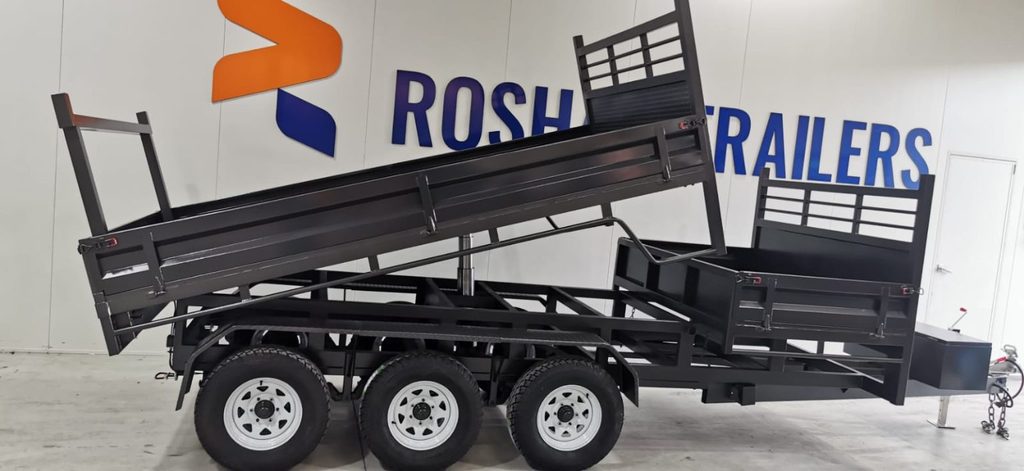
If you’re comparing tipper trailers for sale Melbourne, look at the complete configuration, not just the tipping mechanism. Load rating, chassis, suspension, braking, tyres and the intended material all matter.
Roshar’s current trailer range includes box, cage, flat top, machinery, plant, tandem, tradesman and hydraulic tipper configurations.
Conclusion
When your trailer starts pulling, don’t immediately replace a tyre or adjust the brake controller and hope the problem disappears. Start with tyres and loading, then investigate brakes, axle alignment, suspension and wheel-end components.
If the problem persists, arrange professional trailer servicing or trailer repairs before returning to heavy or highway towing.
For Melbourne tradies, contractors, landscapers, farmers and small businesses, Roshar Trailers offers trailer sales, custom builds and repairs and maintenance support across Braeside, Bayswater North and Dandenong.
FAQ’S
Should I replace both trailer tyres if one is badly worn?
Yes, in many cases. If tyres are fitted as an axle pair, replacing only one can leave different tread depth, construction or wear characteristics side to side. Follow the tyre and trailer manufacturer’s guidance, and investigate why the original tyre wore badly before fitting replacements.
Can a trailer still pull if the tyres have equal pressure?
Yes, equal pressure does not rule out tyre damage, uneven wear, incorrect tyre specification, axle misalignment, suspension problems, brake drag or bearing issues. Pressure is only one check. If the trailer continues to pull with correctly inflated tyres, move to the other parts of the running gear.
Does a replacement axle need to match the original trailer rating?
Yes, the replacement axle must suit the trailer’s approved configuration and required capacity. Matching only the physical dimensions is not enough. Axle rating, hub, brake, suspension and mounting specifications all matter, and changing trailer capacity may require manufacturer or engineering approval.
Should I inspect the tow vehicle if the trailer suddenly tracks differently?
Yes, sometimes. Check the tow vehicle’s tyre pressures, alignment symptoms, towbar condition and coupling setup, especially if the trailer behaves differently behind another vehicle. A trailer that tracks normally behind one vehicle but pulls behind another deserves a towing-system check rather than a trailer-only diagnosis.
Can wheel nuts contribute to a trailer tracking problem?
Yes, potentially. Loose or incorrectly fitted wheel nuts can allow wheel movement, vibration and uneven tracking, while damaged studs or hubs can create similar symptoms. Wheel nuts should be fitted and torqued according to the wheel or trailer manufacturer’s specification, not tightened by feel alone.
Does a tandem trailer need matching tyres across both axles?
Yes, matching tyres across a tandem setup is important for consistent handling and load sharing. Tyres should have suitable specifications, load ratings and condition for the trailer. If one tyre differs or wears unusually, investigate the cause rather than treating the tyre as an isolated issue.