
37 Malcolm RD, Braeside, VIC
7 Trailer Coupling Problems You Shouldn’t Ignore
9 November 2026 | roshartrailers
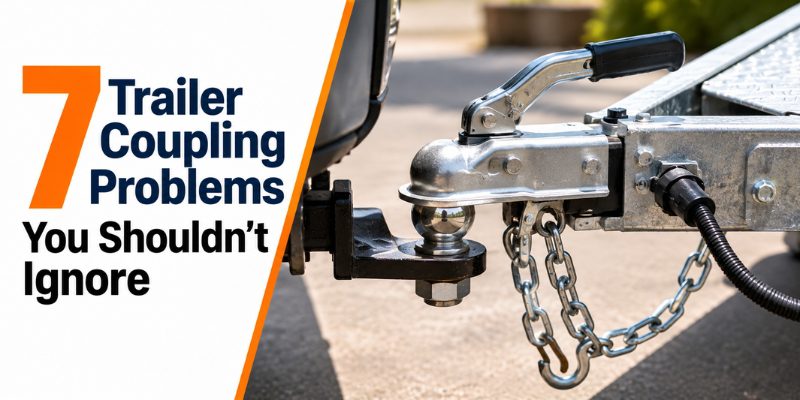
Table of Contents
By Writer :- Ron
Roshar Trailers Team, Trailer Manufacturing and Sales Specialists
Published: 06/11/2026
Trailer coupling problems can start with excessive movement, a latch that will not lock, visible cracks, corrosion, unusual noise or difficulty connecting. These signs can indicate wear, incorrect fitment or damage, and they should be checked before the trailer is towed again.
A coupling is one of the most important connection points on a trailer. It has to cope with acceleration, braking, cornering, reversing and changes in road surface while keeping the trailer connected to the tow vehicle.
For tradies, contractors, landscapers, farmers and homeowners, a coupling problem can also become a workday problem. A trailer that cannot be safely connected means tools, machinery or materials may not reach the job.
This guide explains the warning signs worth taking seriously, what you can check yourself, and when a trailer should be taken to a qualified professional.
What trailer coupling problems should you watch for?
The trailer coupling is the physical connection between your trailer and tow vehicle, so problems with locking, fitment, wear or mounting can affect the entire towing combination. Catching small changes early is easier than dealing with a failed connection on the road.
The most important problems to watch for are:
- A latch that does not lock properly
- Excessive movement or play
- Visible cracks or deformation
- Heavy corrosion or pitting
- Incorrect tow-ball or coupling fit
- Loose or damaged mounting hardware
- Unusual movement, noise or difficulty operating the mechanism
These issues don’t all mean the coupling has failed. They do mean you need to stop and work out why the behaviour has changed.
The National Heavy Vehicle Regulator recently highlighted worn, damaged or incorrectly adjusted coupling components as a contributor to coupling failures and advised regular inspections by appropriately skilled personnel. It also recommends pre-start checks before journeys, including visual inspection, checking that components are clean and confirming the coupling is correctly secured.
Coupling problem vs normal wear
| What you notice | What it could mean | What to do |
| Latch won’t lock | Dirt, wear, mismatch or damage | Do not tow until identified |
| Excessive play | Coupling or tow-ball wear | Inspect both components |
| Visible crack | Structural damage | Remove from service |
| Heavy rust or pitting | Corrosion-related deterioration | Assess condition |
| Bent coupling | Impact or overload | Professional inspection |
| Loose mounting bolts | Mounting or structural issue | Do not tow until checked |
| Clunking at the connection | Movement or component wear | Investigate before towing |
| Hard-to-operate latch | Dirt, corrosion or mechanism wear | Clean/inspect according to manufacturer instructions |
What are the main trailer coupling wear signs?
Trailer coupling wear signs usually include excessive play, difficult locking, visible cracks, deformation, corrosion, damaged locking parts or unusual movement around the coupling and drawbar. A coupling that suddenly feels different from normal deserves an inspection before the next trip.
Wear isn’t always dramatic. A coupling can gradually develop more movement or become harder to operate before an obvious failure occurs.
1. Excessive movement
Some movement is normal depending on the coupling design, but new or excessive play deserves attention.
If the connection feels noticeably looser than it did previously, inspect the coupling, tow ball and mounting area rather than assuming the movement is harmless.
2. Difficult locking
A latch that suddenly becomes stiff or refuses to lock can point to:
- Dirt or debris
- Corrosion
- Incorrect alignment
- Worn internal components
- Incorrect tow-ball size
- Damage from an impact
Never rely on force to make a damaged mechanism close.
3. Cracks or deformation
Cracks are particularly important because the coupling transfers towing forces between the trailer and vehicle.
Look closely around:
- Coupling body
- Mounting plate
- Drawbar
- Welds
- Bolt holes
A cracked or visibly deformed coupling should be assessed before the trailer is used again.
4. Corrosion and pitting
Surface discolouration isn’t automatically a structural failure, but deep pitting, flaking metal or corrosion around critical areas deserves attention.
This matters particularly for trailers exposed to:
- Rain
- Coastal air
- Wet worksites
- Mud
- Road grime
- Long periods outdoors
5. Unusual noise
A new clunk, knock or rattle around the front of the trailer can have several causes. It may involve the coupling, tow ball, drawbar, brakes, load movement or another component.
The sound itself doesn’t identify the fault. It tells you something has changed and needs checking.
What causes common trailer coupling problems?
The most common trailer coupling problems are worn locking mechanisms, excessive play, incorrect tow-ball compatibility, corrosion, damaged mounting hardware, poor alignment and structural damage. These issues can develop gradually, especially when trailers are used frequently, loaded heavily or exposed to wet conditions.
1. Repeated use
A trailer used every day experiences more coupling and uncoupling cycles than a trailer used occasionally.
Tradies who connect a trailer several times a week should pay particular attention to changes in:
- Latch operation
- Coupling movement
- Tow-ball condition
- Mounting hardware
2. Dirt and debris
Mud, grit and road contamination can interfere with moving parts.
This is particularly relevant for trailers used on construction sites, farms, landscaping projects and unsealed roads.
3. Incorrect compatibility
The coupling and tow ball need to be compatible.
Queensland Government guidance states that light-trailer couplings must be positive-locking and that coupling capacity and manufacturer markings matter. It lists typical approved couplings for light trailers, including heavy-duty 50 mm couplings and pintle-hook couplings for specified applications.
A coupling that appears to fit isn’t necessarily the correct coupling.
4. Overloading or poor load distribution
The coupling is affected by the forces created by the loaded trailer.
The NHVR identifies improper loading and poor weight distribution as factors that can increase stress on coupling components.
For example, a contractor carrying a concentrated heavy machine at the wrong position can create very different forces from a trailer carrying a balanced load.
5. Impact damage
A trailer can suffer coupling or drawbar damage after:
- A collision
- Reversing into an obstacle
- Dropping the drawbar
- Incorrect coupling
- Excessive loading
- A hard impact on uneven terrain
Even if the damage isn’t immediately obvious, an impact can justify an inspection.
6. Corrosive conditions
Moisture and contaminants accelerate deterioration. A trailer stored outdoors or regularly used around wet soil, mud or coastal environments needs closer attention to exposed metal components.
7. Incorrect modification
Drilling new holes, changing mounting arrangements or welding a coupling without following the manufacturer’s requirements can affect structural integrity and compliance.
If a coupling needs changing, match the replacement to the trailer’s approved configuration rather than improvising the installation.
How should you check a trailer coupling before towing?
A useful pre-trip coupling check should confirm the connection is compatible, fully locked and free from obvious damage. It should also cover the drawbar, safety chains, mounting points, electrical connection and other components that help keep the trailer attached.
Coupling inspection process
1. Inspect the coupling body: look for cracks, bends, corrosion, damaged welds or obvious deformation before connecting.
2. Check the tow ball or compatible hitch: confirm it is the correct size, rating and condition for the coupling.
3. Operate the locking mechanism: use the manufacturer’s procedure and confirm that the coupling reaches its properly locked position.
4. Inspect the mounting area: check bolts, plates, welds and the surrounding drawbar for movement, cracking or damage.
5. Check the safety chains: inspect chain condition and attachment points, and make sure the chains are correctly connected.
6. Connect the trailer plug and other required systems: confirm the electrical connection is secure and check lights before departure.
7. Complete a final walk-around: check the coupling, chains, jockey wheel, ramps, doors, load and other loose components before moving.
The NHVR recommends visual inspection of couplings and related components before travel and says drivers should complete a final walk-around and tug test as part of a safe coupling process.
What a coupling check cannot tell you
A visual inspection is useful, but it doesn’t prove that an internal mechanism, bolt, drawbar or structural component is sound.
If you find a crack, significant movement or a component that doesn’t operate correctly, treat the visual check as the reason to seek a closer inspection, not as proof that the trailer is safe.
When should a trailer coupling be repaired or replaced?
Repair or replacement becomes the safer option when a coupling is cracked, deformed, excessively worn, loose at its mounting points or unable to lock correctly. The correct response depends on the component, manufacturer requirements, trailer rating and condition of the surrounding drawbar.
Repair may be appropriate when
A professional may be able to address a problem involving:
- Replaceable coupling hardware
- Worn service components
- Correctable mounting issues
- Minor corrosion that has not compromised the structure
- Manufacturer-approved replacement components
Replacement is more likely when
The coupling has:
- Structural cracks
- Severe deformation
- Excessive wear
- Damaged critical locking components
- Significant corrosion
- An unsuitable rating
- Damage that cannot be repaired to the manufacturer’s specification
The important point is that the coupling should be assessed as part of the complete front-end assembly.
A new coupling mounted onto a damaged drawbar does not solve the underlying problem.
Don’t automatically upgrade the rating
A higher-rated coupling doesn’t automatically make a trailer capable of carrying a heavier load.
The complete combination includes:
- Trailer chassis
- Drawbar
- Axles
- Suspension
- Brakes
- Coupling
- Tow ball
- Tyres
- Towing vehicle
Each component has its own requirements.
Roshar’s current trailer specifications show why this matters: its 8×5 tradesman trailer is available in multiple rated configurations, with final tare, ATM, GTM, payload and braking configuration confirmed for the selected build.
For owners who need replacement trailer parts, the safest approach is to identify the existing component and its specification before ordering a replacement.
How should trailer couplings be maintained?
Coupling maintenance is mainly about keeping the mechanism clean, correctly lubricated where specified, properly adjusted and regularly inspected. Maintenance requirements vary between coupling designs, so the manufacturer’s instructions should take priority over a generic lubrication or adjustment routine.
Keep the mechanism clean
Dirt and debris can interfere with moving parts and locking mechanisms.
This matters particularly after:
- Muddy worksites
- Gravel roads
- Landscaping jobs
- Farm work
- Wet conditions
Clean the relevant components using the method recommended by the coupling manufacturer.
Lubricate only where required
Not every coupling component should automatically be greased.
Some coupling designs specify lubrication points, while other connection surfaces have different requirements.
Follow the product-specific maintenance instructions.
Inspect mounting hardware
Look for:
- Loose bolts
- Elongated holes
- Cracks
- Corrosion
- Movement around the mounting area
If mounting hardware is loose or the drawbar shows damage, don’t simply tighten everything and continue towing. Find out why the movement occurred.
Keep maintenance records
For a work trailer, record:
| Maintenance item | Record |
| Coupling inspection | Date and findings |
| Replacement component | Part/specification |
| Repair | Work completed |
| Trailer use | Heavy or unusual application |
| Damage | Cause if known |
| Next inspection | Planned date |
Roshar’s existing maintenance guidance recommends checking the coupling, safety chains, drawbar and related components as part of broader trailer maintenance.
You can also review Roshar’s trailer coupling types guide when comparing different coupling arrangements.
When should you get professional trailer servicing or repairs?
Professional trailer servicing is appropriate when the coupling has structural damage, excessive play, repeated locking problems, loose mounting points or a fault you cannot confidently identify. A professional inspection can also check the drawbar, brakes, safety chains and related components together.
Book an inspection if you notice:
- A crack
- A bent coupling
- Significant corrosion
- Persistent looseness
- A latch that won’t stay locked
- Repeated coupling movement
- Damage after an impact
- Loose mounting hardware
- A coupling that doesn’t match the tow ball
- A problem that returns after a basic clean
For a business trailer, professional inspection can be especially worthwhile because a coupling problem may affect the whole workday.
Roshar’s existing maintenance content recommends professional servicing when trailers are used frequently, carry heavy loads, travel long distances, operate on rough roads or develop faults that cannot be confidently assessed during a visual inspection.
For owners needing broader trailer servicing, the coupling should be checked alongside bearings, brakes, suspension, tyres, lights and the chassis rather than treated as an isolated component.
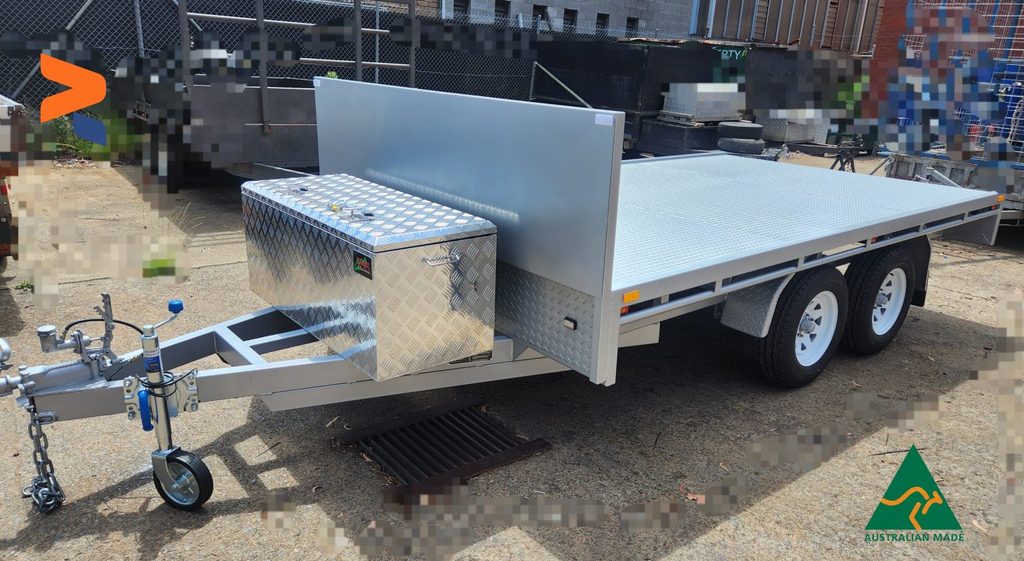
If a coupling issue is part of a wider mechanical fault, trailer repairs may need to cover related systems as well.
When not to tow
Don’t tow the trailer simply because the coupling “mostly works”.
Stop and seek assessment if:
- The latch will not lock
- The coupling is cracked
- The connection has excessive unexplained movement
- The drawbar is damaged
- The mounting area is compromised
- The tow ball and coupling are incompatible
- A major impact has occurred
The NHVR’s current safety bulletin specifically stresses that coupling-related failures can result in trailer drop and serious crashes, reinforcing the need to address defects before travel.
How do loading and road conditions affect coupling wear?
Coupling problems can become more serious when a trailer is heavily loaded, used on rough roads or exposed to moisture and dirt. The best prevention is a consistent inspection routine that follows manufacturer guidance before every towing trip.
Heavy loads
A heavier load increases the forces acting through the trailer connection.
This is particularly relevant for:
- Machinery trailers
- Plant trailers
- Tandem trailers
- Tipper trailers
- Heavy tradesman trailers
The trailer must remain within its approved ratings.
Rough roads
Repeated bumps, potholes and uneven worksites can increase stress throughout the trailer.
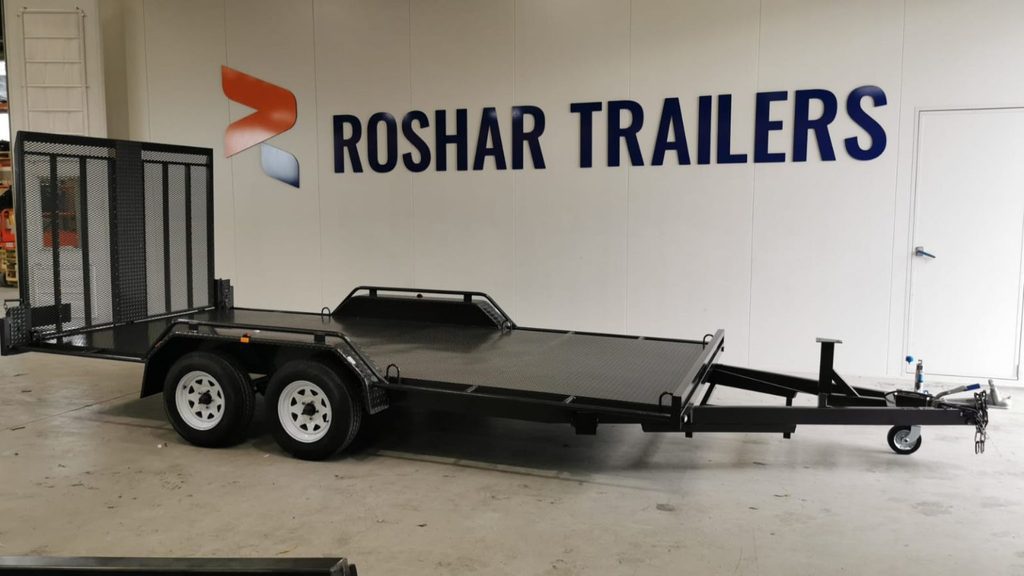
A trailer used primarily on sealed Melbourne roads may experience different conditions from one regularly taken across farms, construction sites or unsealed rural roads.
Frequent coupling and uncoupling
A tradie who connects a trailer every morning puts more cycles through the coupling mechanism than someone who uses a trailer once a month.
That doesn’t mean frequent use automatically causes failure. It means the inspection routine should reflect the way the trailer is actually used.
Wet and dirty conditions
Mud, water and road grime can affect moving components and accelerate corrosion.
After particularly dirty work, clean and inspect the relevant coupling components according to the manufacturer’s maintenance instructions.
Practical coupling risk framework
| Operating condition | Coupling attention |
| Occasional sealed-road towing | Routine pre-trip inspection |
| Daily trade use | Frequent visual checks and scheduled maintenance |
| Heavy machinery transport | Closer inspection of coupling and drawbar |
| Rough worksites | Inspect after heavy or unusual use |
| Rural/unsealed roads | Monitor dirt, movement and corrosion |
| Coastal or wet conditions | Pay closer attention to corrosion |
| After an impact | Inspect before returning to service |
How much does trailer coupling repair or replacement cost in Australia?
Trailer coupling costs vary substantially with the coupling type, rating, mounting arrangement and labour required. Current Victorian repair estimates put fitted coupling replacement at roughly 140–400 plus the part, while retail coupling prices vary widely by rating and design.
These are indicative market figures, not Roshar Trailers pricing or a fixed repair quote. A basic 50 mm coupling can be relatively inexpensive, while higher-rated or articulated systems can cost several hundred dollars before installation.
Current Australian retail listings illustrate that range: 50 mm coupling products are advertised from roughly 45–100 for some basic or 2,000 kg-rated units, while 3,500 kg and 4,500 kg options can cost substantially more depending on design.
A Victorian repair-cost guide currently estimates 140–400 plus the coupling itself for coupling replacement, while more involved drawbar or mounting repairs can cost considerably more. Treat these figures as budgeting guidance only and obtain a written quote for the actual trailer.
What affects the final cost?
- Coupling rating
- Coupling type
- Brake integration
- Mounting arrangement
- Drawbar condition
- Required welding or fabrication
- Replacement hardware
- Labour
- Inspection or compliance requirements
A cheap coupling isn’t necessarily the right coupling.
The correct replacement must match the trailer’s approved configuration and towing application.
Which Roshar trailers may need different coupling considerations?
Coupling selection should follow the trailer’s specification and intended application. Roshar manufactures box, cage, car carrier, flat top, machinery, plant, tandem, tipper and tradesman trailers, so the correct coupling setup can vary with trailer design and intended load.
Roshar’s current trailer range includes multiple configurations across commercial and general-purpose applications.
For example:
- Tradesman trailers may be used daily by electricians, plumbers, builders and maintenance contractors.
- Tandem trailers may carry heavier or more varied loads.
- Plant and machinery trailers can be used for equipment transport.
- Flat top trailers may carry pallets, machinery and long materials.
- Tipper trailers may handle bulk materials and landscaping loads.
- Box and cage trailers may be used for general transport and landscaping.
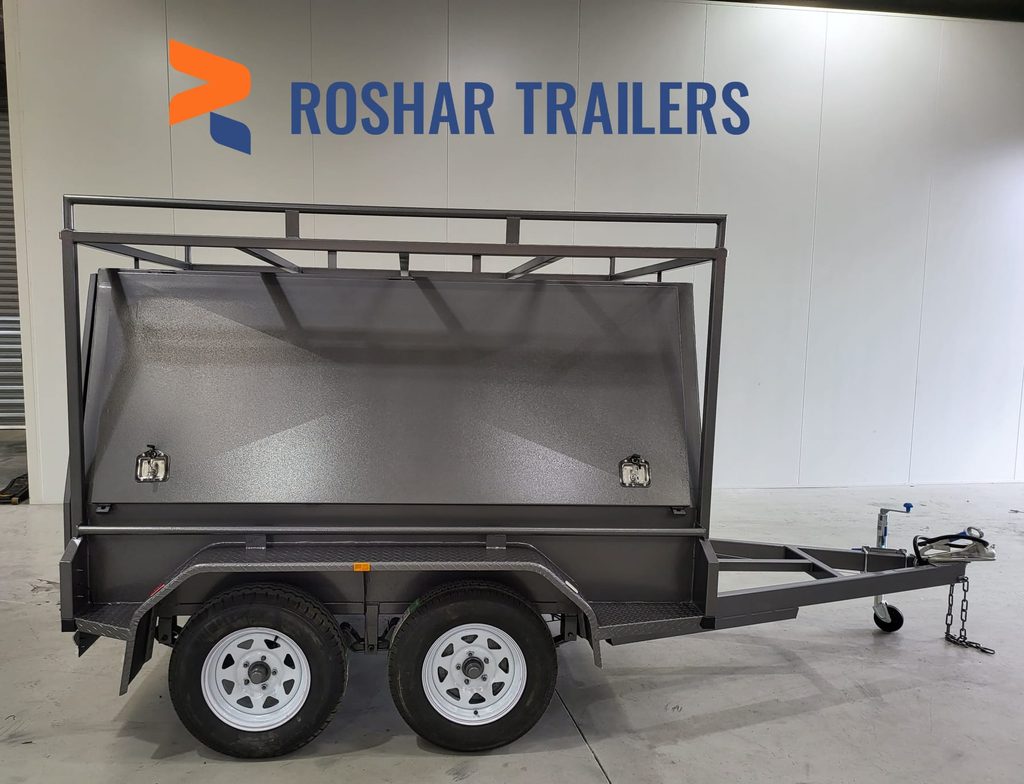
If you’re looking at tradesman trailers for sale Melbourne, don’t select the coupling separately from the rest of the build. The trailer’s rating, payload, braking arrangement, tow vehicle and intended use should all be considered together.
For a new or custom build, discussing the coupling during the trailer specification stage is usually more useful than changing it after the trailer has been built.
Coupling problem decision framework
Use this simple framework when you notice something unusual:
| What you notice | Can you keep towing? | Next step |
| Light surface dirt | Usually, after appropriate cleaning | Clean and inspect |
| Stiff mechanism | No until cause is understood | Inspect manufacturer-specified mechanism |
| Excessive play | No | Inspect coupling and tow ball |
| Cracked coupling | No | Professional assessment/replacement |
| Bent coupling | No | Professional assessment |
| Heavy corrosion/pitting | No if structural integrity is uncertain | Professional inspection |
| Loose mounting | No | Inspect mounting and drawbar |
| Wrong tow-ball size | No | Fit compatible equipment |
| Coupling won’t lock | No | Do not tow until repaired |
| Damage after impact | No until inspected | Professional assessment |
Conclusion
Knowing the warning signs of trailer coupling problems can help you identify issues before they become a roadside failure. Latch problems, excessive movement, cracks, corrosion, incorrect fitment and damaged mounting points all deserve attention.
The safest approach is simple: inspect the connection before towing, follow the coupling manufacturer’s maintenance instructions and stop using the trailer when the coupling or drawbar shows serious damage.
If you need help with a new trailer configuration, replacement components or an inspection, speak with a qualified trailer professional before making changes.
For Melbourne buyers, Roshar Trailers manufactures and supplies a broad range of trailers from Braeside, Bayswater North and Dandenong.
Need help choosing the right trailer setup? Contact Roshar Trailers to discuss your requirements.
FAQ’S
Can a coupling still look good but be unsafe?
Yes, a coupling can appear clean and undamaged while developing internal wear, excessive play or a problem with its mounting. A visual inspection is useful but cannot prove every component is mechanically sound. If the coupling behaves differently from normal, have the connection assessed before continuing to tow.
Does replacing a coupling increase the trailer’s ATM?
No, replacing a coupling does not automatically increase the trailer’s ATM. The trailer’s approved rating depends on the complete configuration, including the chassis, drawbar, axles, suspension, brakes, tyres and other components. A higher-rated replacement coupling alone does not authorise a heavier load.
Should a coupling be inspected after a minor collision?
Yes, even after a minor collision, the coupling, drawbar and mounting area should be checked before the trailer returns to service. Impact forces can cause bending, cracking or alignment changes that aren’t obvious from a quick glance. The same applies after a significant reversing impact or hard contact with an obstacle.
Can a coupling be repaired by welding?
No, not as a general DIY solution. Welding or modifying a coupling can affect its structural integrity, rating and compliance. If the coupling body or mounting area is damaged, have the component assessed against the manufacturer’s requirements before deciding whether an approved repair or replacement is appropriate.
Should I replace the safety chains when replacing a coupling?
Not automatically, but they should be inspected at the same time. Check their condition, rating, attachment points and compatibility with the trailer. If the chains or mounting points are damaged, worn or unsuitable for the trailer’s configuration, they should be replaced or rectified before towing.
Should I keep the original coupling specifications after replacement?
Yes, keeping the original coupling details, replacement specifications, invoices and installation information can make future maintenance easier. It helps establish the coupling’s rating, type and compatibility when servicing the trailer or ordering replacement components later.