37 Malcolm RD, Braeside, VIC
Common Mistakes to Avoid When Buying a Trailer
7 August 2026 | roshartrailers
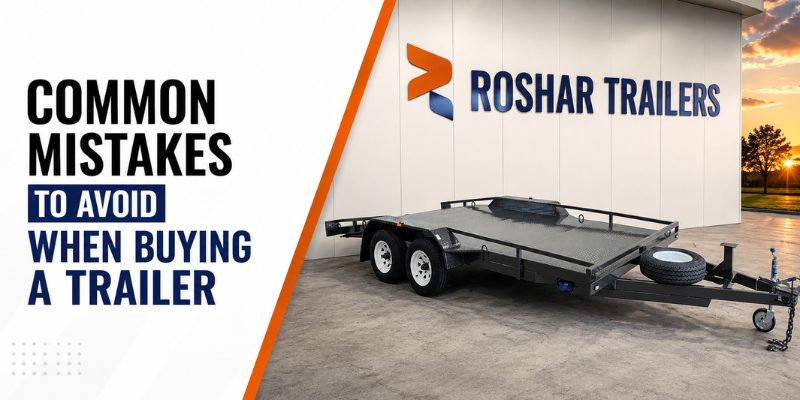
Trailer buying mistakes usually happen when buyers compare price and tray size before checking payload, ATM, GTM, brakes, tow vehicle limits, tyre ratings, load restraint, warranty and real job use. The safest trailer is the one matched to the load.
Buying a trailer looks simple until you start comparing models. A 7×5, 8×5 or 10×6 trailer may sound clear, but the size does not tell you how much it can legally carry, how well it will brake, whether the tyres suit the load, or whether the setup will survive weekly work use.
For tradies, contractors, landscapers, farmers, vehicle owners and small business operators, mistakes when buying a trailer can cost more than the purchase price. The wrong trailer can create extra trips, damaged equipment, unsafe towing, downtime, repairs and early replacement.
Roshar Trailers works with buyers who need practical trailers for trade, construction, landscaping, car carrying, plant transport, farming, DIY and business use across Victoria. In practice, the best buying decision starts with the load and the job, not the cheapest advertised trailer.
What are the biggest trailer buying mistakes in Australia?
The biggest trailer buying mistakes are buying too small, ignoring payload, choosing weak running gear, overlooking brakes, trusting photos, skipping warranty questions, failing to check tow vehicle limits and buying a trailer that does not match the real load.
Most mistakes happen before a buyer even visits a yard or requests a quote. They start with the wrong question. “What size trailer do I need?” is useful, but “what will I carry, how often, on what roads and behind which vehicle?” is better.
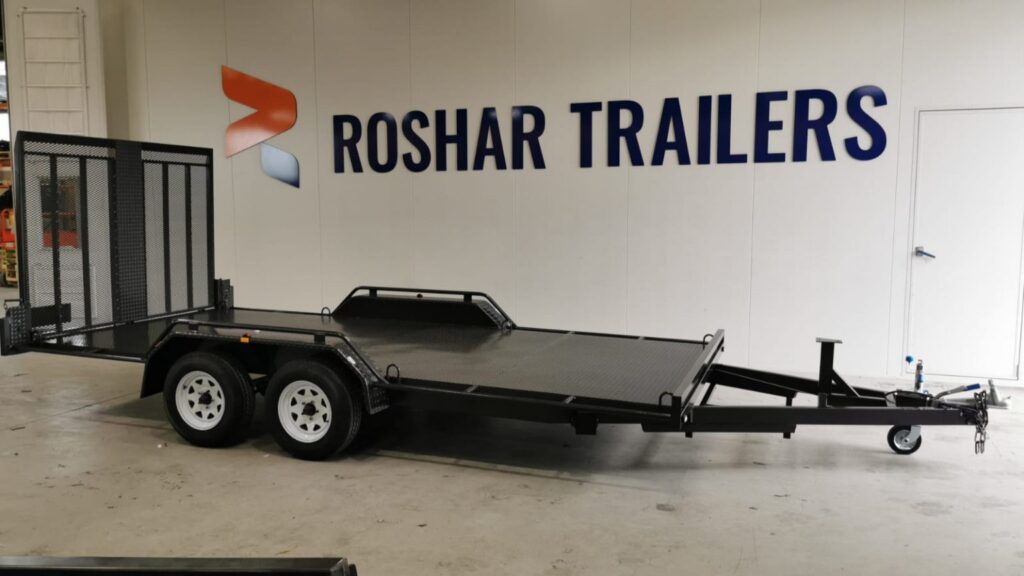
For example, a homeowner carrying garden waste a few times a year may be happy with a basic box trailer. A landscaper carrying wet green waste, mulch and tools every week needs a different conversation. A mechanic moving cars needs a car trailer with suitable deck length, ramps, restraint points and brakes. A contractor carrying machinery needs a plant trailer or flat top setup built around weight, ramps and tie-down points.
According to the Department of Infrastructure, trailers with an aggregate trailer mass of 4.5 tonnes or less are expected to comply with applicable Australian Design Rules, and VSB 1 helps manufacturers understand those requirements for common trailer types. That is why compliance should be part of the buying decision, not an afterthought. Source: Department of Infrastructure
Trailer mistake map
| Buying mistake | What it looks like | What can happen later |
| Buying by tray size only | “I just need an 8×5” | Payload, brakes, tyres or axle rating may not suit the load |
| Buying too cheap | Choosing the lowest quote | More repairs, lower durability or missing features |
| Ignoring tow vehicle limits | Assuming the ute can pull it | Poor braking, sway, insurance issues or unsafe towing |
| Underestimating future use | Buying only for today’s job | Outgrowing the trailer quickly |
| Skipping warranty questions | Trusting verbal promises | Confusion when parts, lights, latches or brakes need attention |
| Not inspecting used trailers | Buying from photos | Rust, wiring faults, stolen trailer risk or repair costs |
| Forgetting restraint points | No suitable tie-downs | Tools, machinery or waste may be hard to secure safely |
Why is buying by price alone risky?
Buying by price alone is risky because cheaper trailers often save money by reducing materials, running gear, accessories, warranty support or finish. A low price can still be good value, but only when the trailer suits the load and use.
A low-cost trailer can be perfectly reasonable for light household use. The mistake is expecting it to behave like a heavy-duty work trailer. If you carry tools, mowers, machinery, building materials, waste, cars or rural loads, the real price includes safety, service life, downtime and repair risk.
In Roshar sales conversations, many buyers start by comparing two trailers that look similar from the outside. Once you compare chassis strength, axle setup, brakes, tyre rating, floor material, tie-down points, ramps, cages and warranty, the price difference usually becomes easier to understand.
A cheaper trailer may exclude features you assumed were included: spare wheel, cage, jockey wheel, upgraded brakes, galvanised finish, heavy-duty ramps, breakaway system, ladder racks or lockable storage. This is why quote comparison should be based on specification, not headline price.
Price comparison table
| Quote item | Cheap quote risk | Better buying question |
| Trailer size | Same tray size but lower payload | What are tare, ATM, GTM and payload? |
| Axle setup | Lower-rated running gear | What loaded weight is it built for? |
| Brakes | Not included or not suitable for the load | What brake setup does this trailer need? |
| Tyres | Lower load rating or budget tyres | Are the tyres rated for the real load? |
| Coating | Basic finish only | Is it suited to outdoor storage, wet waste or site work? |
| Tie-downs | Too few or too light-duty | Can the load be restrained properly? |
| Warranty | Unclear coverage | Who handles repairs and how quickly? |
How do buyers get payload, ATM and GTM wrong?
Buyers get payload, ATM and GTM wrong when they confuse trailer size with carrying capacity. ATM is the maximum loaded trailer mass, GTM is the load on the trailer wheels, and payload is what the trailer can actually carry.
This is one of the most common mistakes when buying a trailer because the numbers feel technical. They are not optional. They decide whether the trailer can legally and safely carry the load you plan to put on it.
A trailer’s payload is not the same as its ATM. Payload is what remains after the trailer’s own weight is counted. For example, a heavier-built trailer may have a strong frame but lower remaining payload than a buyer expects if they only look at size. That is why tare matters.
According to Transport for NSW, the loaded mass of a trailer must not exceed the lowest relevant limit among the towbar and coupling rating, vehicle towing capacity, trailer carrying capacity and tyre carrying capacity. That makes payload checking a legal and safety decision, not just a specification detail. Source: Transport for NSW
Simple rating definitions
| Term | Meaning | Buyer mistake to avoid |
| Tare | Empty trailer weight | Forgetting the trailer’s own weight reduces usable payload |
| ATM | Aggregate Trailer Mass, or maximum loaded trailer mass | Assuming bigger tray means higher legal carrying capacity |
| GTM | Gross Trailer Mass carried by trailer wheels when connected | Ignoring braking and axle requirements |
| Payload | What you can carry after trailer weight is counted | Buying a trailer that cannot carry your real load |
| Towball weight | Load placed on the tow vehicle through the coupling | Creating poor steering, braking or sway |
Why does the tow vehicle matter before buying?
The tow vehicle matters because the trailer must suit the vehicle, towbar, coupling, brake setup and tyre capacity. A trailer can be well built and still be the wrong purchase if the towing vehicle cannot legally or safely handle it.
Many buyers ask for the strongest trailer first and think about the tow vehicle later. That is backwards. The whole combination matters: vehicle, towbar, coupling, ball mount, trailer, tyres, brakes, load and driver.
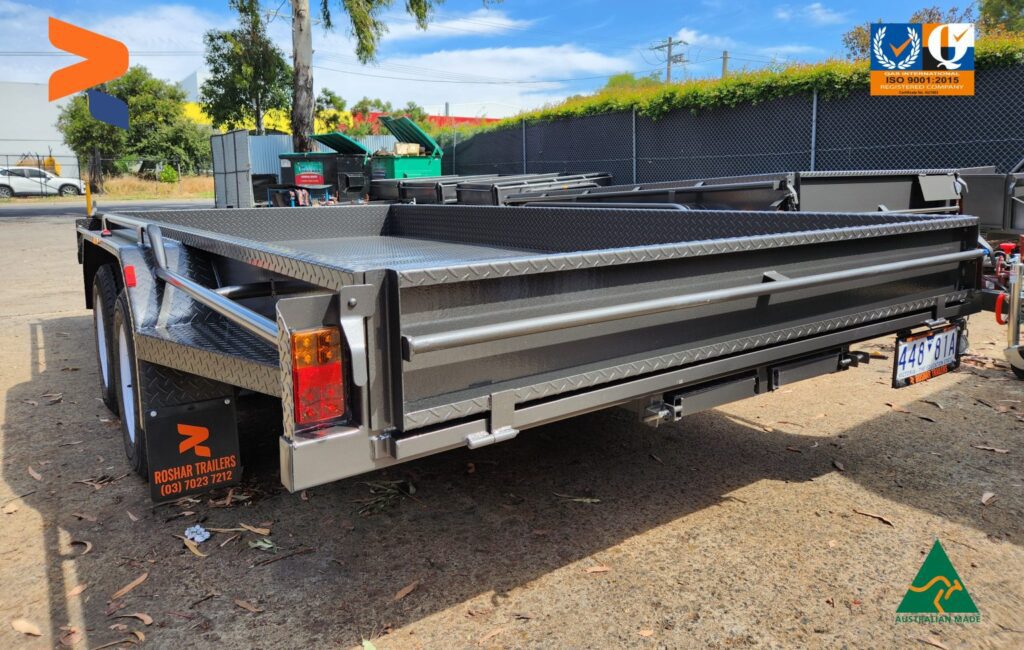
For example, a compact SUV may suit a light household trailer but not a heavily loaded tandem trailer. A ute may have strong towing capacity but still be limited by towbar rating, ball weight or manufacturer conditions. A business buyer may need to upgrade the vehicle, trailer or both to make the combination safe.
According to Transport for NSW, vehicles must be suited to the trailer, manufacturer towing limits should not be exceeded, and towbars and couplings must be of a suitable type and capacity. It also notes that extra mirrors or other equipment may be needed when towing larger trailers. Source: Transport for NSW
Tow vehicle check process
- Check the vehicle owner’s manual: the manufacturer’s towing capacity is your starting point.
- Check the towbar plate: the towbar may have a lower limit than the vehicle.
- Check the coupling rating: the coupling must suit the loaded trailer.
- Check tyre load ratings: tyres are part of the carrying system.
- Check brake requirements: heavier trailers need suitable braking.
- Check real operating conditions: hills, wet worksites, gravel roads and highway trips reduce your safety margin.
What trailer type mistakes should buyers avoid?
Trailer type mistakes happen when buyers choose a general trailer for a specialist job. A box trailer, tandem trailer, car trailer, plant trailer, tradesman trailer and tipper trailer are built around different loads, access needs and safety requirements.
The wrong trailer can create annoying daily problems. A tradie may buy a basic box trailer and then realise tool access, security and weather protection are poor. A landscaper may buy a trailer without thinking about unloading wet green waste. A car owner may buy a car trailer without checking ramp angle, deck length, vehicle weight and tie-down method.
Roshar’s trailers for sale page positions trailer buying around strength, road-legal compliance and long-term reliability, and notes Roshar’s 15-plus years of trailer manufacturing experience. It also lists trailer options by load and use case, which helps buyers avoid choosing by size alone.
If you are still comparing general options, start with Roshar’s full trailer for sale range and narrow the choice by load type, frequency and tow vehicle. Buyers moving heavier trade loads can compare tandem trailers, while vehicle owners can review a suitable car trailer for car transport.
Trailer type matching table
| Buyer type | Common mistake | Better trailer direction |
| Tradies and contractors | Buying a basic box trailer for tools | Tradesman trailer, tandem trailer or custom trailer |
| Landscapers | Underestimating wet green waste and unloading time | Cage trailer, hydraulic tipper or lawn mowing trailer |
| Construction companies | Buying without checking ramps or payload | Plant trailer, machinery trailer or flat top trailer |
| Vehicle owners | Choosing by deck length only | Car trailer with suitable ramps, brakes and restraint points |
| Farmers and rural owners | Ignoring terrain and mixed loads | Tandem, flat top or custom rural-use trailer |
| Homeowners | Overbuying for occasional light use | Box trailer or cage trailer |
| Tiny house builders | Treating chassis as a normal trailer | Custom chassis discussion with a specialist manufacturer |
How do brakes, axles and tyres affect the buying decision?
Brakes, axles and tyres affect safety, payload, stopping distance and long-term reliability. Buyers make mistakes when they focus on tray dimensions but ignore the running gear underneath, especially for tandem trailers, plant trailers, car trailers and work trailers.
The trailer’s visible body gets attention, but the running gear does the heavy work. Axles carry the load. Suspension controls movement. Tyres connect the load to the road. Brakes help the combination stop safely. If these parts are under-specified, the trailer may look right but feel wrong on the road.
A tandem trailer usually costs more than a single axle trailer because it has more running gear and is often chosen for heavier or more frequent use. That extra cost can make sense for a business buyer who needs better load distribution and payload capability.
According to Transport for NSW, trailers from 751 kg to 2000 kg GTM need an efficient braking system on at least one axle, while trailers from 2001 kg to 4500 kg GTM need an efficient braking system on all wheels and an automatic breakaway system if detached. Source: Transport for NSW
Running gear checklist
| Component | What to check | Why it matters |
| Axles | Rating, single/tandem setup and load suitability | Controls carrying ability and road behaviour |
| Suspension | Type, condition and suitability for terrain | Affects bounce, stability and wear |
| Brakes | Brake type and GTM suitability | Affects stopping control and compliance |
| Tyres | Load rating, age, pressure and condition | Tyre failure can stop the job or cause danger |
| Bearings | Noise, heat and maintenance history | Bearing failure can leave the trailer stuck roadside |
| Coupling | Rating and locking condition | Keeps the trailer attached safely |
What used-trailer mistakes should you watch for?
Used-trailer mistakes include buying without checking identity, rust, welds, compliance plate, registration status, tyre age, lights, brakes, floor condition, bearings and ownership history. Photos are not enough; inspect the trailer physically before paying.
Used trailers can be good value, especially for occasional home or farm use. The problem is hidden. Fresh paint can hide rust. A clean tray can hide floor weakness. New-looking tyres can still be old or poorly rated. Wiring may work during inspection but fail once the trailer vibrates on the road.
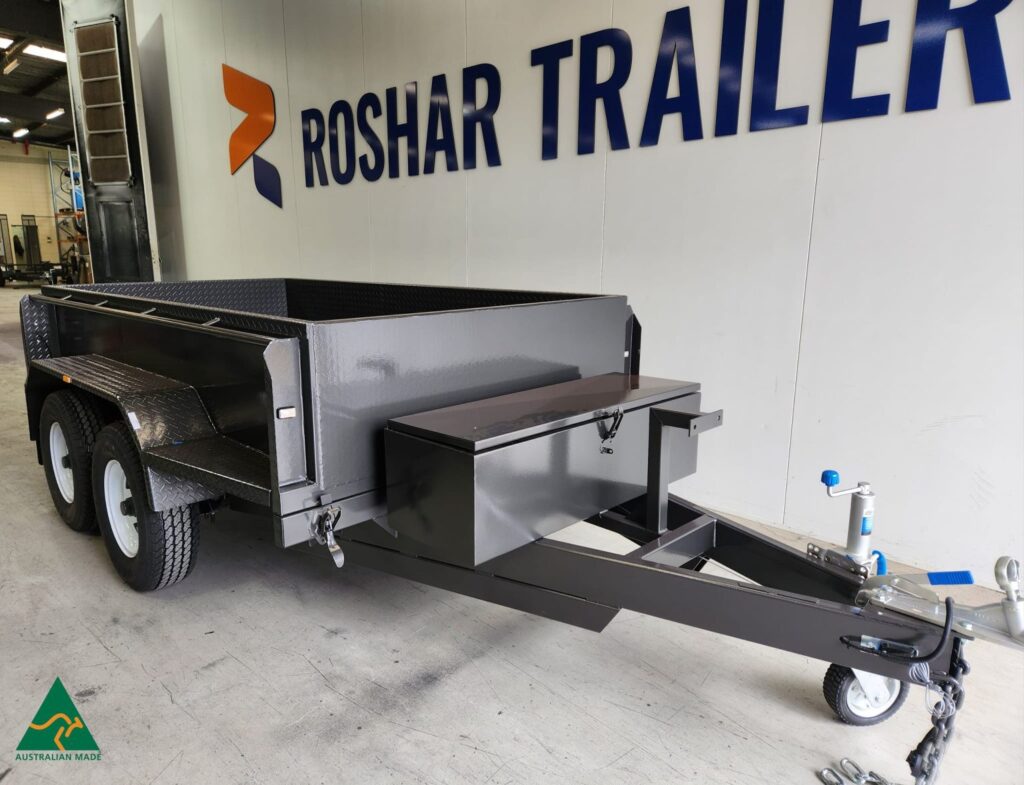
Marketplace buying also has a paperwork risk. If the trailer identity is unclear, registration is not current, or ownership cannot be confirmed, pause the purchase. A cheap trailer is not a bargain if you cannot register it or prove it belongs to the seller.
According to the ACCC, consumer guarantees apply to products and services bought from businesses, and businesses cannot remove those rights through store policies or warranty wording. Private sales can be different in practice, so buyers should keep written records and understand who they are buying from. Source: ACCC
Used trailer inspection process
- Check the VIN or chassis number: it should match the paperwork and plate.
- Inspect underneath first: rust, cracks and poor repairs often show below the tray.
- Test all lights: indicators, brake lights and tail lights must work.
- Check tyres and wheels: look for age, uneven wear, cracks and load rating.
- Check brakes if fitted: poor braking is expensive and unsafe.
- Look for floor softness: timber, checker plate and weld points should feel solid.
- Ask for ownership proof: vague stories are a warning sign.
- Budget for immediate repairs: tyres, bearings, lights and registration costs can change the real price.
What should you check before paying for a trailer?
Before paying for a trailer, check specification, compliance, ratings, build quality, tow compatibility, included accessories, warranty and after-sales support. A proper buying checklist prevents most mistakes and makes quotes easier to compare fairly.
Use one checklist for every seller. This avoids emotional buying and keeps the comparison fair. A dealer, manufacturer and marketplace seller may describe trailers differently, but the same details still matter: size, tare, ATM, GTM, payload, brakes, axles, tyres, coupling, chains, lights, ramps and restraint points.
According to the National Transport Commission, light vehicle loads must be properly restrained, must not overhang dangerously, must not exceed mass limits and must not cover lights, indicators, reflectors or the number plate. That is why tie-down points, cage design, headboards and load layout should influence the trailer purchase. Source: NTC
According to Transport Victoria, loads should be stable and evenly distributed, heavy items should sit underneath lighter items, and suitable restraints can include rated webbing straps, chains, cargo nets or tarpaulins. For heavy loads, chains are often better because they stretch less than webbing. Source: Transport Victoria
Pre-payment checklist
| Check | Ask this before paying | Pass/fail sign |
| Specification | What are tare, ATM, GTM and payload? | Seller can explain clearly |
| Tow match | Will this suit my vehicle and towbar? | Ratings match in writing |
| Brakes | What brake setup is fitted or required? | Brake setup suits loaded use |
| Tyres | What is the tyre load rating and age? | Tyres suit the trailer’s capacity |
| Load restraint | Where will I tie down the real load? | Points are suitable for the job |
| Accessories | Are cage, ramps, spare wheel and jockey wheel included? | Quote lists inclusions clearly |
| Warranty | Who handles issues after purchase? | Coverage and process are written |
| Registration/compliance | Is the trailer road-ready? | Paperwork and plate match the trailer |
Buyer decision process
- List your regular load: include tools, equipment, soil, water, fuel, ramps and accessories.
- Find the heaviest realistic trip: buy for the real maximum, not the average easy day.
- Check tow vehicle limits: confirm vehicle, towbar, coupling and tyre capacity.
- Choose the trailer category: box, cage, tandem, tipper, plant, car trailer, tradesman or custom.
- Compare specifications: tare, ATM, GTM, payload, brakes, tyres, axles and finish.
- Inspect build quality: look at chassis, drawbar, welds, ramps, floor and hardware.
- Confirm after-sales support: warranty, repair process, replacement parts and service help.
- Get it in writing: price, inclusions, lead time, warranty and registration details.
Conclusion
Avoiding trailer buying mistakes starts with one simple rule: buy for the real load, not the cheapest listing or the nearest tray size. The right trailer should match the vehicle, payload, job type, road use, restraint needs and long-term workload.
For Victorian buyers comparing trailers for sale, Roshar Trailers can help match the trailer to the job, whether you need a box trailer, tandem trailer, car trailer, plant trailer, tradesman trailer, tipper trailer or custom trailer for business or everyday use.
Faq’s
Can I buy a trailer before knowing my exact load?
No, not safely. You should at least estimate your heaviest realistic load, including tools, fuel, water, equipment, ramps and accessories. Without that number, you may buy a trailer that looks suitable but cannot legally or safely carry what you need.
Is it worth paying more for tandem trailers?
Yes, when the load, trip frequency or business use justifies it. Tandem trailers usually cost more because they have extra running gear and often suit heavier work. For light occasional home use, a single axle trailer may still be the better value.
Should I choose a car trailer by deck size only?
No, deck size is only one part of the decision. A car trailer also needs suitable ATM, GTM, brakes, ramps, tie-down points, wheel clearance, loading angle and tow vehicle compatibility. Check the vehicle’s actual weight before choosing.
Can a cheap trailer still be a good buy?
Yes, if it is correctly rated, roadworthy and used for light, occasional loads. Cheap becomes risky when the trailer is used for heavy machinery, wet landscaping waste, daily trade work, long highway trips or loads that need stronger tie-downs and braking.
What should I ask about trailer warranty?
Ask what the warranty covers, how long it lasts, who handles repairs, whether parts and labour are included, and what can void the warranty. Get the answer in writing. A vague warranty can become a problem when lights, brakes, latches or welds need attention.
Should I inspect a new trailer before final payment?
Yes, a final inspection is still smart. Check lights, tyres, coupling, chains, paint or galvanising, welds, ramps, latches, accessories and paperwork. New trailers can still have fit-up issues, missing inclusions or specification misunderstandings that are easier to fix before handover.
Can I use one trailer for every job?
Sometimes, but not always. A general box trailer may handle household loads, but it may not suit cars, machinery, trade tools, livestock equipment, wet landscaping waste or tiny house chassis work. If one trailer will do many jobs, choose a flexible design carefully.