
37 Malcolm RD, Braeside, VIC
Which Trailers Need Brakes? A Simple Guide for Safe Towing
7 July 2026 | roshartrailers
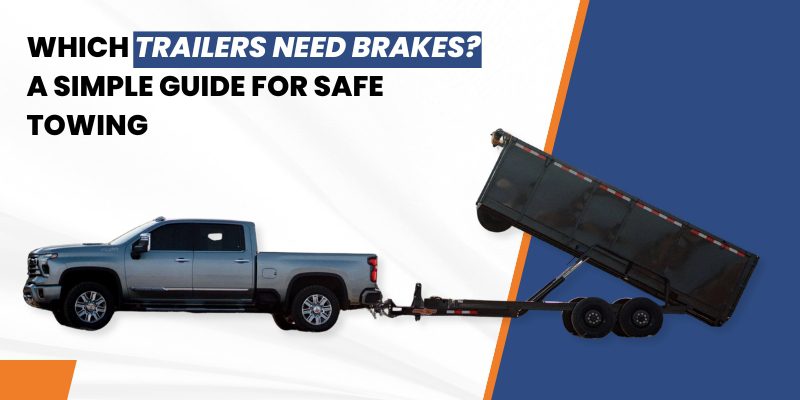
Towing a trailer is straightforward when the trailer is light, empty, and only used occasionally. But once you start carrying tools, soil, machinery, building materials, or a vehicle, braking becomes a much more significant safety consideration.
That is why understanding trailer brake requirements in Australia matters before you buy, load, or tow not after something goes wrong on the road. The right brake setup helps your vehicle stop safely, keeps the trailer under better control, and reduces stress on the tow vehicle throughout every trip.
Trailer brake requirements in Australia are governed nationally by Vehicle Standards Bulletin 1 (VSB1), which sets the GTM thresholds that apply in every state and territory. For tradies, landscapers, builders, farmers, mechanics, tiny house builders, and small business owners, this is not just a technical topic, it affects daily work, road safety, insurance, compliance, and the long-term life of your trailer.
Why Trailer Brakes Matter
A trailer adds extra weight behind your vehicle. When you brake, your tow vehicle has to slow itself down and control the trailer behind it simultaneously. If the trailer is heavy and does not have the right braking system, stopping takes significantly longer especially on wet roads, downhill sections, or when traffic suddenly slows.
Think about a landscaper towing a trailer full of soil and green waste. Empty, the trailer may feel easy to control. Loaded, it pushes much harder against the tow vehicle during braking. The same applies to a builder carrying concrete tools, a farmer moving equipment, or a mechanic transporting a vehicle.
Trailer brakes share the stopping work. Instead of the tow vehicle doing everything, the trailer’s own braking system helps slow the load behind you. This makes towing more controlled, more predictable, and significantly safer particularly in the emergency braking situations that matter most.
Trailer Brake Requirements by Weight
Trailer brake requirements in Australia are generally based on GTM Gross Trailer Mass. VSB1, the national bulletin for trailers with an aggregate trailer mass of 4.5 tonnes or less, specifies that braking requirements are expressed in terms of GTM, not ATM.
Here are the key thresholds:
| Trailer GTM | Brake Requirement | What It Means |
| Up to 750kg GTM | Brakes not required | Usually applies to very light trailers |
| Over 750kg GTM | Efficient service brakes required | The trailer needs its own braking system |
| Up to 2,000kg GTM | Brakes may be fitted to one axle | Over-run brakes may be used in this range |
| Over 2,000kg GTM | Brakes must operate on all wheels | A breakaway brake system is also required |
For trailers over 2,000kg GTM, VSB1 requires brakes on all wheels and an emergency breakaway braking system that applies the brakes if the trailer disconnects from the tow vehicle and keeps them applied for at least 15 minutes.
The key takeaway: do not judge brake requirements by trailer size alone. A trailer may look manageable when empty, but the loaded weight is what determines the legal requirement.
GTM vs ATM: What Weight Should You Check?
Knowing which weight figure applies to trailer brake requirements is one of the most common points of confusion for buyers and getting it wrong has real consequences.
GTM is the weight carried by the trailer wheels when the trailer is loaded and connected to the tow vehicle.
ATM is the total maximum loaded trailer weight, including the weight imposed on the tow vehicle through the coupling.
In plain terms: ATM is the full loaded trailer rating, while GTM is the portion carried by the trailer wheels when hitched. For brake requirements, GTM is the figure that matters.
A small trailer used for household rubbish may stay under the brake threshold when loaded lightly. The same trailer filled with bricks, gravel, or wet soil may become much heavier than expected. Tare weight the empty trailer weight is not enough to determine compliance. You need to consider the real loaded weight you plan to carry on every trip.
In Victoria, VicRoads states that ATM can be found on the manufacturer’s trailer identification plate, the Register of Approved Vehicles, by contacting the manufacturer, or through a VASS signatory. For trailers up to 4,500kg, tare weight and ATM must be displayed on the trailer identification plate or the RAV.
Trailer Brake Requirements by State
While trailer brake requirements in Australia follow the national VSB1 framework, each state enforces them through its own road authority. Here is what applies in the states where most of our customers and their trailers operate.
| State | Framework | Enforcing Authority | Key Note |
| Victoria | VSB1 national thresholds | VicRoads | Brakes must be roadworthy for registration |
| NSW | VSB1 national thresholds | Transport for NSW | Chain of Responsibility obligations apply |
| QLD | VSB1 national thresholds | TMR Queensland | Rural road use still requires full compliance |
| WA | VSB1 national thresholds | Main Roads WA | Remote use on public roads is included |
| SA / TAS / ACT / NT | VSB1 national thresholds | State road authorities | Confirm local enforcement specifics |
Trailer Brake Requirements in Victoria
For Victorian trailer owners, trailer brake requirements in Victoria follow the national VSB1 thresholds but VicRoads also requires brake systems to be in good working order as part of roadworthiness assessment for applicable trailers.
The 750kg and 2,000kg GTM thresholds apply in Victoria exactly as they do nationally. When registering a trailer in Victoria, the brake system must be appropriate for the trailer’s GTM as shown on the compliance plate. Trailers requiring brakes that are not properly fitted or maintained can fail a roadworthiness inspection and may be defected during roadside enforcement.
A tradie in Melbourne asking about trailer brake requirements in Victoria will find the VSB1 thresholds apply directly, with VicRoads adding the requirement that brakes must be functional and properly maintained throughout the trailer’s registration life not just at time of purchase.
Practical tips for Victorian trailer owners:
- Check the compliance plate GTM before registering or towing any trailer
- If you are unsure whether your trailer’s brakes are compliant, a licensed vehicle tester can inspect and certify
- VicRoads can direct you to a VASS signatory if ATM or GTM details are unclear from the compliance plate
- Brake systems on trailers stored for extended periods should be inspected before returning to regular use
For the full VicRoads registration process including how GTM and ATM appear on your compliance plate read our complete guide on how to register a trailer in Victoria.
Trailer Brake Requirements in NSW
For NSW owners, trailer brake requirements in NSW follow the same VSB1 thresholds trailers over 750kg GTM need service brakes, and trailers over 2,000kg GTM need all-wheel braking and a breakaway system.
Transport for NSW enforces brake compliance as part of vehicle inspection and roadworthiness requirements. NSW has periodic vehicle inspection obligations for registered vehicles; trailers with brakes may require brake system inspection as part of this process. NSW Police and Transport for NSW Heavy Vehicle Compliance can also check trailer brake systems during roadside inspections, particularly for commercial operators.
A tradie or contractor operating in NSW should also be aware that NSW trailer brake requirements intersect with Chain of Responsibility (CoR) obligations under the Heavy Vehicle National Law. Even for trailers under 4.5 tonnes ATM, CoR principles mean that everyone in the supply chain including the business owner, driver, and loader shares responsibility for ensuring the trailer is roadworthy and correctly loaded before it moves.
Practical tips for NSW trailer owners:
- Confirm brake system condition as part of any pre-purchase inspection for a second-hand trailer
- Ensure your tow vehicle is compatible with the trailer’s brake type before towing
- For business operators, document trailer brake inspections as part of your fleet maintenance records
- If operating near the NSW-QLD or NSW-VIC border, the same national thresholds apply in all states
Trailer Brake Requirements in QLD
For Queensland owners, trailer brake requirements in QLD follow the VSB1 national thresholds but the state’s road conditions and climate mean brake maintenance deserves particular attention, especially for trailers used in rural, remote, and regional areas.
TMR Queensland (Department of Transport and Main Roads) enforces trailer brake compliance. Queensland’s heavy vehicle inspection stations and roadside enforcement check brake systems on applicable trailers, particularly for commercial and trade operators.
Farmers and rural operators in Queensland often ask whether farm trailers need brakes on public roads. QLD trailer brake requirements apply to public road use regardless of rural location the GTM thresholds are the same across the state. A farm trailer that moves between paddocks on private property may not require registration, but the moment it uses a public road even briefly the same brake requirements apply.
Queensland’s climate adds a specific maintenance consideration: heat, dust, and flood crossings can accelerate brake component wear and cause fluid degradation, particularly in hydraulic systems. Brake fade on long downhill sections in Queensland’s terrain is also worth understanding for operators towing heavy loads.
Practical tips for QLD trailer owners:
- Inspect brake systems more frequently in extreme heat or after flood crossings
- Check breakaway system battery condition regularly heat degrades battery performance faster in Queensland
- For rural operators crossing between properties on public roads, confirm brake compliance even for short trips
- Second-hand trailers purchased in QLD should have brake systems inspected before first use
Trailer Brake Requirements in WA
For WA owners, trailer brake requirements in WA follow the national VSB1 thresholds regardless of whether the trailer is used in metropolitan Perth or remote regional and mining areas.
Main Roads WA enforces trailer compliance as part of vehicle licensing and roadworthiness. Western Australia’s mining, resources, agriculture, and construction sectors involve significant trailer use often with heavy equipment, machinery, and materials that push trailers into higher GTM categories where brakes on all wheels and breakaway systems are mandatory.
Western Australian buyers in the mining, agriculture, and construction sectors should pay particular attention to WA trailer brake requirements for heavy equipment trailers. GTM on loaded plant and machinery trailers can exceed the 2,000kg threshold quickly and in remote WA where emergency response times are long, brake system integrity is especially important.
Practical tips for WA trailer owners:
- Buyers purchasing trailers from interstate should confirm compliance documentation is in order before re-registering in WA compliance plate details will be checked during registration
- Remote and regional operators should carry spare brake components and know how to inspect brake systems in the field
- Mining and resources sector operators should confirm whether any additional WorkSafe WA requirements apply to trailers used on mine sites in addition to road rules
- Check breakaway system battery condition regularly, particularly for trailers stored outdoors in WA’s heat
Which Trailer Types Usually Need Brakes?
Brake requirements depend on GTM, not simply on the trailer name or type. That said, some trailer types are more likely to require brakes because of how they are loaded and used.
A light garden trailer for occasional household clean-ups may not need brakes if it stays under 750kg GTM when loaded. A trailer used weekly for trade, landscaping, farming, construction, or vehicle transport is a different situation entirely.
Do Tandem Trailers Need Brakes?
Trailer brake requirements for tandem trailers depend entirely on the loaded GTM, not the trailer’s physical size or axle count. Many tandem trailers do require brakes because they are used for heavier loads that push them above the 750kg GTM threshold.
Tandem trailers commonly carry:
- Building materials and framing
- Garden supplies, soil, and mulch
- Tools, ladders, and trade equipment
- Farm equipment and supplies
- Mowers and landscaping gear
- Renovation waste and demolition material
If the trailer’s GTM exceeds 750kg, it needs an efficient service braking system. If it exceeds 2,000kg GTM, brakes must operate on all wheels and a breakaway system is required.
A homeowner towing a tandem trailer with a few boxes may not be carrying the same load as a contractor using the same style of trailer for bricks, pavers, or steel framing. The trailer type may look identical, but the braking requirement depends on the actual loaded weight not the trailer category name.
Before buying a tandem trailer, check the compliance plate for GTM and ATM, confirm the brake system type, and verify that the brake setup is appropriate for your actual loads.
Do Hydraulic Tipper Trailers Need Brakes?
Hydraulic tipper trailers are popular with landscapers, builders, contractors, and farmers because they make unloading faster and easier. Because these trailers frequently carry heavy bulk materials, many will require brakes and the loaded weight can change significantly between trips.
Tipper trailers commonly carry:
- Soil, sand, and gravel
- Mulch and green waste
- Rubble and demolition material
- Construction aggregate
- Farm supplies and bulk materials
A load of loose green waste may be relatively light. A load of wet soil, gravel, or rubble can push the same trailer into a much heavier category. A landscaper may leave the yard with an empty trailer, load soil at a supplier, add tools and plants, and finish the day with a trailer that behaves very differently from the morning run.
Before buying or towing a hydraulic tipper trailer, check: GTM and ATM on the compliance plate, brake type and which axle or axles are braked, whether a breakaway system is fitted, tow vehicle towing capacity and tow ball rating, and brake controller compatibility if electric brakes are fitted.
Do Plant Trailers Need Brakes?
Plant trailers carry machinery and equipment mini loaders, compact excavators, scissor lifts, skid steers, trenchers, and other heavy worksite gear. Because machinery is heavy, plant trailers frequently fall into braking categories where brakes are legally required.
If the trailer’s GTM exceeds 750kg, brakes are required. If it exceeds 2,000kg GTM, brakes must operate on all wheels and a breakaway system is needed.
A practical scenario: a landscaping business starts with a plant trailer for a small loader. Over time, the business grows, heavier attachments are added, and additional equipment travels on the same trailer. The trailer that met the original requirements may no longer match the actual load profile. Checking ratings, brake systems, and tow vehicle capacity when load requirements change is essential not just at initial purchase.
For plant trailers, also check: ramp condition and load rating, tie-down point number and placement, load distribution across the axles, tyre ratings relative to GTM, breakaway battery condition, coupling rating, and safety chain specifications.
What About Car Trailers?
A vehicle being transported on a car trailer can easily weigh well over a tonne before the trailer’s own tare weight is added. Many loaded car trailers move quickly into the categories where brakes are legally required.
Vehicle owners, mechanics, workshops, and automotive businesses should confirm: trailer GTM and ATM, the weight of the specific vehicle being transported, whether the trailer has brakes and on which axles, whether a breakaway system is fitted, tow vehicle towing capacity, and the correct tie-down method for the vehicle being carried.
For the correct method to secure a vehicle on a car trailer, read our guide on how to tie down a car on a trailer.
What About Tiny House Trailers?
Tiny house trailers need particularly careful planning because the trailer begins as a relatively light base and becomes significantly heavier as the build progresses.
A tiny home build accumulates weight from: structural framing, wall cladding, roofing and insulation, windows and doors, plumbing and water tanks, electrical systems and batteries, furniture, appliances, and finished flooring. That weight adds up to totals that frequently exceed the 2,000kg GTM threshold meaning all-wheel braking and a breakaway system are required.
Tiny house builders and buyers should plan brake requirements before the build starts, not after the structure is finished. The trailer should be specified around the anticipated finished weight, not just the empty frame weight. Getting this wrong creates a compliance and roadworthiness problem that is far more expensive to fix after the structure is built than it would have been to address at the trailer specification stage. If you are commissioning a tiny home trailer, treat brake planning as a non-negotiable part of the initial trailer brief.
Electric Brakes, Mechanical Trailer Brakes, and Breakaway Systems Explained
Different trailers use different brake systems. Understanding the basics helps you choose the right system for your trailer and confirm compatibility with your tow vehicle.
Mechanical Trailer Brakes (Over-Run Brakes)
Mechanical trailer brakes also called over-run or surge brakes work without an electrical connection to the tow vehicle. When the trailer pushes against the tow vehicle during braking, the mechanical force activates the trailer’s brakes automatically.
They are simpler to set up than electric brakes and do not require a brake controller in the tow vehicle, making them a practical option for trailers up to 2,000kg GTM. They are common on boat trailers, smaller tandem trailers, and general-purpose trailers where the owner wants a self-contained system.
When comparing mechanical trailer brakes versus electric brakes, the key question is control. Electric brakes give the driver more active input and more precise adjustment. Mechanical brakes respond automatically to trailer push but provide less driver control, particularly on steep descents.
Limitations to be aware of: over-run brakes can activate during reversing on some setups check your specific system before backing into tight spaces. They are also not suitable for trailers over 2,000kg GTM where all-wheel braking with a breakaway system is required.
Electric Brakes
Electric brakes are controlled through the tow vehicle via a brake controller. When the driver brakes, the controller sends an electrical signal to the trailer brakes, which apply in coordination with the tow vehicle.
Many heavier work trailers use electric brakes because they provide better control, more consistent response across all conditions, and allow the driver to adjust brake sensitivity for different loads. If your trailer has electric brakes, your tow vehicle needs a compatible brake controller this is a separate component that must be correctly installed and calibrated.
Brake controllers come in two main types:
- Proportional controllers: respond to the tow vehicle’s actual deceleration rate and apply trailer brakes proportionally generally smoother and more natural in feel
- Time-delayed controllers: apply trailer brakes at a fixed preset level after a time delay simpler and less expensive, but less precise
If you change tow vehicles, purchase a second-hand trailer with electric brakes, or borrow a trailer for business use, always confirm brake controller compatibility before towing. An incompatible or uncalibrated controller can mean trailer brakes that apply too hard, too softly, or not at all.
Breakaway Brake Systems
Breakaway brakes are designed to apply the trailer brakes immediately if the trailer disconnects from the tow vehicle. For trailers over 2,000kg GTM, VSB1 requires a breakaway system that applies instantly upon disconnection and keeps the brakes applied for at least 15 minutes.
A breakaway system typically consists of a battery, a lanyard connected to the tow vehicle, and a control unit. If the trailer separates, the lanyard activates the system before it snaps. The battery must be maintained in a charged condition for the system to work a flat breakaway battery is a compliance and safety issue.
Trailer Brake Maintenance: What to Check Regularly
Brake compliance at purchase is not enough. Trailer brakes require ongoing maintenance to remain safe and roadworthy throughout the trailer’s working life.
Key maintenance checks for trailer brakes:
- Brake shoe or pad wear: inspect annually or more frequently for trailers in heavy daily use
- Brake drum condition: check for scoring, cracking, or heat damage
- Hydraulic fluid condition: degrade over time, particularly in high-heat environments such as QLD and WA
- Electric brake wiring: inspect for corrosion, chafing, and connection integrity exposed wiring on a trailer is vulnerable to damage
- Breakaway system battery: test charge level before every season and replace on the manufacturer’s schedule heat accelerates battery degradation
- Over-run brake mechanism: check for corrosion on the coupling head mechanism and ensure it moves freely
- Brake adjustment: drum brakes require periodic adjustment as shoes wear self-adjusters can stick and should be checked
For business operators tradies, landscapers, construction companies document brake inspections as part of your fleet maintenance records. Under Chain of Responsibility obligations, the condition of your trailer’s brakes is part of your legal responsibility as an operator, not just a mechanical detail.
Trailer Brake Checklist Before Buying or Towing
Most problems with trailer brake requirements come from one of the same handful of errors here is what to check before every purchase and every tow.
Check the compliance plate. Look for tare weight, ATM, and manufacturer details. GTM may also be shown if not, ask the manufacturer or check the RAV.
Confirm the GTM. Brake requirements are based on GTM. This is the number that determines whether brakes are legally required and what type.
Check whether brakes are fitted. Do not assume a trailer has brakes because it is large, tandem axle, or looks heavy-duty. Check the actual brake hardware.
Ask which wheels are braked. Up to 2,000kg GTM, brakes may be fitted to one axle only. Over 2,000kg GTM, brakes must operate on all wheels.
Check for a breakaway system. If the trailer exceeds 2,000kg GTM, a breakaway system is required. Check that the battery is charged and the lanyard is in good condition.
Confirm tow vehicle capacity. Your tow vehicle must be rated to tow the loaded trailer. Check the tow vehicle’s towing capacity plate or owner’s manual.
Check brake controller compatibility. A trailer with electric brakes requires a compatible, correctly calibrated brake controller in the tow vehicle.
Match the trailer to your real load. A trailer that is fine for light garden waste may not be suitable for wet soil, machinery, vehicles, or commercial materials. Calculate your expected loaded weight before committing to a trailer.
Common Trailer Brake Mistakes to Avoid
Looking only at empty trailer weights. A trailer may be light when empty but significantly heavier once loaded with tools, machinery, green waste, or construction material. Always assess the loaded weight.
Confusing tare, ATM, and GTM. These are not interchangeable. Tare is the empty trailer weight. ATM is the total loaded trailer rating. GTM is the loaded weight carried by the trailer wheels when connected to the tow vehicle. Brake requirements use GTM.
Assuming all tandem trailers have brakes. They do not. Always check the actual brake setup on any trailer you are considering buying or borrowing.
Using a trailer for heavier work than it was originally specified for. Load requirements often grow over time as a business expands. A trailer that was adequate at the start may no longer match the actual load profile check specifications when your use case changes.
Neglecting second-hand trailer brake inspection. Used trailers need careful examination. Check the compliance plate, brake condition, wiring, coupling, tyre rating, and breakaway system before towing. If anything is unclear, get professional advice.
Ignoring brake controller compatibility. A trailer with electric brakes towed by a vehicle without a compatible brake controller is both non-compliant and unsafe. Confirm compatibility before every new vehicle-trailer combination.
A trailer with non-compliant or faulty brakes may also affect your insurance position. Read our guide on do trailers need insurance in Australia for what to check before assuming your trailer is covered.
Choosing the Right Trailer for Your Workload
The right trailer is not just about size. It is about how you actually use it, what you carry, and whether the brake setup is appropriate for the loads you tow regularly.
A builder carrying equipment every day needs a different setup from a homeowner doing weekend clean-ups. A landscaper moving soil and mulch needs different braking and axle support from a mechanic transporting vehicles. A tiny house builder needs to plan the final build weight into the trailer specification from day one.
When choosing a trailer, consider:
- What you carry most often and its maximum loaded weight
- How frequently you tow and on what types of roads
- Your tow vehicle’s towing capacity and brake controller setup
- The axle and brake configuration appropriate for your GTM
- Loading and unloading requirements including ramps and tie-down points
- Whether custom features are needed for your specific work
Brake system quality is also one of the factors that separates a quality trailer from a cheaper alternative. Read our guide on why quality trailers are expensive for a full explanation of what you are paying for in a properly specified build.
Need Help Choosing a Trailer With the Right Brake Setup?
Not sure whether your trailer needs brakes or which brake setup is right for your load and tow vehicle? Roshar builds Australian-made tandem trailers, tipper trailers, plant trailers, car carriers, and more from our Melbourne locations. Every trailer we build is specified with the correct brake setup for its GTM and intended use, and leaves our workshops with full ADR compliance documentation.
Roshar Trailers builds Australian-made trailers for tradies, contractors, landscapers, farmers, and businesses across Victoria. Every trailer leaves our Melbourne workshops with the correct brake setup, full compliance documentation, and ADR-certified construction. Visit us in Braeside, Bayswater North, or Dandenong, or get a quote online.
Faq’s
What are the trailer brake requirements in Australia?
In Australia, trailers with a GTM over 750kg must be fitted with an efficient service braking system. Trailers with a GTM over 2,000kg must have brakes operating on all wheels and a breakaway braking system that activates immediately if the trailer disconnects and keeps brakes applied for at least 15 minutes. These requirements are set out in VSB1 and apply nationally in every state and territory.
At what weight does a trailer need brakes in Australia?
Trailers over 750kg GTM must be fitted with an efficient service braking system. Trailers up to 750kg GTM do not require brakes under VSB1. Note that GTM not ATM or tare weight is the figure used for brake requirement assessment. A trailer may exceed the 750kg GTM threshold when loaded even if its tare weight is well below that figure.
What are trailer brake requirements in Victoria?
Victorian trailer brake requirements follow the national VSB1 thresholds service brakes required over 750kg GTM, all-wheel braking and a breakaway system required over 2,000kg GTM. VicRoads also requires brake systems to be in good working order as part of roadworthiness assessment. If unsure about compliance, a licensed vehicle tester can inspect and certify your trailer’s brake system before towing.
What are trailer brake requirements in NSW?
NSW follows the national VSB1 framework, trailers over 750kg GTM need service brakes, and trailers over 2,000kg GTM need all-wheel braking and a breakaway system. Transport for NSW enforces compliance through vehicle inspections and roadside enforcement. Business operators in NSW should also be aware that trailer brake compliance intersects with Chain of Responsibility obligations under the Heavy Vehicle National Law.
What are trailer brake requirements in QLD?
Queensland follows the VSB1 national thresholds. TMR Queensland enforces brake compliance through inspection stations and roadside enforcement. Importantly, farm trailers used on public roads in QLD must meet the same brake requirements as urban trailers; rural location does not create an exemption. Queensland’s climate means brake maintenance is particularly important, especially for hydraulic systems and breakaway batteries exposed to heat.
What are trailer brake requirements in WA?
Western Australia follows the national VSB1 thresholds, enforced by Main Roads WA. The same 750kg and 2,000kg GTM thresholds apply whether the trailer is used in Perth or remote regional areas. WA buyers purchasing trailers from interstate should confirm compliance documentation is current before re-registering in WA. Mining, agriculture, and construction sector operators should pay particular attention to GTM on loaded plant trailers, which can exceed the 2,000kg threshold quickly.
Do tandem trailers need brakes?
Many tandem trailers need brakes because they are used for heavier loads. Whether brakes are required depends entirely on the loaded GTM not the axle count or trailer style. If the trailer’s GTM exceeds 750kg, service brakes are required. If it exceeds 2,000kg GTM, brakes must operate on all wheels and a breakaway system is required. Always check the compliance plate GTM rather than assuming based on trailer type.
Do hydraulic tipper trailers need brakes?
Many hydraulic tipper trailers require brakes because of the heavy materials they carry soil, gravel, mulch, sand, rubble, and construction aggregate. Whether brakes are required depends on GTM when loaded. A tipper carrying light green waste may have a different loaded GTM from the same trailer carrying wet soil. Always calculate your expected loaded weight against the trailer’s GTM rating before assuming the trailer is below the brake threshold.
What is a breakaway brake system?
A breakaway brake system applies the trailer brakes immediately if the trailer disconnects from the tow vehicle. VSB1 requires this system for trailers over 2,000kg GTM; it must apply instantly upon disconnection and keep the brakes applied for at least 15 minutes. The system typically uses a lanyard connected to the tow vehicle and a battery-powered control unit. The battery must be maintained in a charged condition to function correctly.
What are mechanical trailer brakes?
Mechanical trailer brakes also called over-run or surge brakes activate automatically when the trailer pushes against the tow vehicle during braking, without requiring an electrical connection to the tow vehicle. They are suitable for trailers up to 2,000kg GTM and do not require a brake controller. They provide less driver control than electric brakes but are simpler to set up and maintain for lighter-duty applications.
Should I check ATM or GTM for trailer brake requirements?
For trailer brake requirements, check GTM. VSB1 specifies that braking requirements are expressed in terms of GTM, not ATM. ATM is still important for registration, overall towing capacity assessment, and load planning but it is GTM that determines whether your trailer legally requires brakes and what type of braking system is needed.