37 Malcolm RD, Braeside, VIC
How Trailers Are Made: What Buyers Should Check Before Purchase
10 July 2026 | roshartrailers
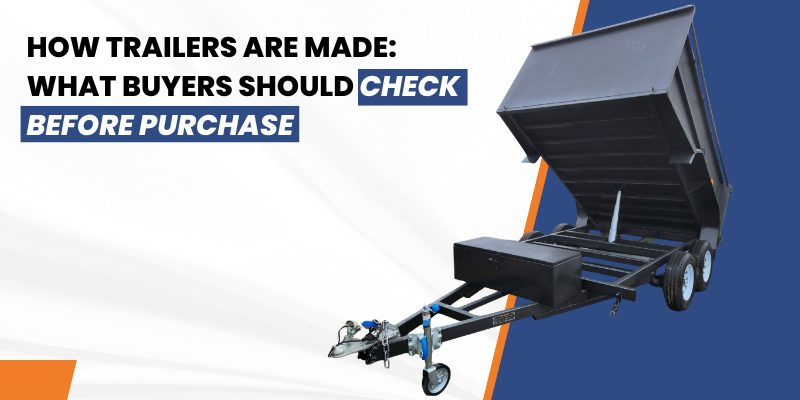
Buying a trailer is not just about choosing the right size or the lowest price. A trailer might look strong from the outside, but the real value comes from how it is built underneath.
For tradies, contractors, landscapers, farmers, vehicle owners, tiny house builders, and small business owners, quality trailer construction matters every day. A poorly built trailer can mean unstable towing, faster wear, rust issues, repair costs, and downtime that affects your work and income. A well-built trailer handles regular use, carries the right load safely, and lasts longer with proper maintenance.
That is where quality trailer construction becomes important and understanding what it actually means in practice is what separates a good buying decision from an expensive one. It is not just about thick steel. It is about the chassis, welds, drawbar, suspension, axles, brakes, flooring, ramps, wiring, and finishing all working together for the type of load you actually carry.
This guide explains how trailers are made, what quality construction looks like in practice, and what to check before you buy.
Why Quality Trailer Construction Matters
A trailer works hard. It carries tools, machines, soil, cars, building materials, farm equipment, garden waste, and sometimes even the base for a tiny home. Every trip puts stress on the frame, wheels, suspension, and connection points.
A landscaper towing green waste once a week has different needs from a contractor carrying heavy equipment daily. A farmer towing across rough rural tracks needs durability and ground clearance. A mechanic moving vehicles needs strong ramps, stable loading support, and suitable brakes. Safety, towing performance, and long-term value all come back to quality trailer construction and understanding what that means in practice is what separates a good buying decision from an expensive one.
A strong trailer should tow steadily, support the load properly, and stand up to regular use. If the trailer is poorly built, problems surface quickly rust, cracked welds, loose wiring, poor balance, weak ramps, or uneven tyre wear. The goal is not just to buy a trailer that looks good on pickup day. The goal is to buy one that performs well after months and years of real work.
What Does Quality Trailer Construction Actually Mean?
Quality trailer construction means the trailer is built to suit its intended use. A light-duty trailer for weekend garden jobs does not need the same construction as a trailer carrying machinery, wet soil, pallets, or vehicles.
A well-built trailer should have:
- A strong chassis and frame suited to the load
- Clean and consistent welding throughout
- A drawbar suited to the trailer’s rated load
- Correct axle and suspension setup for the ATM
- Brakes suitable for the trailer’s rating and use
- Strong flooring or deck support for the load type
- Practical ramps and tie-down points where needed
- Good rust protection or coating for Australian conditions
- Protected wiring and reliable lights
- A clear compliance plate with ATM and GTM figures
The important question is not “does this trailer look heavy-duty?” The better question is “is this trailer built for the load I will actually carry?” A builder carrying timber, cement sheets, and tools needs strength in different areas from a homeowner moving furniture. A small business owner buying a trailer for daily deliveries needs reliability and low maintenance. A tiny house builder needs a straight, strong, and stable base before construction even begins.
The Chassis and Frame: The Trailer’s Foundation
The chassis is where quality trailer construction either holds up or fails under real load everything else on the trailer depends on it. If the chassis is weak, poorly designed, or not properly reinforced, the trailer may flex under load, track poorly when towing, or develop structural fatigue over time.
When inspecting a trailer, look at the frame from multiple angles. It should appear straight, balanced, and well supported. Pay attention to the cross members, corners, and areas where load pressure will be highest during normal use.
A landscaper carrying wet soil needs a strong frame because soil can become very heavy when wet. A contractor carrying tools and building materials needs a trailer that handles repeated loading and unloading without fatigue. A tiny house builder needs a trailer frame that stays straight because the entire structure will depend on it for its working life.
The chassis should match the trailer’s purpose. A trailer used for light household rubbish does not face the same structural pressure as one used for machinery, cars, or construction materials and buyers should not pay for construction that exceeds their needs, or accept construction that falls short of them.
Welding Quality: What Buyers Should Look For
Welding is one of the clearest visible indicators of quality trailer construction and one of the easiest things to assess before you buy. Welds hold major structural parts together, including the chassis, drawbar, ramps, tie-down points, and side frames. The quality of these welds directly reflects the quality of the builder.
Good welds should look consistent and properly finished. They should not look rushed, thin, cracked, or uneven. You do not need to be a welding expert to spot obvious warning signs if the welds look messy in important load-bearing areas, that is worth questioning before you commit.
Check welds carefully around:
- Drawbar joins and chassis connection points
- Chassis corners and cross members
- Ramp brackets and tipper hinge points
- Tie-down points and cage or side frames
- The coupling area and safety chain attachment points
A shiny paint finish can make a trailer look neat, but paint should not be used to hide poor welding. Look closely at the joins, especially in areas that will carry stress during towing and loading. For work trailers used daily, welding quality is especially important a tradie might not notice a weak point on day one, but after months of site work, heavy loads, and rough roads, poor welds become a serious and expensive problem.
Drawbar, Coupling and Safety Chain Strength
The drawbar connects the trailer to the tow vehicle and takes significant stress during towing, turning, braking, and reversing. A well-engineered drawbar also makes the trailer more forgiving to handle. For a full guide on technique, read our guide on how to reverse a trailer.
Before buying, check the drawbar design and how it connects to the chassis. Look at the welds around the front frame. The coupling should be rated for the trailer’s intended load, and the safety chains should be strong, correctly sized, and properly attached.
This is especially important for farmers, contractors, and rural property owners who tow on uneven ground, gravel tracks, and worksites. A trailer used only on smooth suburban roads has different drawbar demands from one used across farms or construction sites. A strong trailer is not just strong at the back where the load sits, it must be strong at the front where it connects to the vehicle.
Axles, Suspension, Brakes and Tyres
Many buyers focus on the body of the trailer and overlook what sits underneath. Axles, suspension, brakes, and tyres play a major role in how the trailer performs, tows, and handles under load.
The axle setup should match the trailer’s size, load rating, and use. Single-axle trailers suit lighter loads and simpler towing needs. Tandem trailers are often preferred by tradies, landscapers, farmers, and small business owners who need better load support and towing stability for regular work.
When comparing tandem trailers, check more than just the number of wheels. Ask about the load rating, brake setup, suspension type, and intended use. A tandem axle layout supports heavier loads but only if the rest of the trailer is built to match the axle rating.
For a full explanation of which trailers legally require brakes and what systems apply, read our guide on trailer brake requirements in Australia. Tyres should also be matched to the trailer’s working conditions and GTM not just fitted because they look acceptable.
A trailer with a strong-looking body but weak tyres, poor suspension, or the wrong brake setup is not truly well-built, regardless of how it looks from the outside.
Flooring, Deck Strength and Load Support
The trailer floor or deck takes direct impact from whatever is loaded. This could be mowers, pallets, machines, tools, vehicles, green waste, building supplies, or farm equipment. Check the floor material, thickness, and support underneath a good trailer should not rely only on surface strength, because the structure below the floor matters just as much.
Flat top trailers need a strong open deck because they carry pallets, machinery, timber, building materials, and irregular loads from different sides. The deck, frame, and tie-down points all need to work together to support varied load positions safely.
For a landscaper, the floor handles mowers, soil bags, garden tools, and waste. For a contractor, it supports heavy equipment and building supplies. For an automotive business, the deck handles vehicle weight and repeated loading and unloading.
Also look for water traps. If water sits in corners or under flooring, rust develops faster than it would on an open surface. A quality trailer design considers drainage and long-term durability, particularly for trailers used outdoors in Australian conditions year-round.
Ramps, Hinges and Tie-Down Points
If you carry vehicles, machinery, ride-on mowers, or equipment, ramps and tie-down points are essential parts of the trailer’s safety and daily usability not optional details.
Check the ramp strength, hinge quality, and loading angle. A ramp that feels weak or unstable during loading becomes a daily frustration and a safety risk. The hinges should be strong enough for repeated use, not just occasional loading. Tie-down points should be placed where they are practically useful and strong enough for the actual load; a small tie-down point may be adequate for light tools but entirely unsuitable for machinery or vehicle transport.
For the correct method to secure a vehicle or load on a trailer, read our guide on how to tie down a car on a trailer.
A plant trailer carrying a compact machine needs strong ramps and secure tie-down points at appropriate positions. A car trailer needs stable loading support and anchor rails in the right positions. A garden maintenance business carrying ride-on mowers needs ramps that handle repeated weekly loading without weakening at the hinges.
Paint, Galvanising and Rust Protection
A trailer spends most of its life outdoors exposed to rain, mud, grass clippings, soil, gravel, dust, road grime, and worksite conditions. Coating and rust protection are not cosmetic features. They directly affect how long the trailer lasts and what maintenance costs look like over time.
A poor finish may look fine when new but shows problems after regular use. Rust often appears around welds, joins, edges, underbody areas, and places where paint coverage is thin or has chipped from impact.
Before buying, check: coating coverage at welds and joints, underbody finish quality, corner and edge protection, any areas of exposed steel or early rust, and whether the finish is paint, powder coat, or galvanised.
For tradies and small business owners, downtime and repairs from premature rust are more expensive than the difference between a cheap finish and a quality one at purchase. A better rust protection finish is a legitimate reason for a higher price, and it pays for itself in reduced maintenance over the trailer’s working life.
Wiring, Lights and Small Details That Matter
Small details often reveal how carefully a trailer has been built overall. Wiring, lights, latches, hinges, mudguards, and plugs affect daily use and problems with these components can delay work, create safety issues, or cause trouble during roadside inspections.
Check that the wiring is protected and neatly routed. Loose or exposed wiring leads to lighting failures, particularly when the trailer is used on rough roads or worksites where vibration and impact are constant. Trailer lights should be secure and fully visible. The plug should be suitable for the tow vehicle’s socket type.
Latches and hinges should feel solid. Mudguards should be properly fitted and secured. Reflectors and the number plate light should be in place and working. For a tradie using a trailer every day, small problems become significant frustrations quickly and a faulty light or damaged plug can create legal issues during towing.
Quality construction is visible in the details, not just the frame.
ADR Compliance, Compliance Plates and Warranty as Quality Signals
Three often-overlooked indicators of quality trailer construction are compliance documentation, a clear compliance plate, and manufacturer warranty terms.
ADR Compliance and RAV Registration
Trailers built to Australian Design Rule standards and registered on the Register of Approved Vehicles (RAV) have been assessed against national safety standards. A manufacturer that builds to ADR specifications and provides RAV documentation is investing in engineering rigour that cheaper manufacturers skip. The absence of a clear compliance plate or RAV documentation is both a legal registration issue and a construction quality signal read our guide on how to register a trailer in Victoria for what documentation should be present.
The Compliance Plate
A quality trailer should have a clear manufacturer’s identification plate showing tare weight, ATM, and GTM. If a seller cannot show you a compliance plate or the figures are unclear, do not assume the gap will be resolved after purchase; this is a red flag worth taking seriously before committing.
Warranty Terms
Warranty terms reveal how confident a manufacturer is in their own build quality. A manufacturer offering comprehensive structural warranty on chassis and welds is signalling confidence in their construction. One offering limited or no warranty on structural components is telling you something about their confidence in the build. Ask specifically what the warranty covers, for how long, and what the process is if a structural issue appears.
Quality Trailer Construction Reviews: What to Look For
When checking quality trailer construction reviews, focus on long-term performance comments rather than first-impression scores. A trailer that looks great on pickup day can tell a very different story after six months of daily site work, wet loads, and rough roads.
Reviews that mention specific performance under real conditions are more useful than generic positive ratings. Look for comments about:
- How welds and chassis held up after 12–24 months of regular use
- Whether rust appeared earlier than expected around joins or edges
- How the suspension and axles performed under consistently heavy loads
- Whether the manufacturer responded helpfully when issues arose
Reviews of quality trailer construction from Australian buyers, particularly Victorian and Melbourne-based users in similar work conditions are more relevant than general ratings from interstate buyers in different climates and use cases. A tradie in Melbourne working on suburban sites faces different conditions from a Queensland farmer on remote tracks, and reviews should be assessed with that context in mind.
Negative reviews often reveal construction issues that photos and listings cannot show. Pay attention to mentions of early rust, lighting failures, suspension problems, or poor after-sales response; these patterns in reviews are far more informative than the star rating average.
Quality Trailer Construction Prices: What Affects the Cost and Why
Understanding quality trailer construction prices means looking beyond the sticker two trailers at different prices may look similar in a photo, but the difference often sits in steel grade, axle rating, finish quality, brake specification, and what the manufacturer stands behind.
As a general guide, quality trailer construction prices vary based on:
- Steel grade and section thickness – stronger steel costs more but lasts longer under load
- Axle setup and load rating – tandem axles, higher ATM ratings, and matched suspension add cost
- Brake configuration – electric brakes, all-wheel braking, and breakaway systems add to the build cost at the levels required by law
- Finish quality – powder coat and galvanising cost more than basic paint and perform significantly better over time
- ADR compliance and documentation – a compliant build with RAV registration and a manufacturer’s compliance plate involves real engineering and administrative cost
- Warranty support – a manufacturer who backs their build with a structural warranty prices that confidence into the product
When comparing trailer construction prices, ask for the ATM, GTM, brake setup, finish type, and warranty terms alongside the number – these figures tell you far more about value than the headline price alone.
For a full breakdown of what drives quality trailer construction prices, read our guide on why quality trailers are expensive.
Victorian Trailers Price List: How to Compare Properly
Victorian buyers searching for a trailer price list are usually trying to compare options across different trailer types before visiting a dealer or manufacturer. The challenge with a simple price list is that trailer prices vary significantly based on configuration. Two box trailers at the same nominal size can have very different ATM ratings, axle setups, brake configurations, and finish quality.
Rather than comparing a Victorian trailers price list by headline figure, ask for a specification breakdown alongside any quote. The more useful comparison is:
- What is the ATM and payload capacity?
- Is it a single or tandem axle and why does that suit the intended use?
- Does it include brakes and what type?
- What finish does it have?
- Is ADR compliance and RAV registration included?
- What warranty is provided?
Roshar Trailers provides configuration-specific pricing for Victorian buyers across box trailers, tandem trailers, flat tops, tippers, plant trailers, car carriers, and tiny home trailers. The most useful starting point is a quote that includes specifications, not just a number.
Victorian Trailers Reviews: What Local Feedback Tells You
Victorian trailer reviews are more relevant for local buyers than general national ratings; real feedback from Melbourne tradies, rural Victorian farmers, and local landscapers reflects the conditions your trailer will actually work in.
Victoria’s varied conditions from Melbourne’s urban worksites and coastal salt air to rural Victorian gravel tracks and seasonal flooding test different aspects of trailer construction in ways that interstate reviews may not capture. A trailer that performs well in dry inland conditions may show different rust and suspension behaviour in wetter coastal Victorian areas.
When reading reviews of Victorian trailers, look beyond star ratings for comments about:
- Long-term performance after a full season of real work
- How the trailer held up in wet conditions, on worksites, or across rural properties
- Whether the manufacturer or dealer provided helpful support after the sale
- Whether the build matched what was advertised in terms of load rating and construction quality
For Roshar Trailers customers across Victoria, our reviews reflect real use cases across construction, landscaping, farming, automotive, and residential applications from buyers who use their trailers daily.
Finding Quality Trailer Construction Near Me: What to Look for When You Visit
For buyers searching for quality trailer construction near me, visiting in person before buying is one of the most valuable things you can do. A physical inspection reveals build details that listing photos never show.
When visiting a trailer manufacturer or dealer in person, bring the checklist at the end of this article. Check the underside of the trailer, not just the top rust protection, wiring routing, axle condition, and underbody finish are all visible from underneath and often reveal more about construction quality than the deck and sides.
Ask to see the compliance plate and confirm the ATM and GTM match what was advertised. Check the welds in load-bearing areas. Test the ramp hinges and tie-down points. Ask about the finish type and what warranty covers structural components.
If you are looking for quality trailer construction near Melbourne, Roshar Trailers operates from three locations across the city Braeside, Bayswater North, and Dandenong where trailers can be inspected in person, specifications confirmed, and our team consulted before you commit to a purchase. If no local manufacturer is accessible, ask for detailed build specifications in writing including ATM, GTM, steel grade, finish type, and warranty terms before purchasing online or interstate.
Custom Trailers Melbourne: When Standard Options Don’t Fit Your Work
Not every buyer’s needs are met by a standard trailer configuration. Tradies with specific tool setups, businesses with unusual load dimensions, construction companies with site-specific requirements, and tiny house builders all benefit from custom trailer builds that are engineered around the actual job.
For buyers whose work doesn’t fit a standard configuration, custom trailers in Melbourne offer the ability to specify exact deck dimensions, axle placement, drawbar length, brake type, flooring material, load rating, and finish from the ground up rather than adapting a standard trailer to a purpose it wasn’t designed for.
Choosing a custom trailer Melbourne manufacturer means you can verify construction quality in person throughout the build not just at delivery. It also means direct access to the team building your trailer when you have questions about specifications, load ratings, or modifications.
Custom trailers should still come with full ADR compliance documentation, a manufacturer’s compliance plate, and RAV registration; these are not optional extras for custom builds, they are the same legal requirements that apply to standard trailers. A custom trailer without proper compliance documentation creates the same registration and insurance problems as a non-compliant standard trailer.
Roshar Trailers builds custom trailers in Melbourne across a range of configurations modified box trailers for specific trade needs, bespoke flat top platforms for unusual load dimensions, commercial equipment trailers, and tiny house platforms. For tiny house builders looking for custom trailers in Melbourne, the trailer platform is the most critical structural component of the entire project and gets the specification right before the first floor joist goes down.
Construction Quality by Trailer Type
Different trailers are built for different jobs. The right construction features depend on what the trailer carries and how often it is used.
Tandem Trailers
Tandem trailers are popular with tradies, farmers, landscapers, contractors, and property owners because they offer better load support and towing stability than many single-axle trailers.
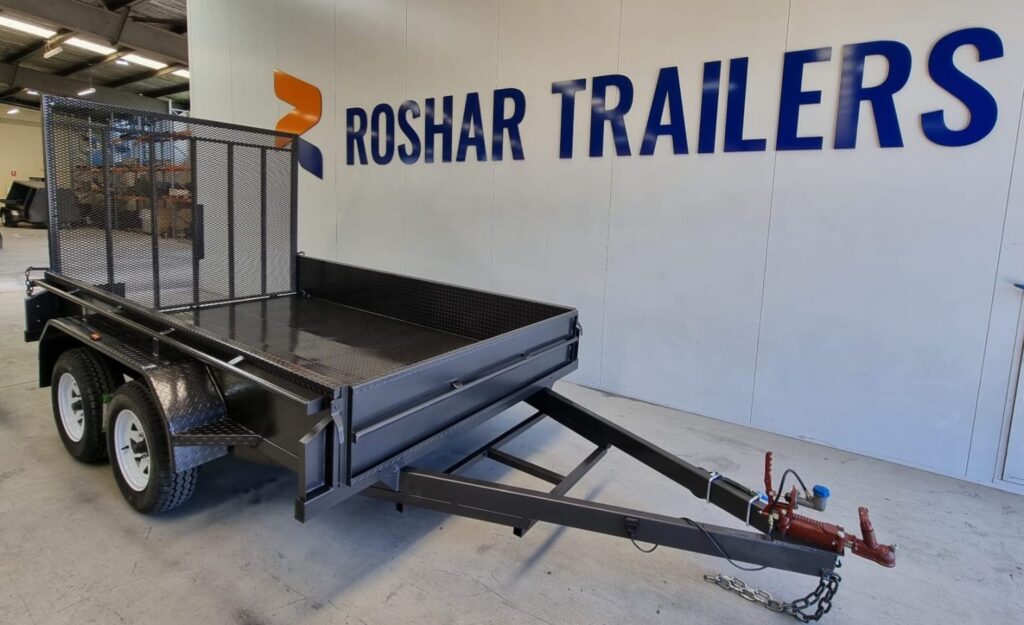
When checking tandem trailers, look at the chassis construction, axle setup, suspension quality, brake specification, and load balance. The trailer should be built for regular use not just occasional light towing. If you carry tools, materials, farm supplies, garden waste, or equipment regularly, confirm the trailer’s construction matches your real loaded weight. A large tandem trailer still needs the right frame, axle rating, tyres, and brakes to be genuinely capable.
Flat Top Trailers
A flat top trailer is useful when you need open deck space and flexible loading pallets, machinery, timber, construction supplies, rural work, and commercial transport all suit the flat top configuration.
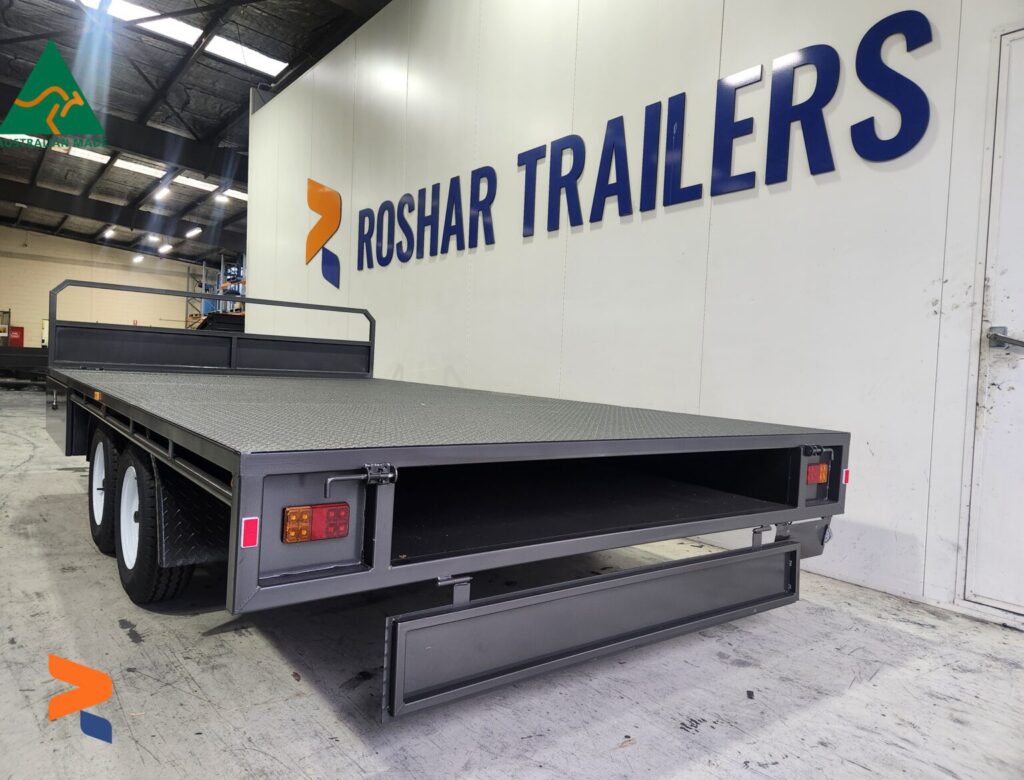
When checking a flat top trailer, pay close attention to deck strength, frame support under the deck, tie-down point number and placement, ramp quality, and axle setup. Since loads vary in size and shape, the trailer needs a strong structure and practical securing points across the full deck. A contractor may use the same flat top trailer for pallets one day and machinery the next that flexibility is only valuable when the construction is strong enough for the heaviest use case.
Hydraulic Tipper Trailers
Tipper trailers are common with landscapers, builders, contractors, and property maintenance businesses because they make unloading faster and easier. A quality tipper trailer should have a strong chassis, durable floor, reliable hydraulic system, strong tipping hinge, and a brake setup appropriate for the trailer’s GTM.
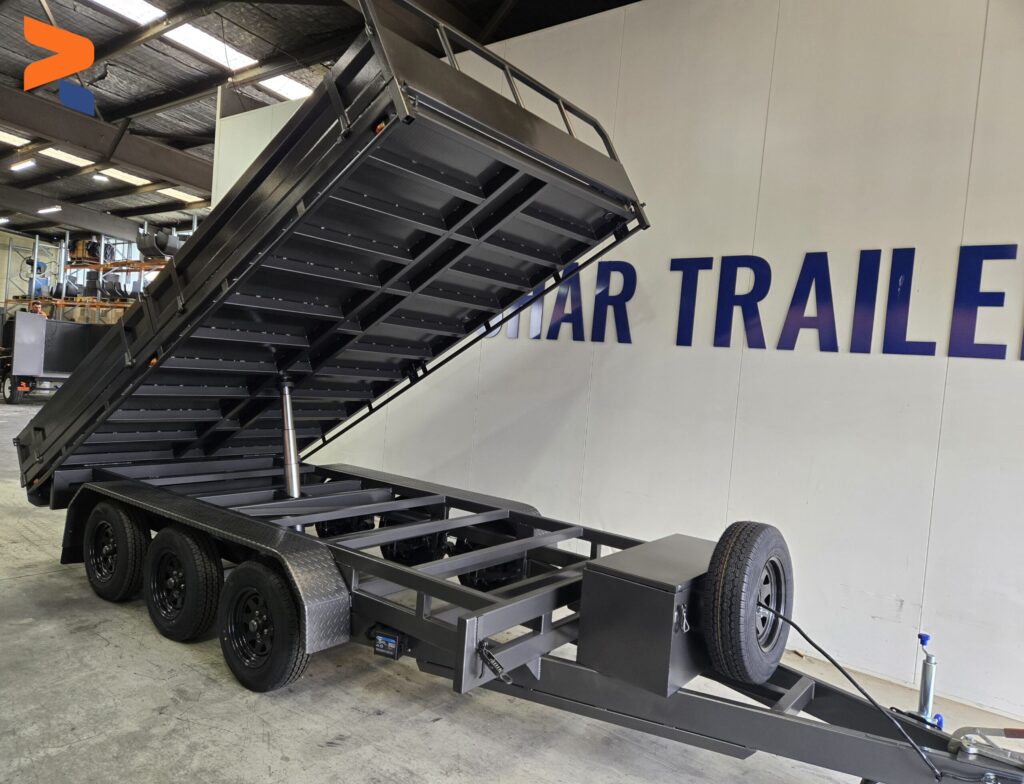
Soil, gravel, mulch, rubble, and green waste all place different demands on the trailer. Wet soil can be significantly heavier than dry material a tipper that handles dry green waste comfortably may be working at its limits with a full load of wet clay. The frame, axle setup, and hydraulic system should be checked against the heaviest loads you actually carry, not the lightest.
Plant and Machinery Trailers
Plant and machinery trailers need to be built around load strength, safe loading access, and secure transport for heavy and often expensive equipment. These trailers may carry compact machines, attachments, and tools that represent significant asset value.
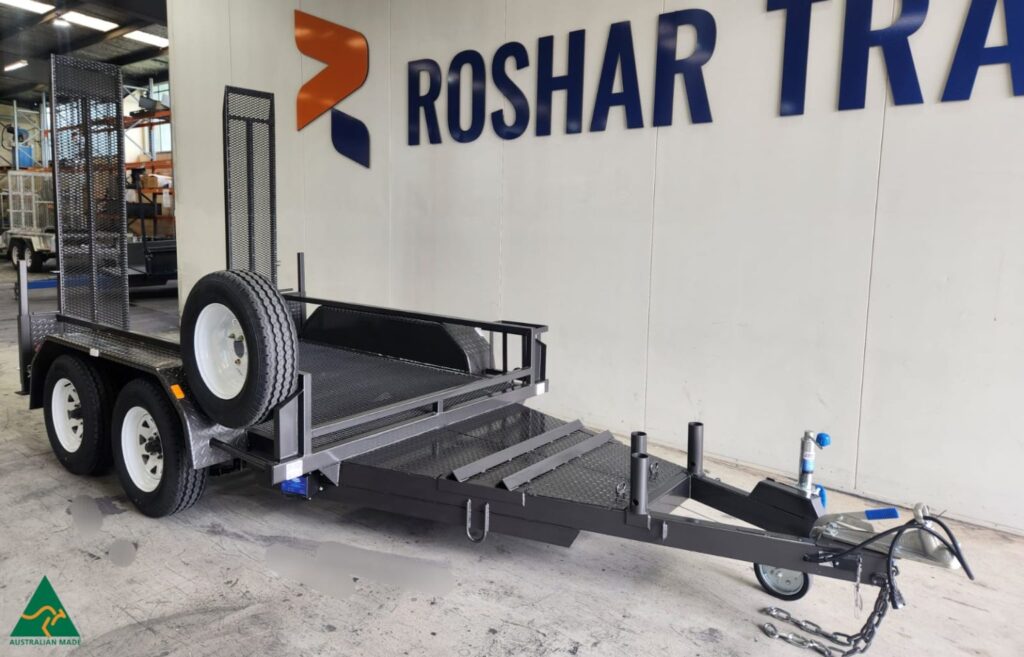
Check the ramps carefully their load rating, hinge strength, loading angle, and surface grip all matter when driving machinery on and off. Confirm the deck structure, suspension, brakes, and tie-down point placement suit the actual machine weight, not just the general trailer category. A landscaper moving a small loader has different needs from a construction company moving a full-size excavator attachment.
Tiny House Trailers
Tiny house trailers are different from all other trailer types because the trailer becomes the permanent foundation for a structure. The empty frame is only the beginning once the build includes flooring, walls, roofing, windows, insulation, plumbing, furniture, and appliances, the total weight increases significantly and stays there permanently.
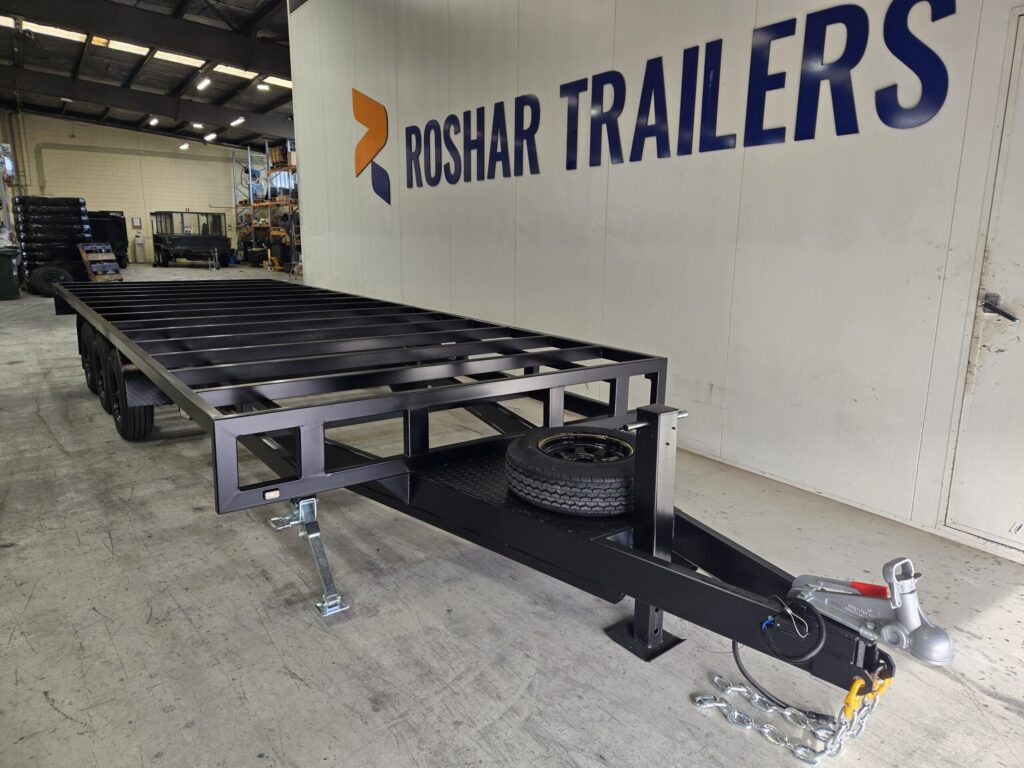
Tiny house buyers should check chassis straightness, axle placement relative to the planned load distribution, braking setup appropriate for the finished build weight, and long-term structural support. A tiny house trailer should be planned and specified around the finished build weight not just the starting frame. Mistakes in the trailer specification are far more expensive to fix after the structure is built than they would have been to address at the brief stage.
Warning Signs of Poor Trailer Construction
Not every trailer advertised as heavy-duty delivers quality trailer construction. Knowing the warning signs helps you avoid buying a problem before it becomes your problem.
| Warning Sign | What It May Indicate |
| Thin or uneven welds | Poor fabrication quality or rushed build |
| Rust around joins on a new trailer | Inadequate rust protection during manufacture |
| Weak-looking drawbar | Under-specified for the trailer’s rated load |
| Uneven or twisted frame | Poor alignment or chassis compromise |
| No clear compliance plate | Possible non-compliance with ADR and RAV requirements |
| Unclear or absent ATM/GTM figures | Cannot confirm load rating or brake requirements |
| Loose or exposed wiring | Poor electrical quality, likely lighting issues |
| Light-duty tyres on a work trailer | Tyres not rated for the ATM |
| Seller cannot explain the load rating | May not understand what the trailer is built for |
| No warranty or limited structural cover | Manufacturer not confident in their own build |
The absence of a clear compliance plate or RAV documentation is both a registration issue and a construction quality signal. A trailer that cannot be properly registered is not just a legal problem, it is evidence that the manufacturer’s process did not meet Australian standards.
Cheap Trailer vs Quality Trailer: What Is the Real Difference?
A cheap trailer may look attractive at first, especially when trying to keep costs down. But the real cost of a trailer is not only the purchase price, it includes maintenance, repairs, reliability, and how long the trailer lasts under real work conditions.
Poor construction leads to: faster rust, cracking welds, electrical faults, poor towing stability, uneven tyre wear, weak suspension, damaged flooring, higher repair costs, and a shorter working life. For business operators, tradies, landscapers, construction companies the cost of downtime from a failing trailer often exceeds the purchase price saving within the first year of heavy use.
A quality trailer does not always mean the most expensive trailer. It means the trailer is built properly for your actual workload. The right trailer for a homeowner doing occasional clean-ups is different from the right trailer for a contractor towing heavy materials every day. Value comes from matching the trailer to the job not from buying the cheapest or the biggest option available.
For a detailed breakdown of what drives cost differences between trailer builds, read our guide on why quality trailers are expensive.
For peace of mind on your investment, also read our guide on do trailers need insurance in Australia a quality trailer is a significant asset worth protecting.
Questions to Ask Before Buying a Trailer
Before you buy, ask practical questions. The answers reveal construction quality more reliably than photos or marketing descriptions.
Ask:
- What is the trailer’s ATM and GTM?
- What type of load is it designed to carry?
- Is it a single axle or tandem axle and why does that suit my use?
- What brake setup does it have and is that appropriate for the GTM?
- How is the chassis reinforced for the intended load?
- What material and thickness is used for the floor or deck?
- Are ramps included and what is their load rating?
- Are the tie-down points rated for my load type?
- What rust protection or finish is applied?
- Does it suit my tow vehicle’s towing capacity?
- Can it be customised for my specific work requirements?
- What does the warranty cover and for how long?
These questions are especially important for business buyers whose income depends on the trailer being available and functional every working day.
Pre-Purchase Quality Construction Checklist
Before choosing any trailer, confirm these points in person:
- Chassis is straight, properly reinforced, and appropriate for the intended load
- Welds are clean, consistent, and strong at all load-bearing points
- Drawbar and coupling are rated and suited to the trailer’s load
- Axles and suspension match the ATM rating
- Brakes suit the GTM and comply with legal requirements
- Floor or deck is strong enough for the actual load type
- Ramps are strong, properly hinged, and practical for regular use
- Tie-down points are well placed, rated, and secure
- Coating or galvanising protects against rust in Australian conditions
- Wiring and lights are neatly routed, protected, and fully functional
- Compliance plate is present, clear, and shows ATM and GTM
- ADR compliance documentation and RAV registration details are available
- Warranty terms are clear and cover structural components
- Trailer matches your real workload not just occasional light use
The best trailer is not the biggest or the cheapest. It is the one built for your load, your tow vehicle, your work conditions, and your long-term reliability needs.
Visit Roshar Trailers in Melbourne
Roshar Trailers builds Australian-made trailers from three Melbourne locations Braeside, Bayswater North, and Dandenong. If you want to inspect trailer construction quality in person before buying, our team is available to walk you through specifications, compliance plates, axle ratings, and brake setups across our full range of standard and custom trailers.
Roshar Trailers builds custom and standard Australian-made trailers for tradies, contractors, landscapers, farmers, and businesses across Victoria. Every trailer leaves our Melbourne workshops with ADR compliance documentation, a manufacturer’s compliance plate, and the construction quality to match its rated load. Visit us in Braeside, Bayswater North, or Dandenong or get a quote online.
Faq’s
What is quality trailer construction?
Quality trailer construction means the chassis, welds, axles, suspension, brakes, flooring, and finish are all built and rated for the load the trailer is intended to carry not just sized to look right. A quality build includes ADR-compliant construction, a manufacturer’s compliance plate with clear ATM and GTM figures, proper rust protection for Australian conditions, and warranty coverage on structural components.
How do I check trailer construction quality before buying?
Inspect the trailer in person where possible. Check welds at all load-bearing points, examine the underside for rust protection and wiring quality, confirm the compliance plate shows ATM and GTM, test ramp strength and hinge quality, and ask about the axle rating and brake setup. Bring the pre-purchase checklist in this article and ask the seller or manufacturer to walk through it with you.
What should I look for when inspecting welds on a trailer?
Good welds should look consistent, clean, and properly finished. Look for welds that are even in width, fully penetrated, and not showing cracks, porosity, or obvious gaps. Check welds particularly at the drawbar join, chassis corners, cross members, ramp brackets, and tie-down points these are the areas under the most stress during towing and loading.
What is the difference between an ATM and GTM?
ATM (Aggregate Trailer Mass) is the total maximum loaded weight of the trailer, including the weight imposed on the tow vehicle through the coupling. GTM (Gross Trailer Mass) is the portion of that weight carried by the trailer wheels when connected to a tow vehicle. For trailer brake requirements, GTM is the relevant figure. For overall trailer selection and towing capacity, ATM is the key figure to check.
Are custom trailers in Melbourne more expensive than standard trailers?
Custom trailers generally cost more than comparable standard trailers because they involve additional design, fabrication time, and component sourcing to meet specific requirements. However, the cost difference is often justified when a standard trailer cannot safely or practically meet your load, dimension, or configuration requirements. Custom trailers in Melbourne from a compliant manufacturer should still include ADR documentation, a compliance plate, and warranty coverage.
How do I find quality trailer construction near me in Victoria?
For Victorian buyers, visiting a local manufacturer or dealer in person is the most reliable way to assess build quality. Roshar Trailers operates from three Melbourne locations Braeside, Bayswater North, and Dandenong where trailers can be inspected in person before purchase. If buying remotely, ask for full written specifications including ATM, GTM, steel grade, finish type, and warranty terms before committing.
What does a compliance plate tell me about trailer construction?
A manufacturer’s compliance plate confirms the trailer’s tare weight, ATM, and GTM the figures that determine load capacity and brake requirements. Its presence indicates the trailer has been assessed and documented to a minimum standard. The absence of a compliance plate is a significant warning sign it may indicate non-ADR-compliant construction or that the trailer cannot be legally registered for public road use.
How long should a quality trailer last?
A quality trailer that is correctly specified for its load, properly maintained, and used within its rated capacity should last many years commonly 10 to 20 years or more in regular service. The main factors affecting trailer lifespan are construction quality, finish and rust protection, maintenance frequency, and whether the trailer is consistently used within its rated capacity. Overloading, poor rust protection, and deferred maintenance are the most common causes of premature trailer failure.