
37 Malcolm RD, Braeside, VIC

Machinery Trailers Design Considerations for Industrial Equipment
13 February 2026 | roshartrailers
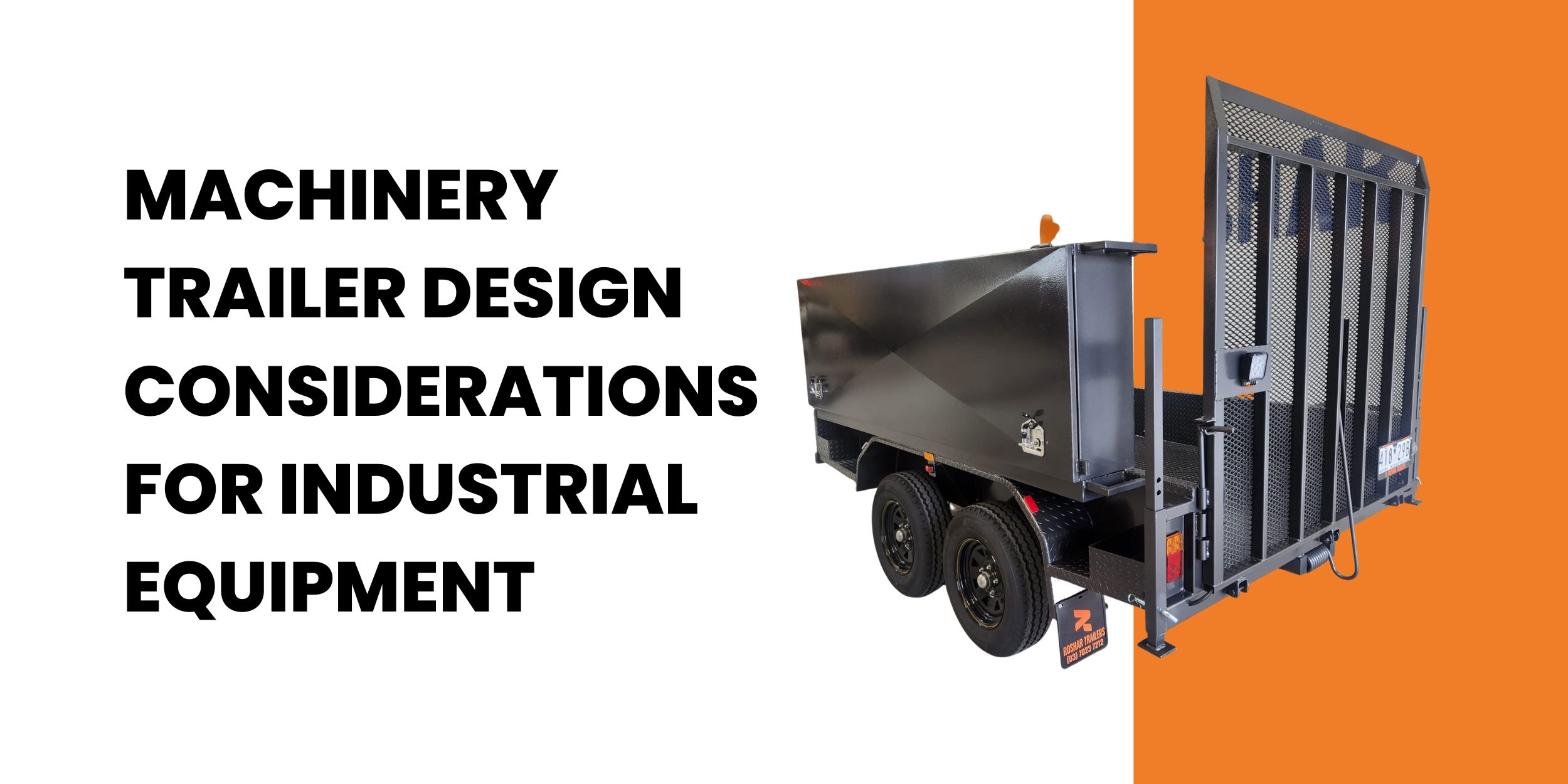
Transporting industrial equipment is not just about moving weight from one place to another. It is about safety, compliance, efficiency, and long-term reliability. As demand for machinery trailers for sale continues to grow across Australia, businesses in construction, mining, manufacturing, and infrastructure are placing greater emphasis on trailer design rather than price alone.
From Melbourne’s industrial zones and manufacturing hubs such as Braeside and Dandenong to large-scale projects across regional Victoria, choosing the right machinery trailer plays a critical role in protecting high-value equipment and keeping operations compliant with Australian regulations. This article explores the key machinery trailer design considerations that matter most when transporting industrial and heavy machinery, helping buyers make informed, future-proof decisions.
Key Takeaways
• Incorrect trailer design leads to equipment damage, compliance risk, and costly downtime
• Load capacity, braking systems, and chassis engineering matter more than upfront price
• Well-designed machinery trailers improve safety, registration approval, and long-term reliability
What Should You Look for in a Machinery Trailer?
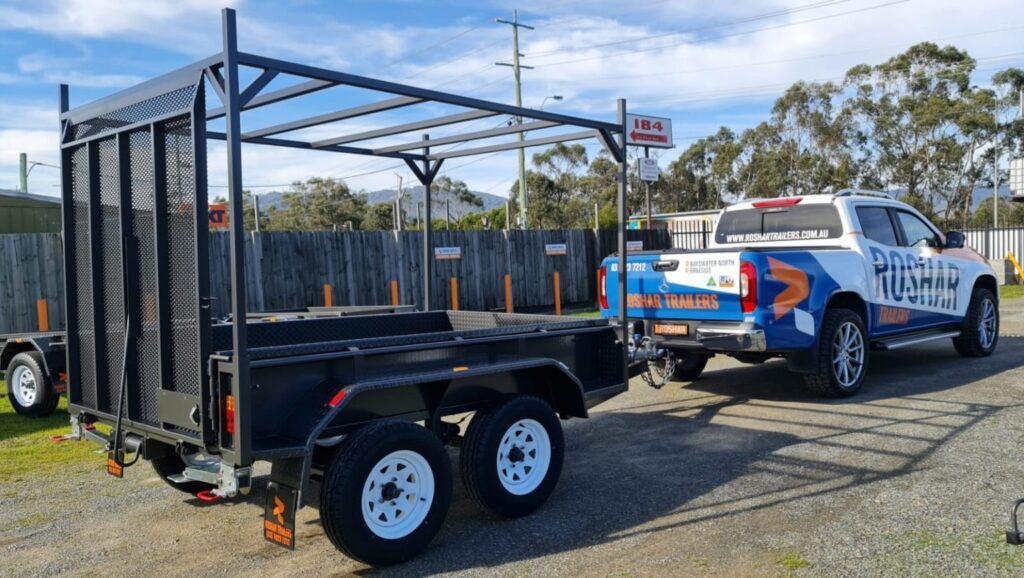
A compliant machinery trailer must be engineered to safely support heavy loads, control braking forces, protect equipment during loading, and meet Australian road regulations.
- Correct load capacity with a legal safety margin above machinery weight
- Reinforced steel chassis designed for industrial equipment
- Low loading angle with heavy-duty ramps for tracked machinery
- Compliance with ADR, VSB1, and Australian load restraint guidelines
Understanding Machinery Trailers for Industrial Use
A machinery trailer is purpose-built to transport industrial equipment such as excavators, rollers, forklifts, scissor lifts, and other heavy machinery. Unlike general-purpose trailers, heavy machinery trailers are engineered to handle concentrated loads, higher axle weights, and demanding road conditions.
Australian machinery trailers are designed with reinforced frames, advanced braking systems, and load restraint features that support both urban transport and long-distance regional hauling. Whether you are searching for a machinery trailer for sale in Melbourne or operating equipment across outer-suburban and regional worksites in Victoria, design quality directly affects safety, compliance, and long-term service life.
What Is the Correct Load Capacity for a Machinery Trailer?
The correct machinery trailer load capacity is one that exceeds the machine’s operating weight while staying safely within legal Aggregate Trailer Mass limits.
Choosing the correct machinery trailer capacity requires calculating the machine’s operating weight, attachments, fuel, and tools, then ensuring the total remains safely within the trailer’s Aggregate Trailer Mass (ATM). Selecting a trailer with excess capacity improves braking performance, stability, and long-term durability.
Matching Trailer Capacity to Machinery Weight
One of the most important design considerations is load capacity. Industrial equipment places concentrated pressure on trailer decks, especially tracked machinery. Selecting a trailer with insufficient capacity can lead to structural fatigue, braking failure, and compliance breaches.
Heavy machinery trailers are commonly available in different capacity ranges, and the correct selection depends on:
- Operating weight of the machine
- Accessories or attachments
- Fuel and tool loads
- Compliance with Aggregate Trailer Mass (ATM) limits
Choosing a trailer that comfortably exceeds the expected load improves safety margins and extends service life.
Importance of Even Weight Distribution
Good trailer design ensures weight is distributed evenly across axles. This reduces sway, improves braking efficiency, and enhances towing stability. Well-designed trailer machinery platforms position axles and drawbars to keep load balance within legal and mechanical limits, even when transporting uneven or tracked equipment.
Chassis Strength and Structural Engineering
Reinforced Frames for Industrial Loads
On high-use sites around Melbourne’s industrial corridors, repeated loading cycles place constant torsional stress on trailer frames, making chassis engineering a critical long-term reliability factor.
Industrial machinery requires a chassis that resists torsional stress and flexing. High-quality heavy machinery trailers use reinforced steel frames engineered to handle repeated heavy loading without distortion.
Structural integrity becomes especially important on uneven terrain, such as construction sites or unsealed regional roads. A rigid, well-designed steel chassis protects both the machinery being transported and the trailer itself over long-term use.
Corrosion-Resistant Steel for Long-Term Durability
Australian operating conditions are demanding, particularly in high-use industrial and outer-suburban areas around Melbourne, such as Dandenong and surrounding regions. Machinery trailers constructed from corrosion-resistant steel are designed to withstand prolonged exposure to moisture, road debris, and variable weather conditions.
Using treated steel construction significantly extends trailer service life while reducing ongoing maintenance requirements. This makes steel-built machinery trailers well suited for businesses operating year-round across diverse Victorian and Australian environments.
Loading Design and Angle of Approach
Low-Profile Decks and Beaver-Tail Designs
One of the most overlooked design factors in machinery trailers is the angle of approach. Machinery with low ground clearance can easily bottom out on steep ramps or poorly designed decks.
Quality machinery trailers incorporate:
- Low-profile decks
- Beaver-tail rear sections
- Optimised ramp geometry
These features allow equipment to be driven on and off smoothly without damaging undercarriages or hydraulic components.
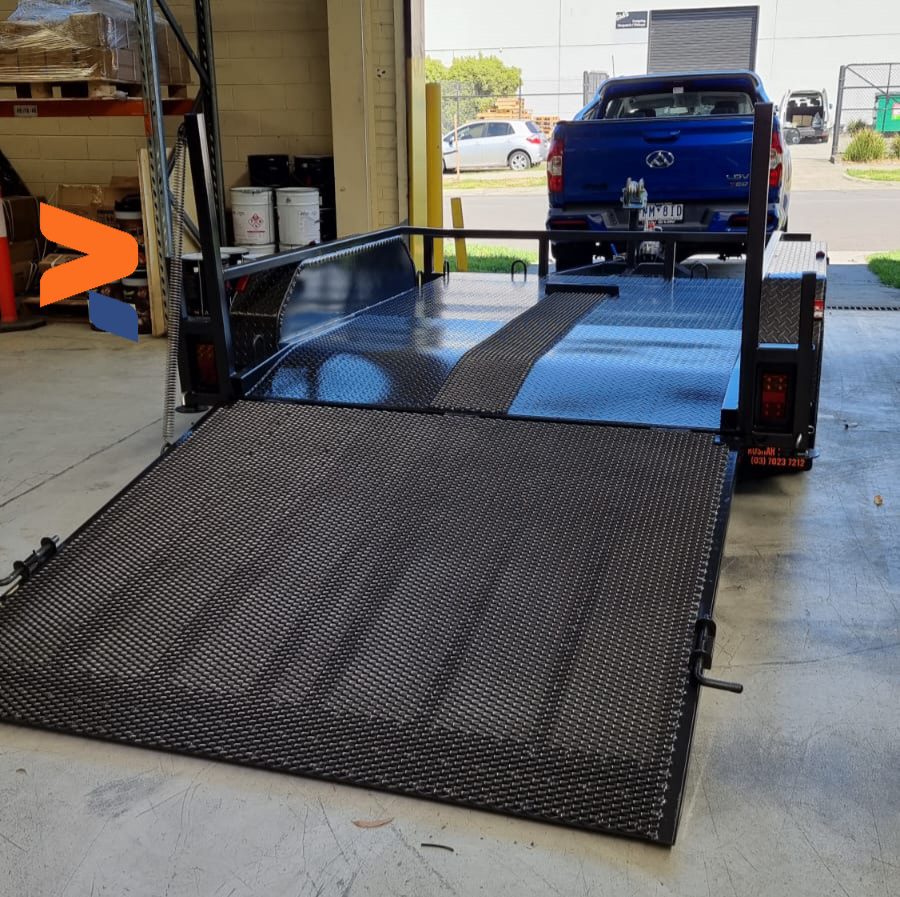
Ramp Strength and Width
Industrial equipment places extreme point loads on ramps. Heavy machinery trailers must use reinforced, wide ramps that support tracked and wheeled machinery without flexing. Proper ramp design improves safety during loading and reduces wear on both equipment and trailer components.
Poor loading design often results in:
• Underbody damage to tracked machinery
• Increased wear on hydraulic components
• Unsafe loading conditions on uneven ground
Braking Systems and Safety Performance
Braking Requirements for Heavy Machinery Trailers
Braking systems are the primary safety control on heavy machinery trailers and must be matched precisely to trailer weight and operating conditions.
As trailer weights increase, braking performance becomes critical. In Australia, heavier machinery trailers for sale must comply with specific braking standards depending on the ATM.
Well-designed trailers may include:
- Electric braking systems for mid-range loads
- Air or air-over-hydraulic brakes for heavier applications
- Breakaway systems for enhanced safety
Advanced braking design improves stopping distances and towing control, particularly on highways and steep descents.
Stability During Transport
Trailer stability depends on axle configuration, suspension quality, and braking response. Dual-axle and tri-axle configurations are commonly used on heavy machinery trailers to improve load control and reduce stress on individual components.
This is especially important for long-distance transport across regional Victoria and mixed road conditions connecting major industrial and outer-suburban areas.
Load Restraint and Compliance Design
Integrated Tie-Down Points
Industrial equipment must be restrained according to national load restraint standards. Machinery trailers are designed with multiple heavy-duty tie-down points positioned to secure both wheeled and tracked machinery.
Well-placed restraint points reduce movement during braking and cornering, protecting equipment and meeting legal obligations.
Compliance with Australian Standards
Quality Australian machinery trailers are built to comply with:
- Vehicle Standards Bulletin 1 (VSB1)
- Australian Design Rules (ADR)
- National load restraint guidelines
Compliance-focused design ensures trailers can be registered and operated legally across Melbourne and key industrial areas such as Dandenong, Bayswater, and Braeside, as well as regional areas, without requiring modification.
State Registration Ready Across Australia
Machinery trailers are designed to meet registration requirements across Australia. Whether registering through VicRoads in Victoria or operating across metropolitan Melbourne, surrounding industrial areas, and regional locations, correctly engineered trailers simplify approval and ensure road-legal operation in both urban and regional environments.
Suspension Systems for Industrial Transport
Managing Shock and Vibration
Industrial machinery is sensitive to vibration, especially hydraulic and electronic components. Trailer suspension plays a key role in absorbing road shock and protecting equipment during transport.
Heavy-duty suspension systems help:
- Reduce mechanical stress
- Improve towing comfort
- Minimise damage to machinery
This is particularly valuable on long hauls or uneven access roads common to construction and mining sites.
Adaptability for Different Industries
One Trailer for Multiple Applications
Well-designed machinery trailers are versatile. Construction companies may transport excavators one day and rollers the next, while facilities managers may move scissor lifts or forklifts between sites.
A flexible trailer design reduces the need for multiple specialised trailers, lowering fleet costs and improving operational efficiency.
Local Considerations Across Australia
Businesses operating in Melbourne often require trailers that can handle tight access, frequent urban stops, and dense industrial zones such as Dandenong, Bayswater, and Braeside. Operations across regional Victoria demand strong braking performance and towing stability for highway and mixed-terrain travel, while varied Australian conditions require machinery trailers to deliver durability, corrosion resistance, and long-distance reliability year-round.
Designing machinery trailers to perform across these environments ensures consistent, compliant, and dependable performance throughout Australia.
What Separates Machinery Trailers from General-Purpose Trailers
Machinery trailers are engineered for concentrated loads, braking control, and compliance, while general-purpose trailers are not designed to safely handle industrial equipment weight or restraint forces.
Common Machinery Trailer Design Mistakes to Avoid
- Choosing a trailer with capacity too close to machinery weight
- Ignoring ramp strength for tracked or industrial equipment
- Overlooking corrosion protection for coastal or high-use environments
Conclusion
Choosing the right machinery trailer is a critical decision for any business transporting industrial equipment. Design considerations such as load capacity, chassis strength, braking systems, loading geometry, and compliance determine not only safety but long-term operating costs.
For businesses exploring machinery trailers for sale, focusing on engineering quality and suitability for Australian conditions leads to better performance, fewer issues, and greater peace of mind.
Choosing a trailer based on price alone often leads to higher long-term costs through repairs, downtime, and compliance issues.
For businesses seeking reliable, compliant, and durable machinery transport solutions, Roshar Trailers offers Australian-engineered machinery trailers designed for industrial equipment, heavy loads, and real-world job site demands.
FAQs
Q1. What size machinery trailer do I need for industrial equipment?
A: The trailer should exceed the machine’s operating weight, including attachments and fuel, while remaining within legal ATM limits.
Q2. Are machinery trailers required to meet Australian standards?
A: Yes. Machinery trailers must comply with ADR, VSB1, and national load restraint requirements to operate legally on Australian roads.
Q3. Why is a low loading angle important for heavy machinery trailers?
A: A low approach angle prevents underbody damage and allows safer loading of tracked and low-clearance machinery.
Q4. What braking systems are used on heavy machinery trailers?
A: Depending on weight, trailers may use electric, air, or air-over-hydraulic braking systems to meet safety and compliance standards.
Q5. Can machinery trailers be used for different types of equipment?
A: Yes. Well-designed machinery trailers are engineered to transport a range of industrial equipment, including excavators, forklifts, rollers, and scissor lifts, provided load capacity and restraint requirements are met.