
37 Malcolm RD, Braeside, VIC
How Flat Top Trailers Improve Loading Efficiency on Busy Job Sites
29 May 2026 | roshartrailers
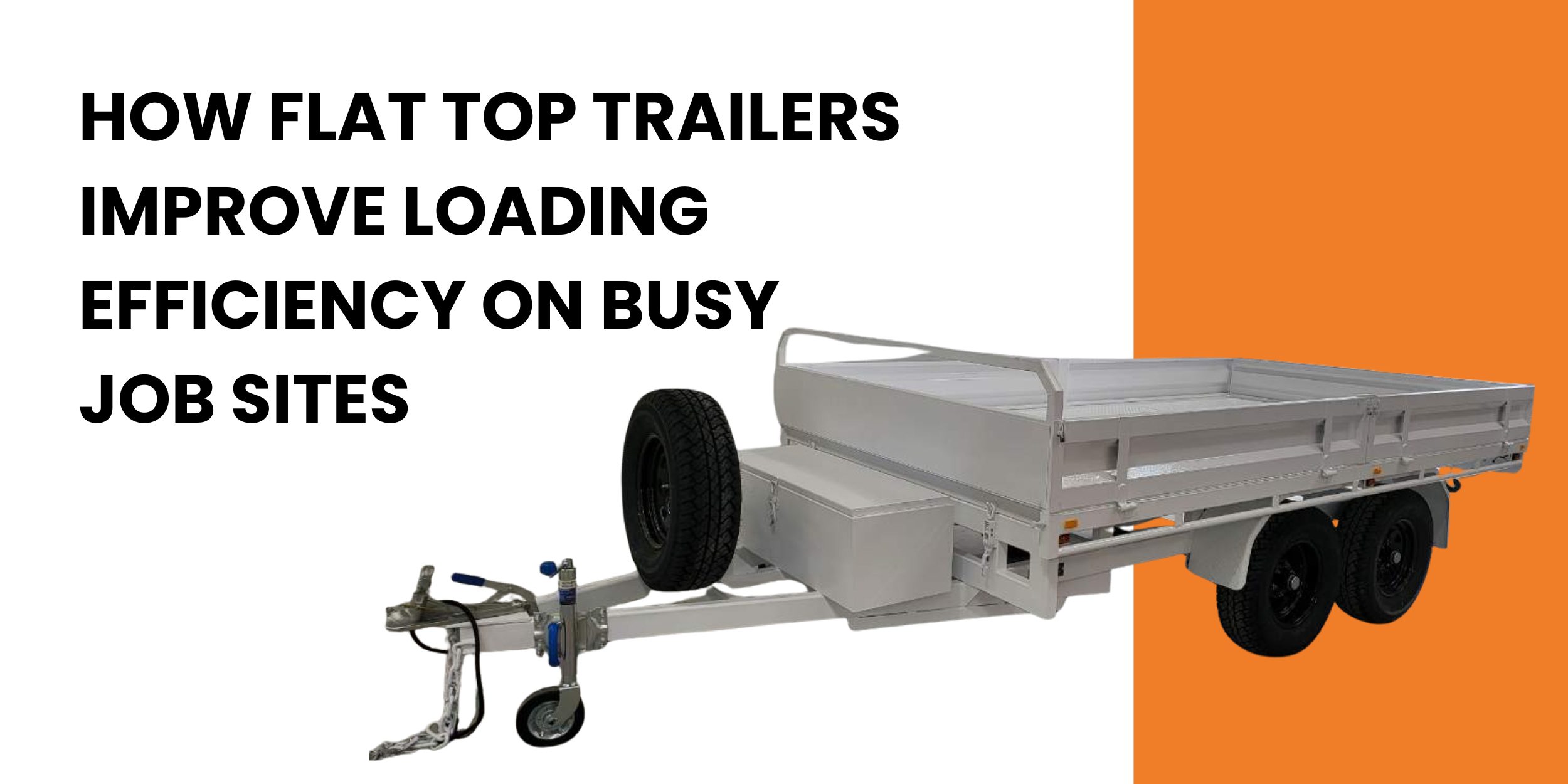
Flat top trailers improve loading efficiency by giving tradies, contractors and businesses open deck access for pallets, machinery, fencing materials, landscaping supplies, construction equipment, long items and uneven loads. Instead of working around fixed high sides or limited rear access, the load can often be positioned from the side, rear or above.
On busy job sites, loading time matters. A trailer that is difficult to access can slow down a crew, create extra manual handling, increase repositioning and make load restraint harder than it needs to be.
Flat top trailers improve loading efficiency because their open deck allows easier side loading, faster forklift access, better use of deck space, safer machinery loading and fewer delays when positioning mixed or awkward loads.
This guide explains the loading workflow benefits of flat top trailers for tradies, contractors and businesses that regularly move mixed or awkward loads on job sites.
Reviewed by: Roshar Trailers Team
Roshar Trailers manufactures Australian-made trailers in Melbourne for trade, machinery, landscaping, construction and commercial transport applications.
Last updated: June 2026
Easier Side Loading
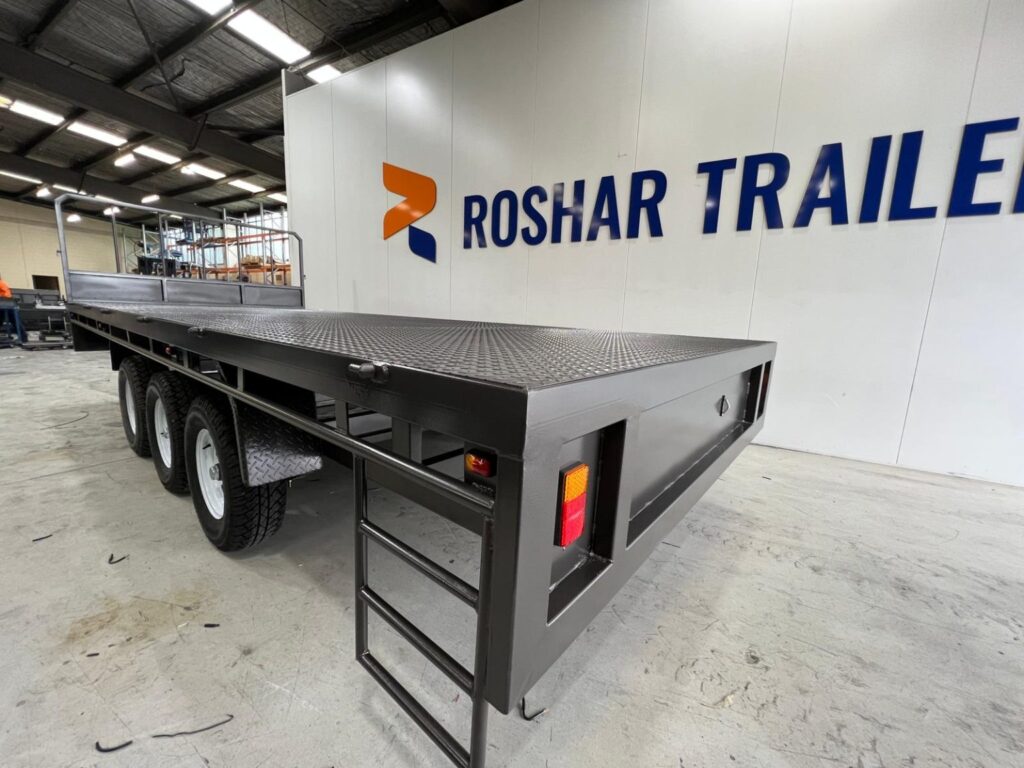
Side loading is one of the main reasons flat top trailers are useful on busy job sites. When a trailer has an open deck, workers can often access the load from more than one direction instead of relying only on rear loading.
This can be useful when the job site has limited space, uneven access or a loading area where materials arrive from different directions.
Loads that benefit from side loading
| Load type | Why side loading helps |
| Pallets | Forklifts can often approach from the side instead of needing rear-only access |
| Fencing materials | Long rails, posts and mesh can be positioned more easily |
| Landscaping supplies | Pavers, sleepers, turf and plants can be separated across the deck |
| Construction materials | Timber, steel, pipe and frames can be loaded without high side restrictions |
| Uneven loads | Irregular items can be arranged where they best fit |
| Mixed job-site loads | Tools, materials and equipment can be placed in separate zones |
Side loading can reduce unnecessary lifting, turning and repositioning. For crews moving between multiple job sites, that can make the trailer easier to use throughout the day.
Faster Forklift Access
Forklift access can make a major difference when loading pallets, packaged materials or heavy equipment. A flat top trailer’s open deck can make it easier for a forklift to approach the load from the side or rear, depending on the site layout.
This is useful for businesses that move:
- Palletised bricks
- Tiles and pavers
- Packaged construction supplies
- Bagged landscaping materials
- Commercial stock
- Machinery attachments
- Site equipment
Forklift loading comparison
| Loading issue | How a flat top trailer helps |
| Rear access is blocked | Side access may still be possible |
| Pallets need quick unloading | Open deck improves forklift reach |
| Materials need to be separated | Pallets can be placed in planned deck zones |
| Heavy items are difficult to move by hand | Forklift loading reduces manual handling |
| Loads vary between jobs | Open deck gives more layout flexibility |
Faster forklift access does not remove the need for safe restraint. Once loaded, pallets and materials still need to be positioned and secured so they cannot slide, shift or fall during transport. Transport Victoria recommends suitable restraint equipment for the load and says rated equipment should be used where possible.
Better Use Of Deck Space
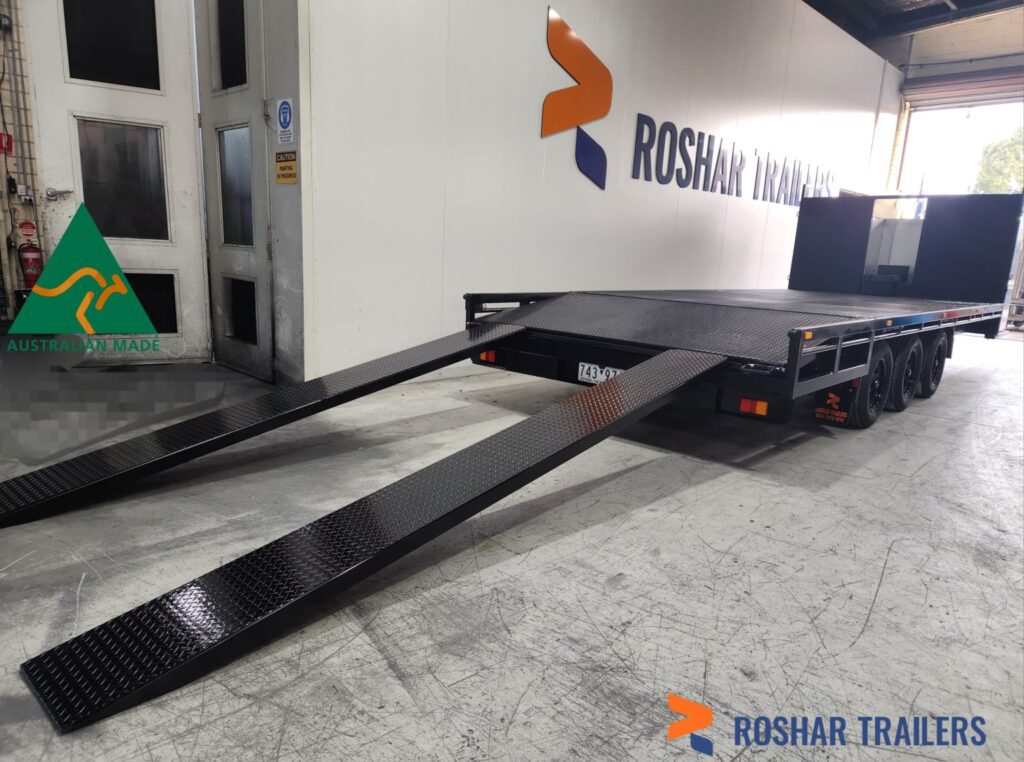
Flat top trailers can improve loading efficiency because the deck is easier to plan. Without fixed high sides limiting the load area, the deck can be used for different materials, equipment and tools on the same trip.
This is especially useful for mixed business loads.
Example deck layouts
| Job type | Example load | Efficient deck use |
| Landscaping | Pavers, sleepers, mower, tools | Keep materials grouped and equipment accessible |
| Construction | Timber, steel, site boxes, ladders | Place long items along the deck and secure tools separately |
| Fencing | Posts, rails, mesh, concrete bags | Separate long materials from bagged supplies |
| Machinery work | Compact equipment, attachments, fuel cans | Position machinery centrally and secure accessories separately |
| Trade work | Toolboxes, conduit, ladders, stock | Arrange by unloading order |
Good deck planning can reduce the number of times a load needs to be moved. It can also make unloading faster because the first items needed on site can be placed where they are easiest to access.
Deck planning questions
Before loading, ask:
- What needs to come off first?
- Which items are heaviest?
- Which items need the strongest restraint?
- Are any items long, sharp or awkward?
- Can pallets or machinery be loaded without blocking access to smaller items?
- Will the load remain balanced from side to side?
A flat top trailer gives flexibility, but the load still needs to be planned around weight, restraint and safe unloading.
Safer Loading For Machinery And Materials
Loading efficiency should never come at the cost of safety. A flat top trailer can make machinery and material loading easier, but the trailer must still suit the load.
For machinery, the main loading factors are:
- Deck height
- Ramp length
- Ramp angle
- Ramp rating
- Machine weight
- Machine width
- Tie-down point location
- Trailer ATM, GTM and payload
- Towing vehicle capacity
For materials, the main factors are:
- Load weight
- Load length
- Side access
- Deck width
- Load balance
- Restraint method
- Overhang risk
- Protection from movement
Australia’s Vehicle Standards Bulletin 1 Revision 6 applies to trailers with an aggregate trailer mass of 4.5 tonnes or less and helps manufacturers understand applicable Australian Design Rule requirements.
Machinery and material loading table
| Load | Loading consideration |
| Compact machinery | Ramp angle, deck strength, payload, tie-down points |
| Construction equipment | Deck space, balance and restraint |
| Pallets | Forklift access, deck width and sliding prevention |
| Fencing materials | Length, bundling and overhang visibility |
| Landscaping supplies | Mixed load separation and restraint |
| Long items | Deck length, tie-down angle and overhang management |
| Uneven loads | Weight balance and contact points |
Transport Victoria advises that chains are best suited to heavy loads, while tarpaulins, cargo nets and ropes are only suited to light loads.
Reducing Time Spent Repositioning Loads
Repositioning is one of the biggest hidden time costs on job sites. It happens when the load does not fit the trailer layout, when heavy items block access, or when materials need to be moved before they can be unloaded.
Flat top trailers can reduce repositioning because the open deck gives more ways to arrange the load before transport begins.
Common causes of repositioning
| Problem | Result | How open deck access can help |
| Load placed in the wrong unloading order | Crew has to move items twice | Items can be arranged by job-site sequence |
| Long materials block smaller tools | Tools become hard to access | Long items can be placed along one side |
| Pallets loaded too tightly | Forklift access becomes difficult | Side access can give more placement options |
| Machinery blocks loose materials | Unloading slows down | Equipment and materials can be zoned |
| Uneven load placement | Restraint becomes harder | Load can be positioned more carefully |
| Mixed loads without planning | Time is lost sorting on site | Deck can be divided by load type |
Practical example
A fencing contractor may load posts, rails, mesh, tools and bags of concrete. On a limited-access trailer, these items may need to be stacked in a way that forces unloading in the wrong order. On a flat top trailer, long items can be positioned along the deck, heavier materials can be placed low, and tools can be kept accessible.
The result is a more organised loading workflow.
Loading Mistakes To Avoid
A flat top trailer can make loading easier, but mistakes can still create delays, safety risks or damage to materials.
Common loading mistakes
| Mistake | Why it matters |
| Loading by convenience only | The load may be hard to unload or secure |
| Ignoring weight balance | Poor balance can affect towing stability |
| Blocking access to first-use items | Workers waste time moving other materials |
| Using the wrong restraint method | The load may shift during transport |
| Overloading the trailer | Can exceed trailer or tow vehicle limits |
| Forgetting ramp angle | Machinery may scrape, slip or load unsafely |
| Not bundling long items | Materials can move separately during travel |
| Leaving loose tools on the deck | Items may fall or become hazards |
| Relying on ropes for heavy loads | Heavy loads need more suitable restraint equipment |
| Not checking restraints after loading | Straps or chains may loosen as the load settles |
Job-site loading checklist
Before leaving the site, check that:
- Heavy items are placed low and evenly
- Pallets cannot slide
- Machinery is secured at multiple points
- Long items are bundled where practical
- Loose items are contained or secured
- Straps, chains and anchor points are suitable
- The load does not exceed the trailer rating
- The towing vehicle can handle the loaded trailer
- Lights, tyres, coupling and brakes are checked
- Nothing protrudes dangerously or blocks visibility
If a load extends behind the trailer, Transport Victoria says overhanging loads may need to be made visible with a brightly coloured flag or material, and a red light at night in certain cases.
When Loading Efficiency Justifies A Custom Build
A custom flat top trailer can make sense when loading delays happen regularly. If a crew keeps losing time because the trailer does not suit the load, customisation may improve workflow.
A custom build is worth considering when:
- Pallets are loaded regularly
- Machinery needs a specific ramp angle
- Long materials need more usable deck length
- Fencing materials need dedicated load zones
- Landscaping supplies and machinery travel together
- Tie-down points need to match repeated loads
- Toolboxes or ramp storage would save time
- A wider deck would improve forklift access
- Uneven loads need better restraint options
- The trailer must fit tight job-site access or storage areas
When loading efficiency is becoming a daily issue, compare Roshar’s flat top trailers for job sites to review available configurations.
Custom feature planning table
| Loading problem | Custom feature to consider |
| Regular pallet loading | Wider deck and side access |
| Machinery loading delays | Rated ramps and suitable ramp angle |
| Long material handling | Longer deck and headboard |
| Mixed job-site loads | Toolboxes, removable sides and load zones |
| Slow restraint setup | Extra tie-down points in planned positions |
| Limited storage space | Custom overall length or ramp storage |
| Uneven loads | Flexible restraint layout and reinforced deck |
| Frequent site work | Durable flooring and spare wheel bracket |
A custom trailer should solve a repeated workflow problem. It should make loading, securing, towing and unloading easier on the jobs the trailer handles most often.
When loading efficiency is becoming a daily issue, compare Roshar’s flat top trailer options to review available configurations.
Final Thoughts
Flat top trailers improve loading efficiency by giving busy job sites more practical access to the load. Side loading, forklift access, open deck space and flexible restraint points can all reduce wasted time when moving pallets, machinery, fencing materials, landscaping supplies, construction equipment and long or uneven loads.
The best loading setup depends on what is carried most often, how the trailer is loaded, how the load is secured and how the trailer is used across different job sites.
For many tradies and businesses, improving loading workflow is not about choosing the largest trailer. It is about choosing a trailer layout that makes daily loading, restraint and unloading faster, safer and more predictable.
Frequently Asked Questions
How do flat top trailers improve loading efficiency?
Flat top trailers improve loading efficiency by providing open deck access for side loading, rear loading, forklift access, ramp loading and flexible load positioning.
Are flat top trailers good for pallet loading?
Yes, flat top trailers can be practical for pallet loading because the open deck may allow forklift access from the side or rear, depending on the site and trailer layout.
Can a flat top trailer carry machinery?
Yes, a flat top trailer can carry machinery when the deck size, ramp setup, payload, brakes, tyres and tie-down points are suitable for the machine being transported.
Why is open deck access useful on job sites?
Open deck access is useful because materials, machinery and equipment can often be loaded or unloaded from more than one direction, reducing delays in tight or busy work areas.
What loads benefit most from flat top trailer access?
Loads that benefit include pallets, machinery, fencing materials, landscaping supplies, construction equipment, long items and uneven or mixed job-site loads.
How can I reduce time spent repositioning loads?
Plan the load before transport. Place first-use items where they can be accessed easily, keep heavy items low and balanced, separate mixed materials, and use tie-down points that match the load.
When should loading efficiency justify a custom trailer?
A custom trailer may be justified when loading delays happen regularly because of pallet access, machinery ramps, long materials, uneven loads, poor tie-down placement or storage limitations.