
37 Malcolm RD, Braeside, VIC
Flatbed Trailers for Sale in Australia for Heavy Equipment and Flexible Transport Needs
27 March 2026 | roshartrailers
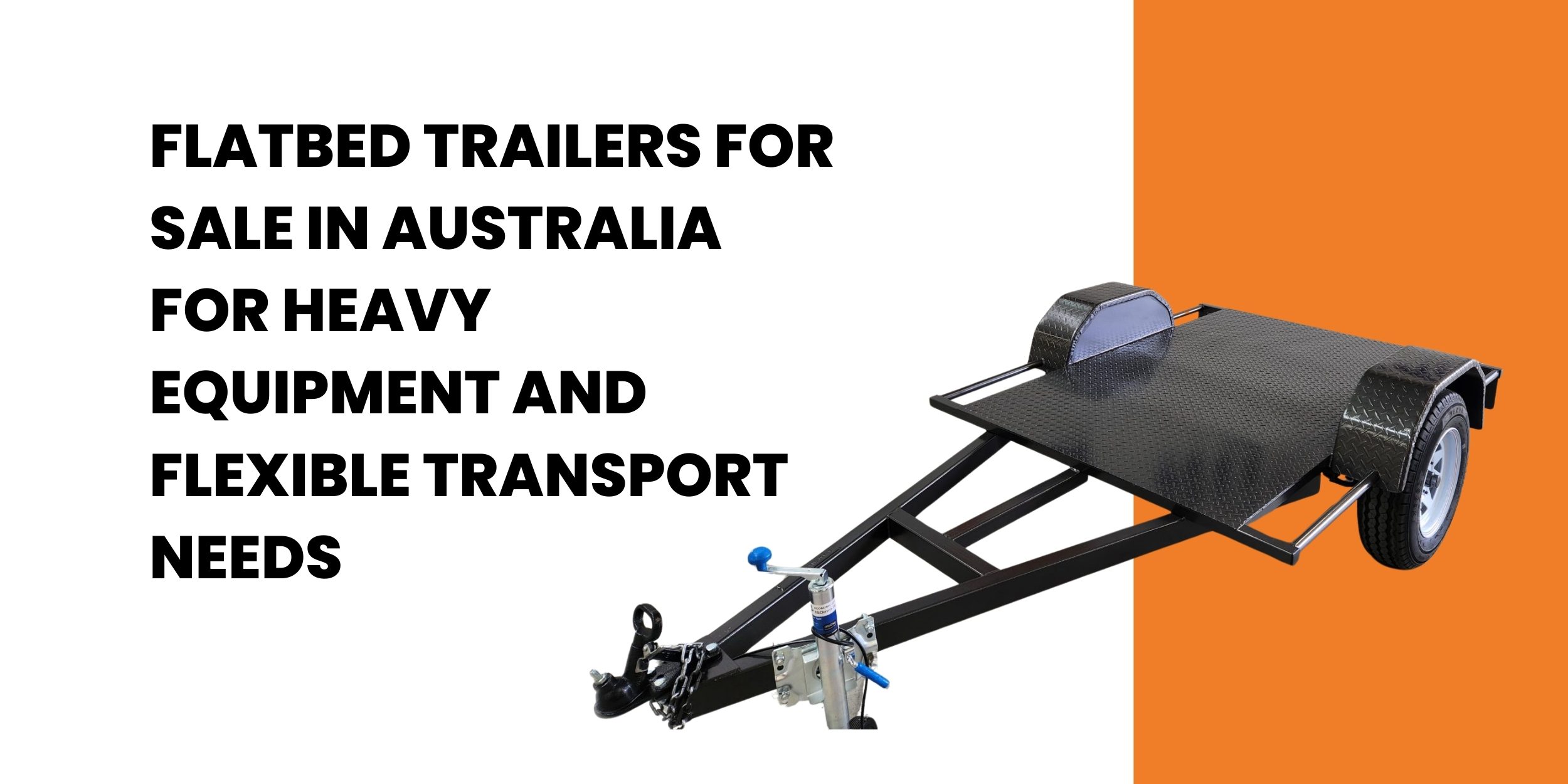
When searching for flatbed trailers for sale in Australia, buyers are typically looking for strength, flexibility, and long term reliability. Unlike enclosed trailers or box configurations, flatbeds provide an open deck platform designed for transporting oversized, irregular, and heavy loads.
From construction contractors and farmers to equipment hire businesses and logistics operators, flatbed trailers offer unmatched adaptability. Their simple yet powerful design allows for easy loading, high payload capacity, and secure heavy equipment transport across both urban and regional roads.
Understanding how flatbeds function and what features matter most, ensures you choose a trailer that delivers long term performance.
Why Flatbed Trailers Are Ideal for Heavy Equipment
Flatbed trailers are purpose built for transporting machinery and bulk materials that cannot be easily confined within side panels. Their open platform eliminates height restrictions and allows cargo to extend beyond the deck when properly secured.
Heavy machinery such as skid steers, mini excavators, compact tractors, and generators can be loaded directly onto the trailer deck without obstruction. This flexibility is particularly valuable on construction sites where quick loading and unloading improves overall workflow.
Because there are no fixed side walls, equipment can be positioned precisely for optimal weight distribution, reducing strain on suspension components and improving towing stability.
Understanding Load Capacity and Aggregate Trailer Mass
When evaluating flatbed trailers for sale, one of the most important technical considerations is Aggregate Trailer Mass (ATM). This figure represents the maximum allowable weight of the trailer and its load combined.
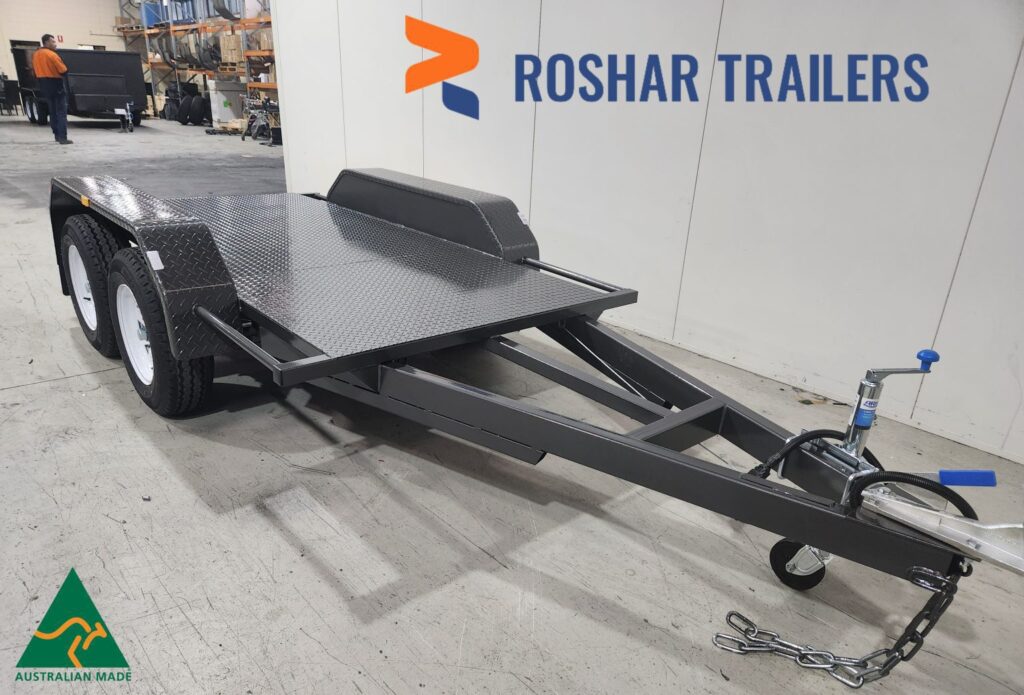
Flatbeds intended for heavy machinery must support concentrated loads without compromising structural integrity. Buyers should carefully assess:
- Trailer tare weight
- Maximum payload capacity
- Axle ratings
- Suspension strength
Operating beyond rated capacity risks structural fatigue, axle damage, and legal compliance issues.
Choosing the correct ATM ensures safe transport and long term durability under demanding conditions.
Structural Strength and Chassis Design
The chassis is the structural backbone of a flatbed trailer. Since heavy equipment places concentrated pressure on specific areas of the deck, the frame must resist bending and flexing.
High quality flatbeds incorporate:
- Fully welded RHS steel chassis
- Reinforced cross members
- Heavy duty drawbars
- Thick steel decking plates
A reinforced frame distributes load forces evenly across the trailer, preventing stress concentration.
Manufacturers such as Roshar Trailers emphasise durable chassis construction designed to withstand repeated heavy loading cycles common on Australian worksites.
Structural integrity directly influences both safety and lifespan.
Suspension Systems and Road Stability
Suspension plays a crucial role in towing performance. A poorly designed suspension system can result in excessive bounce, uneven tyre wear, and instability at highway speeds.
Flatbed trailers commonly use:
- Leaf spring suspension
- Rocker roller suspension
- Independent suspension systems
Robust suspension improves ride quality and protects transported equipment from excessive vibration.
Balanced suspension also enhances towing stability, especially when travelling long distances across Australia’s varied road conditions.
A stable trailer reduces driver fatigue and increases overall safety.
Loading and Accessibility Features
One of the defining benefits of flatbed trailers is ease of access. Because the deck is open, loading can occur from multiple directions using forklifts, cranes, or ramps.
Important loading features include:
- Slide under steel ramps
- Beavertail rear design
- Anti slip checker plate decking
- Integrated tie down rails
A beavertail design reduces the loading angle, making it easier to drive machinery onto the trailer without scraping.
Proper loading mechanisms improve both safety and efficiency during material handling.
Versatility Across Industries
Flatbed trailers are used across a wide range of Australian industries because of their adaptable design.
In construction, they transport pallets of bricks, steel beams, and heavy tools. In agriculture, they move fencing supplies, machinery, and feed. Landscaping businesses use them for turf pallets and bulk soil transport.
The open platform design allows users to customise load configurations according to task requirements.
This versatility explains the strong demand for flatbed trailers for sale among businesses seeking flexible transport solutions.
Corrosion Resistance and Durability
Australian environmental conditions can be harsh. Coastal air introduces salt exposure, while inland regions experience intense UV radiation and dust.
High quality flatbeds include protective measures such as:
- Zinc primed steel
- Powder coated finishes
- Sealed wiring systems
- Corrosion resistant fasteners
These features prevent premature rust formation and protect structural components.
Durability ensures the trailer maintains performance and structural safety over years of commercial use.
Safety and Compliance Standards
Flatbed trailers must meet strict Australian Design Rules to ensure road safety.
Compliance features typically include:
- Electric braking systems for heavier loads
- Breakaway safety units
- ADR compliant LED lighting
- Rated safety chains
- Reinforced tie down points
Proper load restraint is essential when transporting machinery. Equipment must be secured with rated straps and anchored to reinforced tie rails.
Compliance protects not only the driver but also other road users.
Towing Considerations and Vehicle Compatibility
Before purchasing a flatbed trailer, it is important to confirm compatibility with your towing vehicle.
Factors to evaluate include:
- Maximum towing capacity
- Tow ball weight rating
- Brake controller installation
- Gross Trailer Mass limits
Popular Australian vehicles such as the Toyota HiLux and Ford Ranger often support towing capacities up to 3,500kg when configured correctly.
Matching trailer weight to vehicle capability ensures safe acceleration, braking, and handling.
Maintenance for Long Term Performance
Flatbed trailers require consistent inspection to maintain performance.
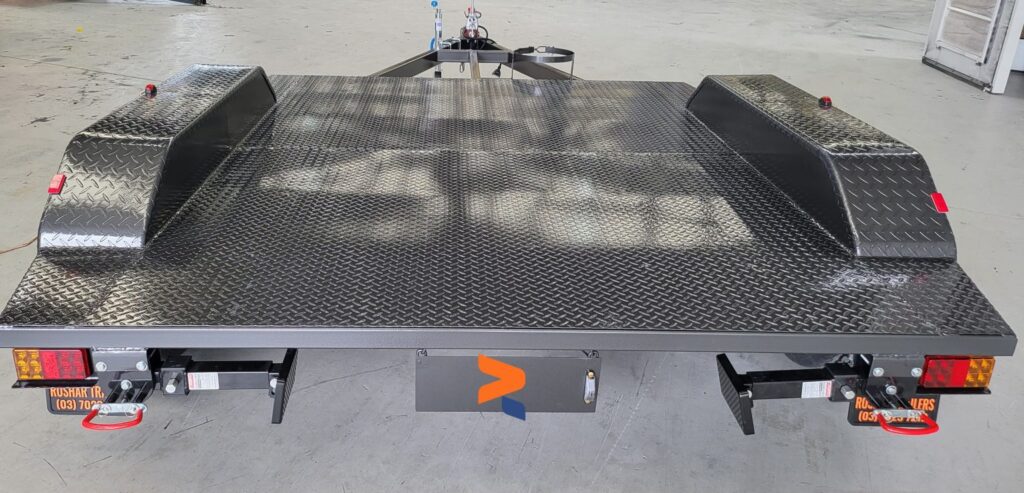
Routine maintenance should involve:
- Tyre pressure checks
- Brake inspection
- Lubricating bearings
- Checking weld integrity
- Removing accumulated debris
Preventative maintenance reduces unexpected breakdowns and extends operational lifespan.
A well maintained flatbed continues to deliver reliable service even under heavy commercial use.
Cost Versus Long Term Value
Although flatbed trailers represent a larger investment compared to smaller utility trailers, their durability and adaptability provide significant long term value.
Owning a flatbed reduces reliance on equipment hire, increases operational flexibility, and allows businesses to transport oversized cargo without outsourcing logistics.
Quality construction minimises maintenance costs and prevents premature replacement.
Manufacturers such as Roshar Trailers focus on delivering structural durability suited to Australian transport demands.
Long term reliability ultimately offsets initial purchase costs.
Final Thoughts on Flatbed Trailers in Australia
Flatbed Trailers for Sale in Australia remain one of the most practical solutions for heavy equipment and flexible transport needs.
Their open deck design, reinforced chassis construction, and adaptable loading options make them indispensable across construction, agriculture, and logistics industries.
Manufacturers such as Roshar Trailers design flatbed trailers built to perform under demanding Australian conditions.
Choosing the right flatbed ensures safer transport, improved efficiency, and long term durability.
Ready to Upgrade Your Transport Capability
If you are considering investing in a flatbed trailer, take time to compare load ratings, chassis strength, and compliance features.
Explore professional grade options from Roshar Trailers to find a flatbed solution engineered for Australian roads and heavy duty use.
Haul smarter. Move confidently. Choose reliability.
Frequently Asked Questions
What types of loads suit flatbed trailers
Flatbeds are ideal for heavy machinery, construction materials, agricultural equipment, and oversized cargo.
Do flatbed trailers require electric brakes
Electric brakes are required for trailers exceeding certain weight thresholds under Australian regulations.
How do I secure equipment safely
Use rated tie down rails and heavy duty straps to prevent load movement.
Are flatbed trailers good for long distance towing
Yes. With proper suspension and weight distribution, they perform reliably on highways.
How long will a flatbed trailer last
With corrosion protection and maintenance, a well built trailer can last more than a decade.
Can flatbeds be customised
Yes. Options such as toolboxes, ramps, and extended decks increase functionality.