
37 Malcolm RD, Braeside, VIC
What Are Flatbed Trailers Used For?
27 March 2026 | roshartrailers
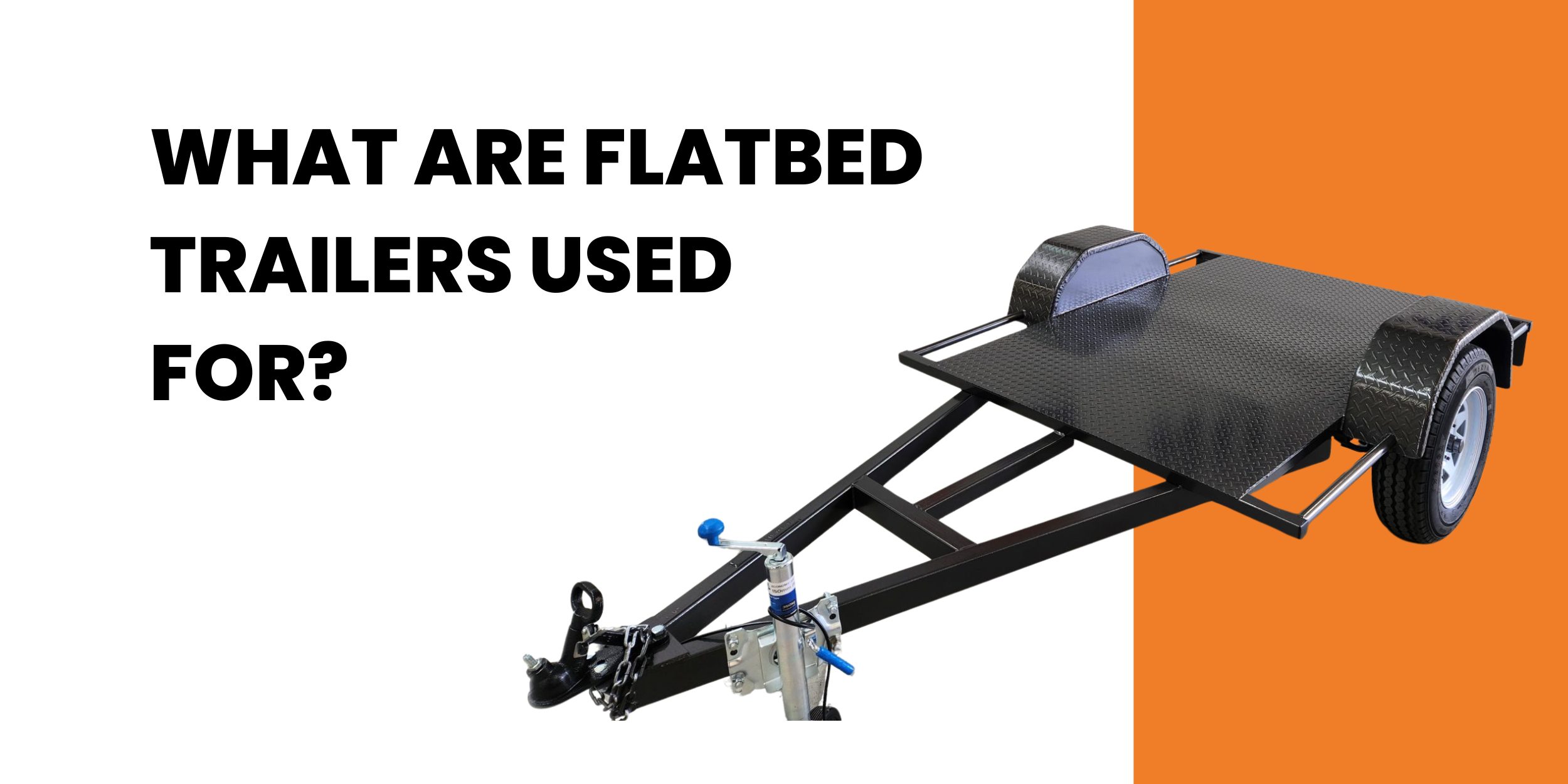
Flatbed trailers are used for transporting machinery, pallets, trade equipment, landscaping materials, construction supplies and bulky loads that need open-deck access. They are useful when the load is too long, wide, awkward or heavy for a standard box trailer.
Unlike enclosed or high-sided trailers, a flatbed trailer has an open, level deck. This makes it easier to load items from the rear, side or above using ramps, forklifts or lifting equipment.
For available models, sizes and custom options, view our flat top trailers for sale in Melbourne.
Flatbed trailers are commonly used by builders, landscapers, tradespeople, civil contractors, farmers, equipment operators and businesses that need practical transport across different worksites. This guide explains the common uses and practical situations where flatbed trailers make sense, while Roshar’s flat top trailer page covers available sizes, build options and quote enquiries.
Reviewed by: Roshar Trailers Team
Last updated: June 2026
What Makes A Flatbed Trailer Flexible?
A flatbed trailer is flexible because it provides a clear, open loading surface. Instead of fixed high sides limiting how the load is positioned, the deck allows different materials, equipment and machinery to be placed and secured according to the job.
This makes flatbed trailers useful for both regular and changing transport needs.
Key reasons flatbed trailers are flexible
| Feature | Why it matters |
| Open deck | Makes it easier to load wide, long or irregular items |
| Side and rear access | Allows loading by hand, forklift, crane or ramps |
| Flat surface | Helps position pallets, machinery and mixed materials |
| Tie-down access | Makes it easier to secure loads from multiple points |
| Custom options | Can be built around specific load types or work needs |
| Removable ramps or sides | Adds flexibility for machinery and mixed trade loads |
A flatbed trailer is especially useful when a business carries different types of loads during the week. For example, a landscaper may move pavers and turf one day, then mowers and tools the next. A builder may carry timber, steel, frames, pallets and site equipment on different jobs.
The main value is not just load space. It is the ability to adapt the trailer to different transport tasks.
Common Loads Carried On Flatbed Trailers
Flatbed trailers are used for many types of trade, commercial and worksite transport. Their open-deck design makes them suitable for loads that are awkward to place inside a box trailer or enclosed trailer.
Common flatbed trailer loads
| Load type | Examples | Why a flatbed trailer helps |
| Machinery | Mini loaders, compact equipment, generators, compressors | Easier ramp loading and open access |
| Pallets | Bricks, tiles, pavers, packaged goods | Forklift access from the side or rear |
| Landscaping materials | Turf, sleepers, plants, bagged soil, pavers | Mixed materials can be arranged across the deck |
| Construction supplies | Timber, steel, mesh, frames, pipe, formwork | Long or awkward items are easier to position |
| Trade equipment | Ladders, toolboxes, site boxes, cable drums | Suitable for moving equipment between job sites |
| Agricultural supplies | Fencing gear, tanks, feed, rural equipment | Open layout suits varied rural loads |
| Commercial equipment | Signage, event gear, packaged stock | Useful when load sizes change often |
Flatbed trailers are often chosen when the load needs to be accessed quickly or secured from several directions. This is why they are common across trade, construction, landscaping, equipment hire and commercial transport.
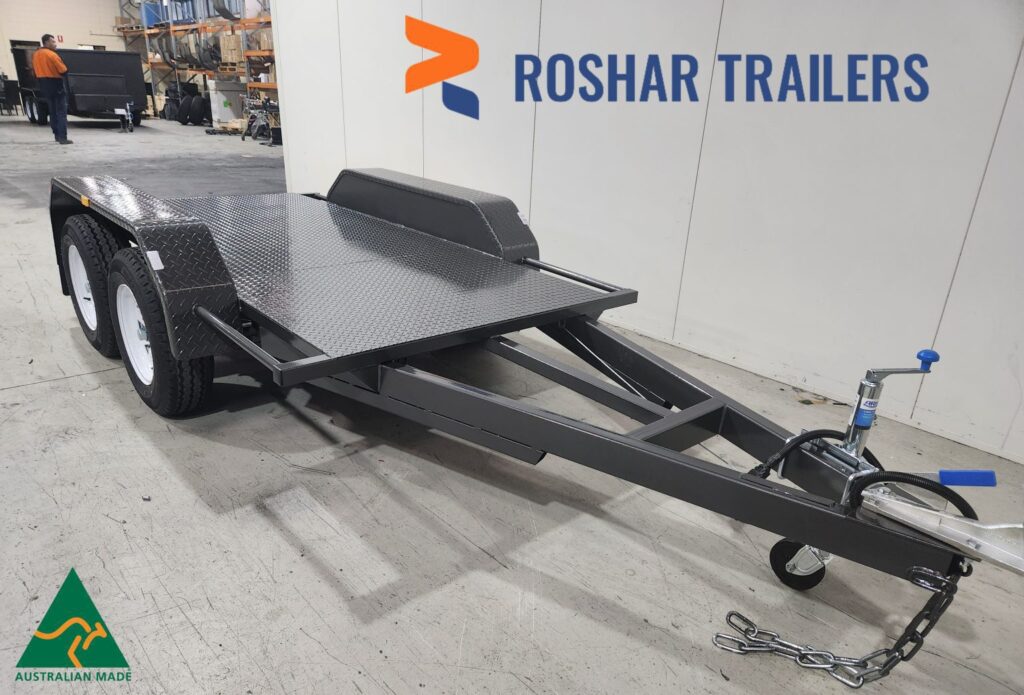
When A Flatbed Trailer Is Better Than A Box Trailer
A box trailer is useful for general domestic loads, loose materials and smaller items that need side containment. A flatbed trailer is usually better when the load is large, palletised, heavy, long or awkward.
Flatbed trailer vs box trailer
| Transport situation | Better option | Reason |
| Moving loose garden waste | Box trailer | Sides help contain the load |
| Carrying small household items | Box trailer | Easier to keep items inside |
| Transporting pallets | Flatbed trailer | Easier forklift access |
| Carrying long timber or steel | Flatbed trailer | Fewer side restrictions |
| Moving compact machinery | Flatbed trailer | Ramps and open deck improve access |
| Carrying mixed trade loads | Flatbed trailer | Different shapes can be arranged more easily |
| Transporting weather-sensitive goods | Enclosed trailer | Better protection from rain and dust |
A simple way to decide is this:
Choose a box trailer when containment is the priority. Choose a flatbed trailer when loading access, deck space and load shape are more important.
For tradies and businesses, this difference matters because time is often lost when materials are difficult to load, unload or secure. A flatbed trailer can reduce that friction when the load changes from job to job.
Flatbed Trailer Use Cases For Tradies
Flatbed trailers are popular with tradies because worksite transport is rarely the same every day. One job may require tools and ladders, while the next may involve machinery, pallets, building materials or landscaping supplies.
Builders and carpenters
Builders and carpenters may use flatbed trailers to carry:
- Timber packs
- Wall frames
- Steel lengths
- Mesh
- Formwork
- Site boxes
- Portable saws
- Scaffolding parts
The open deck makes it easier to position long materials without working around fixed trailer sides.
Landscapers
Landscapers often carry a mix of heavy and bulky materials, such as:
- Turf rolls
- Sleepers
- Pavers
- Plants
- Bagged soil
- Mowers
- Compact equipment
- Garden tools
A flatbed trailer can help separate different materials on the same trip while keeping them accessible at the worksite.
Plumbers and electricians
Plumbers and electricians may use flatbed trailers for:
- Pipe lengths
- Conduit
- Cable drums
- Ladders
- Site boxes
- Generators
- Work platforms
Open access is useful when long materials need to be loaded quickly and secured properly before transport.
Civil and equipment contractors
Civil contractors and equipment operators may use flatbed trailers to move:
- Plate compactors
- Compressors
- Compact machinery
- Generators
- Traffic equipment
- Small site tools
- Temporary fencing components
For machinery transport, the trailer must be matched to the machine’s weight, ramp setup, braking requirements and towing vehicle capacity.
Fabricators and installers
Fabricators, sign installers and commercial fit-out teams may use flatbed trailers for:
- Steel frames
- Aluminium sections
- Signage
- Panels
- Shopfitting materials
- Custom components
- Packaged commercial equipment
These loads are often too awkward for a standard box trailer, especially when they need to be loaded from the side or lifted onto the deck.
Safety Tips For Securing Loads
Load security is one of the most important parts of using a flatbed trailer. Because the deck is open, every item must be properly restrained before towing.
Transport Victoria recommends choosing a suitable vehicle and transport method for the load, using suitable restraints such as webbing straps, chains, ropes, cargo nets or tarpaulins, and using rated equipment where possible. It also notes that chains are better suited to heavy loads, while tarpaulins, cargo nets and ropes are only suited to light loads. (Transport Victoria)
Flatbed trailer safety checklist
Before towing, check that:
- The load does not exceed the trailer’s rated capacity
- The towing vehicle is suitable for the loaded trailer
- Heavy items are placed low and evenly across the deck
- Weight is balanced from side to side
- Suitable rated straps, chains or restraints are used
- Machinery is secured at multiple points
- Pallets are prevented from sliding
- Long materials are bundled where possible
- Straps and chains are not worn, cut or damaged
- Loose items cannot fall, bounce or shift
- Nothing protrudes dangerously from the trailer
- Lights, tyres, brakes and coupling are checked before travel
Understand trailer weight limits
A flatbed trailer should always be used within its rated limits. The Australian Government’s Vehicle Standards Bulletin 1 explains that trailers with an aggregate trailer mass of 4.5 tonnes or less are expected to comply with applicable Australian Design Rules. It also explains that ATM minus tare mass equals the maximum load the trailer can carry.
This matters because a trailer may look physically capable of carrying a load, but the legal and safe payload depends on the trailer’s rating, construction, axle setup, tyres, brakes and towing vehicle.
A flatbed trailer is only flexible when it is used safely and within its approved limits.road conditions.
When To Consider A Custom Flat Top Trailer
A standard flatbed trailer may suit general transport, but a custom flat top trailer can be more practical when your loads are repeated, unusual or difficult to secure.
You may need a custom flat top trailer if:
- You regularly carry the same machine or equipment
- Your load needs specific tie-down points
- You need ramps or a lower loading angle
- You often load pallets from the side
- You carry long timber, steel or pipe
- You need removable sides or drop sides
- You work on rougher access roads or rural sites
- You need toolboxes, spare wheel brackets or storage additions
- Your current trailer is slow or awkward to load
- Your load is difficult to balance or restrain safely
A custom trailer should be designed around the way it will actually be used. That includes the load type, loading method, required deck size, restraint points, braking setup and towing vehicle.
For example, a landscaper may need a trailer that can carry both equipment and materials. A builder may need extra deck length for timber and steel. A machinery operator may need stronger ramps and specific tie-down points.
The right time to consider a custom flat top trailer is when a standard trailer no longer matches the work. If loading, unloading or securing the same type of load is consistently difficult, the trailer layout may need to be designed around that use case.
Final Thoughts
Flatbed trailers are useful because they provide open, flexible loading space for machinery, pallets, trade equipment, landscaping materials and bulky worksite loads. They are especially practical when access, load shape and secure positioning matter more than enclosed storage.
The best trailer choice depends on what you carry most often, how the load is handled, how it needs to be restrained and whether a standard layout suits your work.
If you need a trailer built around regular machinery, pallet, trade or commercial transport tasks, compare Roshar’s flat top trailer options before requesting a quote.
Frequently Asked Questions
What is a flatbed trailer used for?
A flatbed trailer is used for transporting machinery, pallets, trade equipment, landscaping materials, construction supplies and bulky items that need open-deck loading access.
Is a flatbed trailer the same as a flat top trailer?
In many Australian trailer contexts, flatbed trailer and flat top trailer refer to a similar open-deck trailer style. The terms may vary depending on the manufacturer, trailer design or region.
Can a flatbed trailer carry pallets?
Yes, flatbed trailers are commonly used for pallet transport because the open deck can allow forklift loading from the side or rear, depending on site access and trailer design.
Is a flatbed trailer better than a box trailer?
A flatbed trailer is better for long, wide, heavy, palletised or awkward loads. A box trailer is usually better for loose materials, small domestic items or loads that need side containment.
Can tradies use flatbed trailers?
Yes, tradies often use flatbed trailers to move tools, ladders, machinery, timber, steel, pipes, pavers, landscaping supplies and other jobsite materials.
When should I consider a custom flat top trailer?
Consider a custom flat top trailer when your load is difficult to position, slow to secure, too long for a standard trailer or requires specific ramps, tie-down points, deck size or storage features.