
37 Malcolm RD, Braeside, VIC
How Trade Businesses Use Flat Top Trailers For Flexible Daily Transport
17 April 2026 | roshartrailers
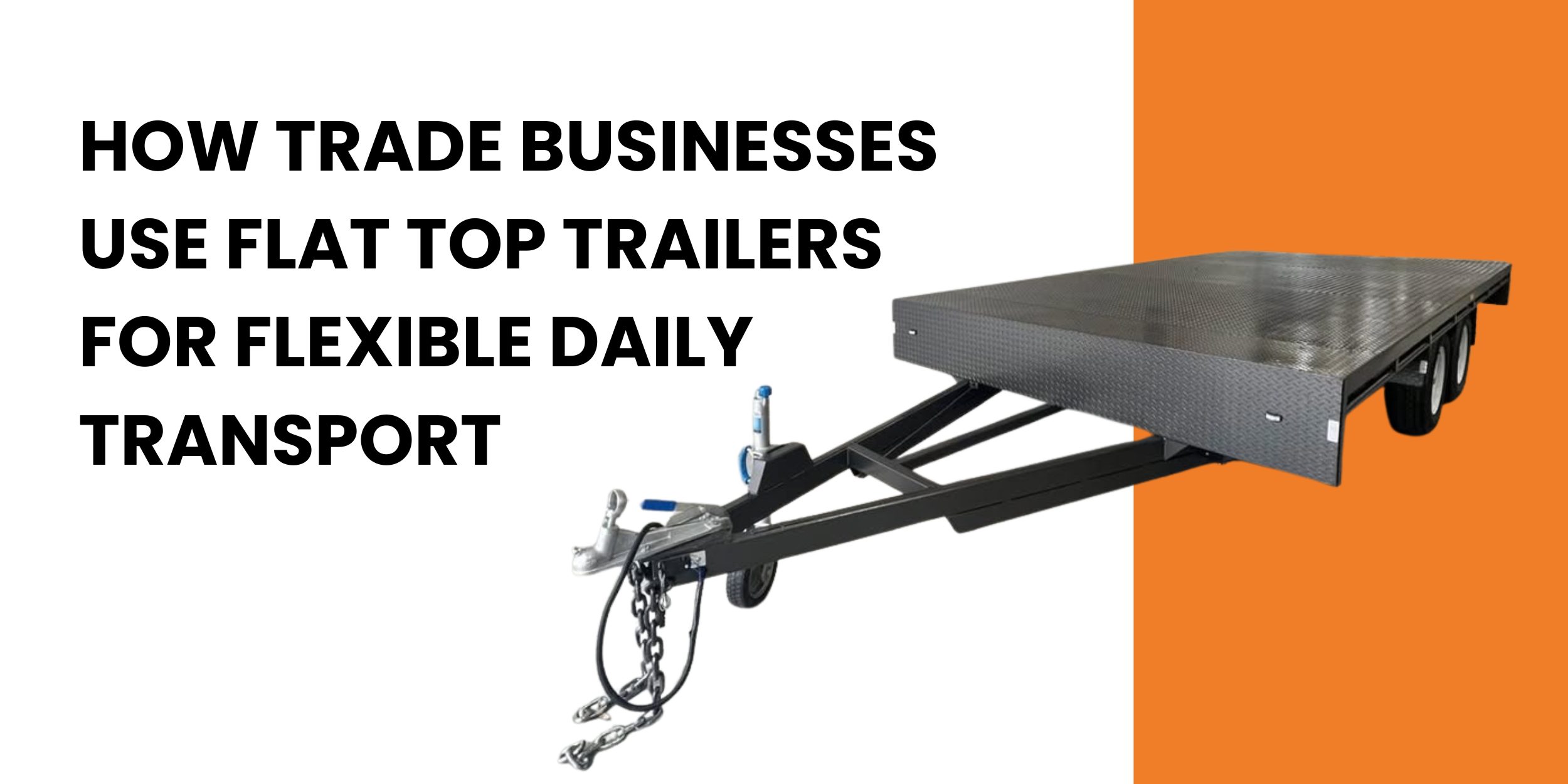
Trade businesses use flat top trailers to move tools, materials, equipment, machinery, landscaping supplies and mixed job-site loads more flexibly throughout the day. Their open deck design helps tradies load from the side, rear or above, making them useful when each job requires a different transport setup.
For many trade businesses, the challenge is not carrying one type of load. It is carrying different loads across different job sites without wasting time rearranging tools, materials and equipment.
Flat top trailers help trade businesses because they provide open deck space for daily transport tasks such as carrying pallets, tools, machinery, fencing materials, landscaping gear, timber, steel, mowers and mixed worksite loads.
Reviewed by: Roshar Trailers Team
Roshar Trailers manufactures Australian-made trailers in Melbourne for trade, machinery, landscaping, construction and commercial transport applications.
Last updated: June 2026
Why Tradies Need Flexible Trailer Setups
Tradies rarely carry the exact same load every day. One job may require tools and ladders, while the next may need timber, pallets, machinery, fencing materials or landscaping supplies.
A flexible trailer setup helps when a business needs to move between job sites, suppliers, depots and customer locations without changing trailers for every task.
Common daily transport problems for tradies
| Trade transport problem | Why it matters | How a flat top trailer helps |
| Mixed loads | Tools, materials and equipment may travel together | Open deck space allows easier load planning |
| Changing job-site needs | Each site may require different gear | Deck layout can adapt to different loads |
| Long materials | Timber, pipe, conduit, steel or fencing may not fit neatly | Fewer side restrictions improve load placement |
| Pallet loading | Materials may need forklift access | Open sides can make pallet loading easier |
| Machinery transport | Equipment may need ramps and tie-down points | Trailer can be configured around equipment use |
| Limited site access | Loading areas may be tight or uneven | Side and rear access improves flexibility |
A flat top trailer does not replace every trailer type. But for businesses carrying mixed trade loads, the open deck can make daily transport more practical.
Carrying Tools, Materials And Equipment
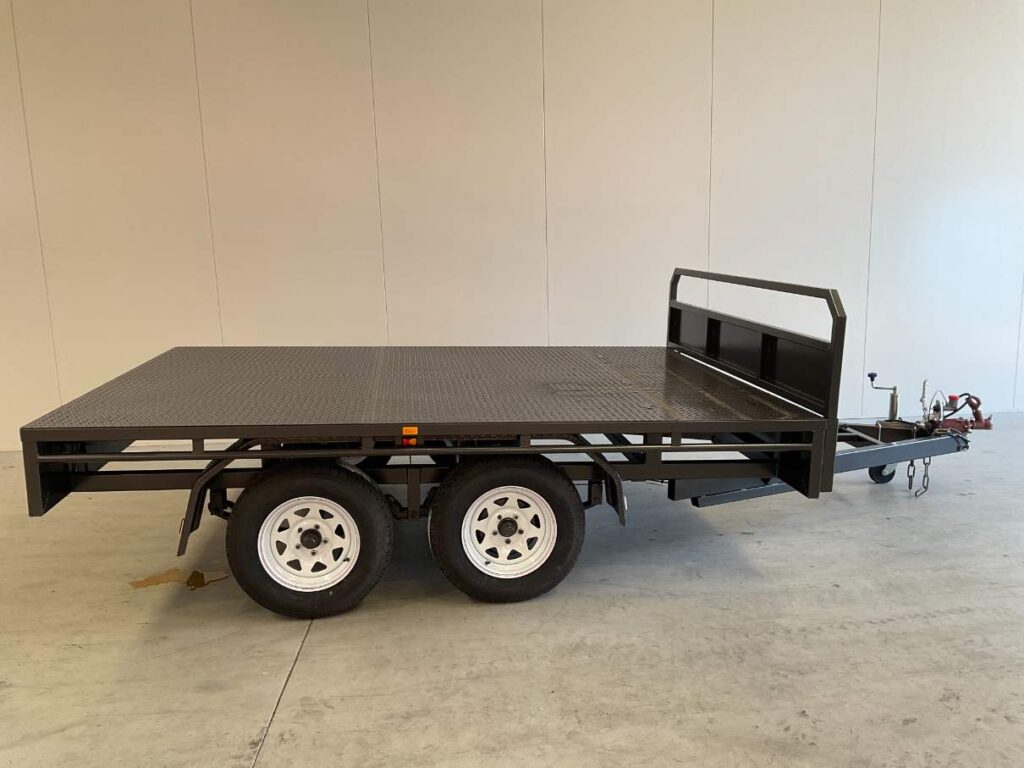
A flat top trailer is useful when a trade business needs to carry a combination of tools, materials and equipment on the same trip. This is common for builders, landscapers, fencing contractors, plumbers, electricians, maintenance crews and machinery operators.
Common trade loads
| Load type | Examples | Why open deck access helps |
| Tools | Toolboxes, power tools, ladders, site boxes | Can be positioned for quick access |
| Materials | Timber, steel, pipe, conduit, mesh, frames | Long or awkward items are easier to place |
| Pallets | Pavers, tiles, bricks, packaged supplies | Forklift loading may be easier |
| Equipment | Generators, compressors, compact machines | Can be loaded with ramps or lifting equipment |
| Fencing materials | Posts, rails, mesh, gates, concrete bags | Long and heavy items can be separated |
| Uneven loads | Mixed tools, stock, materials and equipment | Deck space can be planned around load shape |
For trade businesses that need enclosed tool storage as part of their setup, Roshar also offers tradesman top trailers designed around organised trade use.
Practical workflow example
A contractor may start the day carrying tools, ladders and materials. Later, they may collect palletised supplies or carry leftover materials from a job site. A flat top trailer can help because the load can be reorganised without being restricted by fixed high sides.
The key benefit is workflow flexibility. The trailer can support different daily tasks rather than being limited to one type of load.
Flat Top Trailers For Landscapers
Landscapers often carry a wide mix of materials and equipment. A single job may require turf, pavers, sleepers, plants, soil bags, fencing materials, tools, mowers and compact machinery.
A flat top trailer can help landscapers organise these loads across the deck while keeping materials accessible.
Landscaping loads suited to flat top trailers
| Landscaping load | Transport consideration |
| Pavers and tiles | Often palletised and heavy |
| Turf rolls | Need flat space and easy unloading |
| Sleepers | Long and awkward to carry |
| Plants | Need careful placement and separation |
| Bagged soil or mulch | Needs load balance and restraint |
| Mowers and compact equipment | May need ramps and tie-down points |
| Garden tools | Need storage or secure positioning |
For landscaping businesses that regularly move mowers or garden equipment, Roshar’s lawn mower trailer options may also be useful to compare.
Example landscaping workflow
A landscaper may load pavers from a supplier, collect plants from a nursery and then carry a mower or compact machine to the same site. A flat top trailer helps because each load type can be placed in a separate area of the deck.
This can reduce time spent unloading and reloading between jobs.
Flat Top Trailers For Builders
Builders and construction trades often carry long, heavy or irregular materials. These loads may not fit neatly into box trailers or enclosed trailers.
A flat top trailer can help builders move materials that require open deck access and practical restraint points.
Builder loads commonly carried
| Builder load | Why trailer layout matters |
| Timber lengths | Need usable deck length and secure restraint |
| Steel sections | Heavy and often awkward to position |
| Wall frames | Large and irregular |
| Mesh and formwork | May need flat loading space |
| Scaffolding components | Mixed sizes and shapes |
| Site boxes | Need stable positioning |
| Ladders and platforms | Need safe placement and restraint |
Builders often benefit from a trailer layout that supports long materials while still leaving space for tools and site equipment.
Example builder workflow
A builder may collect timber in the morning, move site boxes during the day and carry leftover steel or framing materials back to the depot. A flat top trailer helps because the open deck can be arranged around the order in which items are loaded and unloaded.
This makes the trailer part of the work process, not just a transport tool.
Flat Top Trailers For Machinery Operators
Machinery operators need a trailer setup that suits equipment weight, deck size, loading angle and restraint points. A flat top trailer can be useful for some machinery transport tasks, but the trailer must be matched to the equipment.
For machinery transport, always confirm the trailer’s rated capacity, ramp suitability, braking setup, tyre rating and restraint points before towing.
For heavier or specialised machinery, a dedicated machinery trailer may be more suitable.
Machinery transport considerations
| Requirement | Why it matters |
| Machine weight | Must suit trailer payload and towing capacity |
| Machine width | Must fit safely on the deck |
| Ramp angle | Affects safe loading and unloading |
| Ramp rating | Ramps must suit the equipment |
| Tie-down points | Machinery should be secured properly |
| Deck strength | Must suit concentrated equipment loads |
| Braking setup | Important for heavier loads |
| Tow vehicle capacity | Must match loaded trailer weight |
Machinery examples
Flat top trailers may be used for:
- Compact equipment
- Small loaders
- Generators
- Compressors
- Mowers
- Plate compactors
- Attachments
- Worksite equipment
A machinery operator should never choose a trailer based only on deck space. Load rating, ramps, brakes, tyres, axles and restraint points all need to suit the machine.
Custom Add-Ons That Help Trade Businesses
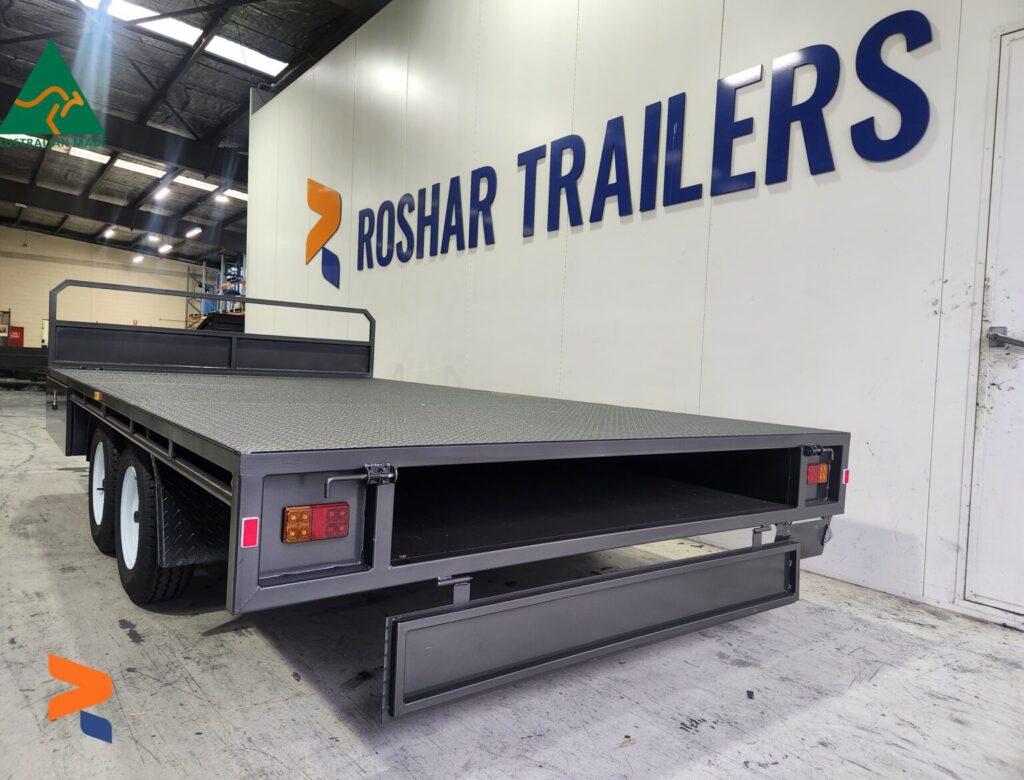
Custom add-ons can make a flat top trailer more useful for daily trade work. The right features depend on what the business carries most often.
The goal is not to add every option. The goal is to reduce daily friction when loading, securing, towing and unloading.
Useful custom add-ons for trade use
| Custom add-on | Helps with |
| Toolboxes | Secure storage for tools, straps and chains |
| Removable ramps | Machinery, mowers and equipment loading |
| Slide-under ramps | Saves deck space when ramps are not in use |
| Extra tie-down points | Better restraint for mixed or repeated loads |
| Headboard | Helps with timber, steel, pipe and forward protection |
| Drop sides | Useful when some loads need containment |
| Spare wheel bracket | Practical for site and regional work |
| Wider deck | Helps with pallets and bulky materials |
| Custom deck length | Useful for long materials |
| Winch points | Helps with equipment loading |
Custom setup by trade type
| Trade business | Useful features |
| Landscapers | Ramps, toolboxes, tie-down points, wider deck |
| Builders | Longer deck, headboard, extra tie-downs, storage |
| Machinery operators | Rated ramps, reinforced deck, strong tie-down layout |
| Fencing contractors | Long deck, headboard, load zones, tool storage |
| Maintenance crews | Toolboxes, flexible deck space, removable sides |
| General tradies | Storage, tie-downs, usable deck space |
A custom trailer makes sense when the same loading problem happens repeatedly. If a business is always struggling to fit tools, materials and equipment safely, the trailer layout may need to be designed around that workflow.
When To Upgrade From A Box Trailer
A box trailer can be useful for loose materials, small tools and general transport. But some trade businesses outgrow a box trailer when their work becomes heavier, more varied or more equipment-focused.
A flat top trailer may be worth considering when open access, load length, deck space and loading flexibility become more important than side containment.
Box trailer vs flat top trailer for trade work
| Situation | Better option | Why |
| Loose green waste or small domestic loads | Box trailer | Sides help contain loose material |
| Small tools and light supplies | Box trailer or tradesman trailer | Easier containment and storage |
| Pallets or forklift loading | Flat top trailer | Open sides improve access |
| Long timber, steel or fencing | Flat top trailer | Fewer side restrictions |
| Machinery or equipment loading | Flat top or machinery trailer | Ramps and tie-down points may be needed |
| Mixed trade loads | Flat top trailer | Deck can be arranged around the job |
| Dedicated tool storage | Tradesman trailer | Built-in organisation may be better |
Signs your business may need a different setup
You may need to upgrade from a box trailer if:
- Long materials no longer fit easily
- Pallets are difficult to load or unload
- Machinery needs proper ramp access
- Mixed loads are hard to organise
- Tools and materials are being moved too often
- Load restraint is becoming difficult
- You need more usable deck space
- You are carrying heavier trade loads more regularly
For trade businesses, the right trailer should reduce loading problems, not create them.
Final Thoughts
Trade businesses use flat top trailers because daily transport is rarely simple. Tools, materials, equipment, pallets, landscaping supplies, construction gear and machinery often need to move between suppliers, depots and job sites in different combinations.
A flat top trailer can help by giving businesses open deck space, side loading access, flexible load positioning and room for custom features. For landscapers, builders, machinery operators and general tradies, this flexibility can make daily transport easier to manage.
The best setup depends on what the business carries most often. A flat top trailer may suit mixed loads, a tradesman trailer may suit organised tool storage, a lawn mower trailer may suit landscaping equipment, and a machinery trailer may suit heavier plant and equipment.
If your business regularly carries tools, materials, machinery or mixed trade loads, compare Roshar’s custom flat top trailers for businesses before requesting a quote.
Frequently Asked Questions
How do trade businesses use flat top trailers?
Trade businesses use flat top trailers to carry tools, materials, machinery, pallets, landscaping supplies, construction equipment, fencing materials and mixed daily worksite loads.
Are flat top trailers useful for landscapers?
Yes, flat top trailers can be useful for landscapers because they can carry pavers, turf, sleepers, plants, mowers, compact equipment and mixed landscaping materials.
Are flat top trailers useful for builders?
Yes, builders often use flat top trailers for timber, steel, frames, ladders, site boxes, scaffolding components and construction materials that need open deck access.
Can machinery operators use flat top trailers?
Machinery operators can use flat top trailers when the deck size, payload, ramps, brakes, tyres and tie-down points suit the equipment being transported. Heavier equipment may need a dedicated machinery trailer.
What custom add-ons help trade businesses?
Useful add-ons include toolboxes, ramps, extra tie-down points, headboards, drop sides, spare wheel brackets, wider decks, longer decks and winch points.
When should a tradie upgrade from a box trailer?
A tradie may need to upgrade when long materials, pallets, machinery, mixed loads or heavier equipment become difficult to carry safely and efficiently in a box trailer.
Is a flat top trailer better than a tradesman trailer?
It depends on the work. A flat top trailer is better for open deck access and mixed loads, while a tradesman trailer may be better when secure tool storage and organisation are the priority.