
37 Malcolm RD, Braeside, VIC
Do Trailers Need Insurance in Australia? A Complete Owner’s Guide
18 June 2026 | roshartrailers
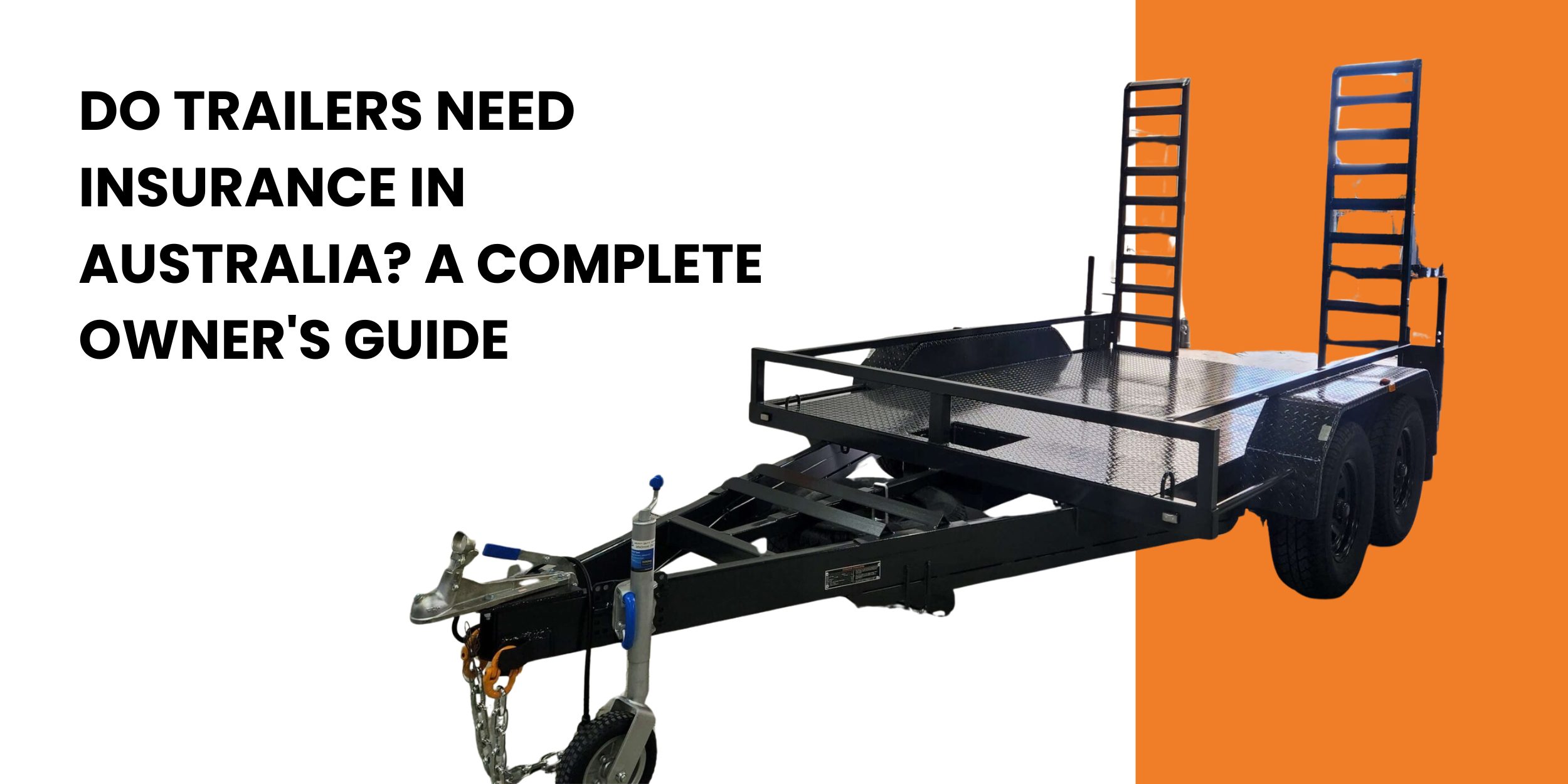
If you’ve recently bought a trailer or you’re planning to, one question often comes up: do trailers need insurance in Australia?
The short answer is no, trailer insurance is generally not legally required in Australia. However, that doesn’t automatically mean going without cover is the right decision.
Many owners assume their existing vehicle policy answers the question but whether car insurance covers a trailer is more complicated than most people expect. Registration and insurance are two completely separate obligations, and confusing the two can leave you significantly exposed.
Whether you own a trailer for personal projects, farming, landscaping, construction work, vehicle transport, or business use, a trailer can represent a serious investment. Replacing a stolen trailer, repairing accident damage, or recovering from a major loss can quickly become expensive especially if the trailer supports your income.
In this guide, we explain when trailer insurance in Australia is worth considering, what it typically covers, common exclusions, the difference between agreed value and market value policies, and how to decide whether cover makes sense for your situation.
Do Trailers Need Insurance in Australia?
No, trailers generally do not need insurance by law in Australia. But registration requirements and insurance requirements are two entirely different things and it’s important to understand both.
A registered trailer can still be:
- Stolen
- Damaged in a collision
- Destroyed by fire
- Affected by storms or flooding
- Vandalised while parked
- Damaged while being towed
For many owners, the real question isn’t whether insurance is mandatory. It’s whether they could comfortably afford to replace their trailer if something went wrong.
A contractor who owns a trailer worth $10,000 and regularly transports tools worth another $15,000 is carrying $25,000 of exposed financial risk every time that trailer is parked overnight. That’s not a theoretical risk trailer theft is one of the most common property crimes affecting tradies and contractors across Australia.
Read our guide on how to register a trailer in Victoria if you need to understand the registration process before tackling insurance decisions.
Is Trailer Insurance Mandatory or Optional?
Many trailer owners assume registration automatically provides insurance coverage. That’s not the case.
What the Law Requires
Most Australian states require trailers to be:
- Properly registered
- Roadworthy
- Maintained in safe condition
- Operated within legal weight limits
These obligations help keep trailers safe on the road but provide zero protection against theft, fire, storm damage, or accidents.
What About CTP Insurance?
Compulsory Third Party (CTP) insurance is included in your trailer’s registration fee in most Australian states. CTP covers personal injury meaning if someone is injured in an accident involving your trailer, CTP handles the personal injury claim.
However, CTP does not cover property damage. If your trailer is involved in an accident that damages someone else’s vehicle or property, whether that’s covered depends entirely on your car insurance policy and how the trailer is classified under that policy. This distinction matters significantly and is one of the most misunderstood aspects of towing insurance in Australia.
What Insurance Companies Offer
Depending on the insurer, trailer insurance Australia policies may include:
- Comprehensive cover
- Fire and theft cover
- Accidental damage cover
- Third-party property cover
Coverage levels vary significantly between insurers, so understanding exactly what is and isn’t included before purchasing a policy is essential.
What Does Trailer Insurance Typically Cover?
One of the biggest misconceptions about trailer insurance in Australia is that every policy offers the same protection. In reality, cover varies considerably between insurers.
| Event | Usually Covered? |
| Theft | Yes |
| Attempted Theft | Often |
| Fire Damage | Usually |
| Storm Damage | Usually |
| Vandalism | Usually |
| Accidental Damage | Usually |
| Wear and Tear | No |
| Rust and Corrosion | No |
Theft and Trailer Theft Insurance
Trailer theft is one of the most common reasons owners make insurance claims. A tandem trailer, flat top trailer, or work trailer can often be stolen in minutes if it isn’t secured properly particularly when stored on the street or at an unsecured worksite overnight.
This is exactly the situation trailer theft insurance exists for replacing a stolen trailer worth thousands without absorbing the full cost out of pocket. If your trailer is stolen and uninsured, you wear the entire replacement cost immediately.
Accidental Damage
Accidents happen even to experienced drivers. A collision while towing can damage axles, drawbars, suspension components, and trailer frames repairs that can easily exceed several thousand dollars depending on the trailer type.
Fire and Storm Damage
Fire, hail, strong winds, and falling tree branches can all cause costly damage to a parked trailer. These events are largely outside your control, which is exactly why many owners include them in their cover considerations.
What Trailer Insurance Usually Doesn’t Cover
Understanding exclusions is just as important as understanding what’s covered. Most trailer insurance Australia policies will not cover:
Wear and Tear
Normal ageing and deterioration are excluded across virtually every policy. Insurance covers sudden, unexpected events not gradual decline.
Rust and Corrosion
If poor maintenance leads to corrosion damage, insurers typically won’t pay for repairs. This is another reason regular trailer maintenance matters both practically and financially.
Overloading
Loading a trailer beyond its legal ATM capacity can void insurance cover entirely. If you’re unsure about your trailer’s ATM, check the manufacturer’s compliance plate on the trailer frame.
Poor Maintenance
Bald tyres, damaged brakes, or neglected maintenance may affect your ability to make a successful claim. Insurers look at the condition of the trailer at the time of the event.
Unsecured Loads
Improperly secured cargo can contribute to accidents and may lead to claim disputes. Read our guide on how to tie down a car on a trailer to understand proper load restraint obligations.
Unapproved Modifications
Major modifications often need to be disclosed to the insurer before the event, not after. Undisclosed modifications are a common reason claims are disputed.
Does Car Insurance Cover a Trailer?
This is one of the most searched questions about trailer ownership in Australia and the answer is more nuanced than most people realise.
The Short Answer
Sometimes but usually only in limited circumstances, and rarely for the trailer itself.
What Most Comprehensive Car Policies Include
Many comprehensive vehicle insurance policies include third-party liability cover for damage your trailer causes to someone else’s property while the trailer is attached and being towed. This means if your trailer swings wide and damages another vehicle, your car insurer may cover the other party’s repair bill.
What Most Car Policies Don’t Cover
- Physical damage to the trailer itself
- Theft of the trailer especially when detached from the tow vehicle
- Storm or fire damage to the trailer
- Accidental damage to the trailer while parked
Here’s a real example of where this matters: your car is comprehensively insured, the trailer is hitched, and you reverse into a fence. The fence damage may be covered under your car policy’s third-party liability. But the damage to your trailer’s drawbar and rear panel? That’s likely not covered at all.
The detached vs attached distinction is critical. Once a trailer is unhitched and sitting in your driveway, yard, or at a worksite, most car insurance policies provide no coverage for it whatsoever.
That’s why many owners choose separate trailer insurance in Australia rather than relying solely on their vehicle policy; the gaps in car insurance coverage for trailers are significant.
Agreed Value vs Market Value: A Distinction That Matters
This is one of the most important practical differences between trailer insurance policies, and most guides don’t explain it clearly.
Market value policies pay out what the trailer is worth at the time of the claim which factors in age, depreciation, and condition. A contractor who paid $12,000 for a tandem tipper four years ago may find a market value policy pays out $6,500 or less at claim time. That gap can be painful if you need to replace a working trailer quickly.
Agreed value policies fix the insured amount upfront between you and the insurer. If you agree the trailer is worth $12,000 and it’s stolen, you receive $12,000 regardless of depreciation. Agreed value policies typically cost slightly more in premiums but remove the uncertainty at claim time.
For business owners who rely on their trailer to generate income, agreed value cover is usually the more appropriate choice. For lower-value personal trailers, market value may be sufficient.
Always ask the insurer specifically which basis applies before signing up; it’s not always clearly labelled in marketing materials.
Is Trailer Insurance Worth It?
When asking do trailers need insurance in Australia, the answer often depends on what type of trailer you own and how you use it. Whether cover is worth the cost depends on several factors:
- Trailer value and replacement cost
- Frequency of use
- Business reliance on the trailer
- What equipment or cargo travels with it
- Storage conditions and theft risk in your area
When Insurance Is Usually Worth It
- The trailer is worth more than a few thousand dollars
- It’s used regularly for work or business
- It carries valuable tools, machinery, or cargo
- It’s stored outdoors or at unsecured locations
- Losing it would affect your income or business operations
When Insurance May Be Less Essential
- The trailer has very low replacement value
- It’s rarely used and securely stored
- You could comfortably absorb the replacement cost without financial strain
| Trailer Value | Recommendation |
| Under $2,000 | Optional weigh replacement cost against annual premium |
| $2,000–$10,000 | Recommended for regular use or any business application |
| $10,000+ | Strongly recommended replacement cost is substantial |
Insurance Considerations by Trailer Type
For business owners especially, the question of do trailers need insurance in Australia has a different answer than it does for occasional personal use the financial exposure is simply higher, and the operational consequences of losing a trailer are more serious.
Tipper Trailers
Tipper trailers are popular among builders, landscapers, and contractors. Because they often include hydraulic tipping systems, repairs following an accident or rollover can be significantly more expensive than a standard trailer. A hydraulic system replacement alone can run into thousands of dollars before the structural repair cost is even considered.
Tandem Trailers
Tandem trailers are commonly used for commercial transport and heavier loads. Their higher purchase price and replacement value make insurance a sensible consideration — particularly for contractors who depend on them daily. A stolen or written-off tandem trailer can put a sole trader out of action for weeks while sourcing a replacement.
Cage Trailers
A cage trailer is frequently used by homeowners, gardeners, and DIY enthusiasts. Although generally lower in value than commercial trailers, cage trailers are often stored outdoors, left at kerbs for tip runs, and are lightweight enough to be stolen without specialist equipment. Trailer theft insurance is worth considering even for lower-value cage trailers if they’re regularly left in accessible locations.
Flat Top Trailers
A flat top trailer is one of the most versatile trailers available, used to transport vehicles, machinery, building materials, and equipment. The combination of high trailer value and the frequent transport of valuable cargo increases both theft risk and accidental damage exposure. Comprehensive cover is worth serious consideration for flat top trailers used in business.
Tiny Home Trailers
A tiny home trailer is usually one of the most significant trailer investments an owner makes. Custom-built tiny house trailer platforms typically cost between $15,000 and $40,000 before the structure is added and the completed structure can represent $80,000 or more of total investment.
Standard trailer insurance policies often do not cover structures built on trailers. The insurance situation for a completed tiny house on wheels is genuinely complex you may need a specialist insurer who covers both the trailer platform and the structure as a single asset. Some owners insure the trailer and structure separately. If you’re buying or commissioning a tiny house trailer, speak to an insurance broker with experience in this category before assuming a standard trailer policy is sufficient.
Does Trailer Insurance Cover Tools, Equipment and Cargo?
Many owners assume trailer insurance automatically covers everything inside the trailer. Unfortunately, that’s not always true and the gap can be significant.
Consider this example: a landscaper owns a $6,000 trailer carrying $18,000 worth of mowing equipment and $5,000 worth of power tools. The trailer may be insured. The equipment on it almost certainly requires separate cover under a business assets, general property, or tools of trade policy.
If you regularly transport tools, machinery, or business assets on your trailer, check your policy documentation carefully. “Trailer insurance” typically covers the trailer structure, not the contents. Always ask the insurer specifically whether cargo and equipment are included, and at what limit.
Real-Life Situations Where Trailer Insurance Could Save You Thousands
These are the situations that make the question: do trailers need insurance feel less theoretical and more urgent.
Scenario 1: Trailer Theft
A contractor leaves a tandem trailer parked at a job site overnight. The next morning, it’s gone. Replacement cost: $9,000. With no trailer theft insurance, that comes straight out of pocket plus the lost work time while sourcing a replacement.
Scenario 2: Storm Damage
A severe storm brings down a tree branch onto a parked flat top trailer. Structural repair bill: $4,500. The storm was unforeseeable and unpreventable which is exactly what insurance is designed for.
Scenario 3: Towing Accident
A rear-end collision damages the trailer’s frame, axle, and suspension. Repair costs exceed $6,000. The car insurance policy covers the other driver’s vehicle but doesn’t extend to the trailer itself.
Scenario 4: Equipment Theft
A landscaping trailer containing commercial mowing equipment was stolen from a residential street overnight. Combined trailer and equipment losses exceed $20,000. The trailer was insured. The equipment wasn’t. The insurer paid out $6,500 for the trailer. The owner absorbed the remaining $13,500.
Scenario 5: Tiny House Trailer Damage
A fire in an adjacent property spreads and damages a custom-built tiny house trailer platform during construction. The trailer platform alone is worth $22,000. The owner had a standard trailer policy but the policy didn’t cover the custom structure. A specialist policy would have covered the total loss.
These scenarios show why many owners view trailer insurance Australia as risk management rather than just another expense.
Business Trailer Insurance vs Personal Trailer Insurance
The distinction between personal and business use affects both the type of cover you need and what a standard policy will actually pay out.
Personal Use
Common personal use examples include home renovations, furniture transport, garden projects, and recreational activities. Personal trailer insurance is generally more straightforward and less expensive.
Business Use
Business use examples include construction companies, landscapers, farmers, automotive businesses, and tradies. For business owners, a standard personal trailer policy may not respond to a claim if the trailer was being used commercially at the time of the event. Always disclose business use upfront.
For businesses, losing access to a working trailer doesn’t just mean a repair bill it can mean lost income, missed deadlines, and delayed projects. This operational exposure is why agreed value policies are generally more appropriate for business trailers than market value policies.
How to Reduce the Risk of Trailer Theft and Lower Insurance Costs
Good security practices protect your trailer and may reduce your trailer theft insurance premium insurers often reward owners who demonstrate proactive security measures.
Install a Quality Hitch Lock
A quality hitch lock prevents the trailer from being hitched to another vehicle. Look for locks rated for your coupler size. A 50mm coupler lock fits differently to a 70mm coupler. Cheap locks can be defeated quickly; invest in a hardened steel option.
Use Wheel Clamps
A wheel clamp adds a second layer of protection that requires additional tools and time to defeat. Visible wheel clamps also act as a deterrent; thieves generally prefer easier targets.
Store Securely
Whenever possible, keep trailers behind locked gates, inside sheds, or in monitored storage facilities. A trailer stored in a visible, accessible location is significantly more likely to be stolen than one stored behind a locked gate.
Consider GPS Tracking
GPS tracking devices particularly those concealed within the trailer frame or a toolbox significantly improve recovery rates if a trailer is stolen. Some insurers offer premium discounts for trailers fitted with active GPS tracking.
Record Identification Details
Keep a record of your trailer’s VIN, compliance plate details, registration number, and purchase documentation. Take dated photographs from multiple angles. This information is critical for both police reports and insurance claims and most owners only realise they don’t have it after something goes wrong.
If you’re new to towing, read our guide on how to reverse a trailer to reduce your risk of accidental damage during manoeuvring.
Questions to Ask Before Choosing Trailer Insurance
Before purchasing any policy, get clear answers to these questions:
- Is theft covered including when the trailer is detached from the tow vehicle?
- Is business use included, or does it require a commercial policy?
- Are tools, cargo, and equipment covered, or is the policy trailer-only?
- Are modifications covered, and do they need to be disclosed?
- What excess applies, and is it per event or per claim?
- Is interstate travel covered?
- Is the trailer covered while parked, stored, or undergoing repairs?
- Is this an agreed value or market value policy?
These questions frequently reveal significant differences between policies that aren’t obvious from the product summary.
Final Thoughts
So, do trailers need insurance in Australia?
Legally, usually not. But the more useful question is: could you afford to replace your trailer tomorrow if it was stolen, written off, or destroyed? For many tradies, contractors, landscapers, farmers, and small business owners, the answer is no or at least not without serious financial pain.
Understanding what trailer insurance in Australia actually covers, what it doesn’t, and how agreed value versus market value policies work puts you in a far better position to make that decision. The right cover isn’t about spending money for its own sake, it’s about protecting an asset that often keeps your work and your livelihood moving.
Ready to invest in a quality trailer that’s built for Australian conditions? Every Roshar trailer leaves our Melbourne workshops with full compliance documentation, ADR-compliant construction, and the durability that makes insuring and registering straightforward from day one. Browse our range of tipper trailers, tandem trailers, cage trailers, flat top trailers, and tiny home trailers or visit us in Braeside, Bayswater North, or Dandenong.
Faq’s
Do trailers need insurance in Australia?
No, trailer insurance is generally not legally required in Australia. However, many owners choose cover to protect against theft, accidental damage, fire, storm damage, and financial loss. Whether it’s worth the cost depends primarily on the trailer’s value, how frequently it’s used, and whether it supports business operations.
Is trailer insurance compulsory?
In most situations, no. CTP insurance is included in trailer registration and covers personal injury, but it does not cover property damage, theft, or damage to the trailer itself. Separate trailer insurance is optional but often sensible for higher-value or business-use trailers.
Does car insurance cover a trailer?
Sometimes, but usually only for third-party liability while the trailer is attached and being towed. Most car insurance policies do not cover physical damage to the trailer, theft of the trailer particularly when detached or storm and fire damage. Separate trailer insurance typically provides significantly broader protection.
Is trailer insurance worth it?
For most trailer owners in Australia, trailer insurance represents good value when the trailer is worth more than a few thousand dollars, supports business operations, or carries valuable equipment. The annual premium is generally modest compared to the replacement cost of a stolen or written-off trailer.
What is trailer theft insurance?
Trailer theft insurance is cover that pays out if your trailer is stolen. It may be included in a comprehensive trailer policy or available as a standalone fire and theft cover option. Given that trailers are a common theft target particularly tandem trailers and commercial work trailers, theft cover is one of the most practically useful components of any trailer insurance policy.
Does trailer insurance cover tools and cargo?
Not always. Trailer insurance typically covers the trailer structure itself. Tools, equipment, and cargo carried on the trailer usually require separate cover under a business assets, general property, or tools of trade policy. Always confirm with your insurer what is and isn’t included.
Can I insure a tiny home trailer?
Yes, but standard trailer policies often don’t cover custom structures built on the trailer. You may need a specialist insurer who covers both the trailer platform and the structure as a combined asset. Speak to an insurance broker experienced in tiny house cover before assuming a standard policy is adequate.
What is the difference between agreed value and market value trailer insurance?
Agreed value policies pay a fixed amount you and the insurer agree on upfront, regardless of depreciation. Market value policies pay what the trailer is worth at the time of the claim, which may be significantly less than the purchase price. For business trailers and higher-value assets, agreed value cover generally provides more certainty.