
37 Malcolm RD, Braeside, VIC
Do Trailers Hold Their Value? What Affects Resale Price
17 July 2026 | roshartrailers
A good trailer is not just something you buy for today’s job. For many tradies, landscapers, builders, farmers, vehicle owners, and small business owners, it becomes part of everyday work carrying tools, machinery, soil, waste, materials, vehicles, equipment, and sometimes even the base of a future tiny home.
That is why trailer resale value matters. When you choose the right trailer from the start, maintain it properly, and keep it in good working condition, it remains useful and easier to sell when the time comes. But if the trailer is overloaded, poorly maintained, badly modified, or missing paperwork, buyers notice quickly.
So, do trailers hold their value? Yes, many do. But resale price depends on much more than age.
Why Trailer Resale Value Matters Before You Buy
Most people think about resale value only when they are ready to sell. That is usually too late.
The choices you make at the time of buying can affect what the trailer is worth years later. Trailer type, size, axle setup, build quality, brakes, finish, custom features, and maintenance all play a part. Thinking about trailer resale value before you buy helps you choose a trailer that works now and remains easier to sell later.
A landscaper buying a tipper trailer may focus only on whether it can carry soil and green waste today. But a future buyer will also check the hydraulic system, floor condition, tyres, brakes, hinges, rust, and service history. A builder buying a flat top trailer may want something strong enough for materials and machinery but later, resale price depends on whether the deck is still straight, tie-down points are solid, and the trailer has been used within its rated limits.
Understanding trailer resale value before purchase helps you avoid the common mistake of buying a trailer that serves you well for two years but has limited appeal when it is time to sell or upgrade.
Do Trailers Have Good Resale Value Compared to Other Assets?
When buyers ask do trailers have good resale value, the honest answer is: better than most people expect provided the trailer is a practical type that suits a wide range of buyers and has been properly maintained.
Trailers generally hold value better than many other work assets for a straightforward reason: the main value drivers are physical condition and practical usefulness, not age, odometer readings, or electronics. Unlike a work vehicle or piece of equipment, a trailer has no engine wear, no depreciation driven by kilometres, and no complex mechanical systems that fail with age alone. A well-maintained trailer from a reputable manufacturer can retain 50–70% of its original value after several years of regular use, depending on trailer type and condition.
Trailers generally have good resale value compared to many other work assets because condition and usefulness are within the owner’s direct control. A five-year-old trailer that has been serviced, stored well, and used within its rated load can be more attractive to buyers than a two-year-old trailer that has been overloaded, left outside, and patched rather than maintained.
The key difference from other assets: a trailer with high usage but excellent maintenance can be more desirable to buyers than a low-use trailer with visible neglect. Buyers are buying a working tool, not a showpiece and working tools that have been cared for command better prices than ones that have been pushed beyond their limits.
Practically useful trailer types tandem trailers, flat top trailers, tipper trailers, plant trailers, and car trailers hold value better than niche or highly specialised configurations because they attract a wider pool of buyers. The more buyers who can use your trailer, the stronger your negotiating position when it comes time to sell.
What’s a Good Price for a Trailer? How Purchase Price Affects Resale
Understanding what a good price for a trailer means at the point of purchase is directly connected to what the trailer will be worth at resale; the two are more closely linked than most buyers realise.
A good price for a trailer is not the lowest available price. It is the price that reflects the right build quality for the intended use, with components rated for the loads you actually carry. A cheap trailer bought at a low price often sells at a low price and frequently costs more in repairs and downtime over the ownership period than the original saving was worth. A quality trailer bought at a fair price typically retains a higher percentage of that price at resale while costing less to maintain.
As a general guide across the Australian market:
- Basic single-axle box trailer for home use: entry-level pricing reflects simpler steel, basic finish, and lower load ratings appropriate for occasional light use
- Quality single-axle trade trailer: mid-range pricing reflects proper ATM rating, better finish, and components suited to regular use
- Tandem trailer for regular work: mid-to-upper range reflecting additional axle, suspension components, brakes, and stronger chassis construction
- Flat top or plant trailer: upper range reflecting open-deck engineering, stronger tie-down systems, and higher ATM ratings
- Tipper trailer with hydraulic system: upper to premium range reflecting hydraulic components, floor strength, and the additional systems required for reliable daily use
- Custom or specialised trailers: premium range reflecting bespoke engineering and configuration
When asking what’s a good price for a trailer, the more useful question is: what will this trailer cost me over three to five years of ownership including purchase, maintenance, repairs, downtime, and eventual resale price? For business operators who rely on the trailer daily, the cheapest available option is rarely the best financial decision over a full ownership period.
For a full breakdown of what drives quality construction cost differences, read our guide on why quality trailers are expensive.
Do Trailers Actually Hold Their Value?
Trailers hold their value when they are well-built, practical, and kept in good condition. Unlike some assets that lose value primarily through age, trailers are judged heavily on usefulness and physical condition.
A buyer does not only ask how old the trailer is. They ask: is it strong? Is it registered? Do the lights work? Are the tyres good? Has it been overloaded? Are the brakes working? Is there rust? Does it suit the work I need to do?
A five-year-old trailer that has been serviced, stored properly, and lightly used may be more appealing than a newer trailer left outside, overloaded weekly, and repaired roughly. That is how trailer resale value works in practice age matters, but condition and confidence matter more.
What Affects Trailer Resale Value?
Trailer type is one of the strongest determinants of trailer resale value a trailer that suits a wide range of buyers will almost always attract stronger demand than one built for a single narrow purpose. Beyond type, the biggest factors include:
- Build quality and chassis integrity
- Trailer type and how wide the buyer pool is
- Size and load capacity relative to common work needs
- Axle setup single or tandem
- Brakes and safety features in working condition
- Tyre condition and remaining life
- Suspension condition
- Rust protection and overall finish quality
- Floor condition and deck integrity
- Wiring and lights functionality
- Registration status and current paperwork
- Service and maintenance history
- Practical upgrades that add usability
- Local and seasonal buyer demand
- How specialised the trailer configuration is
Buyers pay more when the trailer feels ready to use. They do not want to buy someone else’s problem. If they can hitch it up, check the lights, confirm the paperwork, and see that it has been maintained, they are more confident in the asking price.
Depreciation by Trailer Type: What to Expect
Understanding how quickly different trailer types depreciate helps buyers make smarter purchase decisions and sellers set realistic expectations.
Tandem trailers used for trade, landscaping, or construction tend to hold value well because they serve a wide market. A well-maintained tandem trailer from a reputable manufacturer can retain strong resale value after three to five years of regular use, particularly if brakes, bearings, and tyres have been serviced.
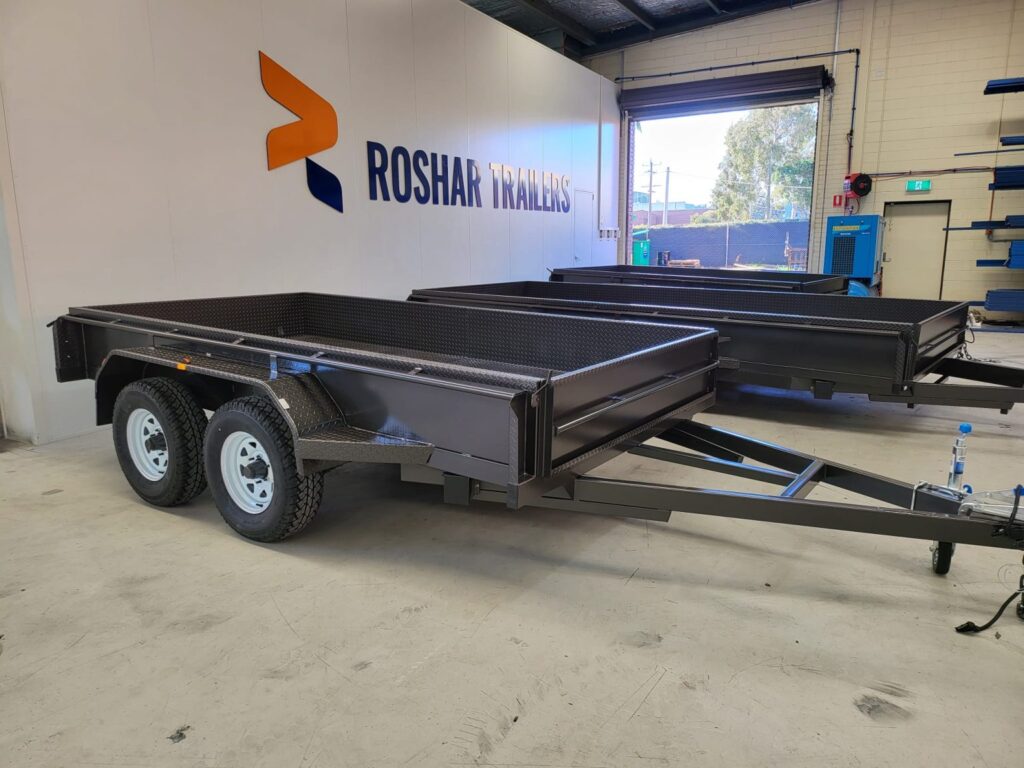
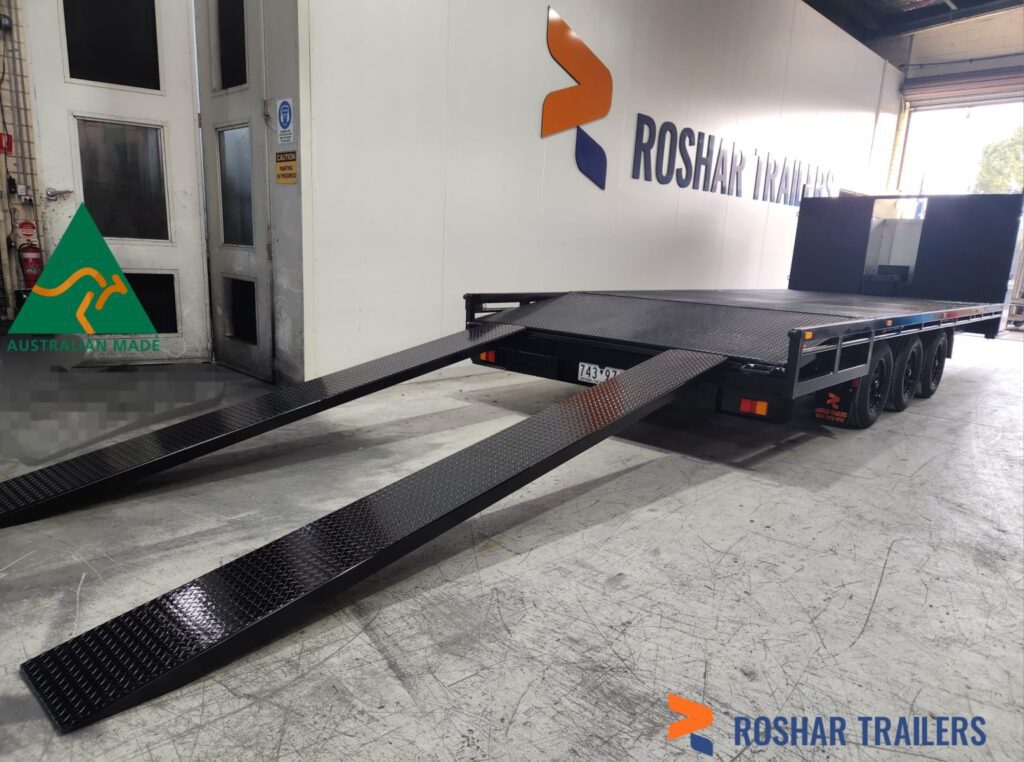
Flat top trailers depreciate moderately but attract consistent demand because of their versatility. Condition of the deck, tie-down points, and ramps are the primary resale value signals buyers check.
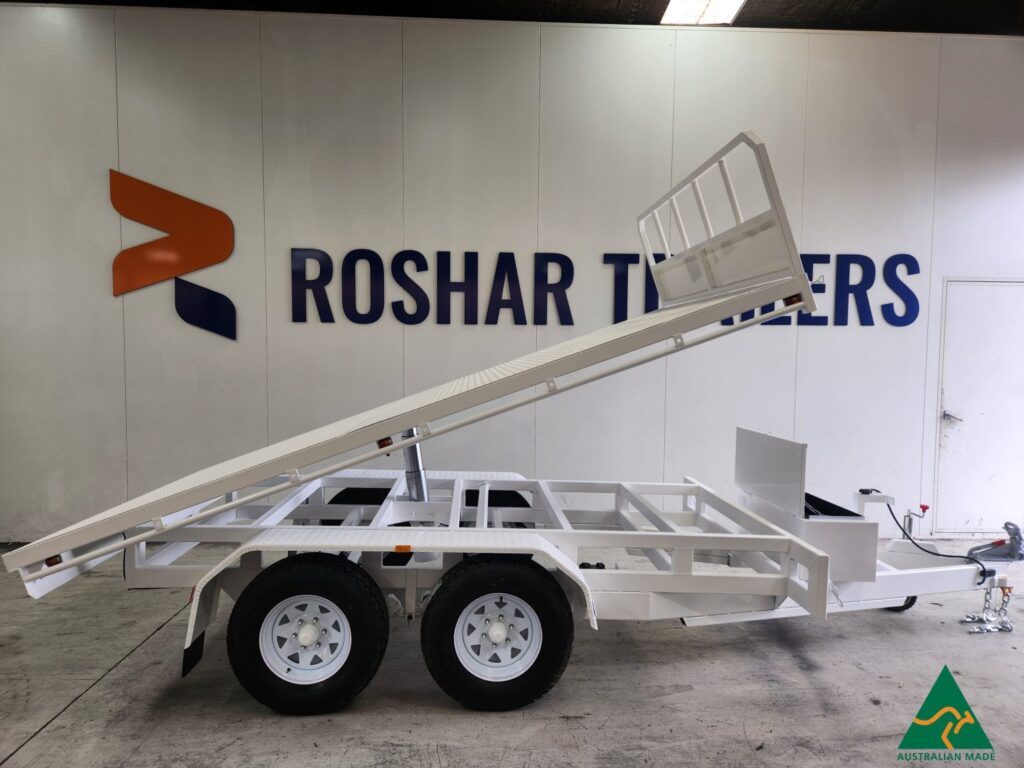
Tipper trailers retain value well when the hydraulic system is functioning correctly and the floor and chassis are in good condition. The tipping mechanism is the single most scrutinised component at inspection a clean, smooth hydraulic system can add meaningful value over one that shows signs of neglect or leakage.
Basic box trailers at the entry-level end depreciate faster because lower initial build quality translates to faster wear. A quality trade-grade box trailer depreciates more slowly because it holds up better under regular use.
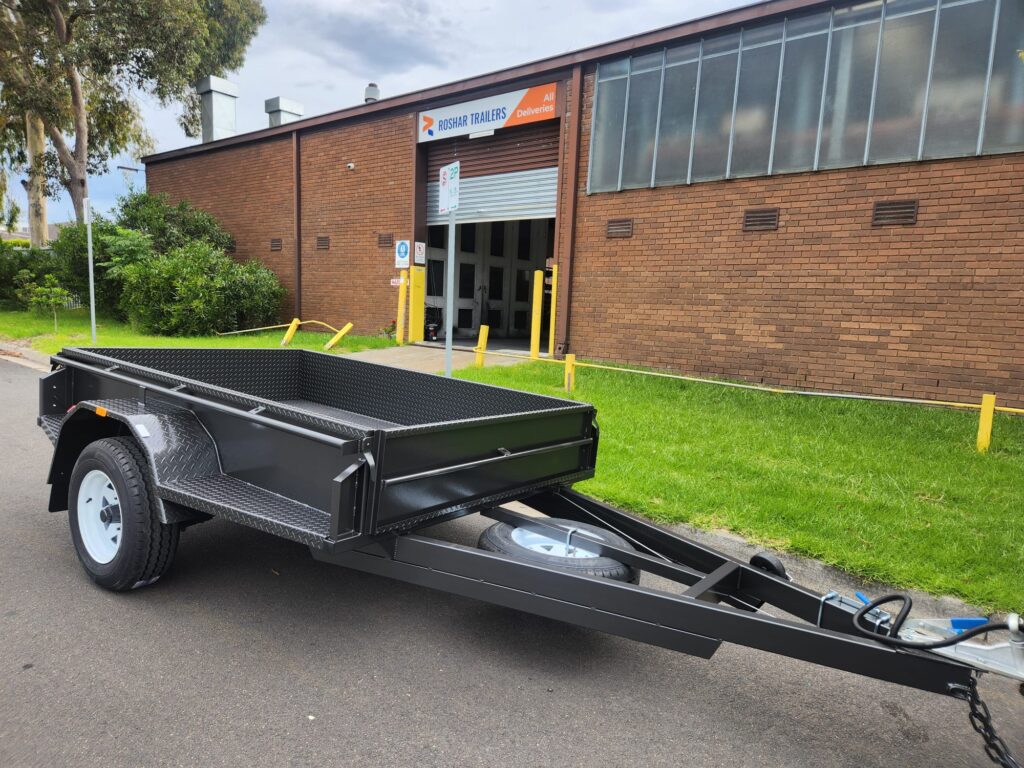
Highly specialised trailers depreciate faster than general-purpose ones because the buyer pool is smaller. A trailer built for one very specific purpose may struggle to find a buyer who needs exactly that configuration.
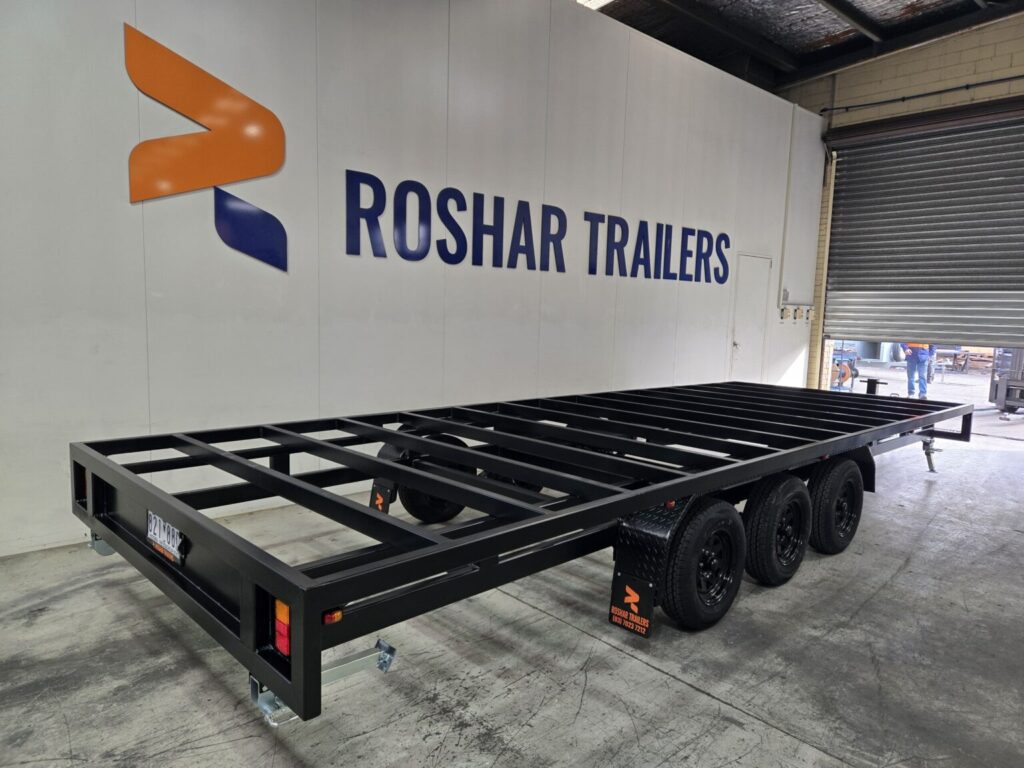
Tiny house trailers are a unique category the trailer and structure are often sold together as a single asset, which changes the resale calculation significantly. The trailer platform’s structural integrity, axle placement, and brake setup are critical resale factors because the buyer is effectively buying a home foundation. A tiny house trailer on a well-specified, compliant platform holds value as part of the overall asset far better than one on a compromised or non-compliant base.
Trailer Type and Resale Demand
Not every trailer has the same resale market. Some trailer types appeal to a broad group of buyers, while others suit a narrow purpose.
Common work trailers have stronger resale demand because they are useful to many people. A trailer that suits a tradie, landscaper, farmer, property owner, or small business owner will attract a wider buyer pool than one built for one very specific task.
A trailer that solves a common problem usually has better resale potential than one that only suits one person’s exact setup.
Tandem Trailers and Resale Value
Tandem trailers are popular because they offer more load support and stability than many lighter single-axle trailers. They are commonly used by tradies, builders, landscapers, farmers, property owners, and small business owners and this wider audience directly supports resale value when the trailer is in good condition.
Buyers looking at tandem trailers compare load capacity, axle condition, tyre wear, suspension, brakes, floor condition, chassis strength, and overall signs of overloading. A farmer may want a tandem trailer for rural property jobs. A landscaper may want one for tools, mulch, and materials. A homeowner may want one for renovation waste. Because the same trailer can suit different uses, it attracts more buyer interest.
But condition still matters. Uneven tyre wear, a bent floor, a stressed drawbar, or weak brakes will lead buyers to assume the trailer has worked harder than it should — and negotiate accordingly.
To protect the value of a tandem trailer: avoid overloading, maintain tyres properly, service bearings and brakes, and fix small issues before they become visible problems at inspection.
Flat Top Trailers and Resale Value
Flat top trailers hold strong resale appeal because of their flexibility. Their open deck design suits pallets, machinery, tools, materials, farm equipment, and bulky items which means a wide range of buyers can see a use for the same trailer.
Strong resale signals for flat top trailers include a straight deck, solid frame, good tie-down points, working lights, clean wiring, strong ramps if fitted, good tyres, no major rust, and no visible signs of overloading or warping. A warped or damaged deck significantly reduces buyer confidence because it suggests the trailer has been used beyond its rated capacity.
Flat top trailers should remain practical. Overly specific modifications can reduce resale demand if they make the trailer useful only for one narrow load type.
For a detailed explanation of what quality flat top construction looks like, read our guide on quality trailer construction.
Tipper Trailers and Resale Value
Tipper trailers attract strong buyer interest when they are in good working condition because the tipping function solves a real, common problem for landscapers, builders, contractors, and farmers unloading bulk materials faster and with less physical effort.
Buyers looking at tipper trailers pay close attention to the hydraulic lift condition, tipping hinge integrity, floor wear, chassis strength, tailgate condition, tyre condition, brakes, and any signs of overloading. A clean, smoothly functioning hydraulic system can add meaningful value at inspection. A tipper with hydraulic leaks, a bent floor, damaged sides, or no service history will attract buyers who negotiate hard.
If resale value matters, treat the hydraulic tipping system as the most important component to maintain. Regular hydraulic fluid checks, hinge lubrication, and battery maintenance for the tipping system are small habits that protect significant resale value.
Tiny House Trailers and Resale Value
Tiny house trailers occupy a unique position in the resale market because the trailer and the structure built on it are usually sold together as a single asset. This changes the resale calculation significantly the buyer is not just buying a trailer, they are buying a home foundation.
The structural integrity of the trailer platform, axle placement and load distribution, brake specification, and ADR compliance documentation are all critical resale factors for tiny house trailers. A well-specified, compliant trailer platform under a tiny house holds value as part of the overall asset far better than one on a compromised, under-rated, or non-compliant base.
For tiny house builders and buyers, the resale value of the completed structure is directly connected to the quality of the trailer specification from the start. Cutting corners on the trailer platform creates structural and compliance risks that are expensive to address and difficult to disclose at resale.
New vs Used Trailers: Which Holds Value Better?
There is no single answer: both new and used trailers have advantages depending on the buyer’s situation.
A new trailer gives you a known history. You know how it has been used, whether it has been overloaded, how it has been maintained, and what features were included from the start. The higher upfront cost is offset by confidence in condition and typically stronger resale value retention if maintained well.
A used trailer may cost less upfront but needs more careful inspection. A cheap trailer can become expensive quickly if it needs new tyres, brake repairs, wiring work, rust treatment, bearing service, or structural repairs soon after purchase.
When comparing trailers, do not only look at the price tag. Ask what the trailer may be worth after three to five years of use. For a small business owner, the cheapest trailer is rarely the best value. A stronger, better-built trailer may cost more initially but perform better, need fewer repairs, and hold resale value more confidently. For a homeowner or DIY buyer, a clean used trailer can be excellent value if it has been lightly used and properly maintained with clear paperwork.
Registration Status and Resale Value
Registration is one of the most underestimated factors in trailer resale value and one of the most practically significant for buyers.
A registered trailer that can be legally hitched and driven away immediately after purchase is worth more than an unregistered equivalent in the same physical condition. Registration gives the buyer immediate usability, confirms the trailer has been assessed as road-legal, and removes the administrative burden of managing the registration process themselves.
An unregistered trailer that is otherwise in excellent condition will still typically sell for less than an equivalent registered trailer because the buyer factors in the time, cost, and uncertainty of the registration process into their offer. For buyers who need the trailer for work immediately, an unregistered trailer may be disqualified entirely.
If your trailer’s registration has lapsed before you plan to sell, renewing it before listing is generally worth the cost. Read our complete guide on how to register a trailer in Victoria for the full VicRoads process.
Seasonal Demand and Timing Your Sale
Trailer demand in Australia has seasonal patterns and timing a sale to align with peak demand for your specific trailer type can meaningfully affect both the selling price and how quickly you find a buyer.
Landscapers and garden maintenance businesses typically buy more trailers in spring and early summer when workloads increase and new contracts start. Farmers often purchase trailers in pre-harvest periods when moving equipment becomes urgent. Construction companies tend to buy at the start of new projects, which cluster around the beginning of the year and after the winter slowdown.
If you are selling a landscaping trailer tipper, cage trailer, or tandem listing in September or October gives you access to buyers who are gearing up for their busiest season. If you are selling a farm trailer, late winter to early spring catches buyers before the seasonal work begins. Listing a construction or trade trailer early in the calendar year aligns with when businesses are expanding capacity for new projects.
Getting the timing right does not guarantee a higher price, but it does increase buyer competition and buyer competition is the most reliable way to achieve asking price.
Features That Help a Trailer Hold Value
Practical features often support resale value because they make the trailer useful to more buyers. Features that consistently support value include: galvanised or rust-resistant finish, strong chassis with quality welds, good flooring, braked axle setup where legally required, LED lights, clean protected wiring, spare wheel, quality tyres, ramps, tie-down points, toolboxes, removable cage, ladder racks, hydraulic tipping system in good condition, and common trailer dimensions with broad demand.
The best features are the ones that solve common problems for a wide range of buyers. Cosmetic upgrades rarely matter as much as strength, usability, safety, and condition.
For a full guide on what quality construction looks like, read our guide on quality trailer construction. For brake requirements by load, read our guide on trailer brake requirements in Australia.
Custom Features: What Adds Value and What Can Hurt Resale
Custom features and trailer resale value have a straightforward relationship practical additions help, niche modifications hurt.
Good custom features that support resale value: removable cage sides, toolboxes, ladder racks, spare wheel mounts, extra tie-down points, machinery ramps, better lighting, and practical storage sections. These features appeal to a wide buyer group because they make the trailer more useful across different jobs.
Very niche modifications can limit the market. A permanently welded frame built for one specific machine, a toolbox layout designed around one person’s exact tool collection, or custom dimensions that prevent the trailer from fitting standard parking or storage spaces all reduce the pool of potential buyers.
The rule is simple: custom features should make the trailer more useful and more versatile, not more restrictive.
Maintenance Habits That Protect Trailer Resale Value
Maintenance has a direct impact on trailer resale value and it is one of the few factors entirely within your control during ownership. Buyers can often assess whether a trailer has been looked after within the first few minutes of inspection, and a well-maintained trailer commands a noticeably better asking price.
Good maintenance habits that protect resale value:
- Wash the trailer after carrying soil, mulch, chemicals, salt, concrete dust, or green waste residue accelerates rust at joins and floor edges
- Check tyre pressure regularly and replace tyres before they become a visible problem
- Service wheel bearings on schedule a seized bearing is one of the most common and obvious signs of neglect
- Maintain brakes check adjustment, pad or shoe wear, and hydraulic condition where applicable
- Keep lights and wiring functional messy patch repairs on wiring are a visible red flag at inspection
- Touch up paint or rust spots early before they spread to structural areas
- Check the coupling and safety chains for wear and corrosion
- Keep the floor clean and address any damage before it worsens
- Store the trailer under cover where possible even a simple cover reduces UV degradation, rust onset, and tyre sidewall cracking
- Check hydraulics and battery condition regularly on tipper trailers
Where and how you store your trailer also affects its condition over time read our guide on can you park a trailer on the street in Australia for storage considerations.
Resale value is not protected by one big repair before sale. It is protected by consistent small habits throughout ownership.
Documents That Improve Buyer Confidence
Paperwork significantly supports trailer resale value by giving buyers confidence in what they are paying for and reducing the questions and negotiation that follow uncertainty.
Useful documents to retain throughout ownership:
- Purchase invoice showing original price and date
- Current registration details
- Service receipts for bearings and brakes
- Repair receipts with descriptions of work completed
- Warranty paperwork from the manufacturer
- VIN or chassis number details and compliance plate photos
- Hydraulic service records for tipper trailers
- Photos from earlier in ownership showing the trailer’s condition over time
For work trailers, service records carry particular weight. A buyer looking at a used tipper trailer feels more confident with records showing hydraulic system maintenance. A buyer considering a tandem trailer appreciates documented brake and bearing service. Clear paperwork reduces back-and-forth questions, supports your asking price, and makes the transaction smoother for both parties.
Where to Sell a Trailer
Knowing where to list your trailer affects how quickly you find a buyer and what price you achieve.
Facebook Marketplace is currently the highest-volume channel for private trailer sales in Australia with high traffic, no listing fee, and strong local buyer reach. Good photos and a detailed description perform well here.
Gumtree remains a strong secondary channel with a large audience of trade and small business buyers actively searching for work equipment.
TradeTrailer is a specialist trailer marketplace that attracts more serious and informed buyers who already know what they want and are comparing specific trailer types and specifications.
Industry networks word of mouth among tradies, landscaping businesses, farming communities, and construction companies often produce the fastest sales at the best prices because the buyer already understands what a quality trailer is worth and does not need convincing.
Dealer trade-ins are faster and lower effort but typically return a lower price than private sale. Worth considering if time is more valuable than maximum return.
Red Flags That Reduce Trailer Resale Price
Every item on this list is a potential reduction in trailer resale value and most are avoidable with routine care during ownership.
| Red Flag | Impact on Resale |
| Rust on chassis, drawbar, or floor | Raises structural concerns, major price negotiation |
| Cracked or uneven welds | Suggests overloading or poor build quality |
| Bent or twisted frame | Significant concern buyers may walk away |
| Uneven tyre wear | Suggests axle, suspension, or loading issues |
| Faulty or flickering lights | Common but signals deferred maintenance |
| Messy or patched wiring | Raises reliability concerns |
| Damaged or worn coupling | Safety concern, directly affects price |
| Weak or non-functional brakes | Legal and safety issue major price reduction |
| Worn or noisy bearings | Signals deferred maintenance |
| Damaged or bent floor | Suggests overloading history |
| Hydraulic leaks on tipper | Major concern expensive to repair |
| Missing compliance plate | Registration problem and quality signal |
| No paperwork or service history | Increases buyer uncertainty and negotiation |
| Rough homemade modifications | Reduces buyer pool significantly |
| Obvious signs of overloading | Undermines confidence in overall condition |
A trailer does not need to look brand new to sell well. It needs to look safe, usable, and honestly represented. If there are issues, fixing them properly or being upfront about them produces better outcomes than hoping buyers do not notice during inspection they usually do.
A quality trailer is also worth protecting with insurance during ownership read our guide on do trailers need insurance in Australia for what policies cover and when it is worth having.
Trailer Resale Value Scorecard
Use this scorecard to assess trailer resale value before buying or before preparing a trailer for sale.
| Factor | Strong Resale Signal | Weak Resale Signal |
| Build quality | Straight frame, clean welds | Cracks, bends, rust |
| Tyres | Even wear, good tread | Uneven wear, old tyres |
| Brakes | Working and serviced | Weak, noisy, or unknown condition |
| Wiring | Clean and functional | Faulty lights or messy repairs |
| Floor | Solid and clean | Holes, dents, or corrosion |
| Documents | Receipts and current registration | Missing or incomplete paperwork |
| Features | Practical, broad-appeal upgrades | Overly custom or niche modifications |
| Presentation | Clean and ready to use | Dirty or visibly neglected |
| Hydraulics | Smooth tipping action | Leaks, slow lifting, or unknown condition |
| Demand | Common, useful trailer type | Very niche or heavily modified setup |
| Registration | Current and transferable | Lapsed or unregistered |
If your trailer scores well across most areas, you can present it confidently and hold closer to the asking price. If it scores poorly in several areas, expect buyers to negotiate and consider addressing the most visible issues before listing.
How to Choose a Trailer That Holds Value Longer
If resale value matters, start with your real workload not your budget ceiling or ego about trailer size.
Do not under-buy for heavy work. A trailer that is too light for your regular jobs wears faster, becomes unsafe, and loses appeal quickly. At the same time, avoid buying a trailer so specialised that only a few buyers would ever need exactly that configuration.
Think about who may buy it from you in the future. A trailer that could suit a tradie, landscaper, farmer, contractor, or homeowner has a wider buyer pool than one built for a single narrow use. Choose practical features: strong chassis, good tyres, working brakes, useful ramps, removable cage options, proper tie-down points, and clean wiring consistently matter more than cosmetic extras.
Before buying, ask: What will I carry most often and how heavy will those loads be? How often will I tow and on what types of roads or sites? Do I need brakes, ramps, cages, or tie-down points for my specific loads? Will this trailer still appeal to other buyers in three to five years?
These questions consistently lead to better purchase decisions and stronger resale outcomes.
Need Help Choosing a Trailer That Holds Its Value?
Choosing a trailer that holds its value starts with buying the right build for your actual workload. Roshar Trailers builds Australian-made trailers for tradies, landscapers, contractors, farmers, and businesses across Melbourne with the construction quality, compliance documentation, and practical features that support long-term value.
Roshar Trailers builds Australian-made trailers for tradies, contractors, landscapers, farmers, and businesses across Victoria. Whether you need a tandem trailer, flat top, tipper, plant trailer, or custom configuration every trailer leaves our Melbourne workshops with ADR compliance documentation, a manufacturer’s plate, and the build quality that supports strong long-term resale value. Visit us in Braeside, Bayswater North, or Dandenong or get a quote online.
Faq’s
Do trailers have good resale value?
Yes, trailers generally have good resale value compared to many other work assets particularly well-built, practical types like tandem trailers, flat tops, and tippers. The main advantage is that resale value is driven by physical condition and usefulness rather than age or odometer readings, which means maintenance during ownership directly protects what the trailer is worth at sale.
What’s a good price for a trailer in Australia?
A good price reflects the right build quality for your intended use, not the lowest available number. Basic single-axle home-use trailers sit at entry level. Quality trade-grade single-axle trailers are mid-range. Tandem trailers for regular work are mid-to-upper range. Flat tops, tippers, and plant trailers sit at the upper end. For business operators, the total cost of ownership over three to five years is more relevant than the sticker price.
What affects trailer resale value the most?
Build quality, trailer type, physical condition, maintenance history, registration status, tyre and brake condition, rust protection, floor integrity, wiring functionality, documentation, and whether the trailer type suits a wide range of buyers. Condition and usefulness consistently outweigh age as resale value determinants.
Do tandem trailers hold resale value well?
Tandem trailers hold value well because they suit a wide range of buyers, tradies, farmers, landscapers, contractors, and property owners. Good condition, working brakes, even tyre wear, serviced bearings, and a sound chassis are the key factors buyers assess. A well-maintained tandem trailer from a reputable manufacturer can retain strong resale value after three to five years of regular use.
Do flat top trailers have good resale demand?
Flat top trailers attract consistent resale interest because of their versatility the same trailer can be used for pallets, machinery, farm equipment, construction materials, and commercial transport. Straight deck condition, solid tie-down points, working ramps, and clean wiring are the primary resale value signals buyers check when inspecting a flat top trailer.
Does a tipper trailer hold value?
A tipper trailer can hold value well when the hydraulic system functions correctly, the floor and chassis are sound, brakes are maintained, and tyres are in good condition. The hydraulic tipping mechanism is the single most scrutinised component at inspection; a clean, smooth system adds meaningful value, while leaks or slow lifting significantly reduce buyer confidence and negotiating position.
Should I buy new or used if resale value matters?
A new trailer gives you known history, cleaner starting condition, and more control over features which typically translates to stronger resale value retention if maintained well. A used trailer can deliver good value if it has been lightly used and properly maintained with clear documentation. The better choice depends on condition, use case, price, and total ownership cost over the planned period of use.
How does registration affect trailer resale value?
A registered trailer that can be legally hitched and driven away immediately after purchase commands a higher price than an unregistered equivalent in the same physical condition. Buyers factor the time, cost, and uncertainty of registration into their offer for unregistered trailers or disqualify unregistered trailers entirely if they need immediate use. Renewing lapsed registration before listing is generally worth the cost.