37 Malcolm RD, Braeside, VIC

Choosing the Right Hydraulic Tipper Trailer in Melbourne: A 2026 Guide to Safer, Faster Australian Worksites
5 January 2026 | roshartrailers
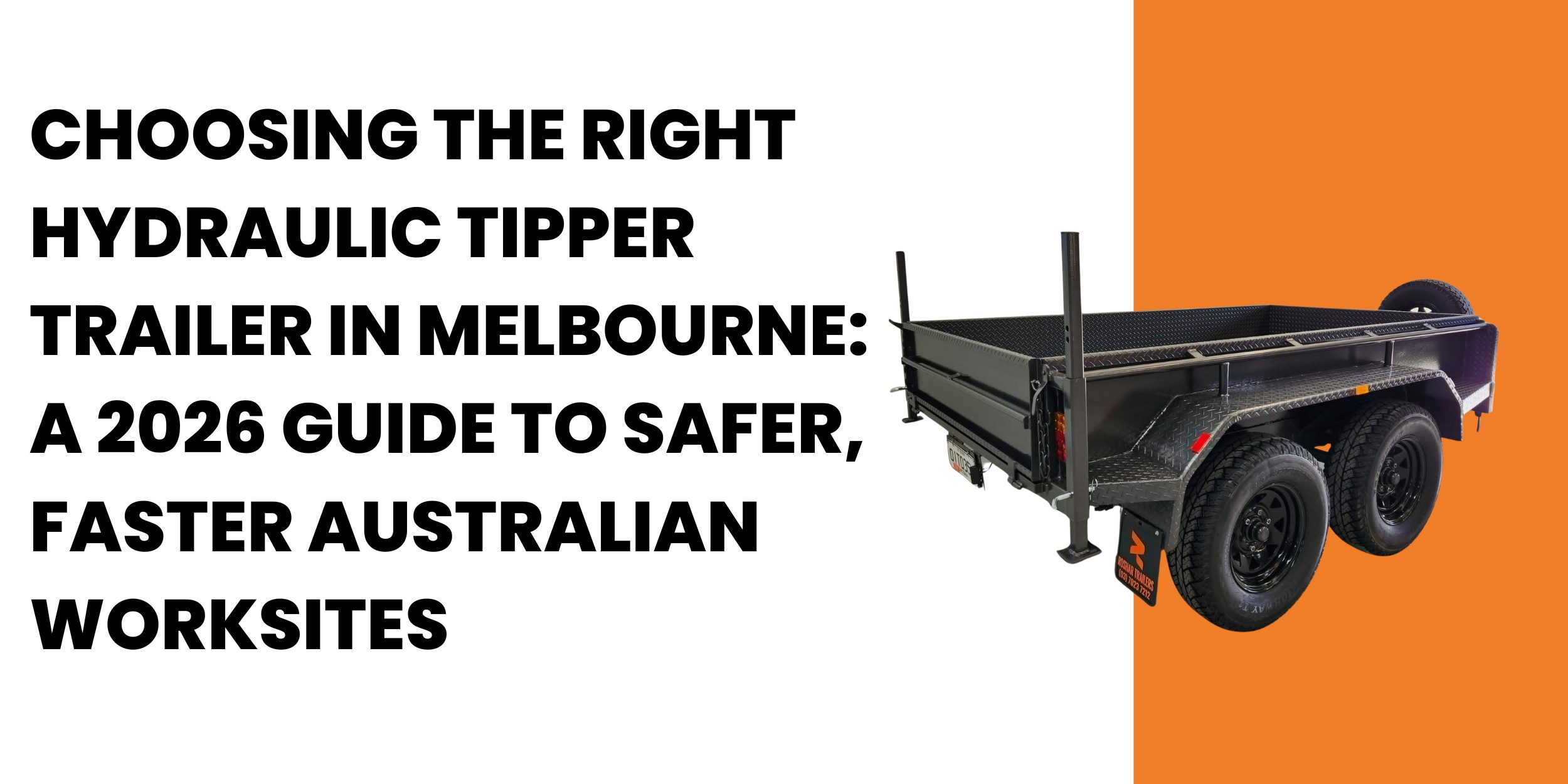
On busy construction, landscaping, and trade job sites across Melbourne and regional Victoria, time and labour efficiency are critical. Whether you’re moving soil in Dandenong, clearing waste in Braeside, or delivering materials to a residential build in Bayswater, the way materials are loaded and unloaded directly affects productivity, safety, and profitability. This is where a hydraulic tipper trailer becomes far more than just another trailer, it becomes a core productivity tool.
In 2026, hydraulic tipper trailers for sale in Melbourne are increasingly chosen by Australian tradies, landscapers, and contractors who want to minimise manual handling, speed up unloading, and maintain compliance with Australian safety standards. Unlike standard box or flat trailers, tipping trailers are purpose-built to handle repetitive unloading tasks efficiently, even in tight metro environments.
This guide explains how choosing the right tipper trailer improves safety and efficiency, what features matter most for Victorian buyers, and how a well-engineered trailer delivers long-term value on real Australian worksites.
Why Melbourne and Australian Worksites Demand Hydraulic Tipper Trailers
Australian job sites are physically demanding and highly regulated. In Melbourne alone, operators regularly move between congested city streets, industrial hubs like Dandenong South and Braeside, and expanding suburban developments where access and space are limited. Manual unloading of soil, rubble, green waste, or construction materials not only slows jobs down but also increases fatigue and injury risk.
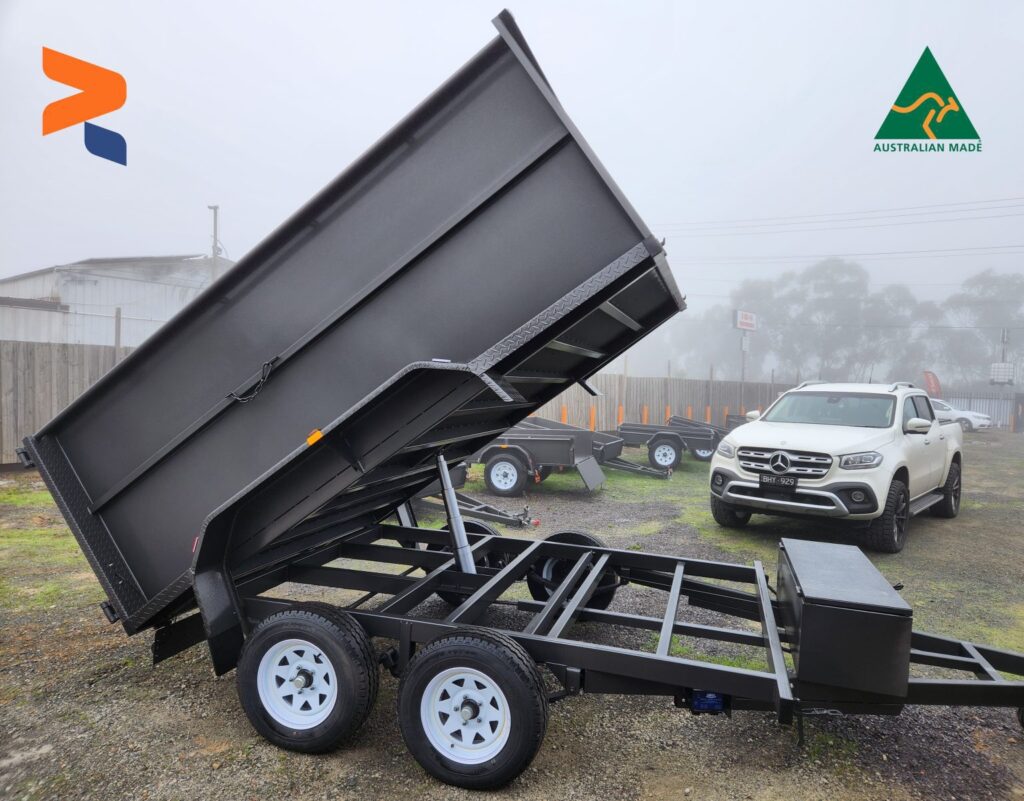
Hydraulic tipper trailers solve this problem by allowing materials to be discharged safely and quickly using a controlled tipping mechanism. Instead of shovelling or lifting, operators can unload with minimal physical effort, improving job turnaround and site safety.
Key reasons hydraulic tipper trailers are essential across Victoria include:
- Reduced manual handling and physical strain
- Faster unloading on repetitive or multi-site jobs
- Safer discharge of loads on uneven or confined sites
- Improved compliance with workplace safety expectations
- Higher daily productivity with fewer labour hours
For Melbourne-based contractors managing multiple jobs per day, these benefits quickly translate into measurable cost savings.
Quick Compliance Snapshot for Melbourne Buyers (2026)
For contractors who need fast, accurate answers before purchasing a hydraulic tipper trailer for sale, the table below outlines the non-negotiable requirements for legal and safe operation in Victoria in 2026.
| Feature | Requirement for Melbourne & Victoria (2026) |
| Braking System | Electric brakes required for ATM over 2000kg |
| Compliance | Must be listed on the Register of Approved Vehicles (RAV) |
| Registration | Digital approval via the ROVER system |
| Hydraulics | Dual-acting ram with load-holding (anti-drop) safety valve |
| Load Control | Must meet NHVR Load Restraint Guide performance |
| Use Environment | Designed for metro traffic + regional job sites |
This snapshot reflects current enforcement standards across Melbourne, including industrial zones such as Dandenong, Braeside, and Bayswater, where roadside inspections are increasingly common.
What Features Should You Look for in a Tipper Trailer for Sale in Melbourne?
Not all tipping trailers are built to the same standard. When evaluating a tipper trailer for sale in Melbourne or regional Victoria, buyers should prioritise engineering quality, load rating, and compliance rather than price alone.
Load Capacity and GVM
Gross Vehicle Mass (GVM) determines how much weight the trailer can safely carry. Common configurations used across Victoria include:
- 8×5 hydraulic tipper trailer – ideal for landscaping, green waste, and lighter construction materials
- 12×7 tipper trailer – suited to heavier loads, bulk materials, and commercial construction work
Selecting the correct GVM ensures safe towing, stable tipping, and longer service life for axles and suspension.
Hydraulic System Quality
A reliable hydraulic tipper trailer must have a properly rated ram and power pack designed for frequent use. Low-quality systems can struggle under load, leading to slow tipping, breakdowns, or safety risks. In Melbourne’s fast-paced trade environment, dependable hydraulics are non-negotiable.
Flat Top vs Boxed Tipper Trailers
- Flat top tipper trailers offer versatility for transporting pallets, equipment, and materials that don’t require side walls.
- Boxed tipping trailers are better suited for loose materials like soil, sand, and rubble.
Your choice should reflect the type of work you regularly perform across Melbourne and regional Victoria.
Axles, Brakes, and Stability
Tandem-axle configurations provide improved stability and braking performance, especially in stop-start Melbourne traffic. For heavier tipping trailers, electric brakes are strongly recommended to meet Victorian safety expectations and maintain control during emergency stops.
ADR Compliance
All road-going tipping trailers must meet Australian Design Rules (ADR). ADR compliance ensures that braking systems, lighting, and structural components meet national safety standards, critical for legal road use, insurance coverage, and long-term reliability.
2026 Digital Compliance: RAV & ROVER Explained for Tipper Trailers
As of 2026, hydraulic tipper trailers sold in Australia are no longer primarily identified by physical compliance plates. Instead, compliance has shifted to a digital approval system administered by the federal government.
Every new hydraulic tipper trailer for sale in Melbourne must be entered into the Register of Approved Vehicles (RAV) through the ROVER system before it can be legally registered in Victoria.
This change has major implications for buyers:
- Trailers not listed on the RAV may be refused registration by VicRoads
- Insurance claims can be rejected if the trailer lacks digital approval
- Responsibility now sits with the manufacturer, not the buyer
When purchasing a tipper trailer in 2026, always request confirmation that the trailer has been digitally recorded on the RAV database. This is now the definitive proof of compliance in Victoria.
How Hydraulic Tipper Trailers Improve Safety and Productivity
The most significant advantage of hydraulic tipper trailers is the reduction in manual labour. Tasks that previously required extended unloading time and multiple workers can often be completed by one operator in minutes.
Hydraulic tipping systems enable:
- Rapid unloading without shovelling
- Reduced need for extra labour on site
- Faster clean-up and job completion
- Lower physical strain on workers
For landscapers operating across Melbourne’s suburbs or builders working in industrial areas like Braeside, this efficiency allows more jobs to be completed each day while maintaining safer working conditions.
Why Load-Holding (Anti-Drop) Valves Matter in 2026
Modern worksite safety audits no longer focus solely on whether a trailer has hydraulics, they assess how safely those hydraulics operate under failure conditions.
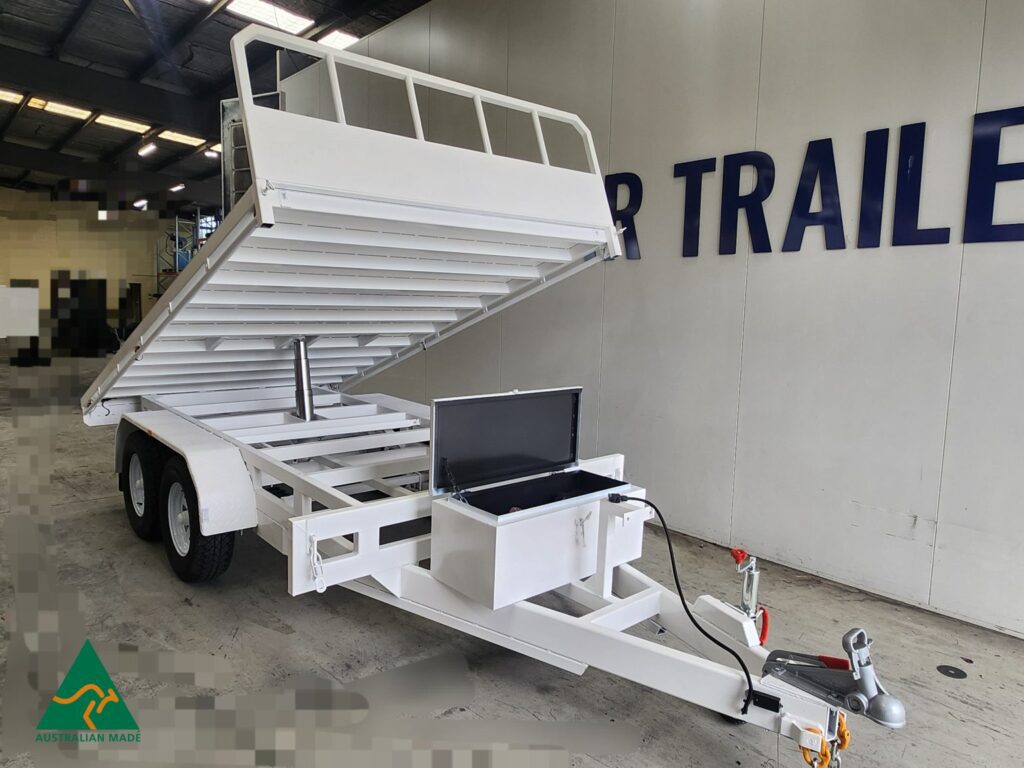
In 2026, many major Victorian infrastructure projects now expect tipping trailers to incorporate load-holding (anti-drop) valves within the hydraulic circuit.
These valves prevent the tray from collapsing suddenly if a hydraulic hose or fitting fails. Without them, a raised tipper body can drop uncontrollably, creating a serious crush hazard.
For contractors working on high-compliance sites, including large Melbourne infrastructure projects, this feature is increasingly essential for:
- Passing third-party safety audits
- Reducing worksite incident risk
- Protecting operators during tipping operations
When evaluating a hydraulic tipper trailer for sale, ask whether the hydraulic system includes certified load-holding safety valves as standard.
Popular Tipper Trailer Sizes Used Across Victoria
Choosing the right trailer size is critical for long-term performance and usability.
8×5 Hydraulic Tipper Trailer
The 8×5 hydraulic tipper trailer remains one of the most popular options in Melbourne. It offers an excellent balance between load capacity and manoeuvrability, making it suitable for suburban driveways, residential projects, and small commercial sites.
12×7 Tipper Trailer
The 12×7 tipper trailer is commonly used by builders and contractors handling heavier materials or operating across regional Victoria. Its increased volume reduces the number of trips required, saving time and fuel on longer routes.
Flat Top Tipper Trailer
A flat top tipper trailer provides added flexibility, allowing operators to carry machinery or palletised loads while still benefiting from hydraulic tipping for bulk materials.
Real-World Use Across Melbourne and Regional Victoria
A landscaping contractor based in Bayswater servicing Melbourne’s eastern suburbs can use a hydraulic tipper trailer to unload green waste directly at disposal facilities, eliminating manual labour and increasing daily job capacity.
In Dandenong, construction crews rely on tipping trailers to remove rubble efficiently from busy sites where space is restricted and turnaround time is critical.
Regional contractors benefit from larger tipping trailers by reducing transport runs, particularly on longer routes throughout Victoria.
The 15-5-5 Rule: Creating a Safe Tipping Exclusion Zone
Safe tipping isn’t only about the trailer, it’s about worksite procedure.
Experienced Victorian contractors commonly follow the 15-5-5 exclusion rule when operating hydraulic tipper trailers:
- 15 metres (side exclusion zone): No personnel beside the trailer
- 5 metres (rear exclusion zone): Clear fall zone for discharged material
- 5 metres (front exclusion zone): Prevents forward movement hazards
This protocol is particularly important on mixed residential and commercial sites across Melbourne, where foot traffic, vehicles, and other trades may be operating nearby.
Applying a consistent exclusion zone significantly reduces injury risk and demonstrates compliance during site inspections.
Common Mistakes When Buying Cheap Tipping Trailers
Choosing a trailer based on price alone often leads to long-term issues, including:
- Underrated hydraulic systems that fail under load
- Poor weight distribution causing instability during towing or tipping
- Non-compliant braking systems
- Inferior steel quality and weld fatigue
Imported trailers not designed for Australian conditions may struggle with Melbourne’s traffic, uneven work sites, and compliance inspections. Investing in a properly engineered trailer reduces downtime and safety risks.
Australian-Built vs Imported Hydraulic Tipper Trailers
Australian-built or locally supplied tipping trailers are engineered for:
- Daily use on Australian job sites
- Melbourne’s stop-start traffic conditions
- Regional Victoria’s longer towing distances
- Local compliance and registration requirements
Access to spare parts, technical support, and compliance documentation further improves long-term value compared to imported alternatives.
Safety, Compliance, and Long-Term Value
Hydraulic tipper trailers improve worksite safety by reducing manual handling and ensuring controlled unloading. Well-designed trailers offer predictable tipping behaviour, stable towing, and better load control.
Over time, these benefits contribute to:
- Lower injury risk
- Reduced vehicle and trailer wear
- Fewer insurance and compliance issues
- Strong resale value
For Victorian buyers, true value lies in reliability and performance over years of use, not just upfront cost.
Important Victorian Road Rule Update for 2026
Contractors towing hydraulic tipper trailers in Victoria should be aware of the expanded Victorian Road Rule 79A, which is now actively enforced.
When towing, drivers must slow to 40 km/h when passing stationary or slow-moving roadside assistance vehicles displaying flashing lights, including:
- Yellow
- Magenta
- Red/blue
This rule applies across Melbourne and regional Victoria and is especially relevant on arterial roads near industrial zones such as Dandenong South and Braeside.
Failure to comply can result in fines and demerit points, making it an important consideration for daily towing operations.
Conclusion
In 2026, hydraulic tipper trailers for sale in Melbourne remain one of the most effective investments for trades, landscapers, and contractors working across Melbourne and Victoria. By reducing manual labour, improving unloading efficiency, and enhancing safety, the right tipping trailer delivers measurable long-term benefits on busy Australian worksites.
Choosing the correct hydraulic tipper trailer, with appropriate size, load rating, and compliance, ensures reliable performance for years to come. Whether you operate in Dandenong, Braeside, Bayswater, or regional Victoria, speaking with a local trailer specialist can help ensure your tipper trailer is safe, compliant, and built for real-world Australian workloads.
For Melbourne and Victoria buyers, speaking with a local manufacturer such as Roshar Trailers can help ensure your hydraulic tipper trailer is safe, compliant, and suited to real worksites.
Frequently Asked Questions (FAQs)
What size hydraulic tipper trailer should I choose?
Most Melbourne trades choose an 8×5 for suburban work, while 12×7 trailers suit heavier or regional applications.
Are hydraulic tipper trailers ADR compliant?
Yes, when built to Australian Design Rules. Always confirm compliance before purchase.
Can a hydraulic tipper trailer be towed by a standard ute?
Many models can, but towing capacity, GVM, and braking requirements must be checked carefully.
Are tipping trailers legal on Melbourne roads?
Yes, provided they are registered, ADR compliant, and correctly matched to the towing vehicle.
Do hydraulic tipper trailers really reduce labour costs?
Yes, Eliminating manual unloading saves time, reduces fatigue, and improves overall productivity.