
37 Malcolm RD, Braeside, VIC
Can You Park a Trailer on the Street in Australia? Rules and Tips
29 June 2026 | roshartrailers
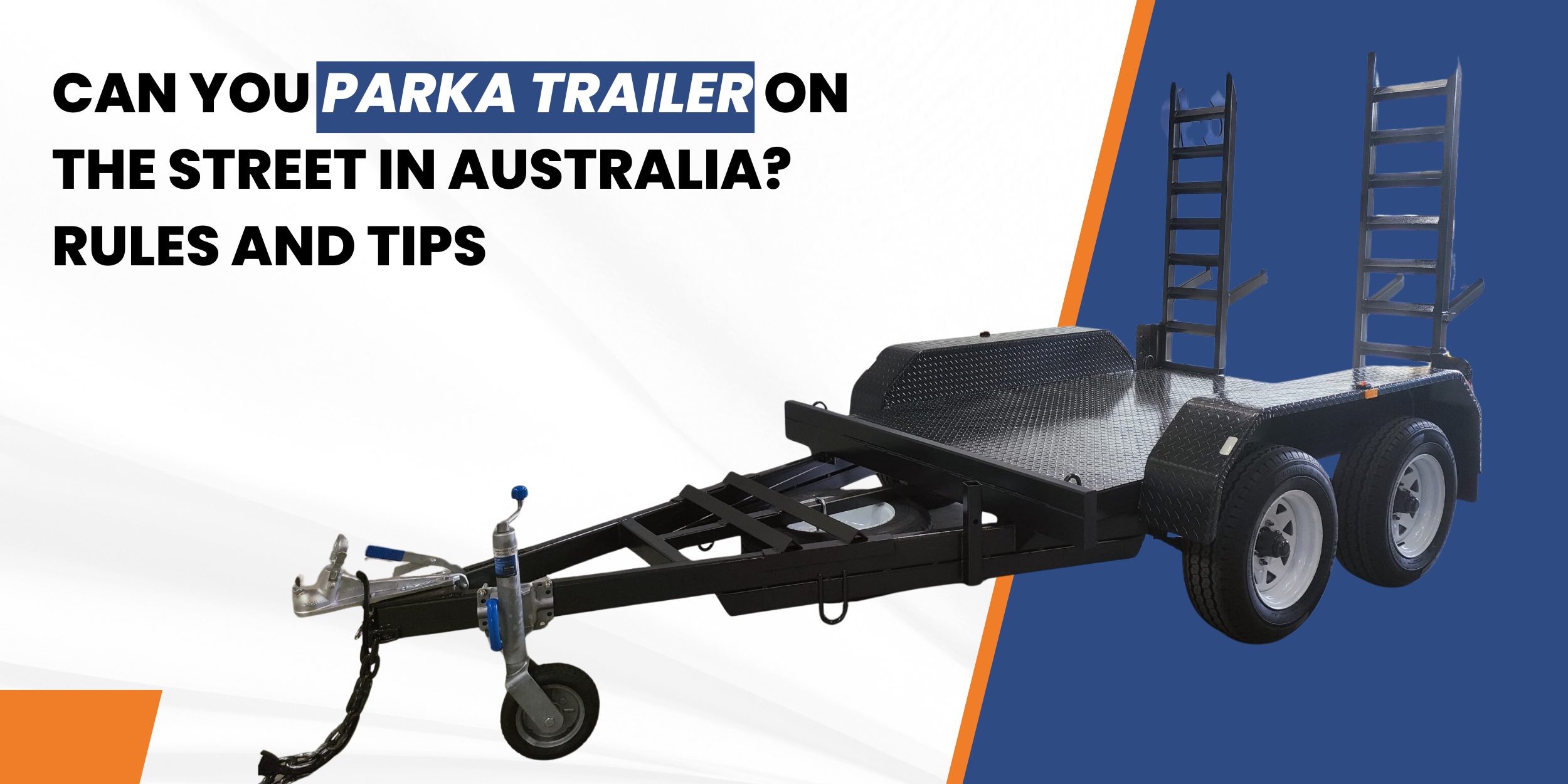
If you own a trailer or you’re planning to buy one, one question usually comes up very quickly: can you park a trailer on the street in Australia?
The simple answer is: sometimes yes. But it depends on where you live, whether the trailer is registered, how big it is, whether it’s attached to a vehicle, how long it stays there, and whether your local council has extra parking rules on top of state road rules.
For homeowners, tradies, landscapers, farmers, small business owners, and vehicle owners, this matters before buying a trailer. A trailer may look perfect for work or weekend jobs, but if you can’t safely store it at home, near your workshop, or near a job site, it becomes a daily frustration fast.
This guide explains trailer parking rules in plain language, with practical examples for the most common trailer types box trailers, tandem trailers, and cage trailers and covers the state-specific rules that most generic guides ignore.
Can You Park a Trailer on the Street in Australia?
In many areas of Australia, a registered trailer can be parked on the street if it follows normal road rules, parking signs, and local council requirements.
That means the trailer should not block traffic, driveways, footpaths, intersections, or visibility. It shouldn’t obstruct rubbish collection, emergency access, or neighbouring properties. And it should not be parked where signs clearly restrict stopping or parking.
However and this is important there is no single national rule that applies perfectly to every suburb in Australia. Trailer parking rules vary between states, councils, and even individual streets within the same suburb.
Parking a small box trailer outside your house for a short time may be perfectly acceptable in one area. Leaving a large work trailer on a narrow street for several weeks may attract council attention, fines, or a removal notice in another.
The safest approach: check the parking signs, check your local council rules, confirm the trailer is registered, and park it safely. If in doubt, private property storage is always the lower-risk option.
Trailer Parking Rules by State: What You Need to Know
Parking a trailer on the street in Australia is governed by a combination of national road rules, state-specific regulations, and local council overlays. Here is what applies in the states where most of our customers operate.
Victoria
In Victoria, a registered trailer can generally be parked on a public road provided it complies with VicRoads road rules and applicable parking signs. However, local councils can and do apply additional restrictions on top of state rules.
Some Melbourne councils enforce time limits for trailers parked on residential streets often 48 to 72 hours before the trailer must be moved. The City of Kingston, for example, has specific rules about caravans and recreational vehicles on council roads, including permit requirements after a certain period. Similar rules exist across many other metropolitan Melbourne councils.
Key points for Victorian trailer owners:
- The trailer must be registered for public road parking
- Local council time limits may apply always check your specific local government area
- Heavy trailers over 4.5 tonnes GVM may face additional restrictions under Victorian heavy vehicle rules
- Nature strip parking is generally not permitted without specific council approval
- An unregistered trailer on a public road can be reported by a neighbour and removed by council
New South Wales
Can you leave a trailer parked on the road in NSW? In New South Wales, a registered trailer can generally be parked on a public road provided it complies with NSW road rules and local council requirements. Transport for NSW sets the baseline road rules, but individual councils in the Sydney metro area often apply stricter time limits and parking restrictions for trailers particularly in high-density residential areas.
In NSW, leaving a trailer parked on the road without registration, or in breach of local council time limits, is one of the fastest ways to attract a fine or a council removal notice. Some Sydney councils actively respond to complaints about trailers that appear abandoned or have been stationary for more than a few days.
Key points for NSW trailer owners:
- Registration is expected for any trailer parked on a public road
- Sydney metro councils often enforce 48–72 hour time limits
- An apparently abandoned or unregistered trailer can be reported to council and removed
- Detached trailers sitting on the road without a tow vehicle attract more scrutiny than attached ones
- Always check your specific local government area’s parking rules before leaving a trailer long-term
Queensland
In Queensland, the rules follow a similar framework: registered trailers can generally be parked on public roads within the limits of parking signs and road rules. TMR Queensland sets the state-level requirements, and local councils apply additional restrictions in residential and commercial areas.
Queensland’s more suburban street layouts mean trailer parking is generally less contentious than in dense Sydney or Melbourne areas but rural councils and urban councils can have very different approaches. Always confirm with your specific LGA before relying on street parking as a long-term storage solution.
Western Australia, South Australia, Tasmania, ACT, and NT
The same general principle applies across all other states and territories: a registered trailer can be parked on a public road within the limits of applicable road rules and council parking controls. The key variables are always registration status, time limits, trailer size, and whether the local council has specific restrictions that go beyond state rules.
The practical rule across all states: treat street parking as short-term and situational, not as a permanent storage solution. Private property parking is the lower-risk option regardless of which state you’re in.
How Long Can You Leave a Trailer Parked on the Street?
This is one of the most practically important questions about trailer parking in Australia and one that most guides skip entirely.
There is no single national time limit for how long a trailer can remain parked on a public road. However:
- Most state road rules do not set a specific maximum time for registered trailers parked legally within applicable parking controls
- Many local councils particularly in metropolitan areas enforce their own time limits, often 48 to 72 hours
- A trailer that hasn’t moved for several days in a residential area is more likely to attract neighbour complaints and council attention
- An unregistered or apparently abandoned trailer can be actioned by councils significantly faster than a registered one
The practical standard: if you’re leaving a trailer on the street for more than 48 hours, check your council’s specific rules first. If you’re in any doubt, move it to private property.
Some councils also require trailers to be physically moved and returned to reset any time limit. Simply leaving a trailer in the same spot indefinitely is not acceptable in many metro areas even if no formal time limit is published. The intent of street parking is temporary use, not permanent storage.
Registered vs Unregistered Trailers: What Owners Should Know
One of the most common questions behind can you park a trailer on the street in Australia isn’t actually about parking technique, it’s about registration status. An unregistered trailer on a public road creates problems fast.
A registered trailer is easier to identify, easier to manage legally, and far less likely to attract council or police attention when parked on the street. An unregistered trailer parked on a public road can be treated as abandoned property, reported by neighbours, and removed by council sometimes without significant notice to the owner.
Before buying a trailer for sale, check whether it’s registered and whether it’s suitable for public road use. This matters especially if you plan to park it outside your home, near your workshop, at a farm gate, or near business premises.
A homeowner buying a second-hand box trailer may focus only on price. But if the trailer is unregistered, has missing plates, damaged lights, or worn tyres, it may create trouble before it ever gets used. A small business owner buying a work trailer should think beyond the purchase price where it will sit overnight? Can it park in a driveway or yard? Will it need to be left on the street between jobs?
Attached vs detached matters too. In some states and councils, a detached trailer sitting on the road without a tow vehicle is treated differently from an attached trailer. A detached trailer with no obvious vehicle connection is more likely to be treated as abandoned. Where possible, keep the trailer hitched or store it on private property when not in use.
Does Trailer Size and Weight Matter for Street Parking?
Trailer size is one of the most overlooked factors when asking can you park a trailer on the street in Australia; the same rule that allows a small box trailer often triggers scrutiny for a large tandem setup.
Small trailers are generally easier to manage, park, and store. Larger or heavier trailers may face stricter restrictions, particularly in combination with a tow vehicle that creates a long overall rig length.
- Box trailers are usually compact enough for most residential streets easier to park, easier to manoeuvre, and less likely to attract attention from neighbours or councils
- Tandem trailers take up significantly more space and can make it harder for rubbish trucks, emergency vehicles, or other cars to pass on narrow residential streets
- Flat top trailers and plant trailers can be extremely long a 12-foot or 14-foot flat top sitting detached on a suburban street is a very different situation to a short single-axle box trailer
- Tipper trailers and heavy-duty trailers over 4.5 tonnes GVM may trigger specific restrictions under state heavy vehicle rules
- Tiny home trailers present the most complex situation of all; these are often substantially larger than standard trailers, may have height and width that exceeds normal parking expectations, and may trigger local council planning rules in addition to road rules. If you’re building or buying a tiny house on wheels, street parking should not be your primary storage plan check council planning requirements and private property options well before the trailer arrives
Before parking any larger trailer on the street, check total length including drawbar, width, weight rating, whether it blocks visibility or access, and whether your council has size-specific restrictions beyond standard road rules.
The 6 Places You Can Never Park a Trailer in Australia
Understanding the places you can’t park a trailer is just as important as knowing where you can. Australian road rules set out clear prohibited zones that apply to trailers exactly the same way they apply to any other vehicle on the road.
1. Driveways and Access Points
Never park a trailer in a way that blocks a driveway yours, a neighbour’s, or any commercial or emergency access point. This is one of the most commonly reported trailer parking issues and councils respond to it quickly. Blocking someone’s driveway is an offence under road rules in every Australian state, regardless of how long you intend to be there.
2. Footpaths and Nature Strips
Parking on a footpath is prohibited in most situations across all Australian states. Nature strips the council-managed land between the road and the footpath are also generally off-limits for trailer parking without specific council permission. Don’t park the drawbar or any part of the trailer on the footpath to free up road space. It’s still an offence, and councils treat it as one.
3. Intersections, Corners, and Pedestrian Crossings
Trailers parked near intersections or corners reduce visibility for drivers and pedestrians. Road rules across all Australian states prohibit parking within specified distances of intersections and pedestrian crossings. A trailer is subject to exactly the same distance rules as a car and its height and bulk can make visibility worse than a parked car would.
4. No-Stopping and No-Parking Zones
Any location with a no-stopping or no-parking sign applies to trailers as much as to any vehicle. This includes clearways, bus lanes during operational hours, and any zone with time-restricted parking that your trailer will exceed. Tow-away zones are enforced actively in many metro areas.
5. Bus Stops, Loading Zones, and School Zones
Bus stops, loading zones, taxi zones, and school zones all carry specific restrictions that apply around the clock or during defined hours. Parking a trailer in any of these locations even briefly is an offence and can attract an immediate fine or tow-away.
6. Anywhere That Blocks Emergency or Essential Services Access
Fire hydrant access, ambulance bays, emergency vehicle access points, and rubbish collection access must remain clear at all times. A trailer that blocks any of these can be removed immediately by council or emergency services regardless of how long it has been parked or what its registration status is.
What If a Neighbour Parks a Trailer in Front of Your House?
Can neighbours park in front of your house including with a trailer? In most Australian states, the answer is generally yes, provided they’re following road rules and council parking time limits.
The road frontage in front of your property is public road space, not private property. A neighbour who parks a registered trailer in front of your house within applicable time limits is generally acting within their legal rights even if it’s inconvenient.
However, there are situations where you can take action:
- If the trailer has been there longer than council time limits allow, you can report it to your local council
- If the trailer is unregistered or appears abandoned, council has stronger grounds to act quickly
- If it blocks your driveway, that is an offence under road rules and can be reported to both council and police
- If it creates a genuine safety issue blocking visibility at a corner or near a driveway that is also reportable
The same logic cuts both ways: your trailer parked in front of a neighbour’s house is subject to exactly the same rules. If a neighbour complains about your trailer, council may inspect and take action if it’s in breach of any applicable rule.
The practical outcome of most trailer parking disputes comes down to time. A trailer that appears in front of a neighbour’s house and disappears within 24–48 hours rarely causes lasting problems. One that sits there for weeks without moving is the scenario that generates complaints and council attention.
Street Parking Tips by Trailer Type
Different trailers create different parking challenges. Here’s how to approach the most common types that Roshar customers own and use.
Box Trailers
Box trailers are popular because they’re practical for many everyday tasks. Homeowners use them for furniture, rubbish runs, garden supplies, and DIY materials. Tradies use them for tools and equipment. Small businesses use them for deliveries and stock transport.
Because most box trailers are smaller and more compact than heavy-duty work trailers, they’re generally easier to park on residential streets. But they still need to be registered for public road use, and they need to be parked safely within any applicable time limits.
A homeowner using a box trailer for a weekend renovation can usually park it outside the house for loading without issue provided the street is wide enough, the trailer is visible, and it doesn’t block access. Leaving it there for several weeks after the job is finished is where problems start. The renovation is done, the trailer sits there, and it gradually becomes a neighbour complaint waiting to happen.
Tandem Trailers
Tandem trailers carry more and offer better load distribution, but they take up significantly more road space than a single-axle trailer. A tandem trailer parked on a narrow residential street can make it harder for other cars, rubbish trucks, and emergency vehicles to pass which is both a practical and a legal issue.
Before buying a tandem trailer, check whether you can park it at home on private property, in a work yard, or at a depot. The right trailer is not only the one that carries your load, it’s the one that fits your real storage situation. If your only option is street parking on a narrow suburban street, a tandem trailer may create more daily frustration than it solves.
Cage Trailers
A cage trailer is useful for garden waste, tools, landscaping materials, and bulky loads. Garden maintenance businesses and homeowners both use them regularly.
The cage height creates a specific parking issue: it reduces visibility for other drivers when parked near corners or driveways. If a cage trailer is parked with materials loaded with branches, green waste, loose tools it also presents a theft risk and may attract council attention if materials are unsecured.
Best practice: unload the cage trailer after every job where possible. Store it on private property overnight rather than leaving it loaded on the street. A loaded cage trailer sitting on a public street unattended is both a security risk and a potential council issue if the load isn’t properly secured.
Can Tradies and Small Businesses Park Work Trailers on the Street?
For tradies and small businesses, the question of whether you can park a trailer on the street in Australia has a practical daily dimension that homeowners rarely face. Builders, electricians, plumbers, landscapers, concreters, and contractors all regularly need trailers close to their work.
Short-term parking near a job site during working hours is common, generally accepted, and usually within road rules provided the trailer isn’t blocking access or creating hazards. Long-term street storage is where problems begin.
If you use a trailer for work:
- Check parking signs before leaving the trailer at any new location
- Avoid blocking driveways, access points, or visibility sightlines at all times
- Don’t leave tools or materials unsecured overnight on the street
- Use a hitch lock or wheel clamp when the trailer is unattended
- Move the trailer if it generates complaints or council notices
- Avoid leaving loaded trailers unattended on the street for extended periods
- Consider depot, yard, or private driveway storage for overnight and weekend parking
For small business owners, trailer parking is also a professionalism consideration. A clean, safely parked trailer that moves regularly creates a better impression than one permanently occupying a public street outside a customer’s home.
Is Driveway or Private Property Parking Better Than Street Parking?
For anything beyond short-term use, driveway or private property parking is the lower-risk option for every trailer type.
Street parking exposes the trailer to theft, weather damage, neighbour complaints, council attention, and the administrative burden of managing time limits. Private property removes most of those risks immediately.
Private property storage is particularly recommended for:
- Work trailers used daily by tradies and contractors
- Tandem trailers and larger configurations that take up significant road space
- Tipper trailers and plant trailers carrying equipment or materials
- Tiny home trailers which often exceed normal parking expectations in size and may trigger planning considerations
- Any trailer regularly carrying tools, stock, or valuable equipment that you can’t afford to lose
Even driveway parking needs care. Don’t let the trailer overhang across the footpath. Don’t block pedestrian access or the nature strip. Keep it visible and stable. For rural property owners, private land storage is generally straightforward but keeps the trailer accessible and in a safe condition, especially if it’s used regularly for farm work.
If reversing a trailer into a driveway or tight storage space is a challenge, read our guide on how to reverse a trailer for the techniques that make tight manoeuvring significantly easier.
What to Check Before Buying a Trailer If You Plan to Park It at Home
Most of the common mistakes that lead to fines, complaints, or council action come from not thinking about storage before buying. When comparing a trailer for sale, most buyers look at size, price, load rating, and features. Those matter but parking should be part of the decision from day one.
Before buying, ask yourself:
- Do I have enough driveway, yard, or shed space for this trailer?
- Is my street wide enough for safe short-term parking?
- Will the trailer’s size block visibility for neighbours or passing vehicles?
- Will it block rubbish collection or emergency access?
- Is the trailer registered?
- Does my council allow trailers on the road long-term?
- Is this trailer too long or heavy for regular street parking in my area?
- Do I need a box trailer, tandem trailer, cage trailer, or another type for my actual use?
- Can I secure it properly when not in use?
A homeowner who wants a large tandem trailer because it carries more may find that a smaller box trailer is actually more practical if they only have a short driveway and live on a narrow street. A landscaper who needs a cage trailer for green waste and equipment may find that daily use requires secure yard storage rather than relying on street parking between jobs. A construction company managing multiple trailers for different crews should almost never be relying on street parking as a primary storage plan; a depot, warehouse, or secure storage yard is almost always more practical and lower risk.
Common Trailer Parking Mistakes to Avoid
Parking a trailer on the street in Australia doesn’t need to be complicated most problems come from a handful of avoidable decisions:
- Buying without measuring your driveway :- a trailer that doesn’t fit in your driveway defaults to street storage whether you planned for it or not
- Leaving an unregistered trailer on the road :- this is the fastest way to attract council attention and potential removal
- Assuming every council has the same rules :- they don’t, and the differences can be significant even between neighbouring suburbs
- Parking too close to driveways or corners :- both are offences and common sources of neighbour complaints
- Leaving tools or equipment unsecured overnight :- a visible trailer full of gear is a theft target on any street
- Parking a large tandem trailer on a narrow residential street :- even if technically legal, expect complaints if it restricts access for other residents
- Blocking footpaths with the drawbar :- the drawbar on a detached trailer can extend across a footpath without the owner realising, and it’s still an offence
- Treating public road space as permanent storage :- no state or council intends street parking to be a substitute for proper trailer storage
One specific mistake worth calling out: parking the trailer partly on the nature strip to keep the road clear. Many owners assume this is acceptable because it frees up driving space. In most Australian councils, parking on a nature strip is still an offence unless signs specifically allow it and it may also damage underground services or irrigation infrastructure below the surface.
Another common mistake: leaving loose items in a cage trailer parked on the street. Even if the trailer is parked legally, unsecured waste, branches, tools, or materials create safety risks, theft opportunities, and potential council issues if the load is not properly contained.
Final Tips for Safe and Legal Trailer Parking
Before parking your trailer on any public street, run through this checklist:
- Is the trailer registered?
- Are there parking signs nearby and does the trailer comply with all of them?
- Is the road wide enough for other vehicles to pass safely?
- Does the trailer block any driveway, footpath, or intersection sightline?
- Is it in one of the 6 prohibited parking locations listed above?
- Does your council have specific time limits for trailers on residential streets?
- Is private property parking available for overnight or long-term storage?
- Is the trailer secured against theft with a hitch lock or wheel clamp?
- If it’s a detached trailer, is it clearly identifiable as registered and not abandoned?
If you are buying a trailer, think about parking before choosing the size. A trailer that suits your load but not your storage situation creates daily frustration from week one. For many buyers, the best trailer is the one that balances capacity, towing comfort, parking practicality, and storage space, not just the one with the biggest load rating.
Need Help Choosing the Right Trailer?
Choosing a trailer that suits your work AND your storage situation makes everyday ownership significantly easier. Roshar Trailers builds Australian-made box trailers, tandem trailers, cage trailers, flat top trailers, and tipper trailers from our Melbourne locations. Talk to our team before you buy. We’ll help you match the right trailer to your real-world parking and towing situation.
Browse our trailer range or get a quote online. Visit us in Braeside, Bayswater North, or Dandenong.
Ready to buy a trailer that suits your work, your load, and your storage space? Roshar Trailers builds Australian-made trailers for tradies, contractors, landscapers, farmers, homeowners, and small businesses across Victoria. Every trailer leaves our Melbourne workshops fully compliant and ready to register. Visit us in Braeside, Bayswater North, or Dandenong or get a quote online.
Faq’s
Can you park a trailer on the street in Australia?
In most parts of Australia, a registered trailer can be parked on a public street provided it follows road rules, parking signs, and local council requirements. Rules vary significantly between states and councils time limits, size restrictions, and registration requirements all affect what’s permitted in your specific area. Always check your local council and state road authority before relying on street parking long-term.
What are the 6 places you can’t park a trailer in Australia?
You cannot park a trailer across driveways or access points, on footpaths or nature strips, near intersections or pedestrian crossings, in no-stopping or no-parking zones, at bus stops or loading zones, or anywhere that blocks emergency service access. These restrictions apply to trailers under the same road rules that apply to any other vehicle, regardless of trailer size or registration status.
Can I leave a trailer parked on the road in NSW?
In NSW, a registered trailer can generally be parked on a public road within the limits of road rules and local council parking controls. However, many Sydney metro councils enforce time limits of 48–72 hours, and an unregistered or apparently abandoned trailer can be reported and actioned quickly. Always check your specific local government area’s rules before leaving a trailer on the road long-term in New South Wales.
Can I leave a trailer parked outside my house in Victoria?
A registered trailer can generally be parked on the street in Victoria provided it complies with VicRoads road rules and local council parking restrictions. Many Melbourne metropolitan councils apply time limits and may require the trailer to be moved periodically. Check your specific council’s rules some councils, including the City of Kingston, have published specific guidance for trailers and recreational vehicles parked on council roads.
Can neighbours park a trailer in front of your house?
In most Australian states, yes the road in front of your property is public road space. A neighbour with a registered trailer is generally entitled to park there within road rules and council time limits. However, if the trailer blocks your driveway, exceeds council time limits, appears unregistered, or creates a genuine safety issue, you can report it to your local council for assessment and appropriate action.
Does a trailer need to be registered to park on the street?
A trailer parked or used on a public road is generally expected to be registered unless a specific exemption applies. An unregistered trailer parked on a public street is at significantly higher risk of council attention, removal notices, and fines than a registered one. If you are unsure about your trailer’s registration status, check with your state road authority before parking on any public road.
Can councils fine or remove trailers parked on the road?
Yes. Councils can issue infringement notices and arrange removal for trailers that breach parking rules, appear abandoned, are unregistered, block access, or create safety concerns. The specific process and timeframes vary by council, but metro councils tend to respond to complaints about stationary trailers more actively than rural councils particularly when the trailer appears unregistered or hasn’t moved for an extended period.
Is driveway parking better than street parking for trailers?
For anything beyond short-term parking, yes. Driveway or private property storage reduces theft risk, eliminates council time limit issues, avoids neighbour complaints, and is generally the lower-risk option for all trailer types particularly larger tandem trailers, work trailers, tipper trailers, and tiny home trailers that would take up significant road space if parked on the street.
What should I check before buying a trailer if I plan to park it at home?
Before buying, check whether your driveway has enough space for the trailer you’re considering, whether your street is wide enough for temporary parking, whether your council has specific rules about trailers on residential roads, and whether the trailer is registered. Choosing between box trailers, tandem trailers, cage trailers, or other types should include parking practicality as a factor not just load capacity.
Does trailer insurance cover a trailer parked on the street?
Not always. Some trailer insurance policies have exclusions or limitations for trailers parked detached from a tow vehicle on public roads. Before assuming your trailer is covered when parked unattended, read your policy’s product disclosure statement carefully and ask your insurer specifically whether the trailer is covered in a detached, street-parked position.