
37 Malcolm RD, Braeside, VIC

Cage Trailer Designs That Improve Load Security on Australian Roads
23 February 2026 | roshartrailers
Transporting loose, tall, or irregular loads safely is a daily challenge for trades, businesses, and private owners across Australia. This is why demand for a cage trailer for sale continues to grow in metropolitan areas like Melbourne and surrounding industrial zones, as well as across regional locations where versatility and load security are essential. A well-designed cage trailer provides containment, visibility, and flexibility that standard box or flat trailers cannot always offer.
From a compact trailer cage 6×4 to a larger 8×5 trailer cage, cage trailers play a vital role in improving load security, road safety, and compliance. This article explores how cage trailer design directly affects load stability on Australian roads and what buyers should look for before purchasing.
What Makes a Secure Cage Trailer
- Cage height matched correctly to trailer width
- Strong steel chassis supporting the cage structure
- Integrated tie-down points for compliant load restraint
- Trailer size suited to urban streets or highway use
Why Cage Trailers Are Used for Secure Transport
A cage trailer combines an open trailer base with mesh or steel cage sides that extend vertically above the deck. This design helps contain loads that are bulky, lightweight, or stacked high, reducing the risk of items shifting or falling during transport.
Unlike enclosed trailers, cage trailers allow full visibility of the load while still providing restraint. For many users, this balance between access and security makes cage trailers one of the most practical transport solutions available.
How Do Cage Trailer Designs Improve Load Security on Australian Roads?
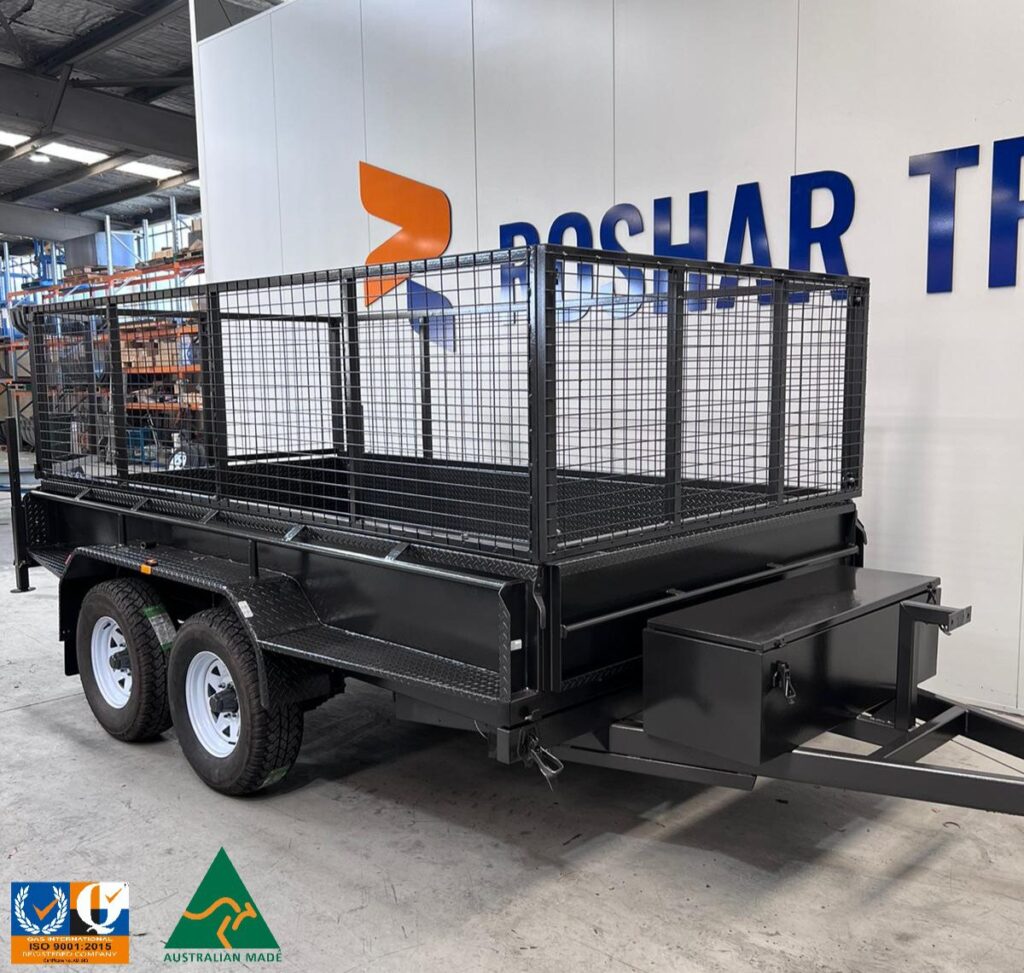
Cage trailer designs improve load security by providing a vertical containment barrier that reduces sideways and upward load movement, while allowing tie-down systems to secure items to the trailer chassis. This combination helps meet Australian load restraint requirements during braking, cornering, and uneven road conditions.
Containment Without Restricting Access
The primary function of a cage is to prevent load movement. Mesh or steel sides act as a barrier that keeps materials contained even if they shift slightly during braking or cornering.
At the same time, cage trailers maintain easy access from the rear and sides. This makes loading and unloading faster compared to fully enclosed designs, especially on busy worksites.
Reducing Load Shift During Transport
Load shift is a major cause of trailer instability. A well-designed cage limits sideways and vertical movement, helping to keep the centre of gravity stable.
This is particularly important on Australian roads, where sudden stops, roundabouts, and uneven surfaces are common. Improved load control directly contributes to safer towing.
What Is the Best Cage Trailer Size for Residential vs Commercial Use?
| Cage Size | Best For | Load Type | Typical ATM |
| 6×4 | Household use, light trades | Garden waste, tools | ~750kg |
| 7×4 | Trades and urban work | Mixed materials | ~750-1000kg |
| 8×5 | Landscaping, contractors | Bulky green waste | ~1400-2000kg |
6×4 and 7×4 Cage Trailers
A trailer cage 6×4 or 7×4 trailer cage is popular for light-duty tasks and urban use. These sizes are easy to manoeuvre and suit:
- Garden waste and green waste
- Small tools and equipment
- Household moving and tip runs
A 7×4 trailer with cage offers a good balance between compact size and usable volume, making it a common choice for homeowners and trades working in tight city spaces.
8×5 Cage Trailers for Higher Volume Loads
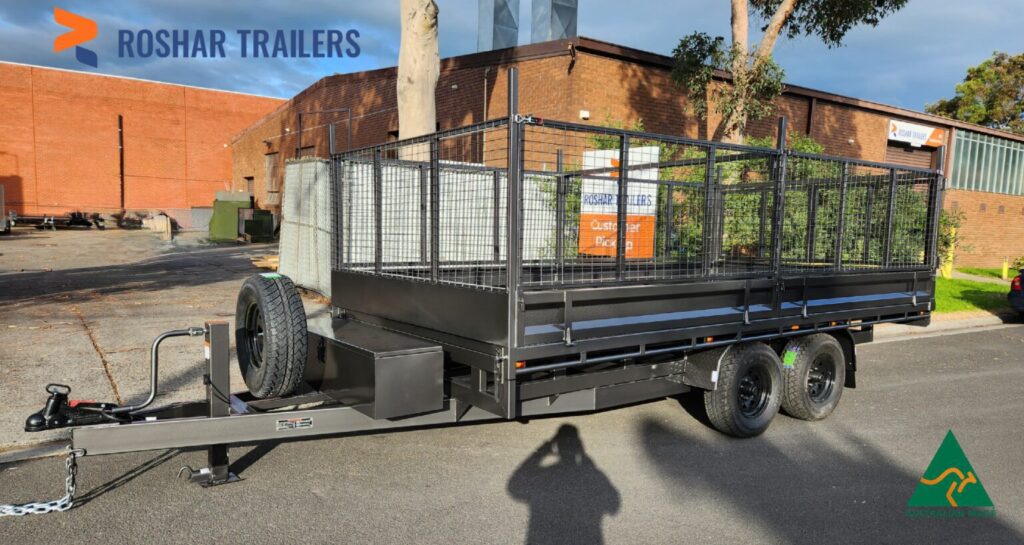
An 8 x 5 trailer cage provides significantly more load volume. This size is often used by landscapers, contractors, and small businesses transporting bulk but lightweight materials such as:
- Tree branches and mulch
- Packaging and recyclables
- Site waste and debris
The increased width improves stability when carrying taller loads, especially on longer trips.
Cage Height and Mesh Design Considerations
Choosing the Right Cage Height
Cage height directly affects load security. Taller cages allow higher stacking without material falling out, but they must be matched to trailer width and axle configuration to maintain stability.
Low cages suit general-purpose transport, while higher cages are ideal for waste, green material, and bulky items that cannot be easily tied down.
Mesh Spacing and Visibility
Mesh design matters. Closely spaced mesh improves containment of smaller items, while wider mesh offers better visibility and reduced wind resistance.
A practical cage design balances airflow, visibility, and restraint without adding unnecessary weight to the trailer.
Chassis and Frame Strength Beneath the Cage
Steel Frame Construction
While the cage is critical, load security also depends on what supports it. Quality cage trailers are built on strong steel frames designed to handle dynamic loads without flexing.
A rigid steel chassis ensures the cage remains aligned and effective, even when the trailer is fully loaded or travelling over uneven surfaces.
Connection Between Cage and Trailer Body
Secure mounting points between the cage and trailer body prevent movement or vibration. Poorly fixed cages can loosen over time, reducing their effectiveness and creating safety risks.
Tie-Down Points and Load Restraint
Internal and External Tie-Down Options
Cage trailers should still include rated tie-down points on the deck or chassis. These allow loads to be restrained properly in line with Australian load restraint guidelines.
Using the cage as containment does not replace the need for correct tie-down practices, especially for heavier items.
Supporting Compliance on Australian Roads
Load restraint is closely monitored across Australia. Cage trailers that support proper restraint reduce the risk of fines, insurance issues, and accidents.
Designs that integrate both containment and tie-down functionality offer the highest level of transport safety.
Important Load Restraint Rule for Cage Trailers
Under Australian load restraint guidelines, a cage is considered containment not a substitute for proper restraint. Heavier or rigid items must still be secured using rated tie-down straps attached to chassis-mounted tie rails, not the cage mesh itself, to remain compliant during emergency braking.
Urban and Regional Driving Conditions
Designed for Real Australian Driving Conditions
- Stop-start city traffic and roundabouts
- Sudden braking in urban environments
- Long regional highway runs
- Uneven access roads and worksites
Cage Trailers in City Environments
In cities like Melbourne and surrounding industrial areas such as Dandenong and Bayswater, frequent stopping and tight turns increase the chance of load movement. Compact cage trailers such as 6×4 and 7×4 models perform well in these conditions, offering secure containment without compromising manoeuvrability.
Regional and Highway Use
For longer distances and higher speeds, cage rigidity and balance become even more important. Wider trailers like the 8×5 provide better lateral stability when carrying bulky loads across regional highways and uneven access roads.
Ventilation, Weight, and Practical Use
Managing Wind Resistance
Cage trailers naturally allow airflow, reducing drag compared to solid-sided trailers. This improves towing efficiency and stability, particularly when travelling at highway speeds.
Keeping Trailer Weight Manageable
A well-designed cage adds security without excessive weight. This preserves payload capacity and keeps the trailer easier to tow for a wider range of vehicles.
Who Benefits Most from Cage Trailers
- Trades transporting loose materials
- Landscapers handling green waste
- Households doing tip runs
- Small businesses moving bulky but lightweight goods
Common Mistakes Buyers Make with Cage Trailers
Some buyers focus only on cage height or size. Common issues include:
- Choosing cages that are too tall for the trailer width
- Ignoring chassis strength beneath the cage
- Relying on the cage without proper tie-downs
Avoiding these mistakes improves safety and extends trailer lifespan.
Conclusion
Cage trailer design plays a critical role in load security on Australian roads.
Factors such as cage height, mesh design, trailer size, and chassis strength all influence how safely loads are transported.
For buyers searching for a cage trailer for sale, understanding how design impacts real-world performance helps ensure safer towing, better compliance, and long-term reliability.
For those seeking practical and reliable solutions, Roshar Trailers designs cage trailers with secure containment, strong steel construction, and layouts suited to Australian road conditions, supporting safer transport across Melbourne and surrounding industrial areas such as Dandenong, Bayswater, and Braeside in Victoria.
FAQs
Q1. Do cage trailers stop loads from moving completely?
A. No. Cage trailers help contain loads, but rated tie-downs are still required for safe and compliant transport.
Q2. What cage height is best for Australian roads?
A. Cage height should match trailer width and axle configuration to avoid instability when carrying tall loads.
Q3. Is a 6×4 cage trailer suitable for highway use?
A. Yes for light loads, but wider trailers such as 8×5 offer better stability at higher speeds.
Q4. Are cage trailers compliant with Australian load restraint rules?
A. Yes, when used correctly with proper tie-down points and compliant trailer construction.