
37 Malcolm RD, Braeside, VIC
How To Compare Flat Top Trailer Builders Before You Request A Quote
19 September 2025 | roshartrailers
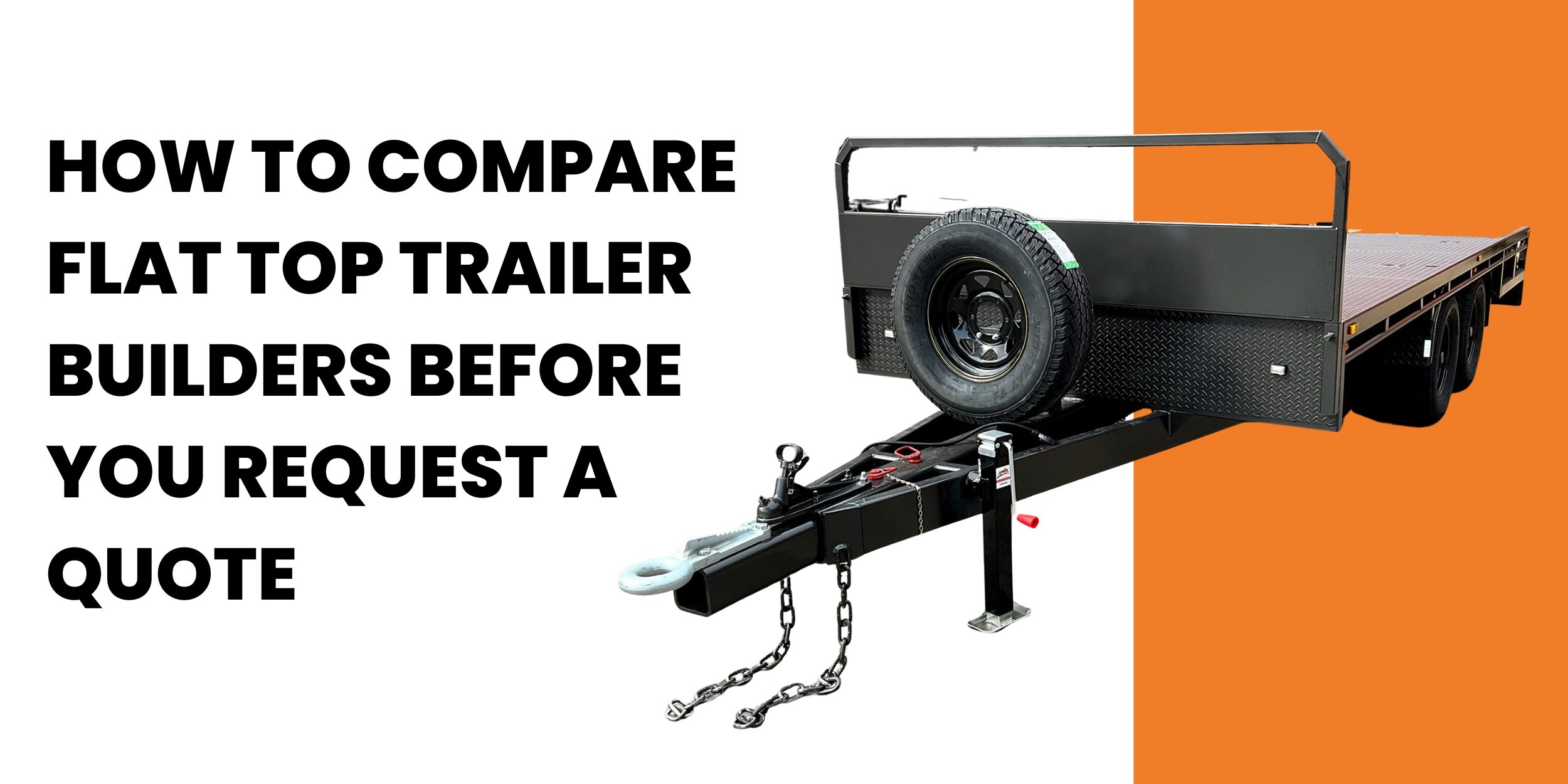
Choosing a flat top trailer builder should be based on more than price. The right builder should understand your load type, towing needs, worksite conditions, required ratings, compliance requirements and how the trailer will be used day to day.
A flat top trailer may carry machinery, pallets, building materials, landscaping equipment, trade tools or mixed commercial loads. Because these loads can be heavy, wide or awkward, the quality of the builder matters.
For Melbourne and Victorian buyers, comparing trailer builders carefully is especially important when the trailer will be used for regular trade, construction, landscaping, machinery or commercial transport work.
To compare flat top trailer builders, check their manufacturing experience, chassis construction, materials, customisation options, load rating knowledge, warranty terms, after-sales support, real trailer photos and how clearly they explain compliance before quoting.
For available build configurations, you can review Roshar’s flat top trailer options.
Reviewed by: Roshar Trailers Team
Roshar Trailers manufactures Australian-made trailers in Melbourne for trade, machinery, landscaping, construction and commercial transport applications.
Last updated: June 2026
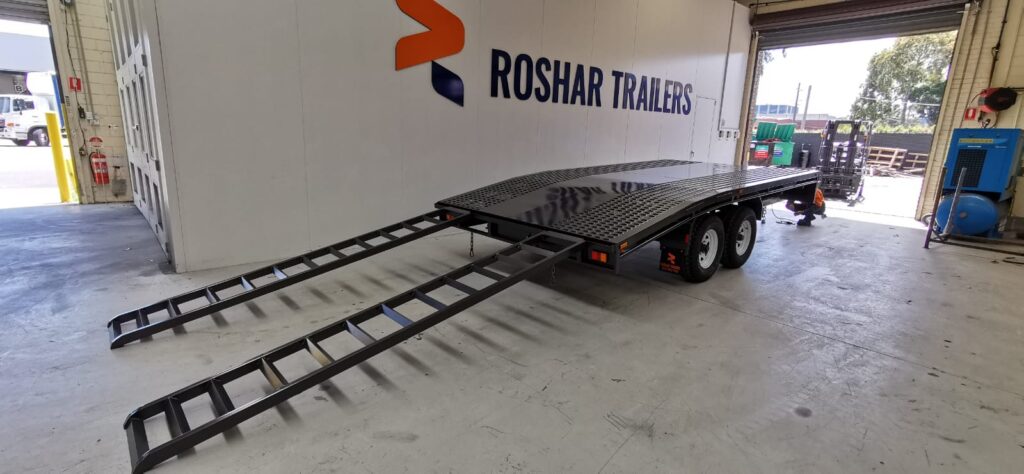
Check The Builder’s Manufacturing Experience
A flat top trailer builder should be able to explain how their trailers are built, what loads they are designed for and what options are suitable for different transport tasks.
Experience matters because a trailer is not just a steel deck on wheels. It needs the right relationship between the chassis, axles, tyres, brakes, coupling, deck size, tie-down layout and towing vehicle.
What to look for
| Experience signal | Why it matters |
| Australian trailer manufacturing experience | Shows familiarity with local towing, worksite and compliance requirements |
| Examples of similar builds | Helps confirm they have built trailers for loads like yours |
| Clear questions about your load | A good builder asks about use before quoting |
| Knowledge of trade and commercial use | Important for regular heavy-duty transport |
| Ability to explain options plainly | Helps you avoid underbuilt or overbuilt specifications |
| Workshop or build process transparency | Gives more confidence in construction quality |
A builder who only asks what size trailer you want may not be asking enough. A better conversation starts with what you carry, how often you tow, where the trailer is used and how the load will be secured.
Useful details to prepare
Before speaking with a builder, prepare:
- Main load types
- Heaviest expected load
- Load dimensions
- Towing vehicle details
- Worksite access conditions
- Loading method
- Ramp requirements
- Storage needs
- Tie-down requirements
- Commercial or personal use
This makes the quote process more accurate and reduces the risk of choosing a trailer that does not suit the job.
Compare Materials And Chassis Construction
The chassis is one of the most important parts of a flat top trailer. It supports the deck, load, suspension, axles, coupling and braking components. For regular trade or commercial use, chassis quality affects long-term durability and towing confidence.
A strong-looking trailer is not always well built. Compare the details behind the build, not just the finished appearance.
Chassis and construction checklist
| Feature | What to ask | Why it matters |
| Steel profile | What steel sections are used? | Affects strength and durability |
| Cross-member spacing | How is the deck supported underneath? | Helps reduce deck flex under load |
| Drawbar design | How is the drawbar constructed and rated? | Affects towing strength and stability |
| Weld quality | Are welds clean and consistent? | Poor welds can weaken high-stress areas |
| Deck material | What flooring is used? | Must suit machinery, pallets or trade loads |
| Corrosion protection | Is the trailer painted, coated or galvanised? | Important for outdoor and worksite use |
| Tie-down integration | Are restraint points part of the build design? | Helps secure loads safely |
Flooring options to compare
| Flooring type | Common use |
| Checker plate | General trade use and grip |
| Steel floor | Heavy-duty machinery or commercial loads |
| Timber deck | Some pallet and equipment applications |
| Mesh or reinforced surfaces | Specific custom applications |
The right material choice depends on how the load contacts the deck. Machinery, pallets, pavers, timber and steel all place different stress on the trailer.
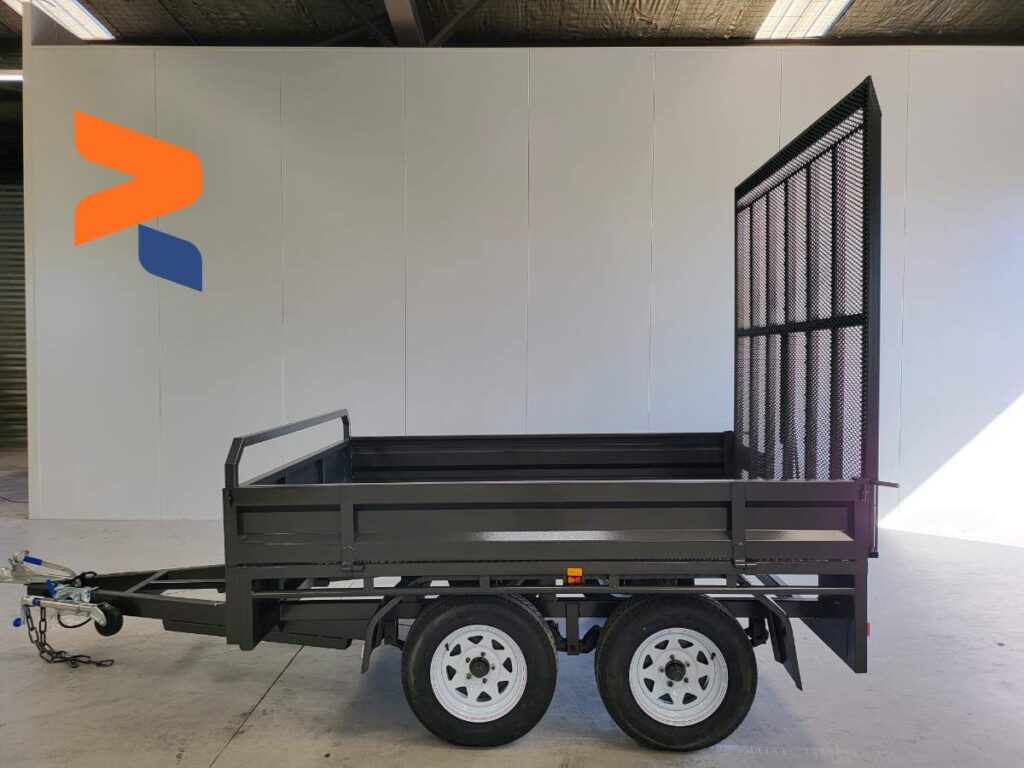
Ask About Customisation Options
Customisation is useful when standard trailer dimensions, tie-down layouts or loading features do not match the work. A good trailer builder should be able to explain which custom options are practical and which may add unnecessary weight or cost.
The goal is not to add every possible feature. The goal is to configure the trailer around regular use.
Useful custom options to compare
| Custom option | Best suited to |
| Custom deck size | Repeated load dimensions |
| Removable ramps | Machinery, mowers and equipment |
| Slide-under ramps | Saving deck space when ramps are not in use |
| Headboard | Timber, steel, pipe and forward load protection |
| Drop sides | Mixed loads that sometimes need containment |
| Extra tie-down points | Machinery, pallets and irregular loads |
| Toolboxes | Straps, chains, tools and worksite gear |
| Spare wheel bracket | Longer trips and site reliability |
| Winch points | Equipment loading assistance |
| Wider deck | Pallets or bulky materials |
Customisation questions to ask
Ask the builder:
- Can the deck size be adjusted to suit my regular load?
- Can tie-down points be positioned around my equipment?
- Are ramps rated for the machinery being loaded?
- Will added features reduce usable deck space?
- Will custom features affect tare weight and payload?
- Can the trailer be designed for side loading?
- Can toolboxes or ramp storage be integrated safely?
Custom features should make the trailer easier to load, tow, secure and use. If a feature does not solve a regular problem, it may not be needed.
Review Warranty And After-Sales Support
Warranty and after-sales support are important because trailers are working equipment. If something needs adjustment, servicing or repair advice, it helps to know who will support the trailer after delivery.
In Australia, consumer guarantees are automatic and cannot be taken away, while warranties are extra promises that a business may choose to make. (ACCC)
Warranty and support checklist
| Item to check | Why it matters |
| Written warranty terms | Helps you understand what is covered |
| Warranty exclusions | Important for commercial or heavy-duty use |
| After-sales support | Useful for adjustments, servicing and parts |
| Repair process | Shows how issues are handled |
| Parts availability | Helps reduce downtime |
| Service advice | Important for brakes, bearings, tyres and couplings |
| Clear documentation | Reduces confusion after purchase |
Business.gov.au explains that warranties cannot override consumer guarantees, and businesses must comply with a warranty if they issue one. (business.gov.au)
Before requesting a quote, ask whether the builder provides written warranty information, service guidance and support for parts or adjustments.
Inspect Real Trailer Photos
Real trailer photos help you assess build quality, finish, deck layout and whether the builder has experience with similar trailers. Stock images or generic product photos may not show enough detail.
Photos are especially useful when comparing custom work.
What to look for in trailer photos
| Photo detail | What it can show |
| Chassis underside | Cross-members, supports and construction quality |
| Drawbar area | Coupling setup and frame connection |
| Deck surface | Flooring material and finish |
| Tie-down points | Placement and load restraint flexibility |
| Ramp setup | Ramp storage, length and usability |
| Welds and joins | Build consistency and workmanship |
| Lighting and reflectors | Attention to road-use details |
| Custom features | Whether the builder can solve specific needs |
Photos to request
Ask for photos of:
- Similar flat top trailer builds
- Chassis and underside
- Ramp setup
- Tie-down points
- Deck surface
- Headboard or drop sides
- Toolboxes and custom storage
- Finished trailers in real use
Real examples help you compare what is actually being built, not just what is promised in a quote.
Ask About Load Ratings And Compliance
A trailer builder should be able to explain load ratings clearly. If the trailer is intended for heavy loads, machinery or commercial work, ratings and compliance should not be vague.
For trailers with an aggregate trailer mass of 4.5 tonnes or less, Vehicle Standards Bulletin 1 Revision 6 helps manufacturers understand applicable Australian Design Rule requirements. (Infrastructure Department)
Rating terms to understand
| Term | Meaning | Why it matters |
| Tare mass | Weight of the trailer when empty | Used to calculate payload |
| Payload | Load the trailer can carry | Helps prevent overloading |
| ATM | Aggregate Trailer Mass: total trailer mass when fully loaded | Shows the trailer’s total loaded limit |
| GTM | Gross Trailer Mass: loaded mass carried by the trailer wheels when coupled | Important for axle and braking requirements |
| Axle rating | Maximum load rating of the axle setup | Must match intended use |
| Tyre rating | Maximum load rating of the tyres | Important for safe towing |
| Tow vehicle capacity | Maximum trailer weight the vehicle can tow | Must suit the loaded trailer |
Compliance questions to ask
Ask the builder:
- What ATM and GTM will the trailer be rated for?
- What is the expected tare mass?
- What payload will remain after tare mass is considered?
- What axle and tyre ratings will be used?
- What braking setup is required?
- Are lighting, safety chains and reflectors included?
- Will the trailer include a compliance plate?
- Can the trailer rating be matched to my tow vehicle?
If a builder cannot clearly explain ratings, payload and compliance, that is a warning sign.
Compare Quotes Carefully
A trailer quote should be compared by specification, not just total price. Two quotes may look similar but include different materials, deck sizes, ratings, ramps, brakes or custom features.
A lower quote may not be better if it leaves out important details. A higher quote may be reasonable if it includes stronger construction, better braking, rated ramps, custom tie-downs or after-sales support.
Quote comparison table
| Quote item | What to compare |
| Deck size | Usable length and width, not just advertised size |
| ATM and GTM | Rated limits and suitability for your load |
| Tare mass and payload | Actual load capacity after trailer weight |
| Axle setup | Single axle, tandem axle or custom configuration |
| Brakes | Brake type and suitability for rating |
| Tyres and wheels | Load rating and replacement availability |
| Chassis construction | Steel profile, drawbar and cross-members |
| Flooring | Checker plate, steel, timber or other material |
| Ramps | Type, rating, storage and loading angle |
| Tie-down points | Number, position and suitability |
| Custom features | Toolboxes, headboards, drop sides, spare wheel |
| Warranty | Written coverage and exclusions |
| Support | Parts, servicing and repair guidance |
Warning signs in a quote
Be cautious if a quote:
- Does not list ATM, GTM or payload
- Does not explain braking requirements
- Does not mention axle or tyre ratings
- Uses vague terms like “heavy duty” without detail
- Does not show what materials are included
- Does not explain ramp rating
- Does not include warranty information
- Avoids compliance questions
- Does not ask what you will carry
A good quote should help you understand the trailer, not just the price.
Questions To Ask A Trailer Builder
Before requesting a quote, prepare a list of questions. This helps you compare builders fairly and keeps the conversation focused on safety, suitability and long-term value.
Builder evaluation checklist
| Question | Why to ask |
| What loads is this trailer designed to carry? | Confirms suitability |
| What deck size do you recommend and why? | Shows whether the builder understands your use case |
| What ATM, GTM and payload will it have? | Helps prevent under-rating |
| What axle setup is best for my load? | Supports stability and capacity decisions |
| What braking system is required? | Important for safety and compliance |
| What steel and flooring will be used? | Helps compare construction quality |
| Where will tie-down points be placed? | Important for load restraint |
| Are ramps included and rated? | Essential for machinery loading |
| What custom options are worth considering? | Helps avoid unnecessary extras |
| What is covered by warranty? | Clarifies support |
| Can I see similar completed builds? | Confirms experience |
| What information do you need before quoting? | Shows a practical, use-led process |
Information to give the builder
Provide:
- Load type
- Load dimensions
- Load weight
- Towing vehicle details
- Worksite conditions
- Loading method
- Storage requirements
- Desired custom features
- Frequency of use
- Any repeated transport problems
The more accurate the information, the more useful the quote will be.
Final Thoughts
Comparing flat top trailer builders should be a practical evaluation process, not just a price comparison. The right builder should understand your load, towing vehicle, worksite conditions, rating requirements and how the trailer will be used.
Before requesting a quote, compare manufacturing experience, materials, chassis construction, custom options, warranty, real trailer photos, load ratings and compliance knowledge.
A good trailer builder will ask questions before quoting, explain the trade-offs clearly and help match the trailer to the work it needs to do.
When you are ready to compare available configurations, review Roshar’s flat top trailers built in Melbourne
Frequently Asked Questions
How do I compare trailer builders?
Compare trailer builders by checking their manufacturing experience, previous builds, materials, chassis design, customisation options, load rating knowledge, warranty terms, support process and how clearly they explain the quote.
What questions should I ask a trailer manufacturer?
Ask about deck size, ATM, GTM, payload, chassis construction, axle setup, braking system, tyre rating, ramp rating, tie-down points, warranty, compliance and whether the trailer suits your towing vehicle.
Why is chassis construction important?
Chassis construction is important because the chassis supports the load, deck, axles, suspension, brakes and towing forces. A poorly matched chassis may flex, wear faster or be unsuitable for regular heavy loads.
Should I ask for real trailer photos?
Yes. Real trailer photos help you inspect build quality, deck layout, tie-down points, ramps, finish and examples of similar work before requesting a quote.
What should be included in a trailer quote?
A trailer quote should include deck size, ATM, GTM, tare mass or estimated payload, axle setup, brakes, tyres, flooring, ramps, tie-down points, custom features, warranty information and after-sales support details.
How do I know if a trailer builder understands compliance?
A builder should be able to explain ATM, GTM, payload, braking requirements, axle and tyre ratings, safety chains, lighting, reflectors and the trailer’s compliance plate.
Is the cheapest trailer quote always the best choice?
Not always. The cheapest quote may exclude important specifications such as stronger chassis construction, suitable brakes, rated ramps, proper tie-down points or after-sales support.
When should I request a custom trailer quote?
Request a custom trailer quote when your load is repeated, heavy, awkward, machinery-based, palletised or difficult to secure with a standard trailer layout.