
37 Malcolm RD, Braeside, VIC
Best Trailer Types for Tradies, Contractors and Small Businesses
31 August 2026 | roshartrailers
By Roshar Trailers Team, Trailer Manufacturing
Published: 28 August 2026
The best trailers for tradies are the ones matched to your trade workflow, payload, tools, access needs and job-site conditions. For most contractors, that means a tradesman, tandem, flat top, tipper or plant trailer built for daily work.
A good trailer should make the working day easier. It should keep tools secure, reduce loading time, handle real payload, tow safely, suit your ute or work vehicle and help you arrive on site organised.
For electricians, plumbers, builders, landscapers, mobile mechanics and small business owners, the wrong trailer can cost more than the purchase price. Lost tools, broken latches, poor storage, low payload and awkward access all slow the job down.
This tradesman trailer guide compares the main trailer types so you can choose by trade, not just tray size.
What are the best trailers for tradies in Australia?
The best trailers for tradies in Australia are tradesman trailers for secure tools, tandem trailers for heavier loads, flat top trailers for open loading, plant trailers for machinery and tipper or cage trailers for landscaping and waste.
There is no single perfect trailer for every trade. An electrician may need shelving, small-part storage and dry compartments. A plumber may need mixed storage for tools, fittings and materials. A mobile mechanic may need strength, compressors, battery setup and room for heavier service gear.
This is where many buyers make the wrong comparison. They look at length and width first, then price. In practice, the better question is: “What work will this trailer do every week?” A trailer used once a month for a home project does not need the same setup as a contractor’s daily work trailer.
Roshar Trailers lists a broad trailer range, including box, cage, car carrier, custom, enclosed, flat top, hydraulic tipper, machinery, plant, tandem, tradesman and tri-axle trailers. That makes it easier for buyers to match the trailer category to the job rather than forcing every trade into one trailer style.
Best trailer type by tradie use
| Tradie or business type | Best trailer direction | Why it suits |
| Electricians | Tradesman trailer | Shelving, lockable storage, cable space and quick access |
| Plumbers | Tradesman or tandem trailer | Mixed tools, fittings, pipes and flexible storage |
| Carpenters and builders | Tradesman, tandem or flat top trailer | Tools, timber, ladders, fixings and site material movement |
| Landscapers | Cage, tipper, mower or tandem trailer | Green waste, soil, machines, mowers and bulky materials |
| Mobile mechanics | Tradesman or custom trailer | Compressors, heavier tools, power setup and secure storage |
| Construction contractors | Flat top, plant or tandem trailer | Machinery, materials, pallets, ramps and load restraint |
| Farmers and rural owners | Tandem, flat top or custom trailer | Mixed rural loads, rough access and practical durability |
| Small businesses | Box, tradesman or custom trailer | Delivery, equipment transport and repeatable workflows |
How should tradies choose the right trailer type?
Tradies should choose a trailer by listing their heaviest load, daily tools, access needs, loading method, tow vehicle limit, job-site terrain, parking space and security risk. The right trailer should reduce handling, protect gear and stay legal when loaded.
Start with the load, not the trailer. Write down the tools, machines, stock, materials, ladders, ramps, tanks, mowers or parts you carry on a heavy day. Then include extra items that are easy to forget: spare wheel, fuel, water, boxes, compressors, generators, batteries and restraint gear.
According to NSW Government towing guidance, the rated capacity of the towbar and coupling must not be exceeded, and the loaded trailer must stay within the lowest applicable rating across the tow vehicle, towbar, trailer and tyres. That means payload matters more than guesswork when a trailer becomes part of daily trade work.
Once you know the load, think about access. Do you need side doors, rear doors, ramps, cage sides, flat loading space, toolboxes, ladder racks or a tipping function? A trailer that looks strong but makes you climb over tools ten times a day will frustrate the team.
Trailer selection process
- List your heaviest realistic workday load: include tools, materials, machines, fuel, water, ramps, spare wheels and restraint gear.
- Check your tow vehicle limits: the trailer must suit the vehicle’s towing capacity, towbar rating and coupling setup.
- Choose by workflow: electricians need organisation, plumbers need flexible space, and machinery users need ramps and tie-downs.
- Inspect loading access: side doors, rear doors, ramps, cages and open decks change how fast work happens.
- Confirm payload in writing: tare, ATM and GTM decide what the trailer can legally carry.
- Plan for security: lockable compartments, latches, doors and toolboxes matter if tools stay in the trailer overnight.
- Think about the next two years: a growing trade business can outgrow a light-duty trailer quickly.
When is a tradesman trailer the best option?
A tradesman trailer is the best option when tool security, daily organisation, weather protection and fast access matter more than open loading space. It suits electricians, plumbers, carpenters, builders, technicians, mobile service teams and contractors carrying valuable tools.
A tradesman trailer is essentially a mobile work storage system. The value comes from compartments, lids, doors, shelves, racks, locks and load control. If your team loses time looking for parts or moving tools in and out of the ute, a better layout can pay for itself through efficiency.
Roshar’s tradesman trailer page says its trailers are built for carpenters, electricians, plumbers, landscapers and other tradies, with customisable features such as compressor boxes, ladder racks, internal shelving, lockable storage, hydraulic or electric brakes, cages, LED lighting, spare wheel mounts, tie-down points, upgraded flooring and heavy-duty axles.
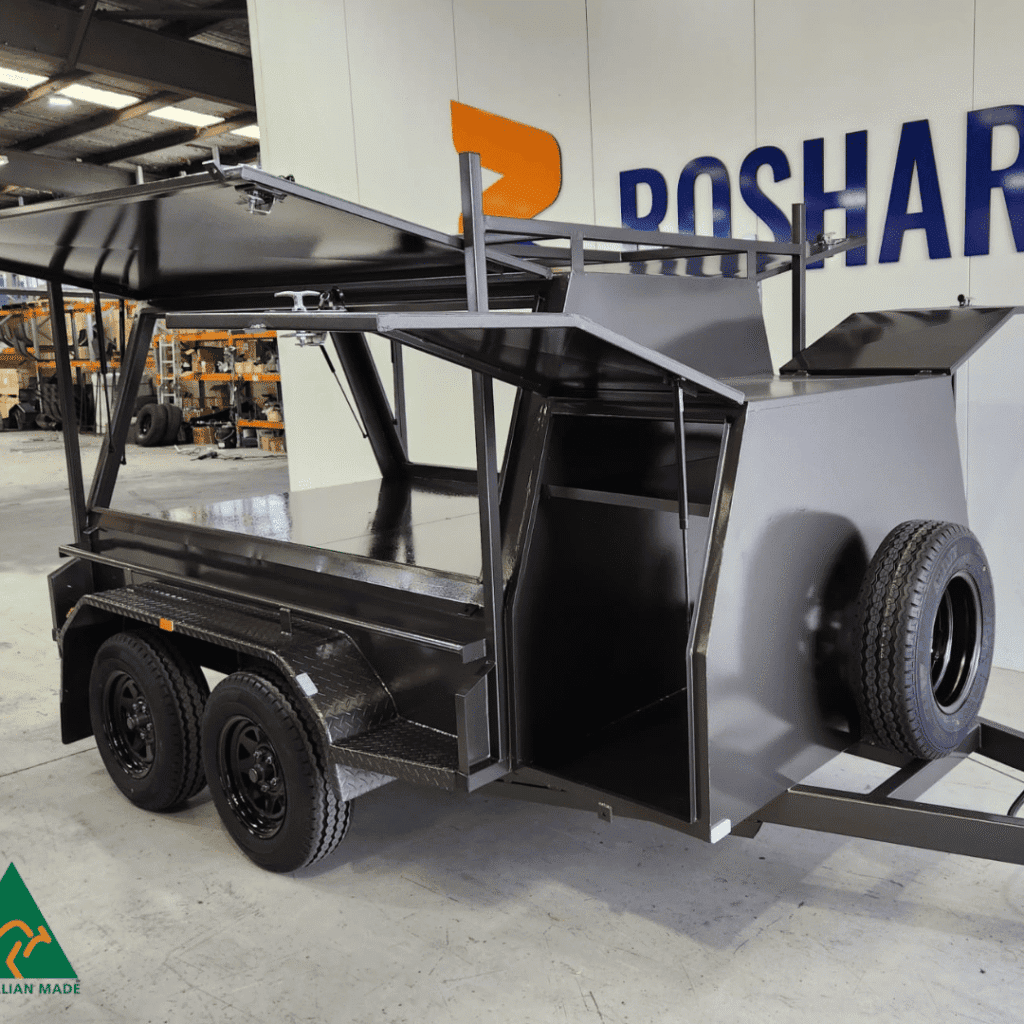
For buyers searching tradesman trailers for sale, the practical question is not only “What size is it?” It is “Can I reach the gear I use most, keep expensive tools dry, lock everything properly and still tow the loaded trailer safely?”
Tradesman trailer feature checklist
| Feature | Why it matters for tradies |
| Lockable tool storage | Protects high-value tools and consumables |
| Shelving and compartments | Reduces time wasted searching for gear |
| Ladder racks | Keeps ladders, pipes or timber separate from small tools |
| Compressor box | Useful for mobile mechanics, carpenters and service teams |
| Side access doors | Helps retrieve tools without unloading the whole trailer |
| Weather protection | Keeps electrical gear, tools and materials drier |
| Tie-down points | Stops heavy gear shifting during towing |
| Strong latches and hinges | Prevents daily-use failures on job sites |
When should contractors choose tandem trailers?
Contractors should choose tandem trailers when the load is heavier, longer, bulkier or used regularly enough to need more capacity and stability. Tandem setups suit builders, landscapers, rural users, delivery work and trades carrying mixed tools and materials.
A tandem trailer spreads load across two axles instead of one. That can help when a contractor carries building materials, landscaping gear, machines, mowers, waste, fencing supplies or heavier tools. It also gives buyers more flexibility when their work changes from job to job.
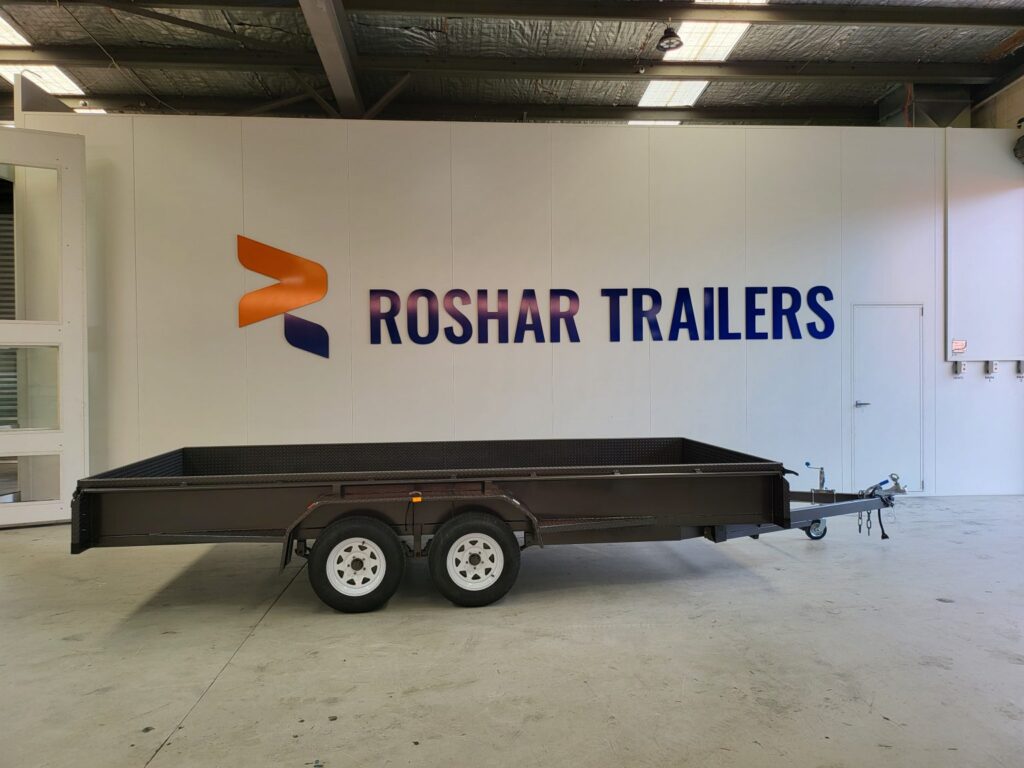
Roshar’s trailer range includes tandem trailers as a key category, and its tradesman page also lists tandem tradesman options such as 8×5 tandem setups. For contractors comparing tandem trailers, the goal should be usable payload and stability, not simply buying a larger trailer because it looks stronger.
Tandem trailers are not automatically better for everyone. They can cost more, weigh more and need more room to manoeuvre. For a solo tradie doing light local service work, a compact tradesman trailer may be easier. For a contractor carrying varied loads all week, tandem can make more sense.
Single axle vs tandem trailer for tradies
| Question | Single axle may suit | Tandem may suit |
| How heavy is the load? | Light tools and occasional materials | Heavy tools, machines or construction materials |
| How often is it used? | Occasional or local work | Daily business use |
| How important is manoeuvrability? | Tight driveways and small sites | Open worksites and heavier transport |
| Is payload growing? | Stable, predictable loads | Business expanding or mixed jobs |
| Is highway towing common? | Short local trips | Longer trips and regular work routes |
| What is the budget? | Lower upfront cost | Higher cost but more capability |
When do flat top trailers suit trade work?
Flat top trailers suit trade work when the load is awkward, long, palletised, machinery-based or easier to load from the side. They are useful for builders, fabricators, farmers, contractors and businesses moving materials that do not fit neatly inside a box.
A flat top trailer gives open loading access. That can be useful when forklifts, side loading, long timber, steel, tanks, machinery or pallets are part of the job. The open deck gives flexibility, but it also means restraint planning becomes more important.
According to the National Transport Commission’s Load Restraint Guide, light vehicle loads must be properly restrained, must not overhang dangerously, must not exceed mass limits and must not cover lights, indicators, reflectors or number plates. A flat top trailer needs suitable tie-down points, load layout and restraint gear because open loads are exposed to wind and movement.
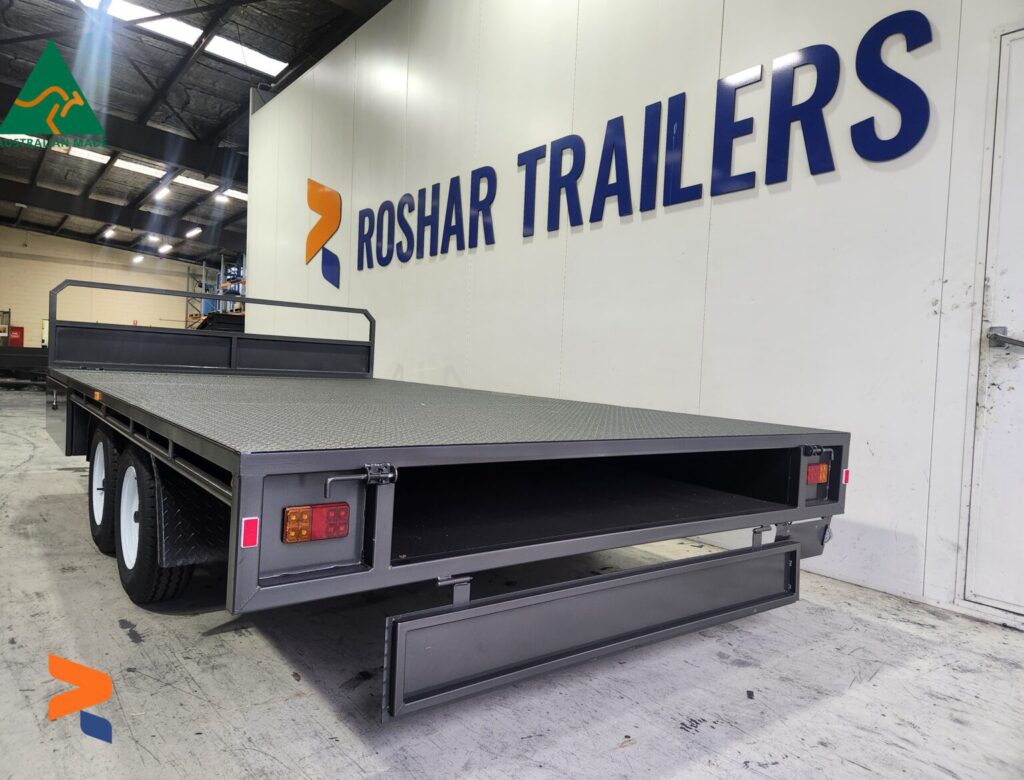
For buyers comparing flat top trailers, the key questions are deck size, axle rating, tie-down positions, ramp options, side loading access, headboard strength and whether the trailer will carry machines, pallets or mixed materials.
Flat top trailer use cases
| Use case | Why flat top works |
| Building materials | Easier side loading for timber, sheets, steel and pallets |
| Rural property work | Flexible deck for mixed gear and odd-shaped loads |
| Machinery transport | Open deck access with suitable ramps and restraint points |
| Fabrication and steel work | Better for long or awkward materials |
| Landscape supply | Useful for pallets, tanks, equipment and bulky items |
| Small business deliveries | Flexible loading for varied commercial jobs |
Which trailers suit landscapers, builders and machinery users?
Landscapers often need cage, mower or tipper trailers, builders need tradesman, tandem or flat top trailers, and machinery users need plant trailers with ramps, brakes and rated tie-downs. The right choice depends on how the load is lifted, secured and unloaded.
A landscaper’s trailer may carry wet green waste in the morning, pavers at lunch and mower gear in the afternoon. That job may need cage height, tipping, ramp access, mower storage or a tandem base. A builder may need secure tool storage plus open capacity for materials. A machinery contractor may need a plant trailer rather than a general box trailer.
Roshar’s trailer range includes hydraulic tipper trailers, plant trailers, machinery trailers, lawn mowing trailers, flat top trailers and tandem trailers, giving different industries more than one workable option. That matters because many small businesses begin with a general trailer and later realise they need something more specific.
According to the Department of Infrastructure’s VSB 1 Revision 6, trailers with an aggregate trailer mass of 4.5 tonnes or less are covered by guidance that helps manufacturers understand Australian Design Rule requirements for common trailer types. For work trailers, compliance should be treated as part of the buying decision, not an afterthought.
Industry matching table
| Business type | Better trailer type | What to prioritise |
| Electrician | Tradesman trailer | Shelving, small-part storage, lockable access |
| Plumber | Tradesman or tandem trailer | Flexible space, pipe storage, mixed tools |
| Carpenter | Tradesman or flat top trailer | Ladders, timber, tools, side access |
| Builder | Tandem, flat top or tradesman trailer | Payload, access, material handling |
| Landscaper | Cage, mower, tipper or tandem trailer | Green waste, ramps, corrosion resistance |
| Mobile mechanic | Tradesman or custom trailer | Compressor box, heavier tools, power options |
| Machinery contractor | Plant trailer | Ramps, brakes, tie-down points, load rating |
| Rural property owner | Tandem, flat top or custom trailer | Mixed load flexibility and durability |
What features matter most in a work trailer?
The most important work trailer features are payload, axle setup, brakes, suspension, tyres, coupling, secure storage, weather protection, access points, tie-downs, ramps, lighting, rust protection and warranty support. These features decide how well the trailer works after purchase.
Competitor content often focuses on tool storage, durability, security and layout because those are the pain points tradies feel every day. Big Man Trailer’s tradie trailer FAQ highlights durability, load capacity, security features, layout and rust protection as key purchase considerations. Modern Trailers also points to canopy enclosure, ladder racks, workplace equipment storage and single/double axle designs.
For Roshar buyers, the practical difference is choosing a feature set around the actual job. A cabinetmaker may need dry storage and gentle organisation. A landscaper may need ramp access and wash-down practicality. A mobile mechanic may need a heavier base, compressor box and better power planning.
According to Transport Victoria, heavy-load restraint depends on suitable transport methods, strong enough headboards and racks, rated webbing straps or chains where suitable, and stable, evenly distributed loading. This is why trailer features such as tie-down points, cages, racks and headboards directly affect safe work use.
Work trailer feature priority table
| Feature | High priority for | Why it matters |
| Payload capacity | All tradies | Prevents overloading and repeated trips |
| Lockable storage | Electricians, plumbers, builders, mobile mechanics | Protects expensive tools and materials |
| Ladder racks | Electricians, carpenters, plumbers, painters | Keeps long items organised and accessible |
| Tandem axle setup | Builders, landscapers, contractors | Helps with heavier and more varied loads |
| Ramps | Mower, plant, machinery and service businesses | Makes loading safer and faster |
| Tie-down points | Machinery, flat top and mixed-load users | Helps keep loads controlled while towing |
| Weather protection | Tool-heavy trades | Reduces water damage and corrosion |
| Rust protection | Landscapers, coastal work, outdoor storage | Extends service life in wet or harsh conditions |
| LED lighting | Daily road users | Improves visibility and reliability |
| Warranty support | Business users | Reduces downtime risk when issues appear |
What should tradies check before buying?
Before buying, tradies should check tare, ATM, GTM, payload, axle rating, brake setup, tyre rating, coupling, safety chains, lights, ramps, tie-down points, storage layout, rust protection, warranty and whether the trailer suits the tow vehicle.
The buying mistake is assuming two trailers are equal because they share the same size. A 7×5 trailer can be a light household option or a serious work trailer depending on frame, axle, brakes, toolbox setup and payload. A cheap trailer can become expensive if it needs repairs, upgrades or replacement too soon.
For buyers searching for a trailer for sale, compare the trailer against your weekly load. For example, a carpenter carrying ladders, fixings, nail guns and timber should inspect racks, compartments and tie-down points. A landscaper should inspect cage height, tipping needs, ramp access and corrosion protection.
Pre-purchase process for tradies
- Write down your daily load: include tools, materials, machines, racks, boxes, spare wheel and restraint gear.
- Check tare, ATM, GTM and payload: the trailer must legally carry the real loaded weight.
- Match the tow vehicle: do not buy a trailer your ute cannot tow safely when loaded.
- Inspect access points: side doors, rear doors, ramps and shelves decide how fast you work.
- Check security: locks, latches, lids and storage design protect your tools.
- Look underneath: chassis, drawbar, suspension, axles and welds matter more than the paint finish.
- Test lights and wiring: daily towing needs reliable brake lights, indicators and tail lights.
- Ask about warranty support: business users need a clear support pathway if issues affect work.
Conclusion
The best trailers for tradies are not chosen by size alone. They are chosen by workflow, payload, access, security, load type, tow vehicle capacity and how often the trailer needs to earn money for the business.
Roshar Trailers offers practical Australian-made options for tradies, contractors, landscapers, builders, farmers, machinery users and small businesses. Start with the full trailer range, then choose the setup that fits your real working day.
FAQ’S
Is a tradesman trailer better than a ute canopy?
Yes, if you need more storage, better separation, extra carrying space or the ability to detach tools from the ute. A ute canopy is compact and always with the vehicle, but a tradesman trailer can offer more room, better layout options and dedicated work storage.
Do tradies need a tandem trailer?
No, not every tradie needs one. Tandem trailers suit heavier, longer or more frequent work loads. A solo electrician or service technician may prefer a compact tradesman trailer, while builders, landscapers and contractors carrying varied materials may benefit from tandem capacity and stability.
Can a landscaper use a tradesman trailer?
Yes, but only if the layout suits the work. A landscaper carrying hand tools and smaller machines may use a tradesman setup, while green waste, soil, mowers or regular garden clean-ups may be better suited to cage, mower, tipper or tandem trailers.
What trailer size is best for tradies?
There is no single best size. Many tradies compare 6×4, 7×5, 8×5 and larger tandem options, but the better choice depends on payload, storage, access and parking. A compact trailer can work well if it carries the right gear safely and stays organised.
Should I buy a custom trailer for my trade?
Yes, if a standard layout creates daily frustration or cannot safely carry your tools and materials. Custom features such as shelving, ladder racks, compressor boxes, ramps, tie-down points and lockable compartments can improve workflow when they are planned around your actual jobs.
What is the biggest mistake tradies make when buying a trailer?
The biggest mistake is buying by price or tray size only. A low-cost trailer can be poor value if it lacks payload, brakes, secure storage, tie-downs, weather protection or practical access. The right work trailer should save time and reduce risk every day.
How long should a good trailer last?
A good tradie trailer can last many years when it is correctly rated, not overloaded, maintained and matched to the work. Service life depends on build quality, load type, storage, rust protection, bearing and brake maintenance, tyre condition and how hard the trailer is used.